
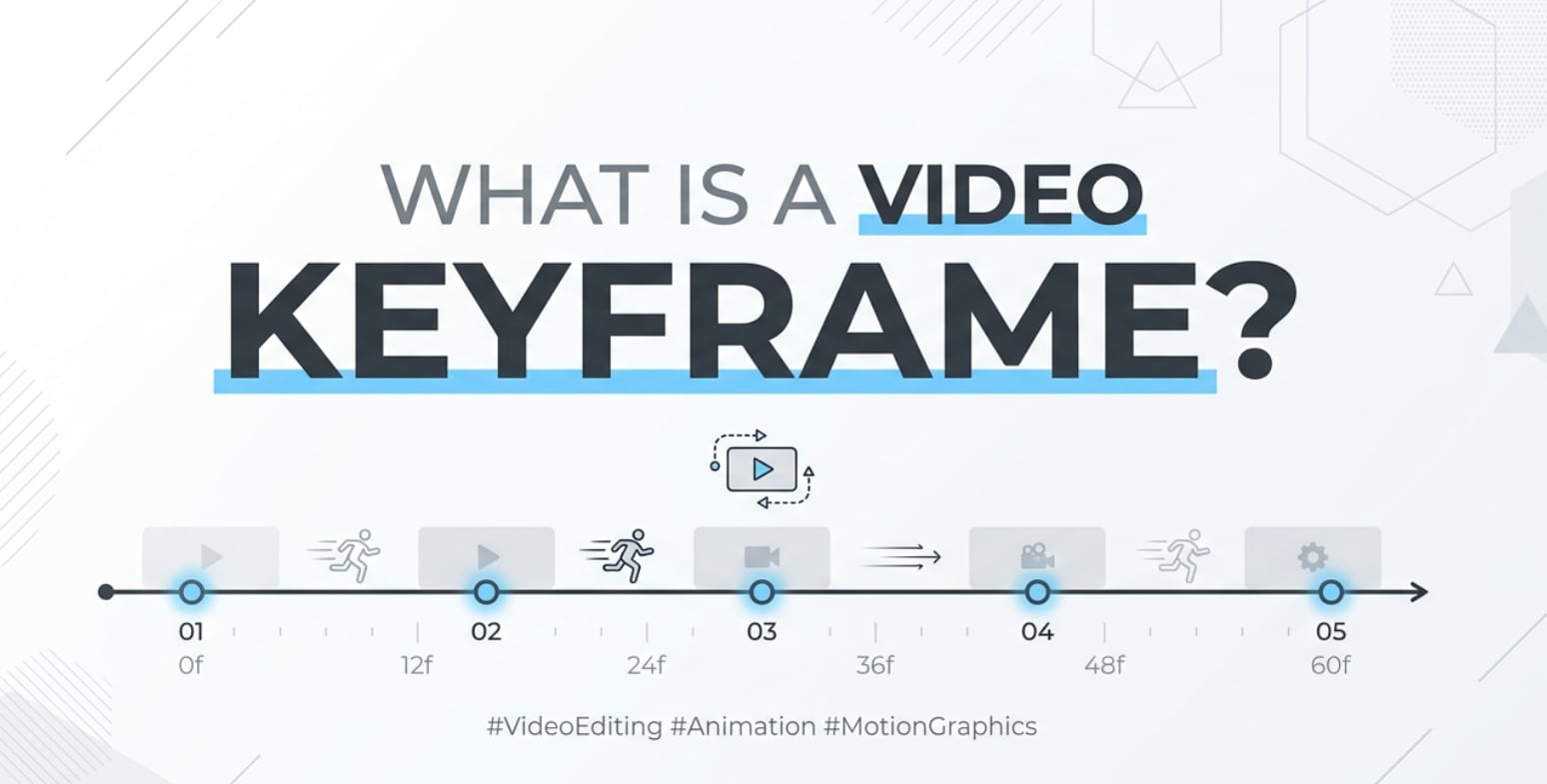
A video keyframe is a silent hero inside every clip you record, edit, compress, or stream. You will run into the term in camera recording menus, export settings in Premiere Pro or DaVinci Resolve, YouTube encoder guides, and live-streaming tutorials. Understanding how a keyframe in video works helps you balance quality and file size, keep timelines smooth, and quickly spot what went wrong when your footage stutters, pixelates, or refuses to play.
Repair Corrupted Files To Save Your Data
 Security Verified. Over 7,302,189 people have downloaded it.
In this article
What Is Video Keyframe?
A video keyframe (often called an I-frame) is a full, self-contained image inside a compressed video stream. It belongs to the category of video compression and encoding parameters. While most frames store only the changes from previous frames, a keyframe stores the complete picture so the decoder can use it as a reference to rebuild surrounding frames. In simple terms, a video keyframe is like a clean snapshot that all nearby frames rely on to display correctly during recording, editing, exporting, streaming, and playback.
What Does Video Keyframe Affect?
Quality, compression, and file size
The way you set up video keyframe intervals directly affects how your footage looks and how large the file becomes.
| Keyframe interval | Practical effect |
|---|---|
| Short (e.g., every 1 second) | More accurate detail recovery, better for fast motion, but larger file size and slightly higher bitrate needs. |
| Medium (e.g., every 2–4 seconds) | Balanced quality and size for most web videos, social uploads, and typical 1080p/4K exports. |
| Long (e.g., 5+ seconds) | Smaller files, but motion artifacts and smearing become more visible, especially during fast action or scene changes. |
Because non-keyframes (P/B-frames) only store changes from the last reference frame, if the gap between two keyframes is very long, the encoder has to stretch prediction further, which may cause blockiness or ghosting when the bitrate is too low.
Editing, seeking, and streaming performance
Keyframes also control how responsive your footage feels to edit and play.
- Timeline scrubbing: NLEs like Premiere Pro, Final Cut Pro, or DaVinci Resolve decode from the nearest keyframe in video. When keyframes are too far apart, jumping around the timeline becomes sluggish.
- Seeking and preview thumbnails: Platforms such as YouTube or Vimeo use keyframes as anchor points for thumbnails and seek positions. Shorter intervals mean more accurate seeks.
- Streaming stability: In H.264/H.265 streams, regular keyframes help players recover quickly after a brief network drop. If keyframes are rare and one gets corrupted or lost, you may see long freezes or hanging frames.
- Compatibility: Some hardware players and older TVs handle streams better when the GOP (Group of Pictures) length and keyframe spacing are conservative, such as 2-second intervals.
How Does Video Keyframe Work in Real Use?
In a typical compressed video, frames are grouped into a GOP that starts with a keyframe (I-frame) followed by predicted frames (P-frames and sometimes B-frames). This structure is used by cameras, editing software, and streaming encoders.
Here is how video keyframe behavior shows up in everyday workflows:
- Recording on cameras and phones: Many DSLRs, mirrorless cameras, action cams, and smartphones quietly choose a GOP length for you. Higher-quality or "All-I" modes use more frequent keyframes, which improve editability at the cost of bigger files.
- Editing in NLE software: When you drop footage into an editor, the program decodes from the nearest keyframe in video to display frames on the playhead. Footage with all-I compression is easier for laptops to scrub, while highly compressed long-GOP clips may feel heavy.
- Exporting and encoding: In export settings you often see options such as "Keyframe every 2 seconds" or "Keyframe distance: 60 frames." This tells the encoder how often to insert full reference frames during rendering.
- Streaming and live broadcasting: Tools like OBS, Wirecast, or hardware encoders usually recommend a keyframe interval that matches the platform requirements (for example, 2 seconds for many CDN and social platforms). This keeps seeking and ad insertion accurate.
- Playback on devices: Media players on TVs, consoles, and phones rely on keyframes to recover from seek and buffering events. If keyframes are inconsistent or damaged, playback can stutter or break around those points.
Common Mistakes and Quick Tips
- Thinking more keyframes always improve quality: Adding excessive keyframes mostly increases file size. Overall bitrate, resolution, and codec choice have a bigger impact on visual quality than keyframe count alone.
- Using extremely long GOP lengths for "small files": Very long intervals can cause smeared motion and ugly artifacts during fast movement or scene cuts. Balance interval and bitrate instead of pushing one to an extreme.
- Ignoring platform guidelines: Streaming platforms often publish recommended video keyframe intervals. Not following them can lead to re-encoding, quality loss, or sync issues.
- Blaming the entire file when just keyframes are damaged: Corrupted keyframes often create glitches around specific timestamps. A repair tool can target structure issues, saving you from full reshoots.
Quick takeaways:
- For 25–30 fps footage, a 1–2 second keyframe interval (25–60 frames) is a safe default.
- Use shorter intervals for sports, fast motion, or heavy editing; longer for static videos like lectures.
- When in doubt, use your editor or platform's recommended export presets instead of guessing.
How to Use Repairit to Fix a Corrupted Video File
Brief introduction to Repairit
When broken or corrupted video keyframe data causes your footage to freeze, pixelate, or refuse to play, a dedicated repair tool can save you from re-recording. Repairit official website offers desktop and online solutions designed specifically to fix damaged video structure, including keyframes, headers, and streams. Instead of wrestling with complex command-line tools, you follow a guided workflow that works for casual users, editors, and professionals handling HD and 4K clips from cameras, phones, or action cams.
Key features of Repairit for corrupted video
- Repairs broken or corrupted video files from cameras, phones, and action cams.
- Supports popular formats and high resolutions, including HD and 4K footage.
- Offers a simple, guided workflow suitable for beginners and professionals.
Step-by-step guide to repair damaged video keyframes
- Add corrupted video files
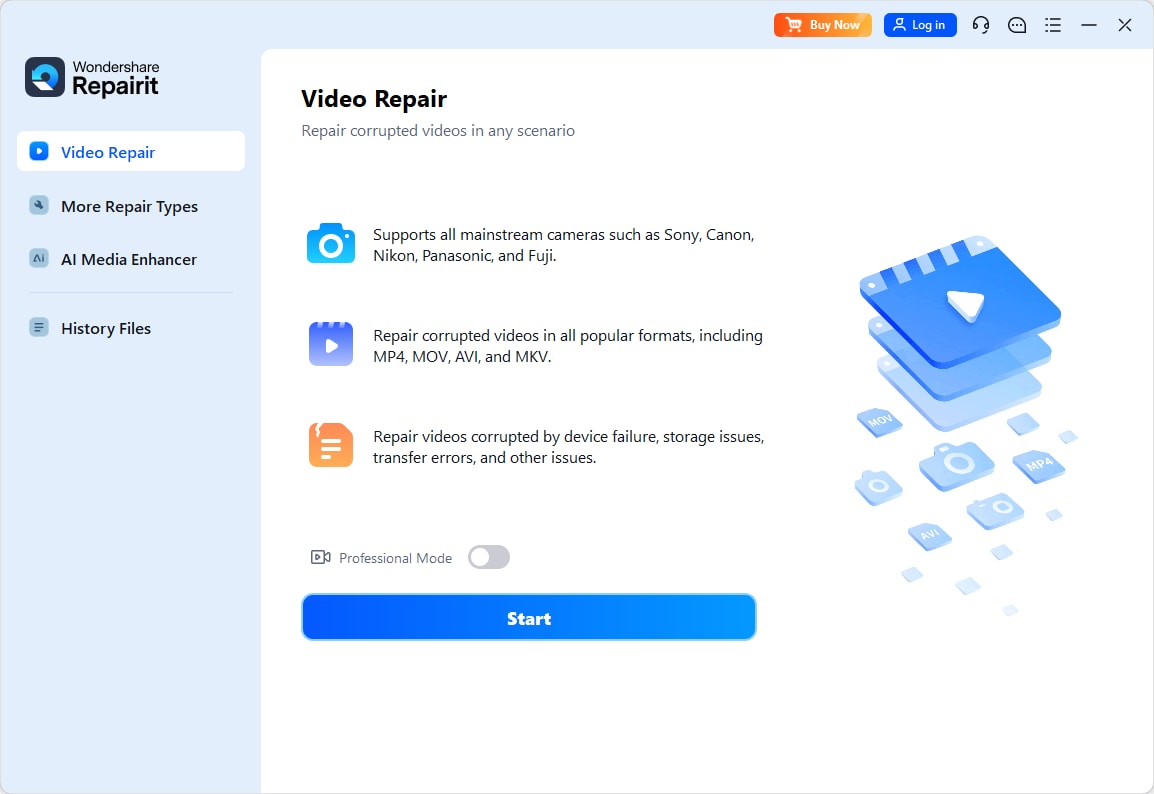
Launch Repairit on your computer and go to the Video Repair module. Click the button to add files, then browse to the folder where your problem clips are stored. Select the videos that freeze, show heavy artifacts, or will not open, and import them into the list so Repairit can inspect their structure and detect broken or missing video keyframe data.
- Repair video files
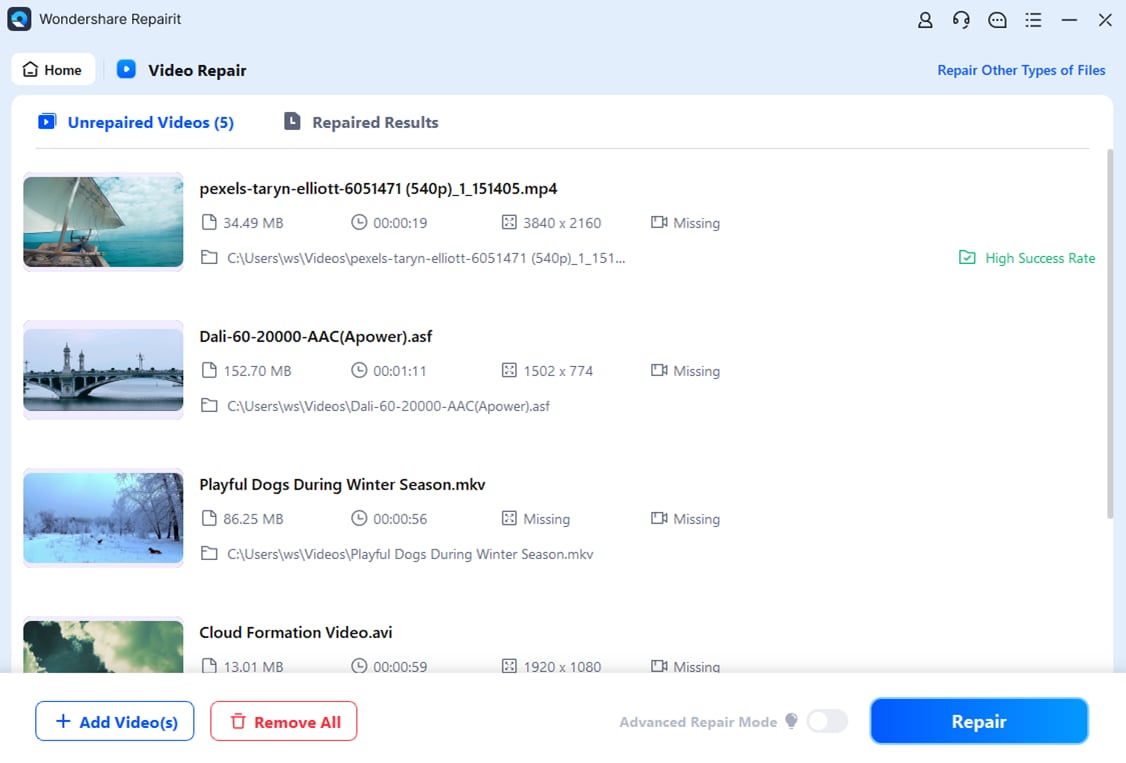
With all damaged clips loaded, start the repair process with one click. Repairit analyzes each file, looking at containers, headers, and GOP structure to locate errors in keyframes and other frame types. It then reconstructs playable streams where possible, helping fix freezes around specific timestamps, random color blocks, or sudden playback stops without forcing you to tweak advanced encoding settings.
- Save the repaired video files
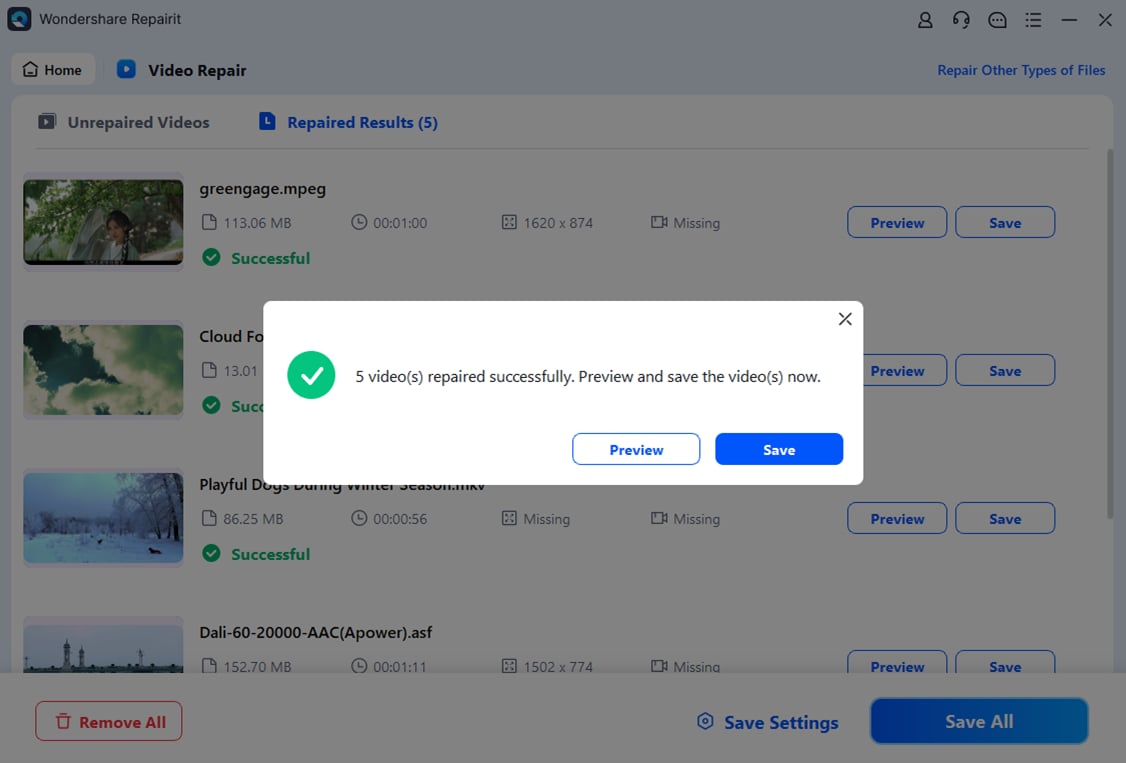
When the repair finishes, preview the fixed videos within Repairit to confirm that playback is smooth and that previous glitches around keyframe positions are gone. If you are satisfied, choose a safe destination folder that is different from the source location and save the repaired copies. Keep the originals as a backup until you have fully checked the results in your editing software, player, or preferred platform.
Conclusion
Video keyframe settings control how each frame in your footage is stored, decoded, and displayed. They influence compression efficiency, file size, editing responsiveness, and how smoothly your videos play or stream. Understanding how a keyframe in video fits into the GOP structure helps you choose better export presets, keep timelines responsive, and meet platform requirements without constant trial and error.
When keyframes or related structural data become corrupted, your clips may freeze, stutter, or fail to open at all. Instead of discarding important recordings, you can use tools like Repairit to fix damaged video files, repair broken keyframes, and recover usable footage with a straightforward workflow.
FAQ
-
1. What is a video keyframe in simple terms?
A video keyframe is a complete, standalone frame that stores the full image, not just the changes from previous frames. Decoders use it as an anchor to rebuild surrounding frames, which is why it is critical for quality, seeking, and playback. -
2. How often should I set keyframes when exporting video?
A practical starting point is a keyframe interval of 1–2 seconds. For 30 fps video, that means placing a keyframe in video every 30–60 frames. Shorter intervals improve seeking and editing precision but increase file size, while longer ones reduce size but can hurt responsiveness. -
3. Why does my video look corrupted around a keyframe?
If data around a keyframe is damaged by bad encoding, storage errors, or interrupted transfers, the decoder cannot correctly reconstruct dependent frames. This often shows up as blocks, color glitches, or freezes that start near the affected keyframe position. -
4. Can re-encoding fix damaged keyframes?
Re-encoding can help only if your player can still read the original stream well enough to decode it. If the file will not open or crashes the player, you usually need repair software like Repairit to rebuild headers and video keyframe structure first, then export a clean copy. -
5. Is using more keyframes always better for quality?
No. Adding more keyframes mainly affects compression efficiency and seek behavior. Real-world quality depends more on bitrate, codec (H.264, H.265, etc.), resolution, and color settings than on simply cranking up the keyframe count.