
Every time you hit record on your phone, choose export settings in an editor, or tweak a streaming profile, you will see options like 720p, 1080p, or 4K. These numbers describe video resolution, a core setting that shapes how sharp your footage looks and how heavy the file becomes. Understanding what is video resolution helps you avoid blurry results, awkward black bars, and needlessly huge uploads across cameras, editing software, and streaming platforms.
Repair Corrupted Files To Save Your Data
 Security Verified. Over 7,302,189 people have downloaded it.
In this article
What Is Video Resolution?
Video resolution is a technical setting that describes how many pixels (tiny squares of color) make up each frame of your video, written as width by height, such as 1920 x 1080. It is a core video parameter that directly influences visual detail and clarity.
When people ask what is video resolution or look for video resolution explained, they are really asking how many pixels their camera or export setting uses to build the image. More pixels usually mean a sharper, clearer picture, while fewer pixels mean a softer, more blocky look.
Resolution works together with other settings like bitrate, frame rate, and codec. In recording apps, editing software, and streaming dashboards, you will typically see resolution listed as labels like 720p, 1080p, 1440p, or 4K, all of which describe different pixel dimensions.
What Does Video Resolution Affect?
Changing video resolution has a direct impact on how your footage looks, how heavy the file is, and how smoothly it plays. It is one of the most important choices for overall video quality and video clarity.
| Aspect | How resolution affects it |
|---|---|
| Sharpness and detail | Higher resolutions like HD vs 4K give more visible detail; low resolutions can look soft or pixelated, especially on big screens. |
| File size and bandwidth | More pixels per frame mean more data; higher resolutions require higher resolution and bitrate, larger files, and more upload speed. |
| Playback and performance | Older devices or slow networks may stutter with 4K but handle 720p or 1080p smoothly. |
| Editing flexibility | Higher resolution gives more room to crop, stabilize, or reframe without the image falling apart. |
| Platform compatibility | Different platforms (YouTube, Instagram, TikTok, streaming services) recommend specific resolutions and aspect ratios for best results. |
If your bitrate is too low for your chosen resolution, compression artifacts such as blockiness and smearing can appear, even if you selected a high resolution. That is why professionals balance resolution with bitrate and codec to keep quality high and avoid oversized files.
How Does Video Resolution Work in Real Use?
Typical video resolution options
Across cameras, phones, and editors, you will see a few common video resolution choices:
- 480p (SD): 640 x 480 or similar; standard definition, small file sizes, now mostly used for low-bandwidth streaming.
- 720p (HD): 1280 x 720; entry-level HD, good for basic online videos and mobile viewing.
- 1080p (Full HD): 1920 x 1080; the common standard for YouTube, live streaming, and consumer cameras.
- 1440p (2K / QHD): 2560 x 1440; sharper than 1080p, popular for gaming and some YouTube content.
- 4K (UHD): 3840 x 2160; very detailed, favored for pro work, high-end YouTube, and future-proofing.
- 8K and above: Used in high-end production; heavy processing and storage demands.
In phones and cameras, you normally pick a combination like "4K 30fps" or "1080p 60fps." In editing and exporting, you choose a project resolution and then an export resolution to match your target platform or device.
Choosing the right resolution for each platform
Resolution should match both your audience and where the video will live. Here is how it plays out in real workflows:
- Recording with smartphones: Many phones default to 1080p, with optional 4K modes. 4K looks better but drains battery and storage faster.
- Editing for YouTube: 1080p is widely accepted, but 4K uploads may get higher-quality encoding and look crisper on modern TVs and monitors.
- Social media stories and Reels: Vertical 1080 x 1920 is common. Here, aspect ratio and framing matter as much as resolution.
- Live streaming: Platforms often recommend 720p or 1080p depending on your upload speed. Higher resolution needs more stable bandwidth.
- Client delivery: Corporate or commercial work is often delivered in 1080p or 4K, depending on the client brief and final screen size.
In each of these cases, you balance video settings such as resolution, bitrate, and frame rate to get good video quality without overwhelming your storage, editing computer, or internet connection.
Common Mistakes and Quick Tips
Frequent misunderstandings
- Assuming resolution alone decides quality. In reality, bitrate, codec, lighting, and camera sensor matter just as much.
- Exporting in 4K from low-quality 720p footage, expecting it to look truly 4K. Upscaling cannot create detail that was never captured.
- Recording at the maximum resolution "just in case," then running out of storage or struggling with slow editing performance.
- Mixing many different resolutions in one timeline without adjusting, which can cause black bars, cropping, or inconsistent sharpness.
Quick tips for better results
- For most online videos, 1080p at a reasonable bitrate gives a strong balance of clarity and file size.
- Use 4K if you plan to crop, reframe, or deliver to large 4K displays, and if your hardware can handle it.
- Match your project and export resolution to your main footage to avoid unnecessary scaling.
- Check platform guidelines (YouTube, Instagram, TikTok, streaming services) for recommended resolutions and bitrates.
- When in doubt, run short test exports at different resolutions and bitrates, then compare quality vs. file size.
Key takeaways: pick resolution based on where your video will be watched, your storage and editing power, and your audience needs. Remember that smart video resolution choices reduce headaches later in your workflow.
How to Use Repairit to Fix a Corrupted Video File
Why use Repairit for high-resolution videos
Even when you choose the perfect video resolution, problems like sudden power loss, faulty memory cards, or conversion errors can leave clips unplayable. Repairit from Wondershare is built specifically to repair damaged or glitchy videos, including HD, Full HD, and hd vs 4k recordings, so you do not have to reshoot important footage. You can learn more and download it from the Repairit official website.
Key features of Repairit
- Repairs videos from popular cameras, phones, action cams, and streaming downloads in multiple formats, including MP4, MOV, and more.
- Supports high-resolution files such as HD, Full HD, and 4K, handling issues like stuttering, freezing, or refusing to open.
- Provides a straightforward preview-and-save workflow so you can confirm the fixed result before exporting your recovered clips.
Step-by-step: fix corrupted high-resolution videos
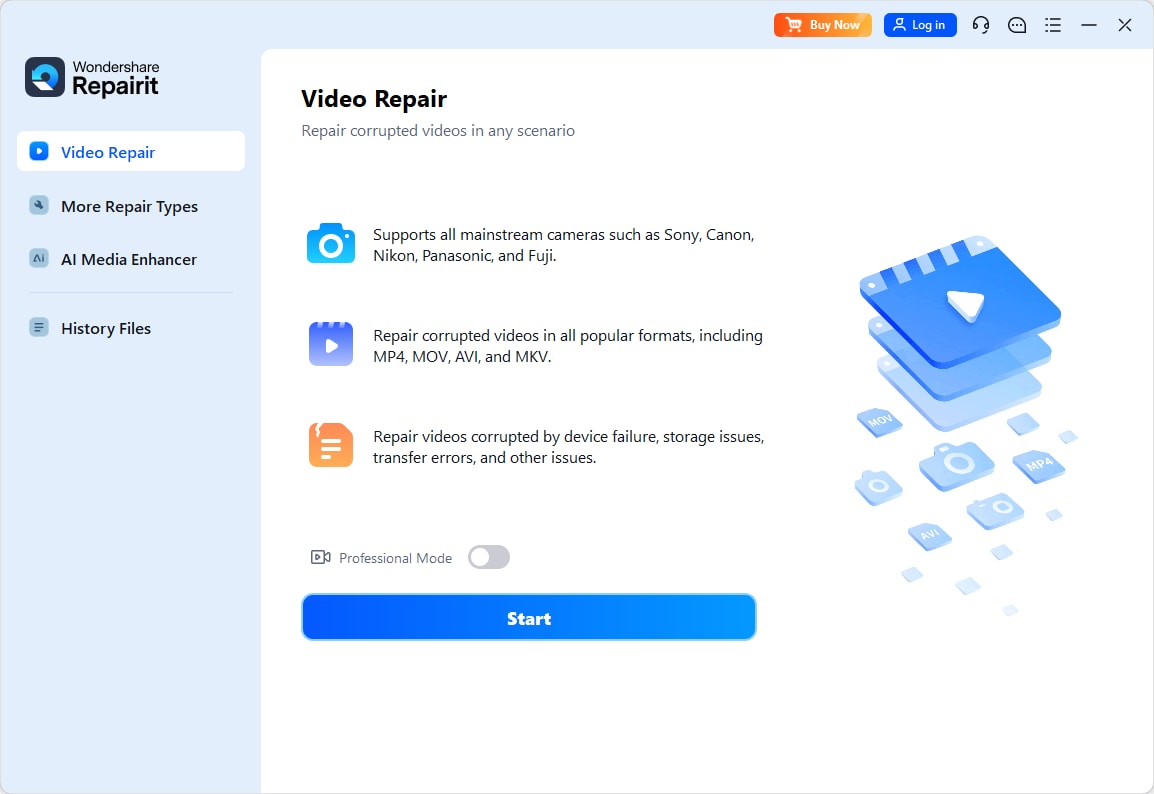
- Add corrupted video files
Install and open Repairit on your computer, then go to the Video Repair module. Click the button to add files and browse to the folder containing your corrupted or unplayable clips. Select one or multiple videos, including large 1080p or 4K files, and confirm so they appear in the file list with details like resolution, duration, and format.
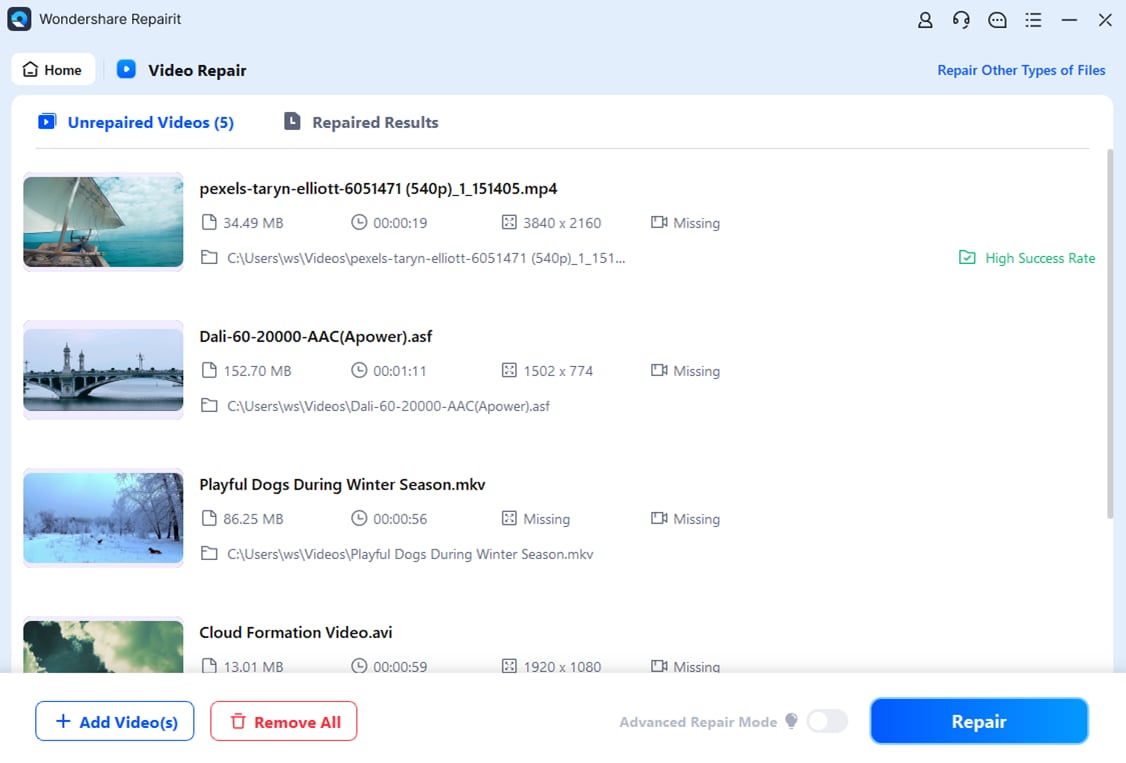
- Repair video files
Once your damaged videos are loaded, start the repair process with a single click. Repairit scans each file for common structural issues, such as broken headers, playback glitches, or audio-video sync errors, and then automatically applies the appropriate fixes. When the process completes, use the built-in preview window to watch the repaired version and confirm that it now plays smoothly and clearly from start to finish.
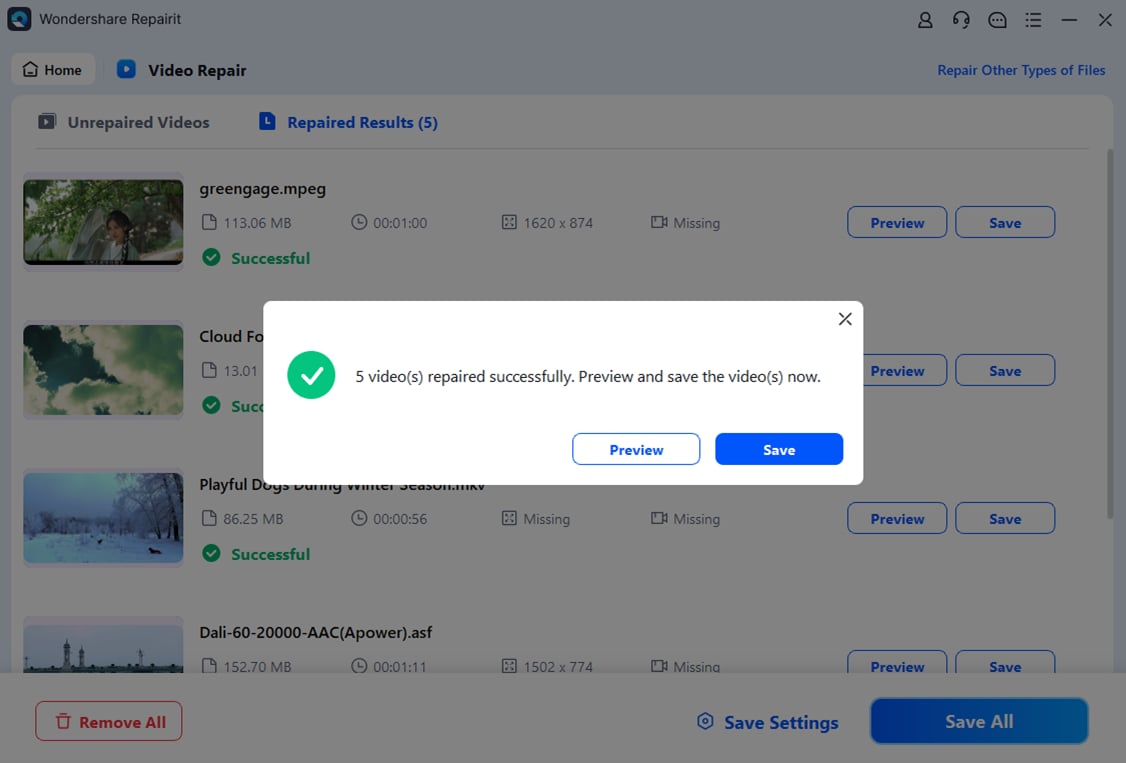
- Save the repaired video files
If you are satisfied with the preview, click to save and choose a secure destination folder on your computer. Repairit will export clean copies of the repaired videos to this location while keeping the original damaged files untouched, so you always retain a backup. You can then edit, share, or archive the recovered high-resolution clips without worrying about sudden errors or playback failures.
Conclusion
Video resolution is the base layer of how sharp and detailed your footage appears, and it controls everything from perceived video quality to file size and streaming performance. By aligning resolution with your target platform, audience, and hardware, you avoid unnecessary blur, stretching, or bandwidth waste.
Once you understand how resolution interacts with bitrate, frame rate, and codec, it becomes easier to create consistent, professional-looking results across devices. And if your high-resolution footage ever becomes corrupted during shooting, transfer, or export, Repairit gives you a practical way to repair damaged video files and protect the quality you worked hard to capture.
Next: What is Video Bitrate?
FAQ
-
1. What is video resolution in simple terms?
Video resolution is the count of pixels in each frame of your video, written as width by height, such as 1920 x 1080. More pixels usually mean more detail and a sharper image on screen. -
2. Is 1080p good enough or do I need 4K?
For most online content and everyday viewing, 1080p offers an excellent balance between clarity and file size. Choose 4K if you want extra detail, plan to crop in editing, or are targeting large 4K TVs and displays. -
3. Why does higher video resolution create larger files?
Higher resolutions pack more pixels into every frame, so each second of video contains more visual data. That extra data requires higher bitrates, which leads to larger files and more bandwidth for upload or streaming. -
4. Can I turn a low-resolution clip into real HD or 4K?
You can upscale low-resolution footage in editing or with AI tools, which may make it look a bit sharper, but you cannot add genuine detail that was never recorded. Upscaled video will not fully match true native HD or 4K quality. -
5. What should I do if a high-resolution video gets corrupted?
Avoid repeatedly re-saving or converting the file, as that can make things worse. Instead, use a dedicated repair tool like Repairit to analyze and repair the corrupted video, then save the recovered version to a safe storage location.




