
When your footage is both corrupted and stored on a drive that might be failing, you need a tool that can handle more than basic playback errors. In this comparison, we will look at how Repairit vs DiskInternals Video Repair stack up, highlighting when a dedicated video-repair workflow makes more sense than a utility that sits closer to disk tools. Use this guide to understand the differences in ease of use, depth of repair, and typical desktop workflows so you can choose the option that fits your situation.
Repair Corrupted Files To Save Your Data
 Security Verified. Over 7,302,189 people have downloaded it.
In this article
- Repairit vs DiskInternals Video Repair: Quick Verdict
- Repairit vs DiskInternals Video Repair: Key Differences
- Repairit vs DiskInternals Video Repair: Comparison Table
- What Repairit and DiskInternals Video Repair Are Best For
- Repairit vs DiskInternals Video Repair: Features and Capabilities
- Repairit vs DiskInternals Video Repair: Supported Formats and Compatibility
- Repairit vs DiskInternals Video Repair: Workflow and Ease of Use
- Repairit vs DiskInternals Video Repair: Pricing and Trial Options
- Who Should Choose Repairit
- Who Should Choose DiskInternals Video Repair
- Pros and Cons of Repairit and DiskInternals Video Repair
- How to Repair Corrupted Videos After Choosing the Right Tool
Repairit vs DiskInternals Video Repair: Quick Verdict
Both tools aim to fix corrupted video files, but they feel quite different in practice. Repairit provides a guided, media-focused environment that usually suits users who just want to restore damaged video playback with minimal configuration. DiskInternals Video Repair feels more like a technical desktop component that sits closer to disk utilities and can appeal to users who already work with storage tools.
If you mainly care about a clear, step-by-step video repair flow for everyday clips, Repairit can be a stronger choice. If your situation often involves problematic drives and recovered files that may need extra repair, DiskInternals Video Repair may be enough as part of that more technical workflow.
Repairit vs DiskInternals Video Repair: Key Differences
The key difference between Repairit vs DiskInternals Video Repair is how each one approaches video repair in your desktop workflow:
- Repair focus vs utility feel: Repairit is designed as a dedicated video repair space, while DiskInternals Video Repair generally feels like a companion to other desktop utilities.
- Ease of use: Repairit leans on a wizard-style process with clear prompts, which can be more comfortable for non-technical users. DiskInternals Video Repair presents options in a way that may feel more familiar to people used to system tools.
- Typical scenarios: Repairit is well-suited to visible corruption, glitches, or playback errors in camera and phone footage. DiskInternals Video Repair often comes into play when files have already been handled by disk tools and you want to see if video playback can be restored.
- Repair depth vs disk context: Repairit emphasizes targeted video repair features, while DiskInternals Video Repair is usually seen in a broader storage context where video repair is one step among others.
Repairit vs DiskInternals Video Repair: Comparison Table
| Dimension | Repairit | DiskInternals Video Repair |
|---|---|---|
| Best for | Users focused on dedicated, guided video repair across many everyday formats | Users balancing storage concerns and damaged video files on desktop |
| Ease of use | Simple, wizard-style interface suited to non-technical users | More technical feel that may suit users comfortable with desktop utilities |
| Repair depth | Stronger choice when you need targeted video repair options | More oriented toward repair in a storage-utility context |
| Workflow | Straightforward media-focused workflow from import to export | Technical desktop workflow that fits disk and system-style tasks |
| Strengths | Clear repair identity, guided process, and broad everyday repair scenarios | Good for storage-adjacent workflows and desktop utility framing |
| Weaknesses | Less aligned for users who mainly need deep disk-level operations | Repair identity is less iconic than dedicated video tools like Repairit |
What Repairit and DiskInternals Video Repair Are Best For
Repairit is positioned as a dedicated video repair solution, while DiskInternals Video Repair leans into a disk-and-utility brand angle with repair-oriented messaging. For users balancing storage and damaged-file concerns, the choice often comes down to whether you want a focused repair environment or a tool that sits closer to traditional desktop utilities.
In many cases:
- Repairit is a better fit if your primary goal is to repair corrupted videos quickly with clear guidance.
- DiskInternals Video Repair may fit when your workflow already involves checking disks, partitions, and other system-level tasks, and video repair is one more step in that environment.
Repairit vs DiskInternals Video Repair: Features and Capabilities
Both tools aim to repair corrupted videos, but they frame their strengths differently. Repairit emphasizes a clear, guided repair experience, while DiskInternals Video Repair often appears alongside drive and utility tools. This makes Repairit feel more like a specialized repair environment and DiskInternals Video Repair more like a technical desktop component for users who are already thinking about disks and storage.
Core capabilities you can expect from both include:
- Scan and repair corrupted or unplayable video files from local storage.
- Support for common consumer video formats used in cameras and phones.
- Desktop-based repair process with files processed locally on your computer.
Beyond the basics, there are some distinctions:
- Repairit offers a more guided workflow that can help with more complex corruption scenarios, especially for people who do not want to tweak many options.
- DiskInternals Video Repair fits naturally into a broader toolkit where you might already be inspecting drives or handling problematic files.
- Both can complement steps you take to safeguard files, though Repairit maintains a stronger standalone repair identity focused specifically on video and media repair.
Repairit vs DiskInternals Video Repair: Supported Formats and Compatibility
Both Repairit and DiskInternals Video Repair are designed for common desktop workflows and typically handle widely used video formats from cameras, phones, and storage media. While exact format lists can change by version, it is reasonable to expect support for mainstream container types and codecs used in everyday recording devices.
Repairit tends to focus on broad, everyday playback and corruption issues. This can be useful if your clips come from a mix of smartphones, action cameras, DSLRs, or screen recordings. DiskInternals Video Repair is often used in situations where files have been moved around or recovered from problematic drives or partitions and need an extra repair pass to restore damaged video playback.
If your workflow relies on niche or professional codecs, it is a good idea to test sample clips with each tool s trial version to confirm compatibility before committing.
Repairit vs DiskInternals Video Repair: Workflow and Ease of Use
Workflow and ease of use are usually the deciding factors in the Repairit vs DiskInternals Video Repair comparison.
Repairit targets a straightforward, media-first experience, which can feel more approachable if you prefer a clear step-by-step repair path over a technical desktop workflow. You typically import the damaged file, let the software analyze it, and then preview and export the repaired version, without needing to understand low-level settings.
DiskInternals Video Repair aligns more with traditional desktop utilities, which may appeal to users who already work with system tools and are comfortable navigating dialogs, settings, and more technical options. The experience can feel more utilitarian, which is helpful if you like that style, but it may be less inviting for beginners who only want to fix one broken clip.
Repairit vs DiskInternals Video Repair: Pricing and Trial Options
Both Repairit and DiskInternals Video Repair are typically offered as desktop software with paid plans, and many users will encounter them through trial or limited versions.
Instead of focusing on exact prices, which can change over time, consider the following approach:
- Compare which feature set, repair depth, and user experience best matches your skill level and workflow.
- Use the free or trial options from each vendor to test how well they fix unplayable video files from your own devices.
- Evaluate not only whether a clip plays again, but also whether the process feels comfortable enough to repeat when future videos are corrupted.
In many cases, running a trial on a few sample files is the most reliable way to see which tool delivers the balance of repair quality and usability you need.
Who Should Choose Repairit
Repairit is generally a strong match for users who prioritize a focused, media-centric repair experience over a utility-style interface.
- Users who want a guided, media-focused video repair workflow.
- People dealing with visibly corrupted videos from cameras, phones, or memory cards.
- Creators and editors who prioritize ease of use and a clear interface.
- Anyone needing a recognizable, dedicated video repair tool for recurring issues.
If you often receive broken footage from different sources and want a repeatable way to repair corrupted video files without digging into technical options, Repairit can be a better fit.
Who Should Choose DiskInternals Video Repair
DiskInternals Video Repair can make sense if your work already involves dealing with problematic storage or system-level checks and you want a tool that feels consistent with that environment.
- Users who already work with disk and system utilities on desktop.
- People balancing storage concerns and damaged video files in one environment.
- Technically inclined users who do not mind a more utility-driven workflow.
- Situations where videos from a problem drive or partition need additional repair to restore playback.
If you are comfortable with a more technical style of interface and like having multiple storage-related utilities from the same vendor, DiskInternals Video Repair may integrate more naturally into your existing toolkit.
Pros and Cons of Repairit and DiskInternals Video Repair
Looking at pros and cons side by side can clarify when each tool is the better fit for repairing corrupted videos.
Repairit Pros and Cons
DiskInternals Video Repair Pros and Cons
How to Repair Corrupted Videos After Choosing the Right Tool
Once you have compared Repairit vs DiskInternals Video Repair and decided which style of workflow suits you, the next step is actually fixing your corrupted clips. Regardless of which utility you keep in your toolkit, it can be helpful to see what a guided, media-first repair flow looks like in practice.
Below we will walk through how to repair corrupted videos using Repairit as an example. This does not prevent you from also trying DiskInternals Video Repair, but it shows how a dedicated video repair environment can streamline the process from import to export.
Key Features
Some capabilities that make Repairit practical for everyday video issues include:
- Dedicated video repair interface with a straightforward process.
- Support for many common video formats used in consumer and professional workflows.
- Guided repair that helps non-technical users handle complex corruption.
Step-by-step guide
Here is a simple example workflow for using Repairit to restore damaged video playback on your desktop.
- Add corrupted videos
Launch Repairit and import the damaged video files from your computer or external drive using the add or import option, so they appear in the repair list.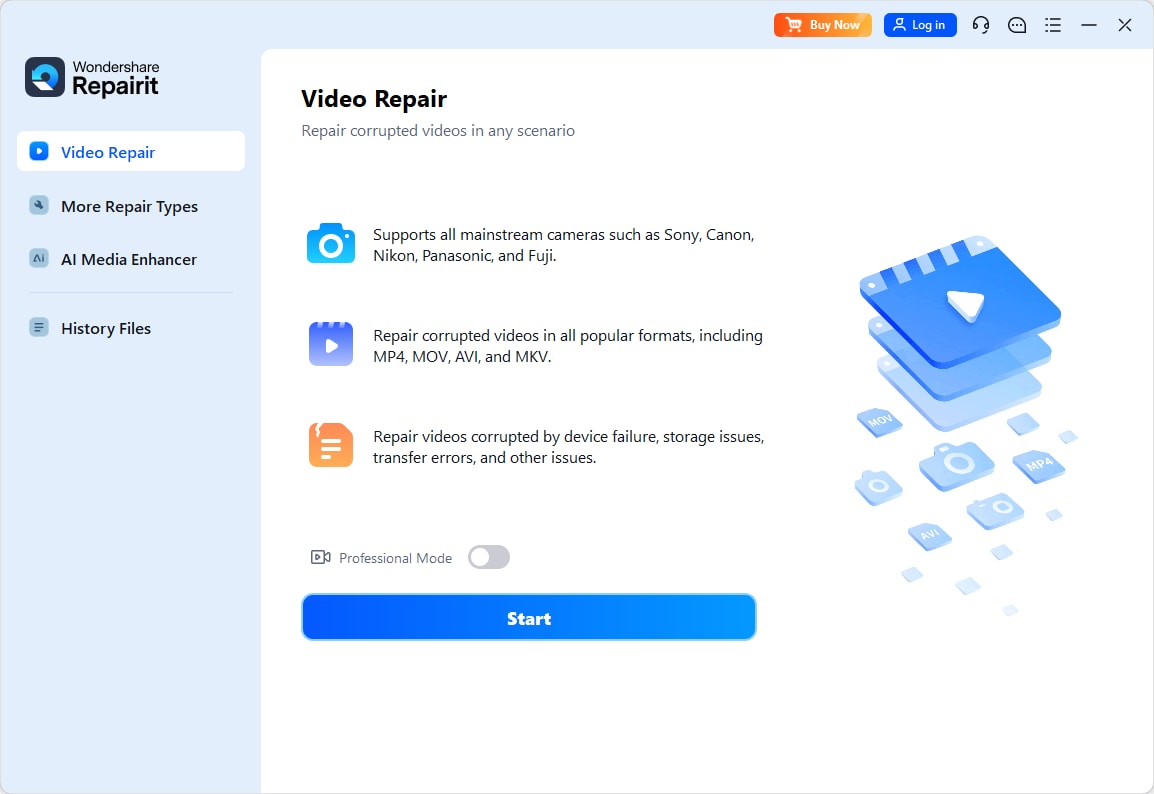
- Run the repair
Click the repair button to let Repairit analyze each selected file and run its repair engine. In most cases, you only need to confirm the action and wait while the progress bar completes.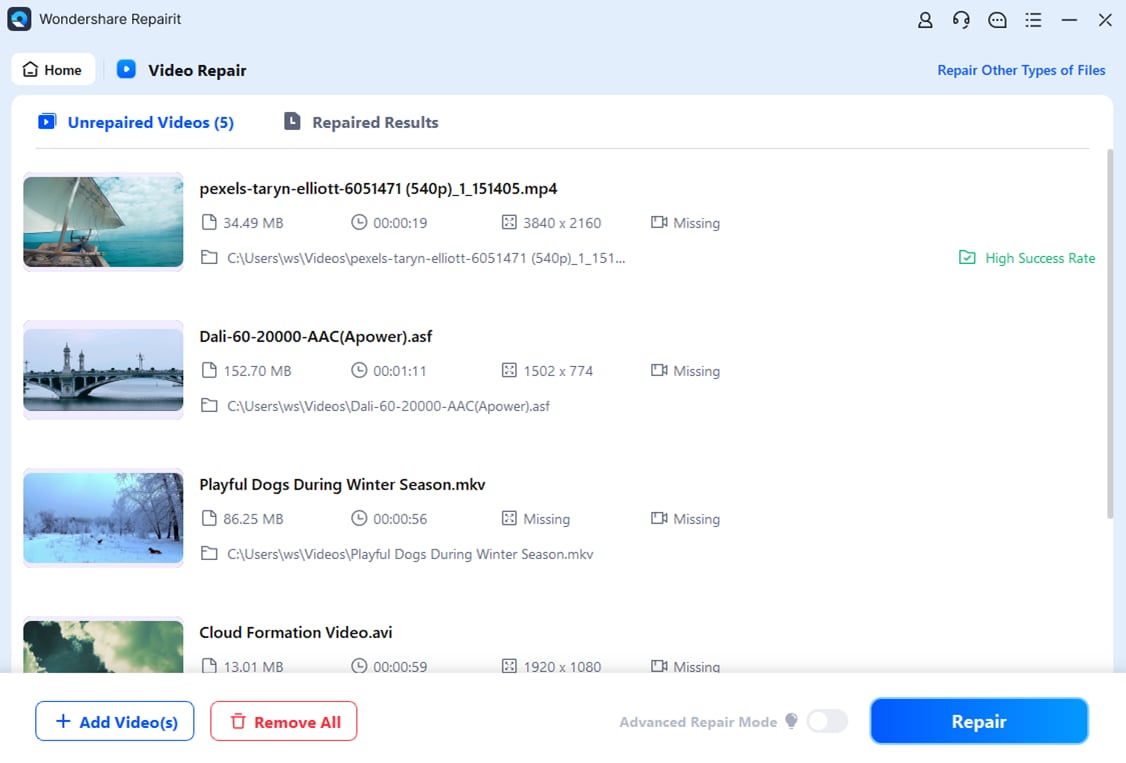
- Preview and export
When the repair finishes, preview the videos inside Repairit to confirm that playback issues are resolved, then export the fixed files to a safe folder or backup location.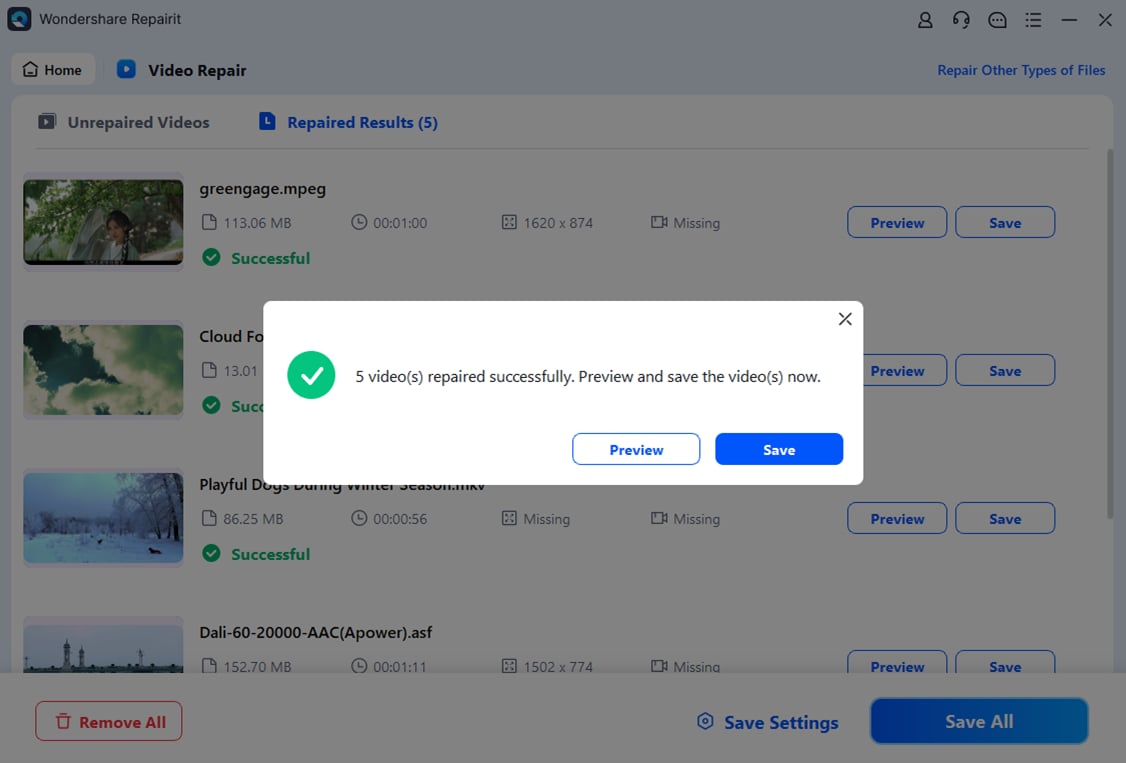
Final Verdict
Repairit is a stronger choice for users who want a clear, dedicated space for repairing corrupted videos, especially when ease of use and guided steps matter more than integrating with other desktop utilities. It typically suits creators, editors, and anyone facing recurring video corruption from cameras, phones, or memory cards.
DiskInternals Video Repair may be enough if you already use DiskInternals tools for handling drives or partitions and simply need a repair option close to that workflow. In that case, its more technical desktop approach can fit well, while Repairit remains the better fit when your priority is focused, user-friendly video repair.
For many people, the most balanced solution is to keep both styles of tools in mind: use a dedicated environment like Repairit for day-to-day video repair software needs, and reach for DiskInternals Video Repair when your situation is tied to more complex storage issues.
FAQ
-
1. Is Repairit better than DiskInternals Video Repair for everyday corrupted videos?
For most everyday corrupted videos from cameras and phones, Repairit is often a stronger choice because it offers a more focused, guided repair experience that feels approachable for non-technical users. -
2. When should I use DiskInternals Video Repair instead of Repairit?
DiskInternals Video Repair may be preferable if you are already working with DiskInternals utilities on the same machine and want a video repair option that fits into that more technical desktop workflow. -
3. Can I use both Repairit and DiskInternals Video Repair on the same files?
Yes, you can run DiskInternals Video Repair on a damaged file and then try Repairit if the video still does not play properly, or the other way around, to see which workflow yields better playback in your situation. -
4. Which tool is easier for non-technical users, Repairit or DiskInternals Video Repair?
Repairit is generally easier for non-technical users because it emphasizes a simple, media-focused interface instead of a utility-style environment with more technical options. -
5. How do I decide between Repairit vs DiskInternals Video Repair?
Consider whether you prefer a dedicated, guided video repair experience or a tool that lives alongside disk utilities, then test both with trial versions to see which one repairs your sample files more comfortably.