
When a video refuses to play smoothly, many users turn to the HandBrake Repair Method as a quick workaround, re-encoding the file in hopes of getting a clean, playable copy. While this transcode-based strategy can help with certain glitches, it is not designed as a dedicated repair solution. In this guide, we compare Repairit vs HandBrake Repair Method side by side so you can see when simple re-encoding is enough and when purpose-built video repair software offers a more reliable path to rescuing damaged playback.
Repair Corrupted Files To Save Your Data
 Security Verified. Over 7,302,189 people have downloaded it.
In this article
- Repairit vs HandBrake Repair Method: Quick Verdict
- Repairit vs HandBrake Repair Method: Key Differences
- Repairit vs HandBrake Repair Method: Comparison Table
- What Repairit and HandBrake Repair Method Are Best For
- Repairit vs HandBrake Repair Method: Features and Capabilities
- Repairit vs HandBrake Repair Method: Supported Formats and Compatibility
- Repairit vs HandBrake Repair Method: Workflow and Ease of Use
- Repairit vs HandBrake Repair Method: Pricing and Trial Options
- Who Should Choose Repairit
- Who Should Choose HandBrake Repair Method
- Pros and Cons of Repairit and HandBrake Repair Method
- How to Repair Corrupted Videos After Choosing the Right Tool
Repairit vs HandBrake Repair Method: Quick Verdict
In most cases, Repairit is a stronger choice when you are dealing with clearly corrupted or unplayable video files and need software that focuses on repairing damaged structures and restoring playback. The HandBrake Repair Method, by contrast, is best viewed as a free re-encoding workaround for videos that still play but show glitches or compatibility issues.
If your clips will not open, freeze consistently, or show obvious corruption, a dedicated repair workflow such as Repairit generally fits better. If your footage mostly works and you just want to normalize problematic files by converting them to a more compatible format, running a HandBrake transcode can be a practical first attempt.
Repairit vs HandBrake Repair Method: Key Differences
The key distinction in this Repairit vs HandBrake Repair Method comparison is intent: Repairit is designed around repairing corrupted videos, while the HandBrake approach focuses on re-encoding as an indirect fix.
- Purpose: Repairit aims to analyze and repair video corruption, whereas HandBrake mainly re-encodes files into new containers and codecs.
- Repair depth: Repairit targets structural issues that can break playback; the HandBrake method can help with mild issues but is not a full structural repair tool.
- Workflow: Repairit offers a guided, repair-first interface; HandBrake requires more manual decisions about codecs, bitrate, and resolution.
- Cost: Repairit is commercial software with paid plans, while HandBrake is free and open source.
- Best fit: Repairit tends to suit seriously corrupted or unplayable files, while the HandBrake method is better for playable but troublesome videos that might improve after re-encoding.
Repairit vs HandBrake Repair Method: Comparison Table
| Dimension | Repairit | HandBrake Repair Method |
|---|---|---|
| Best for | Users needing dedicated repair of corrupted or unplayable video files | Users trying to normalize troublesome files through re-encoding |
| Ease of use | Guided, repair-focused interface suitable for most levels | Straightforward but more technical choices for formats and settings |
| Repair depth | Designed to address structural video and playback issues | Not true structural repair, mainly helpful for milder issues |
| Workflow | Automated, repair-led workflow with minimal manual tweaking | Manual and conversion-led, based on transcoding settings |
| Strengths | Focused repair engine, broader support for corrupted scenarios | Free, good for conversion-based fixes, useful in simple workflows |
| Weaknesses | Dedicated tool that may be more than needed for light glitches | May fail on badly corrupted files and can degrade quality if misused |
What Repairit and HandBrake Repair Method Are Best For
The HandBrake Repair Method is a transcode-based workaround that treats problems by re-encoding video into a fresh file. It is best for users trying to normalize troublesome files through re-encoding rather than deeply repairing damaged data. Compared with Repairit, this approach is more about conversion than true repair, which matters if your video is heavily corrupted or completely unplayable.
In practical terms, many users start with HandBrake when they suspect a compatibility or encoding-profile issue. If re-encoding fails, or the video is clearly corrupted from the start, moving to a dedicated tool like Repairit usually makes more sense.
Repairit vs HandBrake Repair Method: Features and Capabilities
Repairit focuses on dedicated video repair, while the HandBrake Repair Method relies on re-encoding as an indirect fix. HandBrake is free and well suited for conversion-based fixes in simple workflows, but it is not a true structural repair tool and may struggle with badly corrupted files. Repairit is built to analyze and restore damaged content where simple transcoding does not go far enough.
At a basic level, both methods create new output files, but they approach the job differently.
- Repairit offers guided video repair for a range of corruption symptoms.
- HandBrake provides free transcoding with options to change codec, resolution, and bitrate.
- Both can output new video files that may play better than the originals in some cases.
Looking at more advanced use, capabilities also diverge.
- Repairit focuses on repairing structural issues that can prevent playback and cause persistent glitches.
- HandBrake allows advanced encoding settings that can be tuned for compatibility, size, and general video delivery.
- Repairit can be used in more complex repair scenarios where re-encoding alone is not sufficient to restore smooth playback.
Repairit vs HandBrake Repair Method: Supported Formats and Compatibility
Repairit is designed to work with many commonly used camera, phone, and downloaded video formats, making it versatile across devices. This can be important if you regularly handle footage from various cameras, action cams, or smartphones and encounter unexpected corruption or unplayable clips.
The HandBrake Repair Method inherits HandBrake's broad format conversion support, which is helpful when you want to re-encode into more compatible formats or standard containers. For routine compatibility fixes and converting a file into a player-friendly format, HandBrake can often be enough.
If you are dealing with severely corrupted footage from varied sources, however, a repair-focused approach like Repairit is usually more appropriate than relying on compatibility alone.
Repairit vs HandBrake Repair Method: Workflow and Ease of Use
The HandBrake Repair Method is a manual and conversion-led process, where you select codecs, quality, and other options before each re-encode. This can be flexible, but it also introduces some trial and error, especially for users who are not familiar with bitrates, containers, and encoding presets.
Repairit focuses on a repair-first workflow. You add the damaged video, start the repair, and then check the result. The interface keeps steps simple and reduces the need for technical encoding decisions, which can save time for people who mainly want a playable file back rather than tuning encoding parameters.
For users comfortable with tinkering, HandBrake gives detailed control. For users who prefer guided steps focused on fixing corruption, Repairit generally feels more straightforward.
Repairit vs HandBrake Repair Method: Pricing and Trial Options
Repairit is a dedicated commercial video repair solution. Access to full repair features typically requires a paid plan, though trial options are often available so you can test basic capabilities and evaluate results on your own clips before committing.
The HandBrake Repair Method is based on HandBrake, which is free and open source. There is no license fee, making it attractive for budget-conscious users or anyone who only occasionally needs to re-encode troublesome videos.
However, when files are badly damaged, free re-encoding may not replace the value of deeper repair. In those situations, paying for a specialized tool can be more cost-effective than repeatedly attempting conversions that still leave the file unplayable.
Who Should Choose Repairit
Repairit tends to be the better fit when the main priority is to repair corrupted videos rather than simply convert them into another format. You might lean toward Repairit if the following points sound familiar:
- Users with severely corrupted or completely unplayable video files.
- People who prefer a guided repair workflow over manual encoding tweaks.
- Creators and professionals who need to salvage important footage for clients or personal projects.
- Anyone who has already tried re-encoding with HandBrake and still faces playback issues.
In these situations, a dedicated repair engine can give you a more focused path toward restoring damaged playback.
Who Should Choose HandBrake Repair Method
The HandBrake Repair Method makes sense if you mainly want a free way to experiment with re-encoding and format changes to smooth out minor issues. It may be a good fit for:
- Users trying to normalize troublesome files through re-encoding.
- People who want a free, conversion-based workaround for mild glitches or format mismatches.
- Those comfortable with manual, conversion-led workflows and encoding choices, including codec, resolution, and quality settings.
- Anyone dealing with playable but problematic files that may respond to transcoding into a more standard format.
In short, the HandBrake method is more about optimizing and converting than deeply repairing damaged content.
Pros and Cons of Repairit and HandBrake Repair Method
Repairit Pros and Cons
HandBrake Repair Method Pros and Cons
How to Repair Corrupted Videos After Choosing the Right Tool
Once you understand how Repairit vs HandBrake Repair Method compare, the next step is actually fixing your corrupted or glitchy videos. Many users try a quick HandBrake re-encode first; if that does not resolve the problem or the file is already unplayable, moving to a guided repair workflow can be more productive.
Repairit offers a practical way to follow that repair-first path. Instead of tweaking encoding settings, you focus on adding the damaged videos, running a repair, and checking whether playback has improved.
Key Features
- Dedicated workflows for repairing corrupted or unplayable videos.
- User-friendly interface aimed at non-technical and advanced users alike.
- Support for many common formats from cameras, phones, and online sources.
Step-by-step guide
- Add corrupted videos
Open Repairit, choose the video repair module, and add the corrupted or unplayable clips from your computer, camera card, or external drive.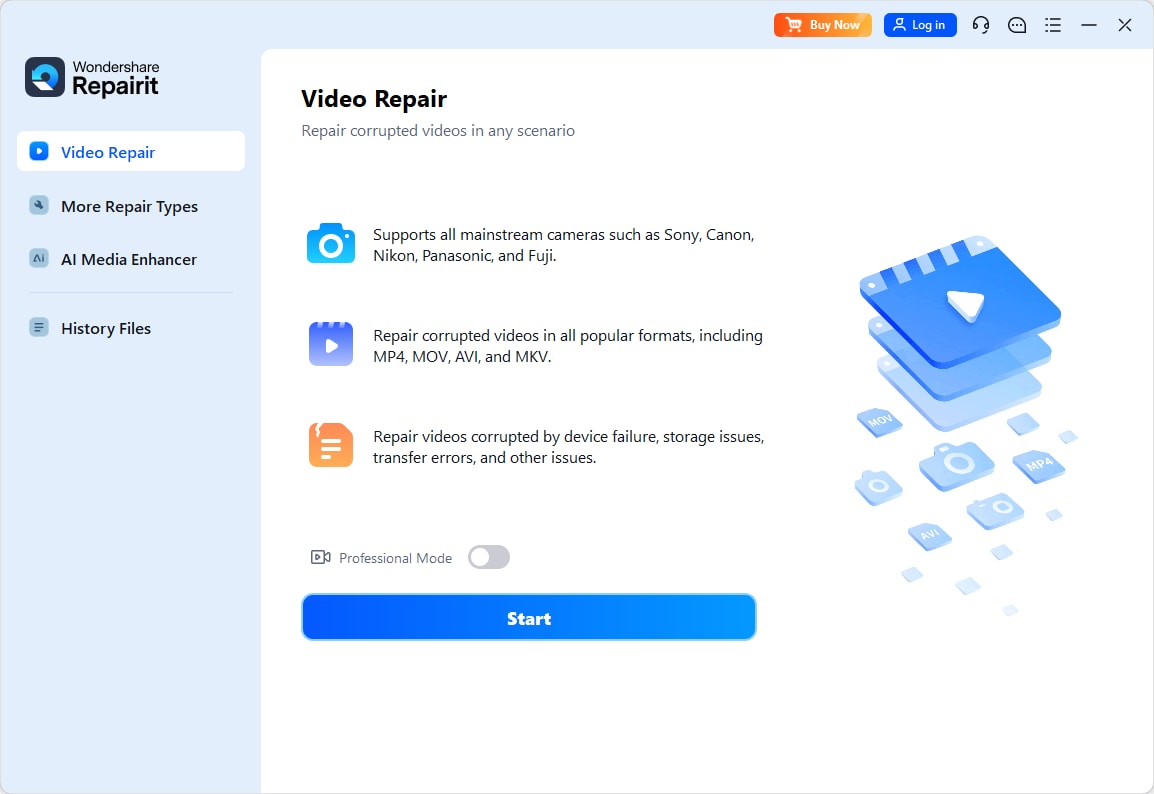
- Run the repair
Start the repair process so Repairit can analyze the file and attempt to fix structural issues that affect playback.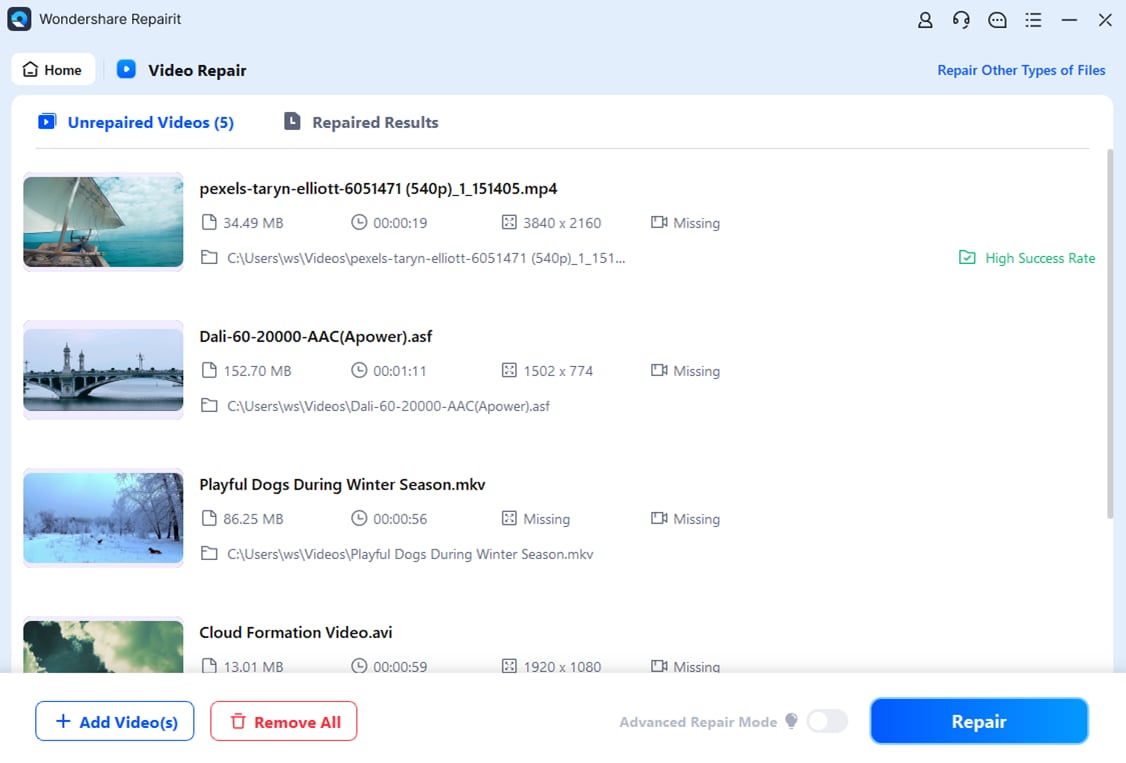
- Preview and export
After the repair finishes, preview the result and, if the video plays correctly, export the repaired file to a safe location.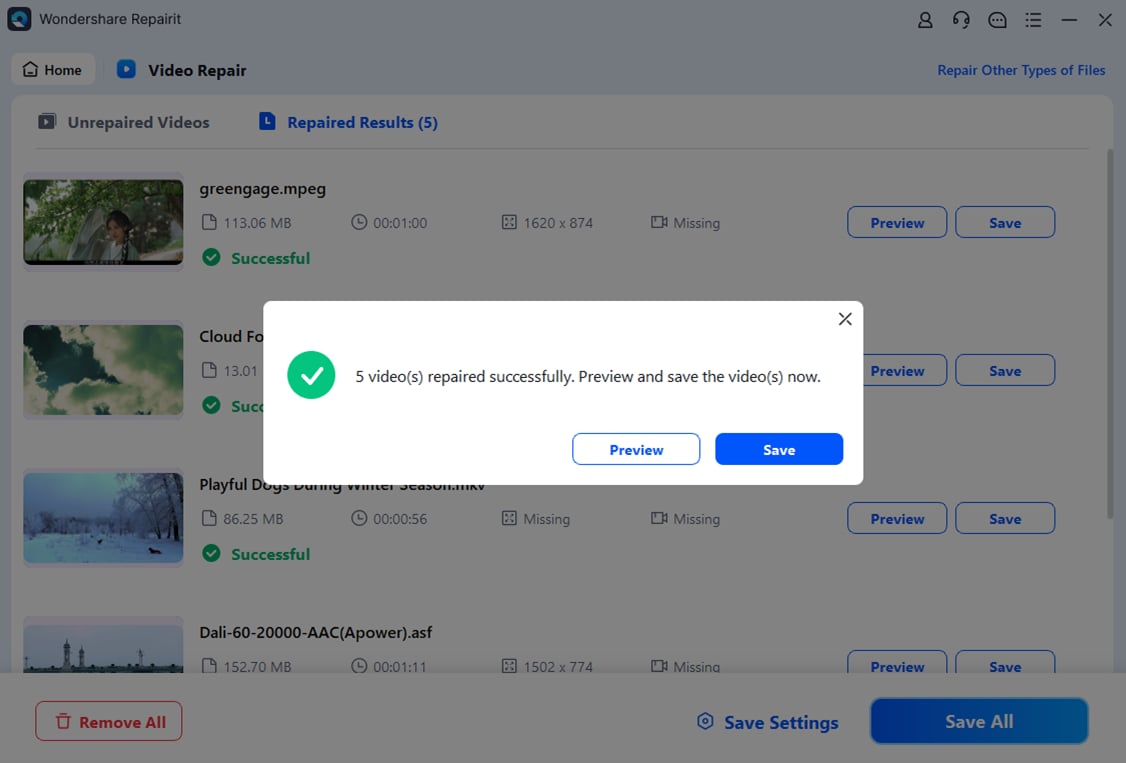
Final Verdict
For users dealing with serious corruption or videos that simply refuse to play, Repairit is often a stronger choice because it is designed specifically for repair rather than just conversion. Its guided workflow and repair-focused engine can handle scenarios where re-encoding alone falls short.
The HandBrake Repair Method may still be enough if your files are mostly playable but glitchy, you are comfortable with manual transcoding, and you primarily want a free way to normalize formats or fix mild compatibility issues. Many users start with HandBrake and turn to Repairit when they need deeper, more reliable repair results.
Ultimately, the best approach depends on the condition of your footage and how hands-on you want to be. If you are troubleshooting minor issues, a HandBrake transcode is worth a try; if those attempts fail or the video is clearly corrupted, investing time in a repair-focused tool like Repairit can give you a better chance of restoring smooth playback.
FAQ
-
1. Is Repairit better than the HandBrake Repair Method for corrupted videos?
Repairit is generally a stronger choice for clearly corrupted or unplayable videos because it focuses on repairing structural issues, while the HandBrake Repair Method is mainly a re-encoding workaround that helps more with milder glitches and compatibility problems. -
2. When should I try the HandBrake Repair Method instead of Repairit?
You may want to try the HandBrake Repair Method first if your video still plays but shows minor stutters, audio hiccups, or format incompatibilities, and you prefer a free, conversion-based approach before considering dedicated repair software. -
3. Can HandBrake fully repair badly corrupted video files?
HandBrake is not designed for true structural video repair, so it may not fix badly corrupted files; its strength is re-encoding, which can sometimes improve playback in lighter cases but usually cannot resolve severe corruption.