
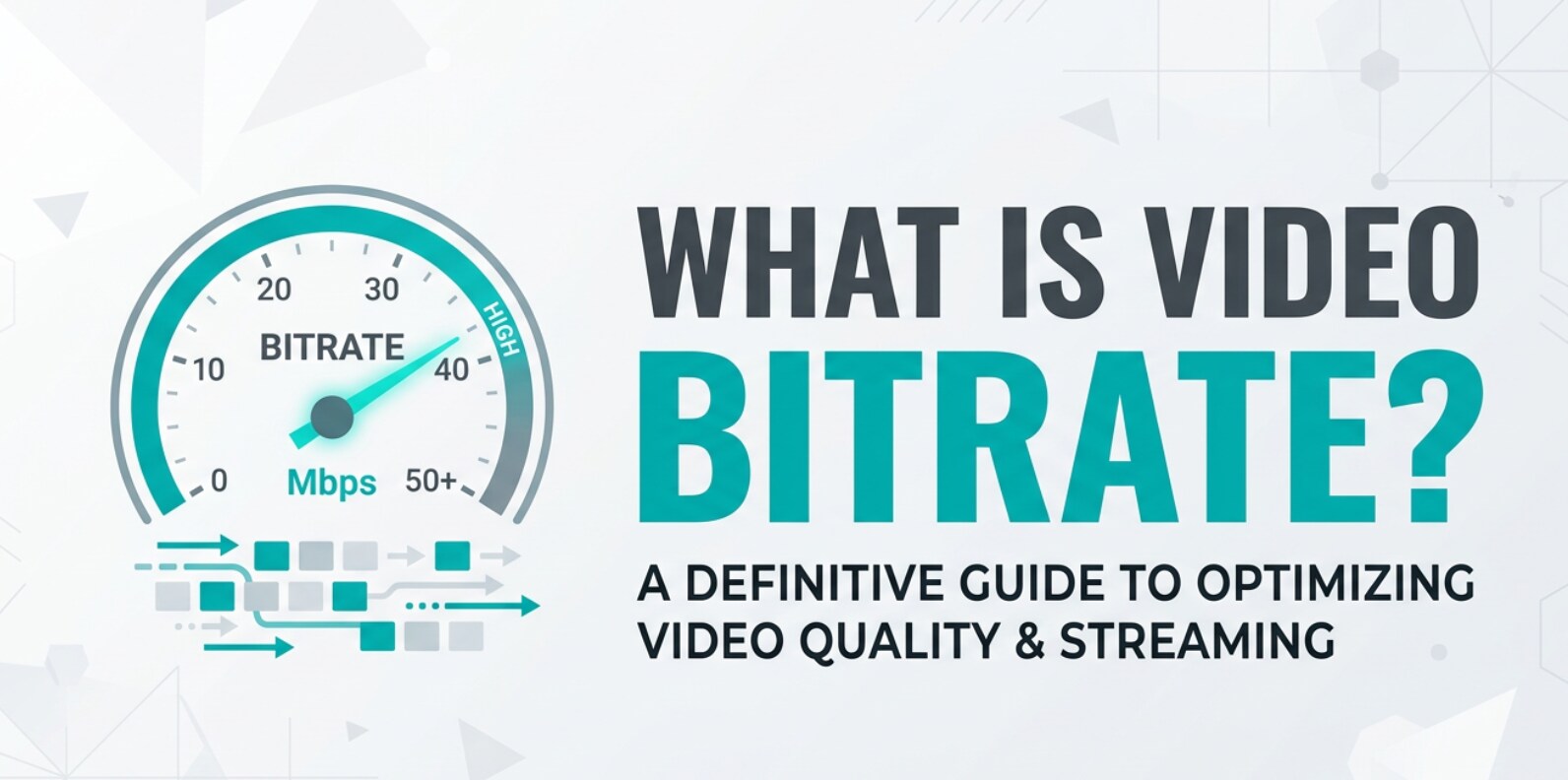
You will see the term video bitrate everywhere: on camera menus, export windows in editors like Premiere Pro, and live streaming dashboards on YouTube or Twitch. It simply describes how much data your video uses every second, but that number quietly controls how sharp your footage looks, how smoothly it streams, and how large your files become. Understanding bitrate helps you avoid blurry uploads, endless render times, and bulky files that are hard to share or store.
Repair Corrupted Files To Save Your Data
 Security Verified. Over 7,302,189 people have downloaded it.
In this article
What Is Video Bitrate?
Video bitrate is the amount of data your video uses every second, usually measured in kilobits per second (kbps) or megabits per second (Mbps). It is a core video parameter that describes how heavily compressed your footage is and how much information is preserved.
In simple terms, bitrate is like the "data budget" for every second of your clip. A higher bitrate for video gives the encoder more data to describe fine details, textures, and motion, while a lower bitrate forces the encoder to throw away more information to keep the file size smaller.
Bitrate belongs to the family of encoding and compression settings along with resolution, frame rate, and codec. When you choose a preset such as 1080p YouTube export or 4K high-quality master, the software is really choosing a combination of those settings, including the target video bitrate.
What Does Video Bitrate Affect?
The bitrate for video has a direct impact on several aspects of how your footage looks and behaves:
- Visual quality and clarity: Higher bitrate usually means sharper details, fewer compression blocks, and cleaner gradients. At too low a bitrate, fast motion smears, edges look jagged, and you may see visible macroblocking.
- File size: Bitrate is the main factor that controls video size. Double the bitrate (with the same length, resolution, and codec), and you almost double the file size.
- Streaming stability: For live streaming or online playback, bitrate determines how much bandwidth is needed. If your chosen best bitrate for streaming is higher than your upload speed or your viewers' download speed, they will see buffering or automatic quality drops.
- Playback performance: Extremely high bitrates can be hard for older devices, slower storage, or low-powered hardware to decode smoothly, causing stuttering or dropped frames.
- Storage and workflow: High-bitrate recording formats (such as ProRes or high-bitrate H.264/H.265) eat through memory cards and hard drives faster but provide more room for color correction and editing.
Bitrate works together with other parameters. The same bitrate will behave differently at 480p, 1080p, and 4K because higher resolutions need more data to maintain the same level of detail. That is why people often compare bitrate vs resolution when tuning exports or live streams.
How Does Video Bitrate Work in Real Use?
Bitrate in recording and editing
When you record on a camera, phone, or drone, you often see options like "High quality," "Standard," or specific Mbps values such as 50 Mbps or 150 Mbps. These are presets for the video bitrate used during recording.
- Action cameras and drones: These often offer high bitrates (e.g., 100–200 Mbps for 4K) to keep details in fast-moving scenes such as sports or aerial shots.
- Smartphones: A 4K 60 fps mode may use a much higher bitrate than 1080p 30 fps to maintain acceptable quality, especially in complex scenes.
- Professional cameras: They may provide different codecs and bitrates (Long-GOP, All-I, ProRes) so you can choose between smaller files or more robust editing formats.
In editing software (Premiere Pro, Final Cut Pro, DaVinci Resolve, etc.), the original recording bitrate affects how much detail you can push in color grading, reframing, or visual effects. Footage shot at very low bitrate tends to break apart quickly under heavy editing, while higher-bitrate sources are more forgiving.
Bitrate in exporting and streaming
When exporting a project, you typically pick a codec (H.264, H.265, ProRes, etc.), resolution, frame rate, and a target video bitrate. You may see modes like CBR (constant bitrate) or VBR (variable bitrate):
- CBR: Keeps the bitrate the same throughout the whole video. This is common in live streaming because it is predictable for networks.
- VBR: Adjusts bitrate according to scene complexity, saving data on simple shots and spending more bits on complex motion or detail. This is often recommended for file-based exports.
Streaming platforms publish recommended video quality settings that list ideal bitrates for each resolution and frame rate. For example, YouTube might suggest around 8–12 Mbps for 1080p 60 fps live streaming in H.264, while 4K may require 20–51 Mbps depending on frame rate and codec.
Matching bitrate vs resolution correctly ensures that your uploads process quickly, look good, and play back smoothly on a wide range of devices and internet connections.
| Resolution and frame rate | Typical streaming bitrate range (H.264) |
|---|---|
| 720p 30 fps | 2,500–4,000 kbps |
| 1080p 60 fps | 4,500–9,000 kbps |
| 1440p or 4K (various fps) | 9,000–25,000+ kbps |
Common Mistakes and Quick Tips
Frequent bitrate mistakes
- Assuming higher is always better: Pushing bitrate far beyond platform recommendations rarely improves visible quality but makes uploads slower and files unnecessarily large.
- Ignoring internet upload speed: For live streaming, choosing a high bitrate without enough upload headroom leads to dropped frames and buffering.
- Mismatching bitrate and resolution: Using a very low bitrate for 4K or high frame rate footage creates muddy, blocky results that look worse than properly tuned 1080p.
- Over-compressing multiple times: Re-encoding the same file repeatedly at low bitrates compounds artifacts and degrades quality quickly.
Quick bitrate tips for beginners
- Follow each platform's official recommended bitrate tables for uploads or streams.
- Test a short 20–30 second clip at different video quality settings and compare visually before rendering an entire project.
- For live streaming, keep your chosen bitrate under 70–75% of your measured upload speed to stay safe.
- When in doubt, prioritize consistent, smooth playback over chasing extreme bitrates that your hardware or network cannot handle.
- Keep original, higher-bitrate masters archived; create smaller versions only for specific platforms or devices.
How to Use Repairit to Fix a Corrupted Video File
Why use Repairit for bitrate-related video issues?
Even when you choose the ideal video bitrate, files can become corrupted during recording, transfer, editing, or export. Wondershare Repairit is a dedicated media repair tool designed to fix damaged, unplayable, or glitchy clips across many formats and bitrates. It analyzes the internal structure of your files, repairs broken headers and data blocks, and restores playable output with minimal manual effort. You can learn more on the Repairit official website.
Key features of Repairit for video repair
- Repairs various video formats from cameras, phones, and drones, including high-bitrate recordings.
- Fixes playback problems such as freezing, stuttering, artifacts, or missing audio after export or transfer.
- Offers a simple workflow with preview, so you can check repaired videos before saving them.
Step-by-step: Repair corrupted video files with Repairit
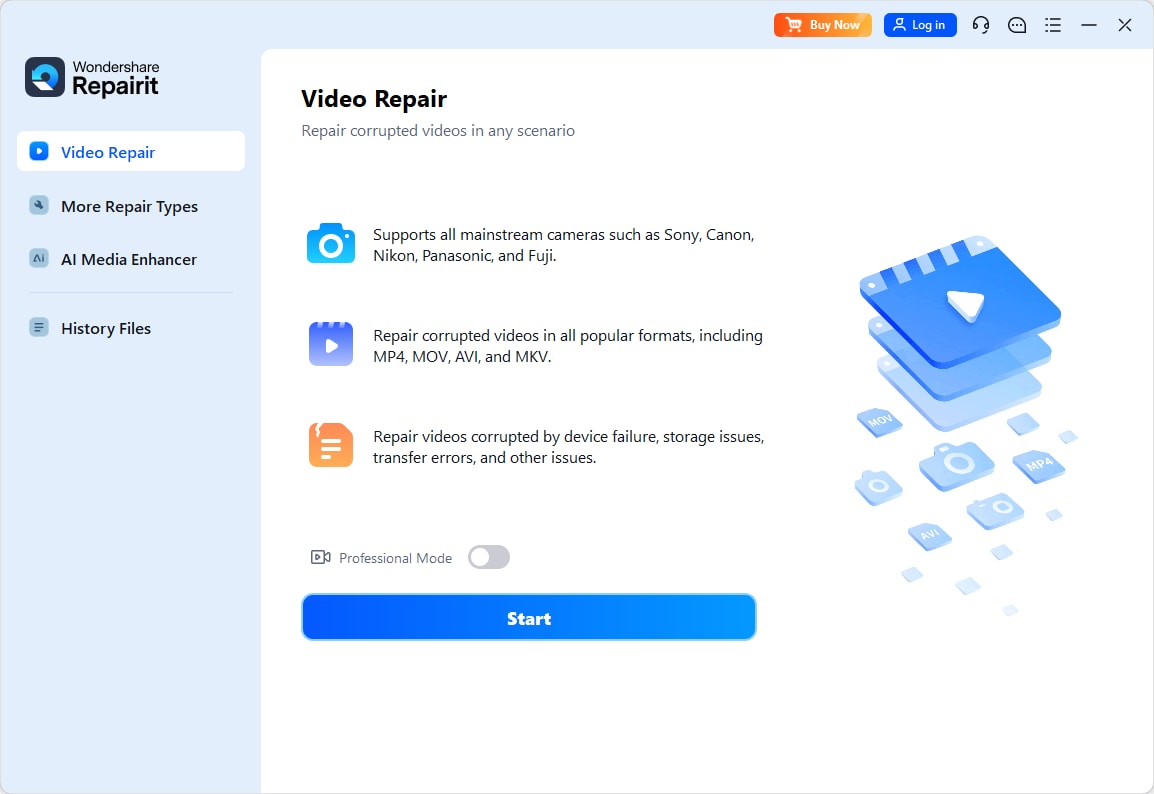
- Add corrupted video files
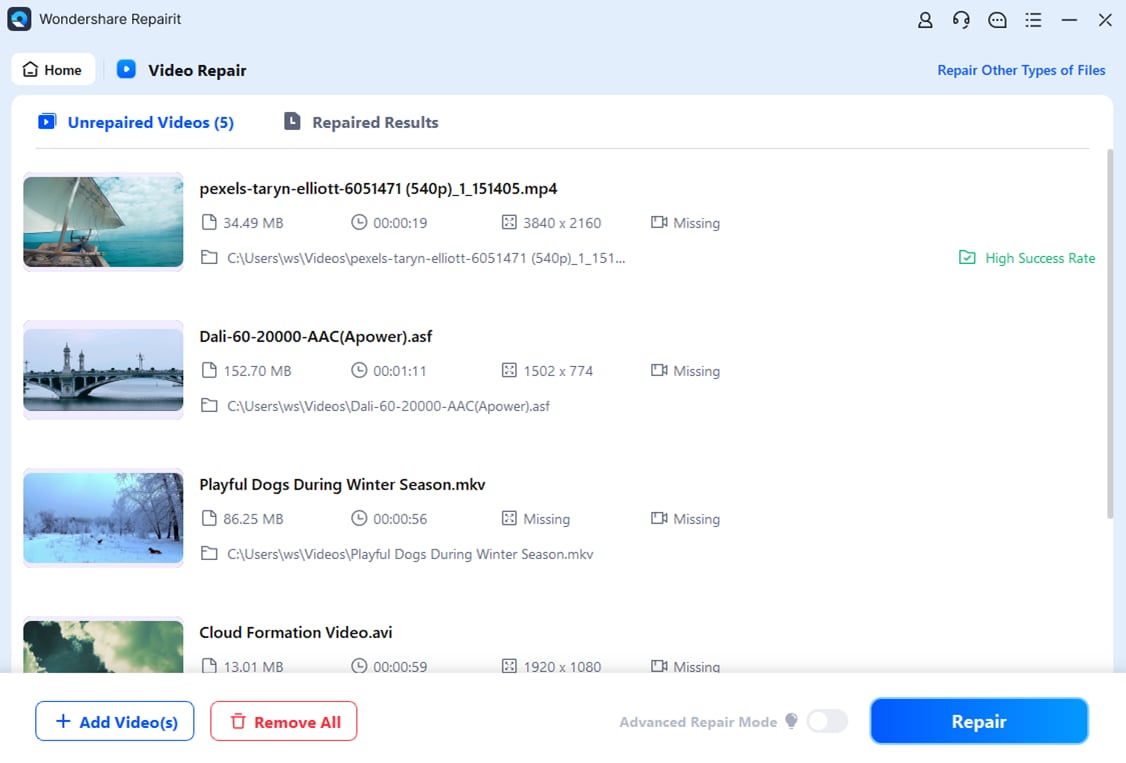
- Repair video files
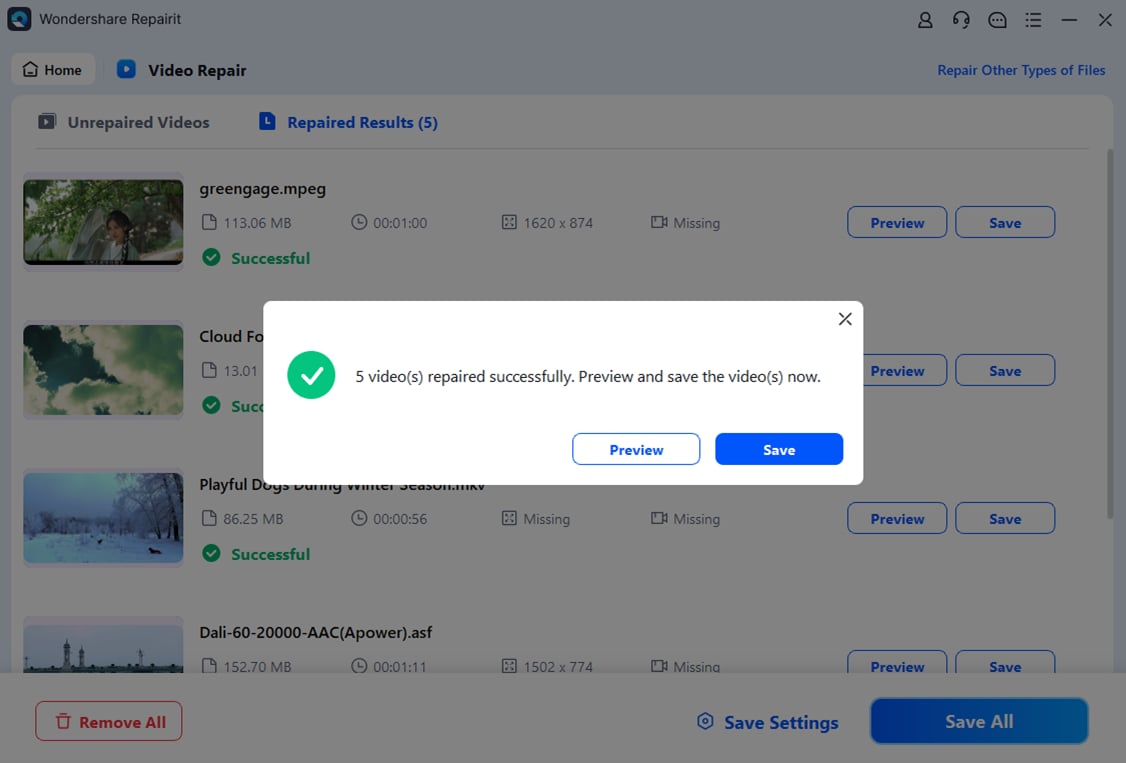
- Save the repaired video files
Conclusion
The video bitrate you choose defines how much data each second of your footage carries, shaping visible quality, smoothness, and file size. By understanding how bitrate interacts with resolution, frame rate, codec, and network speed, you can select settings that balance clarity with efficiency for recording, editing, exporting, and streaming.
When problems arise and your clips become unplayable or corrupted, a specialized repair solution like Wondershare Repairit can help you fix corrupted video files without complex manual intervention. With smart bitrate choices and a reliable repair workflow, you keep your videos sharp, efficient, and recoverable across all your projects.
Next: What is Video Aspect Ratio?
FAQ
-
1. What is video bitrate in simple terms?
Video bitrate is the amount of data your video uses every second, measured in kbps or Mbps. Higher bitrate usually means better visual quality and fewer compression artifacts, but it also produces larger files and requires more bandwidth for streaming or downloading.
-
2. Is higher video bitrate always better?
No. Once the bitrate is high enough for your resolution, frame rate, and codec, increasing it further often brings little or no visible improvement. It only makes files bigger and harder to upload or stream smoothly, especially on slower connections.
-
3. How do I choose the best bitrate for YouTube or streaming?
Check your platform's official bitrate recommendations for your resolution and frame rate, then compare those values with your actual upload speed. Choose a bitrate slightly below your stable upload speed and run a short test stream to confirm that there are no dropped frames or buffering issues.
-
4. Does video bitrate affect resolution?
Bitrate does not change the pixel dimensions (resolution) of your video, but each resolution needs a certain bitrate range to look good. Using a very low bitrate for 4K can look worse than a properly encoded 1080p clip, while giving 1080p an appropriate bitrate keeps the image clear and detailed.
-
5. Can I fix a corrupted high bitrate video file?
Yes. You can use a repair tool such as Wondershare Repairit to scan the corrupted file, rebuild damaged parts of its structure, and recover playable footage, even if the original recording used a very high video bitrate or a professional codec.