

When you record, edit, or stream video, you may see an encoder setting called lookahead in tools like FFmpeg, OBS, HandBrake, or hardware encoders. This option controls how far ahead the encoder "peeks" at upcoming frames before deciding how to compress the current one. Understanding it helps you get cleaner results at lower bitrates, especially for gameplay captures, fast‑moving footage, or long-form streaming.
Repair Corrupted Files To Save Your Data
 Security Verified. Over 7,302,189 people have downloaded it.
In this article
What Is Lookahead?
In video encoding, lookahead is an encoding workflow setting that lets the encoder temporarily buffer and analyze a number of future frames before it finalizes how to compress the current frame. Instead of making decisions frame-by-frame in isolation, the encoder uses this short "preview" to choose frame types (I/P/B), decide where to place keyframes, and distribute bits more intelligently across the clip. You will encounter lookahead when tuning video encoding and encoder settings for recording, editing exports, or streaming presets.
Because the encoder can see what motion, scene changes, or complex textures are coming next, lookahead directly influences video compression efficiency, bitrate control, and the overall video quality you get at a given file size or network bandwidth.
Why Is Lookahead Important in Video Compression?
Lookahead exists to solve a basic problem in compression: the encoder must decide how many bits to spend on each frame without knowing exactly how complex the upcoming content will be. Without lookahead, it can easily overspend bits on simple areas and then starve detailed or high-motion segments later, causing visible quality drops and unstable bitrates.
Quality, bitrate, and file size
By scanning ahead, an encoder with lookahead can:
- Adjust bitrate control more smoothly, avoiding sudden spikes or drops in quality.
- Choose better GOP structure layouts, including where to place I-frames and how to organize B-frames and P-frames around them.
- Reserve extra bits for upcoming complex or fast-motion segments while saving bits on simple, low-motion scenes.
In practical terms, this means:
- Higher visual consistency across the whole clip rather than sharp jumps in sharpness or blockiness.
- Smaller file sizes at the same apparent quality, because bits are used more efficiently.
- More stable streams on bandwidth-limited platforms, improving playback on phones, TVs, and social platforms that re-encode your uploads.
Creators working with gameplay, sports, talking-head videos, or camera footage for YouTube, Twitch, and social media all benefit from a well-tuned lookahead setting.
Limitations and trade-offs
Despite its benefits, lookahead is not free:
- Extra latency: The encoder must buffer future frames, which adds delay. For streaming optimization in live scenarios, too much lookahead can increase end-to-end latency.
- Higher CPU/GPU and memory usage: Analyzing more frames ahead consumes resources and can slow down video encoding, especially on older systems.
- Diminishing returns: Beyond a certain window size, each additional frame of lookahead yields very small quality gains.
Lookahead also does not fix every problem. If your target bitrate is simply too low for the content, or other encoder settings are too aggressive, you can still get banding, macroblocking, or smearing, even with a large lookahead window.
How Does Lookahead Work in the Encoding Workflow?
Inside a typical video encoding workflow, lookahead sits early in the pipeline, just after frames are decoded from the source and before final rate control and bitstream generation. Conceptually, it works like this:
- The encoder reads a small buffer of upcoming frames (for example, 10–60 frames).
- A lookahead module analyzes motion, texture, noise, and potential scene changes across those frames.
- Based on that analysis, it suggests frame types, GOP structure, B-frames placement, and target complexity for each frame.
- The main encoder uses this guidance to perform prediction, transform, and entropy coding with better-informed bitrate control.
In real tools, you will encounter it as an explicit option:
- x264 / x265 / FFmpeg: Options like "rc-lookahead" or similar define how many frames are analyzed ahead.
- OBS Studio: For encoders like x264 or certain hardware encoders (NVENC, AMF), presets and advanced panels expose lookahead as a toggle or numeric value, affecting streaming and recording quality.
- HandBrake, Adobe Media Encoder, Premiere Pro, DaVinci Resolve: You often see it hidden inside "quality" presets, "slow" vs "fast" encoding modes, or expert tuning panels.
- Hardware encoders: Many GPU or dedicated encoders include a configurable lookahead window to balance latency and quality for live and VOD workflows.
In every case, the idea is the same: use knowledge about future frames to steer decisions about prediction (especially B-frames) and bit allocation, rather than encoding each frame blindly as it arrives.
When Should You Care About Lookahead? Common Mistakes and Quick Tips
Not everyone needs to micromanage lookahead, but certain users benefit a lot from understanding it.
Who should care most:
- Live streamers tuning streaming optimization for platforms like Twitch, YouTube Live, or Facebook Live.
- Editors and colorists exporting final masters where consistent video quality and efficient video compression really matter.
- Encoding specialists preparing OTT/VOD catalogs, social media content, and cross-platform deliverables.
- Gamers capturing fast, complex motion where B-frames and smart prediction are critical.
When it matters most:
- When bandwidth or file size is limited but you still want strong visual quality.
- When your content has lots of motion, scene cuts, or detailed textures (sports, action, handheld camera, screen capture).
- When you see pulsing quality, unstable sharpness, or poorly placed keyframes in your encodes.
When it matters less:
- Very high bitrates where the encoder always has "enough" bits.
- Ultra-low-latency streaming (video calls, competitive e-sports with strict delay limits) where any extra buffering is undesirable.
- Quick preview exports or drafts where speed is more important than perfect efficiency.
Common misunderstandings:
- "More lookahead is always better" – after a point, you only increase CPU usage and latency with minimal visual gain.
- "Lookahead will fix low bitrate" – it improves allocation but cannot overcome an unrealistically small bitrate budget.
- "Lookahead is only for professionals" – even casual streamers benefit from basic presets that balance lookahead and latency.
Quick tips and takeaway:
- For offline exports, choose "slow" or "high quality" presets that enable a moderate-to-large lookahead window.
- For live streaming, start with the encoder's default lookahead and only increase it slightly if your system has headroom and latency is acceptable.
- Monitor CPU/GPU usage and end-to-end delay when changing lookahead, especially in OBS and similar tools.
- If you are unsure, stick to presets for your delivery target (YouTube, streaming, archival) rather than extreme manual values.
Overall, treat lookahead as a smart assistant that helps your encoder plan ahead, not a magic option that removes the need for sensible bitrate and preset choices.
How to Use Repairit to Fix a Corrupted Video File
Even with carefully tuned encoder settings and lookahead, things can sometimes go wrong: exports fail, recordings get interrupted, or files are damaged during transfer, leaving them unplayable in editors or players. Wondershare Repairit is designed precisely for these situations. It is an easy-to-use repair toolkit that restores damaged or corrupted clips from cameras, phones, and screen recorders without complicated manual processes. You can learn more and download it from the Repairit official website.
Key features of Repairit for video issues
- Repairs multiple corrupted video formats from various devices in one place, helping you recover recordings from cameras, drones, action cams, and smartphones.
- Supports batch repair so you can fix many broken clips at once and streamline your post-production or archiving workflow.
- Offers a straightforward interface with preview before saving the repaired file, letting you confirm that playback and audio are back to normal.
Step-by-step: repair a corrupted video
- Add corrupted video files
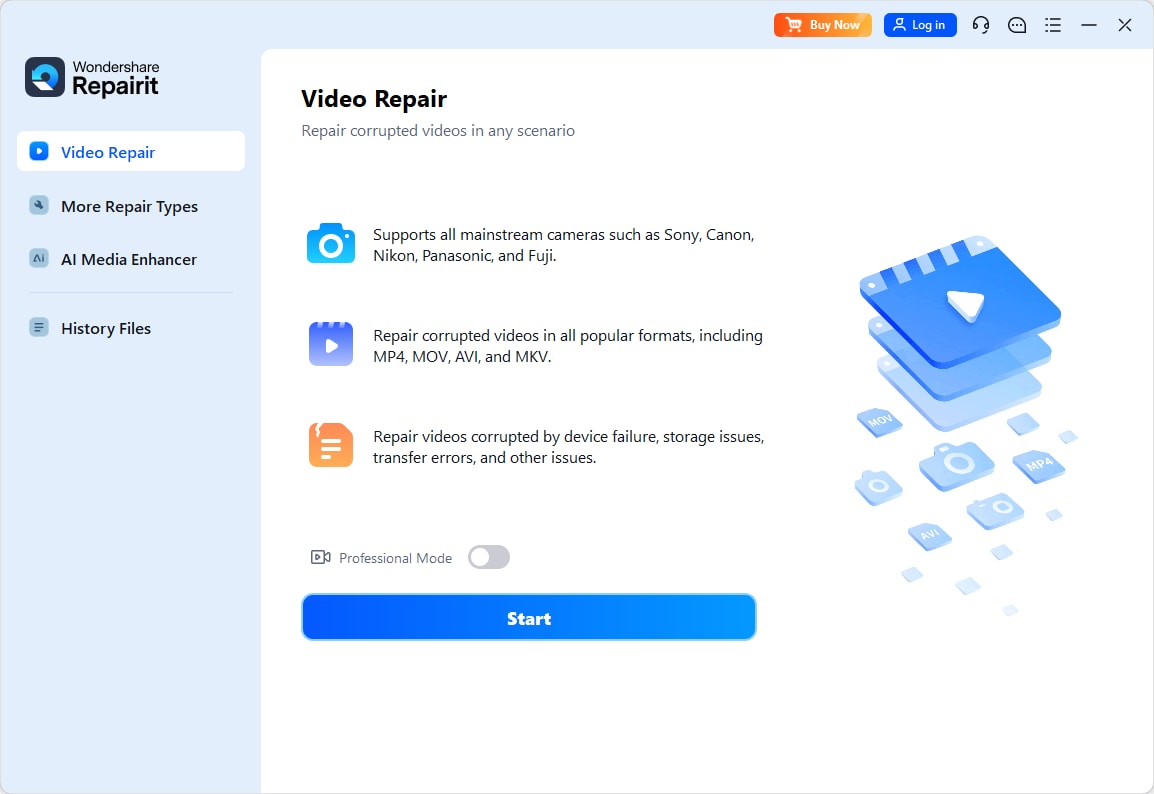
Open Wondershare Repairit and choose the Video Repair module. Click the add button in the center of the window, then browse to the location of your damaged clips. Select one or multiple files and confirm so they appear in the repair list.
- Repair video files
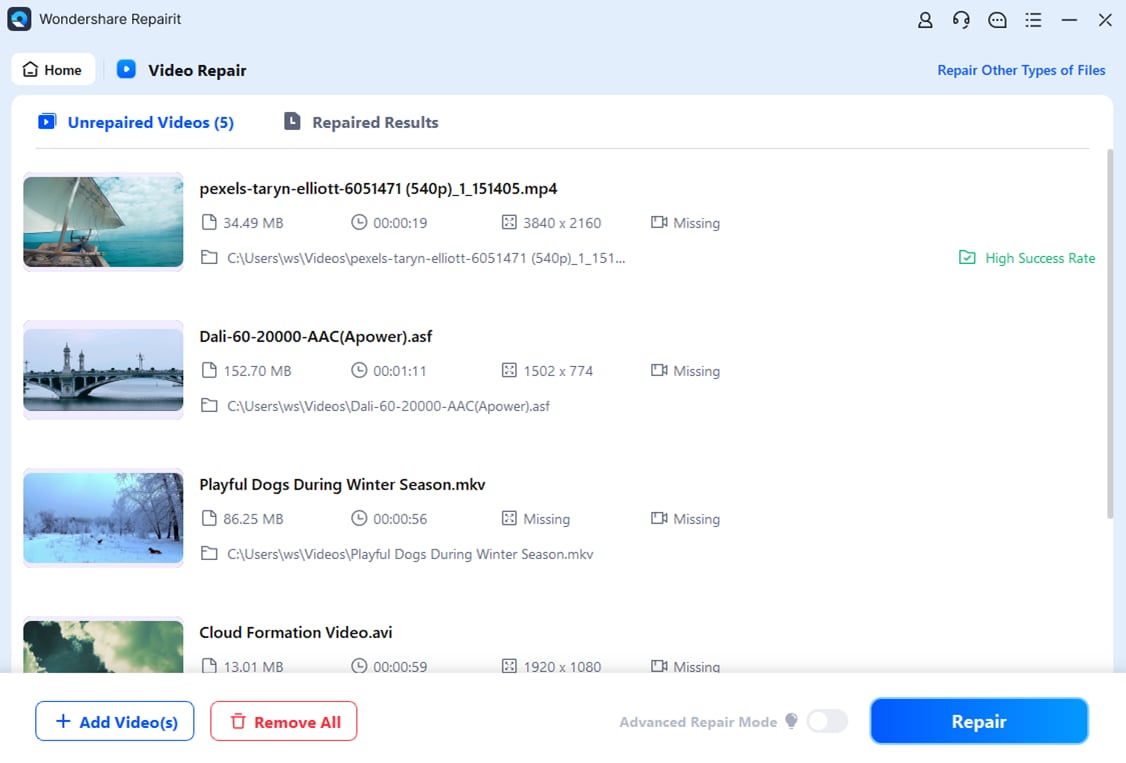
Once your clips are loaded, start the repair process with a single click. Repairit scans each file, analyzes structural damage, and reconstructs playable video and audio streams where possible. When the process finishes, use the built-in preview feature to quickly check if the issues like freezing, glitches, or failure to open have been resolved.
- Save the repaired video files
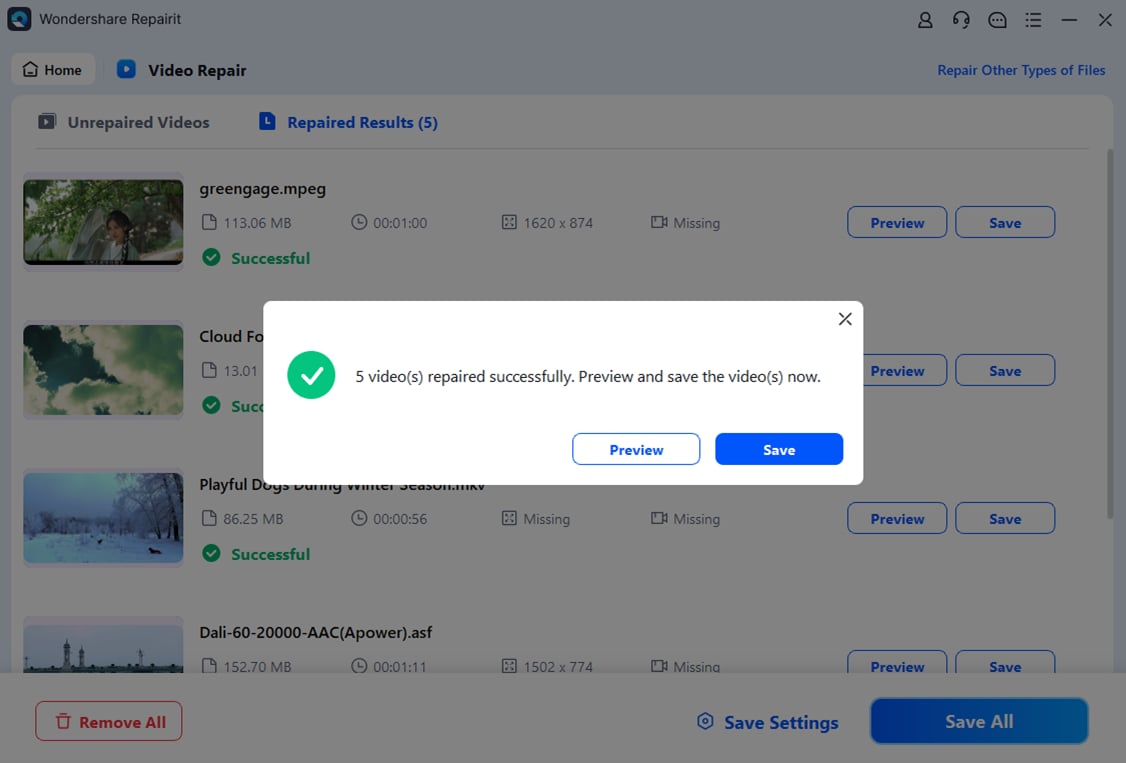
If the preview looks correct, select the clips you want to keep and click the save option. Choose a secure output folder on a healthy drive or external storage, then confirm to export the repaired versions. It is a good idea to back up these fixed files to avoid losing them again due to disk errors or interrupted transfers.
Conclusion
Lookahead gives your encoder a short glimpse into the future, allowing smarter decisions about prediction, GOP structure, B-frames, and bitrate control. Used correctly, it can boost video compression efficiency, smooth out quality, and make streams more stable across platforms, especially for complex or high-motion scenes.
Balancing lookahead with encoding speed and latency is key: offline exports can afford more analysis, while live streams usually need moderate values. And if something goes wrong and leaves you with corrupted or unplayable clips, a tool like Wondershare Repairit can often rescue the footage so your recording, editing, or streaming work is not lost.
Next: Scene Change Detection
FAQ
-
1. What is lookahead in video encoding?
Lookahead is an encoder feature that buffers and analyzes a number of upcoming frames before finalizing how to compress the current frame. This preview helps the encoder choose frame types, keyframe placement, and bitrate allocation more intelligently, improving efficiency and visual quality. -
2. Does a higher lookahead value always improve video quality?
No. Increasing lookahead can improve decisions up to a point, but after that, gains become very small while CPU, memory usage, and latency increase. The best value is usually a balanced setting recommended by your encoder preset for the target use case. -
3. How does lookahead affect live streaming latency?
Lookahead adds latency because the encoder must wait for future frames before encoding the current one. For live streaming, moderate values are used so you still benefit from smarter compression without adding too much delay between capture and viewer playback. -
4. Can wrong lookahead settings cause visible artifacts?
Poorly tuned lookahead can contribute to quality pulsing, inconsistent sharpness, or awkward keyframe placement, especially in high-motion content. However, artifacts usually result from a mix of low bitrate, aggressive compression, and other encoder settings, not lookahead alone. -
5. When should I lower or disable lookahead?
Consider lowering or disabling lookahead when you need ultra-low latency (for example, video calls or competitive streams), when your CPU or GPU is overloaded, or when doing quick draft exports where speed is more important than maximal compression efficiency.