
Scene change detection shows up in video editors, encoders, and streaming tools whenever you cut, export, or analyze footage. It automatically spots when one shot ends and the next begins, so software can compress and organize your video more intelligently. Understanding scene change detection helps you get cleaner cuts, smoother playback, and smaller file sizes whether you are editing, exporting, or streaming video.
Repair Corrupted Files To Save Your Data
 Security Verified. Over 7,302,189 people have downloaded it.
In this article
What Is Scene Change Detection?
Scene change detection (often called shot change or hard cut detection) is a video analysis and encoding workflow setting that automatically finds the frames where one shot ends and another begins. It looks for big visual differences between consecutive frames and marks those points as scene boundaries.
From an encoder's perspective, scene change detection is a helper step that tells the codec where to start a fresh keyframe (I-frame). By aligning keyframes with real edits, the encoder avoids reusing information across unrelated scenes and keeps compression efficient and visually clean.
In everyday use, you encounter it when:
- Exporting from editors like Premiere Pro or DaVinci Resolve
- Configuring encoders such as x264/x265 in FFmpeg or HandBrake
- Streaming via OBS Studio with advanced encoder options
- Running automatic shot detection in media asset management or AI tools
Why Is Scene Change Detection Important in Video Compression?
Video codecs rely on reference frames: instead of encoding every frame from scratch, they store changes relative to earlier frames. That works well when frames are similar, but at a real cut the image changes abruptly. This is exactly the problem scene change detection is designed to solve.
When the encoder misses a shot change, it tries to predict a new scene from an old one. This can cause:
- Ghosting or smeared edges at the cut
- Visible blocks or flickering during fast changes
- Slower seeking because the player has to decode from a distant keyframe
With accurate scene change detection, the encoder can:
- Place keyframes at shot boundaries so new scenes start cleanly
- Improve bitrate efficiency by not wasting bits on impossible motion or prediction
- Speed up seeking and scrubbing in media players and editing timelines
- Make streaming more stable by reducing sudden spikes in complexity after cuts
There are some trade-offs:
| Benefit | Limitation |
|---|---|
| Cleaner cuts with fewer artifacts and ghosting | Too many detected cuts can create excessive keyframes |
| Better seek performance and thumbnail generation | More keyframes can mean slightly larger file size |
| More predictable bitrate behavior across scenes | Poor thresholds may mislabel camera flashes or quick motion as cuts |
In short, good scene change detection strikes a balance: you want keyframes at real cuts, but not at every tiny brightness or camera movement change.
How Does Scene Change Detection Work in the Encoding Workflow?
In a modern encoding pipeline for recording, editing, exporting, or streaming, scene change detection sits inside the analysis and decision phase. The encoder inspects each frame before deciding how to compress it and whether to insert a keyframe.
Scene change detection inside modern encoders
Most encoders follow a similar pattern:
- Frames arrive from a source: camera capture, editing timeline, or existing file.
- A pre-analysis pass compares each frame to the previous one using metrics like:
- Histogram differences (color and brightness distributions)
- Pixel-level differences (how many pixels changed and by how much)
- Motion information from earlier steps (motion vectors suddenly becoming random)
- If the difference crosses a threshold, the frame is flagged as a potential scene boundary.
- The encoder then:
- Forces a keyframe or strongly prefers an I-frame at that point.
- Resets prediction structures (GOP, reference lists) for the new scene.
- Optionally adjusts bitrate targets to handle complex new content.
This logic influences the entire prediction chain. Once a cut is detected, following frames in that segment mostly reference the new scene, improving both quality and compression. For editing and playback, it also means your keyframes line up more closely with visible cuts.
Where you see scene change controls in real tools
You do not always see a big switch labeled "scene change detection", but the option exists in many tools:
- FFmpeg / x264 / x265: options like "scenecut", "keyint", and "min-keyint" control how aggressively scene changes trigger keyframes.
- HandBrake: advanced encoder settings provide GOP and scene cut tuning under the hood.
- OBS Studio: using x264 or certain hardware encoders, keyframe intervals and sometimes scene cut sensitivity can be adjusted for streaming stability.
- Adobe Premiere Pro / Media Encoder: exporting with H.264/H.265 often uses automatic scene change detection, and separate "Scene Edit Detection" tools can cut or mark shots on the timeline.
- AI video analysis platforms: shot detection is used to split long content into logical chunks for highlights, ad insertion, and content moderation.
Across these tools, scene change detection ties together recording, editing, exporting, and streaming because it shapes how keyframes are distributed across your project.
When Should You Care About Scene Change Detection? Common Mistakes and Quick Tips
Not everyone needs to tweak scene change detection, but certain users benefit a lot from understanding it.
Who should care most?
- Video editors and colorists exporting long-form projects with many cuts
- Streamers who want stable bitrates and reliable seek points in VODs
- Encoding and VOD engineers optimizing storage and CDN delivery
- Creators preparing content for platforms that transcode aggressively
When it really matters
- News, sports, and music videos with frequent hard cuts
- Ad-supported content where breaks must align with scene boundaries
- Fast-turnaround workflows where re-encoding is costly
- Archiving masters where future editing and re-use are expected
When it matters less
- Single-take videos with very few or no edits (screen recordings, webinars)
- Static camera lectures or tutorials with minimal scene changes
- Rough previews or temporary review copies
Common misunderstandings
- Thinking "more keyframes is always better": too many keyframes can bloat file size and stress bandwidth without improving visible quality.
- Blaming every artifact on bitrate: missing or misaligned scene cuts can cause ghosting even at high bitrates.
- Assuming all tools handle cuts the same way: different encoders and presets use different thresholds and heuristics.
Quick practical tips
- For content with heavy cutting, avoid extremely long GOP/keyframe intervals; let the encoder insert keyframes at detected scene changes.
- For streaming, use a reasonable max keyframe interval and leave scene change detection enabled so VODs seek cleanly.
- If you see ghosting at cuts, try increasing scene-cut sensitivity or shortening the maximum distance between keyframes.
- When exporting for future editing, prioritize cleaner keyframe placement over minimal file size.
The takeaway: you do not need to micromanage every parameter, but knowing how scene change detection influences keyframes helps you choose presets and settings that fit your content.
How to Use Repairit to Fix a Corrupted Video File
Even perfectly tuned scene change detection cannot help if the underlying video file is damaged. If your exports refuse to play, stutter, or show errors, a dedicated repair tool is the fastest way back to a clean master. Wondershare Repairit provides a user-friendly, guided workflow you can access from the Repairit official website, letting you repair corrupted video files from cameras, phones, and editors without deep technical knowledge.
Key features of Wondershare Repairit
- Video repair for corrupted, unplayable, or damaged clips from many cameras, phones, and formats.
- Batch processing with an intuitive interface so you can fix multiple problem files in one run.
- Advanced repair mode for severely corrupted or important videos that need deeper analysis.
Step-by-step: repair corrupted videos with Repairit
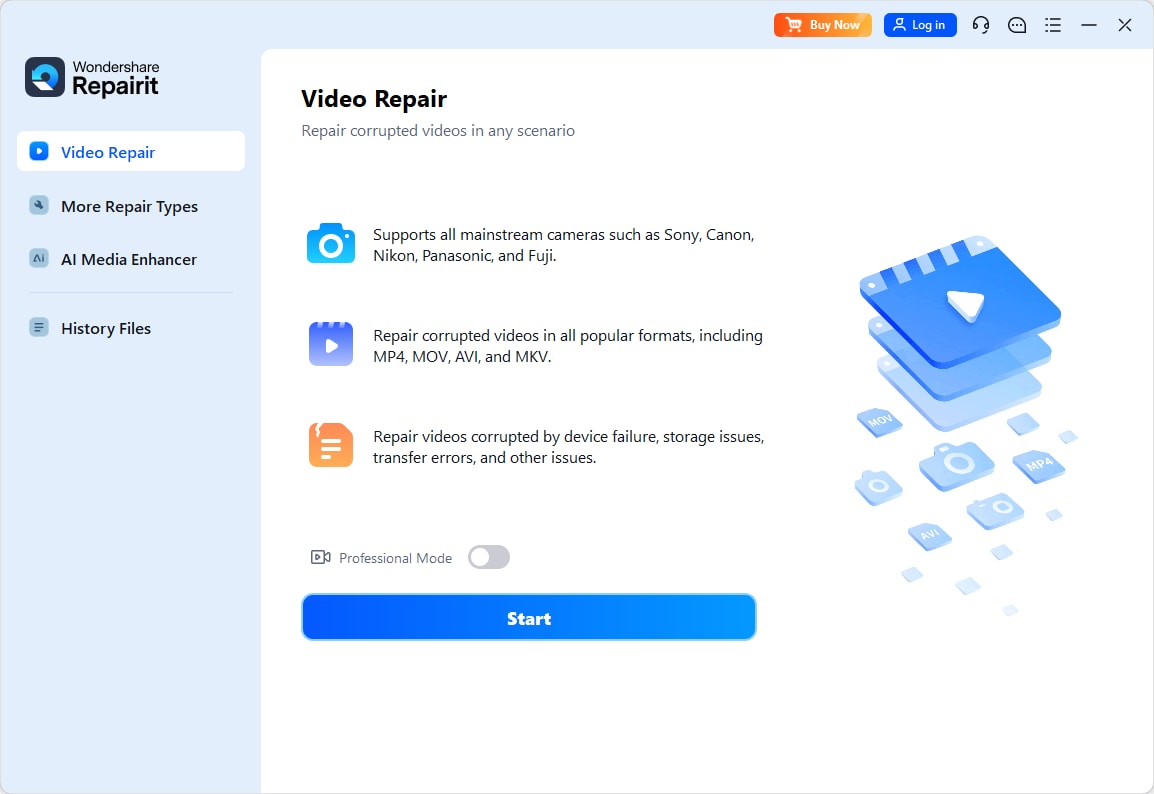
- Add corrupted video files
Install and open Repairit on your computer, then choose the Video Repair module. Click the add button or drag and drop all problematic clips into the window. Each file appears in a list showing its format, resolution, and duration so you know exactly what you are about to fix.
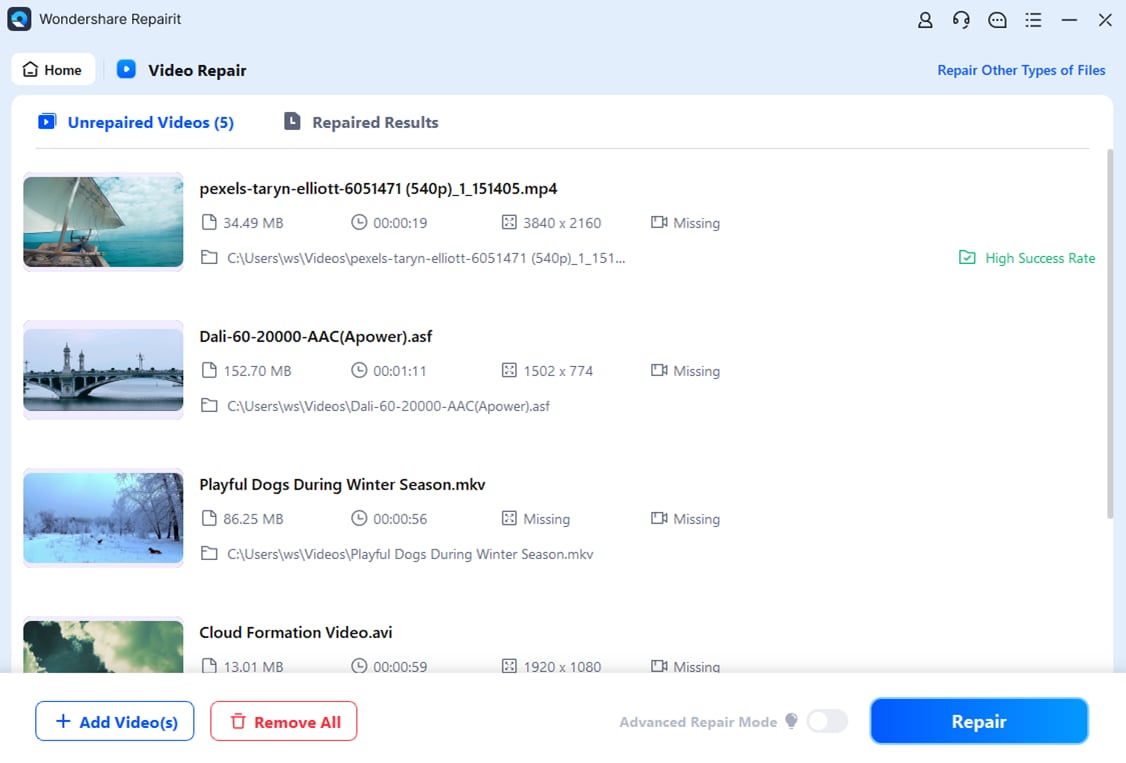
- Repair video files
Tick the videos you want to fix and start the repair. Repairit automatically scans the structure of each file, locates errors, and applies the appropriate repair strategy. When the process finishes, use the built-in preview to play the repaired versions and make sure picture and sound are back to normal.
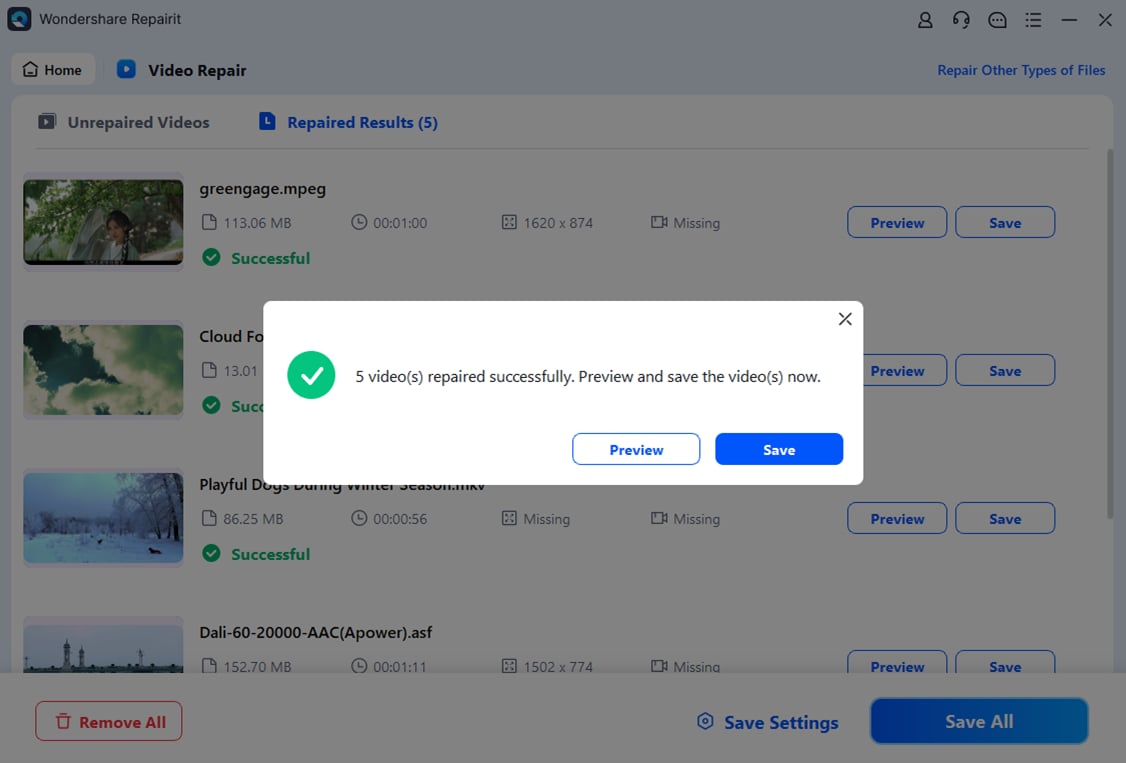
- Save the repaired video files
If the preview looks good, select the clips you want to keep and click Save. Choose a secure destination folder (ideally different from the source location) on an internal or external drive. Repairit will export clean, playable copies that you can safely bring back into your editing, encoding, or streaming workflow.
Conclusion
Scene change detection splits your footage into meaningful shots so encoders can place keyframes where they belong. That alignment reduces wasted bits, avoids ghosting at cuts, and makes editing, seeking, ad insertion, and analysis more reliable across different players and platforms.
If your videos are corrupted during recording, transfer, or export, tuning encoder settings alone will not restore them. Using a specialized repair tool such as Wondershare Repairit lets you recover damaged clips first, then return to optimizing compression, exports, and streaming behavior with confidence.
Next: Chroma Subsampling
FAQ
-
1. What is scene change detection in simple terms?
Scene change detection is the automatic process of finding the exact frame where one shot ends and the next begins. The encoder compares each frame to the previous one, and when the difference is large enough, it flags a scene cut and typically inserts a fresh keyframe at that point. -
2. Why does scene change detection matter for video compression?
Accurate scene change detection helps the encoder avoid predicting across unrelated shots. By placing keyframes at real cuts, it reduces artifacts like ghosting, improves seek performance, and can lower bitrate for the same visible quality because bits are not wasted on impossible motion between very different scenes. -
3. How is scene change detection implemented in common encoders?
Encoders such as x264 and x265 use metrics like histogram differences, pixel change ratios, and motion vector patterns to measure how much one frame differs from the last. If the chosen metric exceeds a threshold, the encoder marks a scene boundary and forces or strongly prefers a keyframe there. -
4. Can bad scene change detection cause visible artifacts?
Yes. If a cut is missed, frames from different scenes may share reference data, causing ghosting, smearing, or blockiness around the edit. If detection is too aggressive, it may create unnecessary keyframes, inflating file size and reducing compression efficiency without visible benefits. -
5. How do I fix a video that will not play after export?
If a video does not play, shows errors, or freezes after export, the file might be corrupted. You can load it into Wondershare Repairit, run a repair, preview the fixed output, and then re-export or recompress the repaired file with your preferred encoder and scene change settings.