
HLG HDR, short for Hybrid Log Gamma High Dynamic Range, is a video format you will see in camera picture profiles, TV specs, streaming apps, and editing software. It matters because it lets you capture and display brighter highlights, deeper shadows, and more realistic colors while staying compatible with standard broadcasts and many existing displays. If you shoot video, edit in HDR, or deliver content to YouTube or TV, understanding Hybrid Log Gamma helps you avoid washed-out images, odd contrast, and playback issues.
Repair Corrupted Files To Save Your Data
 Security Verified. Over 7,302,189 people have downloaded it.
In this article
What Is HLG HDR?
HLG HDR (Hybrid Log Gamma High Dynamic Range) is a video encoding standard designed to store and transmit a wider range of brightness and color than traditional SDR (Standard Dynamic Range) video. Technically, it is a HDR gamma curve and transfer function that defines how brightness values are captured, encoded, and displayed.
In the world of video technology, HLG is a type of HDR video format and a technical setting you can choose in cameras, broadcast systems, and streaming platforms. Unlike some other HDR formats, Hybrid Log Gamma is built to be backward compatible: the same signal can look acceptable on SDR displays and more dynamic on HDR-capable screens.
What Does HLG HDR Affect?
Brightness, contrast, and detail
The main role of HLG HDR is to affect how bright and dark parts of your video are represented and how much detail is visible across that range.
- Highlights: Bright areas like clouds, windows, or reflections hold more detail instead of clipping to pure white.
- Shadows: Darker areas preserve texture and separation instead of turning into flat black blocks.
- Midtones: Faces, skin tones, and common subjects can look more natural with smoother gradients and less banding.
Because of its hybrid curve (log in the highlights, gamma in the shadows), Hybrid Log Gamma lets HDR displays stretch the signal to show punchy contrast while keeping it viewable on SDR screens.
Color, workflow, and compatibility
Beyond brightness, HLG HDR also affects color rendering, editing choices, and how your video plays on different devices.
- Color richness: When paired with wide color gamuts (like BT.2020), HDR color in HLG footage can look more saturated and lifelike than standard Rec.709 video.
- Editing workflow: Working with an HDR workflow means your timeline, monitoring, and export settings must respect HLG gamma and the correct color space. If not, your footage may look washed out or overly contrasty.
- Broadcast HDR: One reason Hybrid Log Gamma exists is to simplify broadcast HDR. It is widely used by broadcasters (like BBC and NHK) because it does not depend on dynamic metadata, which makes live production and transmission easier.
- Platform compatibility: Many modern TVs, streaming boxes, and online platforms support HLG, but support is not universal. The format you choose (for example, HLG vs HDR10) has a direct impact on which viewers get the full HDR experience.
How Does HLG HDR Work in Real Use?
In real-world workflows, you encounter HLG HDR at multiple stages: recording, editing, exporting, and playback.
Using HLG HDR in cameras and capture devices
Many mirrorless cameras, cinema cameras, and even some smartphones offer an HLG picture profile or HLG HDR mode.
- Menu selection: You might see options like "HDR: HLG," "HLG1/HLG2/HLG3," or "Picture Profile: HLG." Choosing these tells the camera to encode video with the Hybrid Log Gamma curve.
- Exposure: You often expose slightly differently than for SDR: protect highlights more carefully because HLG is designed to roll off bright areas smoothly.
- Use cases: HLG is popular for live events, weddings, outdoor scenes, and any situation where you want punchy HDR without complex log grading.
Editing, encoding, and streaming HLG HDR
In post-production, Hybrid Log Gamma appears as a timeline or color-management option in NLEs like Premiere Pro, DaVinci Resolve, and Final Cut Pro.
- Import and interpretation: Footage must be correctly flagged as HLG. If the editor treats it as Rec.709, it often looks flat or milky.
- Timeline settings: You may choose an "HDR: HLG" or "Rec.2100 HLG" timeline, which controls how scopes, grading tools, and HDR previews behave.
- Export: When exporting, you choose an HDR video format with HLG transfer characteristics and a suitable color space (often Rec.2100 HLG / BT.2020). Incorrect exports can break HDR on TVs and platforms.
- Streaming and platforms: Some services (such as YouTube) can ingest HLG and deliver HDR streams to compatible devices. Others may convert it or fall back to SDR, which influences whether you should pick HLG vs HDR10 for your project.
On the playback side, many modern HDR TVs will show "HLG" or "HDR" in their info panel when they detect an HLG signal. Older or SDR-only screens may show the same video with reduced dynamic range, but still generally viewable, illustrating the backward-compatible goal of Hybrid Log Gamma.
Common Mistakes and Quick Tips
- Assuming HLG is automatically better than other HDR formats: HLG HDR is excellent for broadcast and mixed environments, but HDR10 or Dolby Vision might be preferable for some streaming or disc releases. Match the format to your delivery platform.
- Viewing HLG on non-HDR displays and judging the look: On SDR monitors, HLG often appears low-contrast or washed out. Always evaluate final quality on an HDR-capable display when possible.
- Wrong color space in the editor: Mixing HLG footage on a Rec.709 timeline without proper transforms leads to incorrect brightness and color. Use color-managed workflows (e.g., Rec.2100 HLG) or apply the correct conversion LUTs.
- Overexposure because "HDR can handle it": While HLG is more forgiving, clipping still looks bad. Use zebras, waveforms, and highlight warnings to keep important detail.
- Ignoring compatibility with clients and audiences: If your audience mostly watches on older SDR devices, consider creating both an HDR master and a tuned SDR version for consistent results.
Quick takeaways: Choose HLG HDR when you want easy, broadcast-friendly HDR; check your camera and NLE settings for HLG-specific options; always monitor with an HDR display if you can; and plan separate SDR exports when needed.
How to Use Repairit to Fix a Corrupted Video File
Repairit introduction
When your HLG HDR or other HDR video format files refuse to play, glitch, or go out of sync, a dedicated repair tool can save hours of reshooting or re-editing. Wondershare Repairit is built specifically for media recovery and can repair corrupted HDR footage from cameras, phones, and recorders with a straightforward workflow. You can learn more and download it from the Repairit official website.
Key features of Repairit
- Fix corrupted HDR video footage, including HLG HDR, HDR10, and other common recording formats that show errors or refuse to play.
- Repair multiple clips at once, supporting high-resolution content like 4K and 8K while preserving your original quality and HDR workflow.
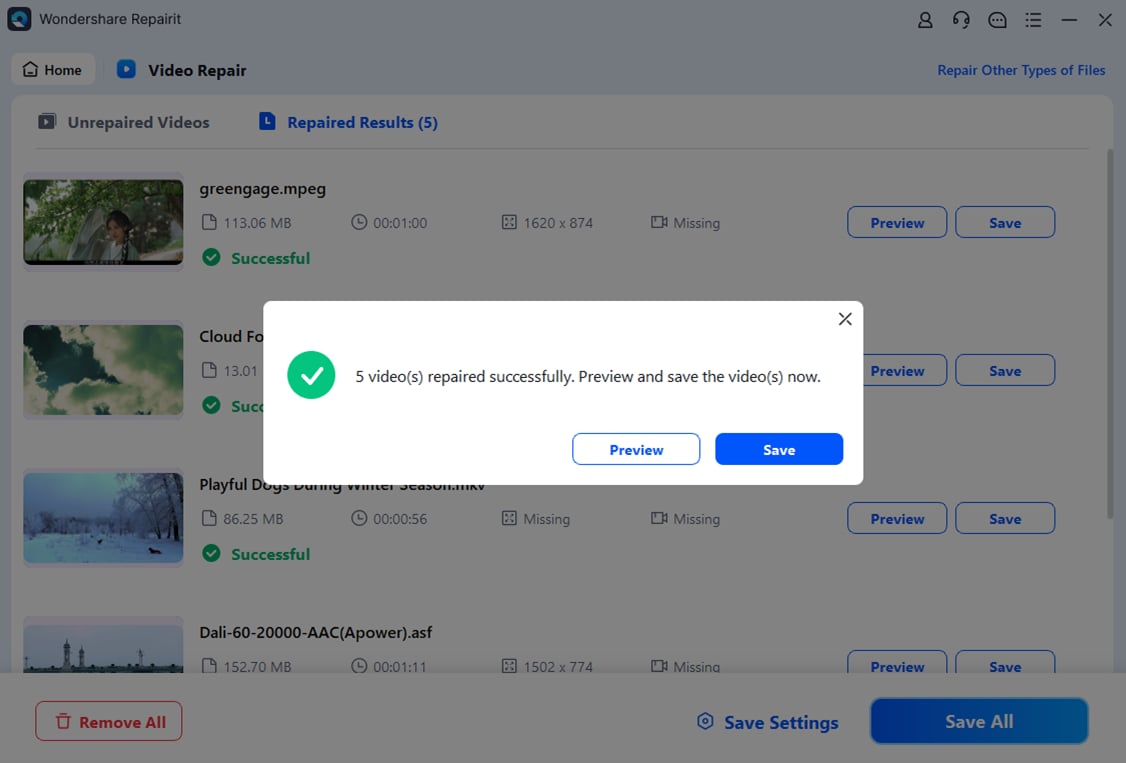
- Preview repaired videos before saving so you can confirm that glitches, artifacts, or sync problems are gone.
Step-by-step guide to repair corrupted HLG HDR video
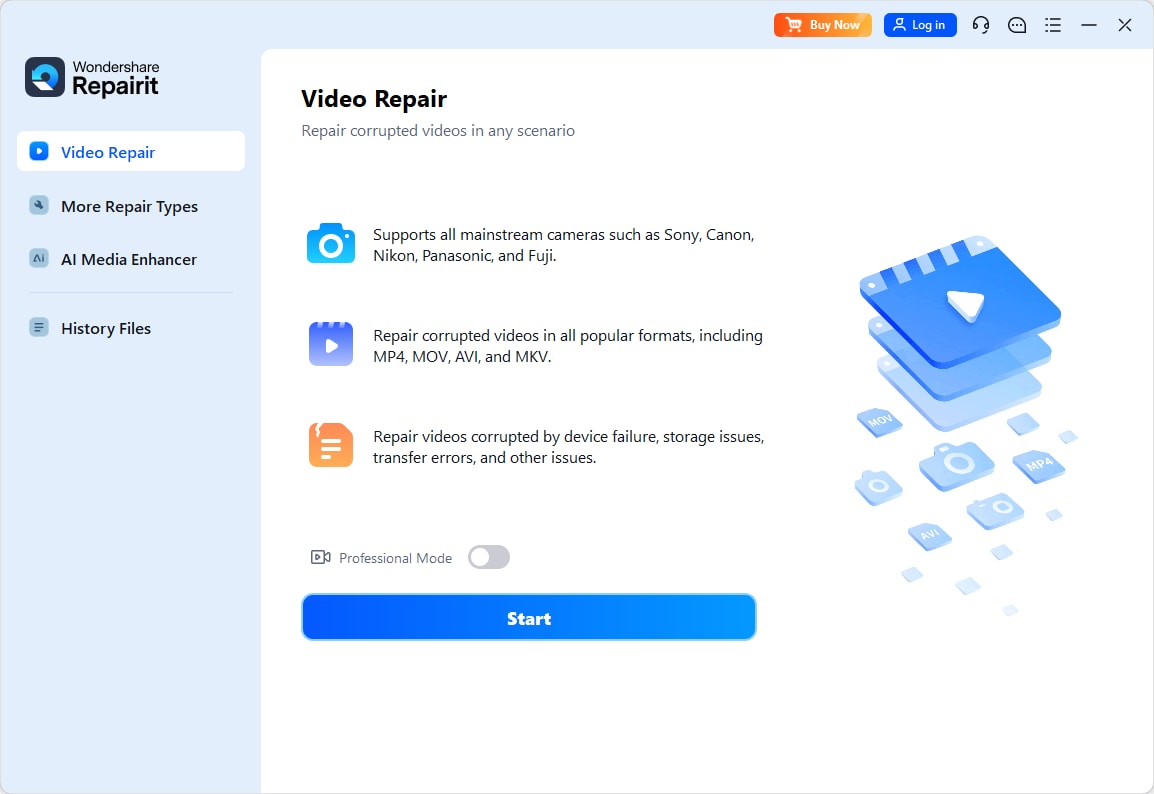
- Add corrupted video files
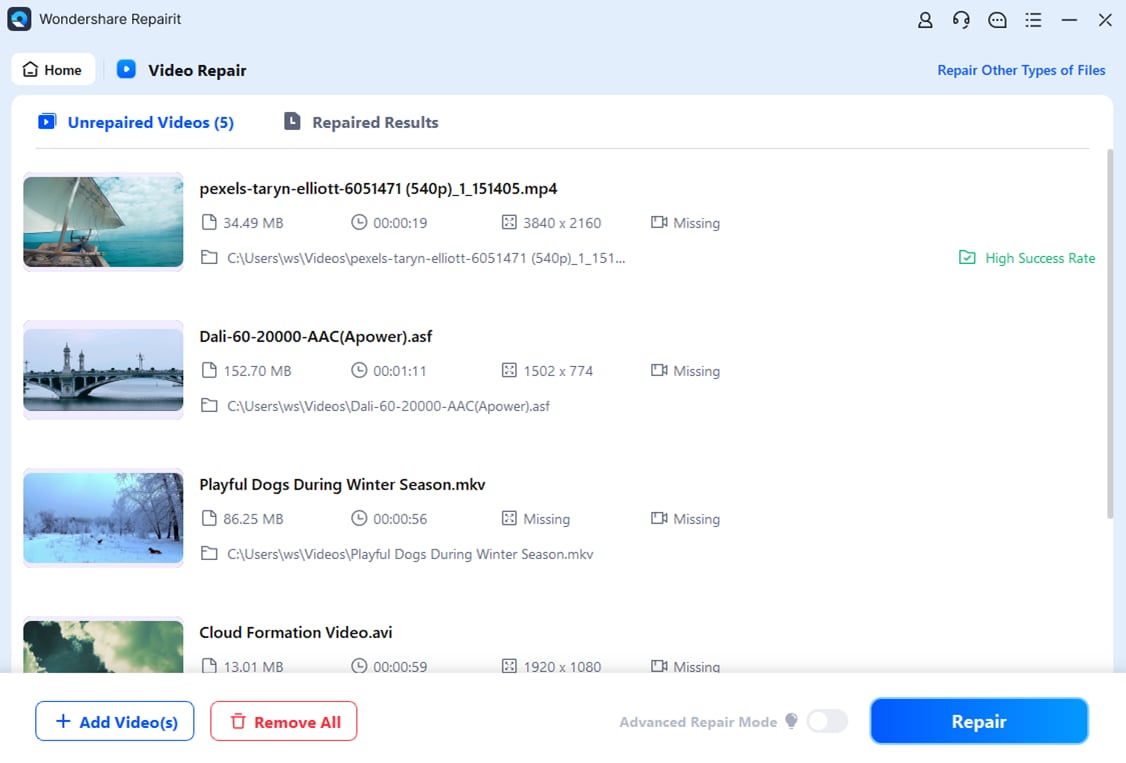
- Repair video files
- Save the repaired video files
Conclusion
HLG HDR, or Hybrid Log Gamma, is a flexible HDR system that lets creators deliver brighter, more realistic images while staying friendly to traditional broadcast workflows and many existing devices. By understanding how it handles brightness, color, and compatibility, you can choose the right profile in camera, grade confidently in your editor, and export HDR content that looks consistent across platforms.
When things go wrong and your HDR clips become corrupted, dedicated software like Wondershare Repairit can often recover the footage you worked so hard to capture. By repairing broken files and preserving your HDR color and detail, you can focus on shooting and storytelling instead of worrying about data loss.
Next: What is Video Keyframe?
FAQ
-
1. What is HLG HDR in simple terms?
HLG HDR, or Hybrid Log Gamma High Dynamic Range, is a way of encoding video so it can show brighter highlights, deeper shadows, and more vivid color than standard video, while still being viewable on many existing TVs and broadcast systems. -
2. Is HLG better than HDR10?
Neither format is strictly better; they serve different needs. HLG is designed for live broadcast and does not require metadata, which simplifies production and compatibility. HDR10 is widely used for streaming and UHD Blu-ray with static metadata that helps TVs tone-map the image. Choose the one that fits your distribution platform. -
3. Why does my HLG HDR video look washed out?
HLG HDR can look flat or washed out if you view it on a non-HDR screen, if your editing software treats it as standard Rec.709, or if you export with the wrong color space or gamma. Make sure your timeline is set to an HDR/Rec.2100 HLG profile and check the output settings and display capabilities. -
4. Do all TVs support HLG HDR?
No. Many newer HDR-capable TVs support HLG, but some older or budget models do not. Check your TV's specifications or manual for HLG support, and update the firmware if the manufacturer has added HLG in a later update. -
5. Can I repair corrupted HLG HDR video files?
Yes. If your HLG HDR clips do not open, stutter, or show artifacts, you can use a specialized repair tool like Wondershare Repairit to scan, repair, and restore the files so they are stable again for playback and editing.