
Video shutter speed is a setting every creator sees on cameras, phones, and even some streaming tools, but it often gets ignored or misunderstood. You will run into it whenever you shoot video for YouTube, TikTok, live streams, or professional filmmaking. Learning how it works helps you control motion blur, exposure, and the overall feel of your footage so your videos look cleaner, smoother, and more cinematic on any platform.
Repair Corrupted Files To Save Your Data
 Security Verified. Over 7,302,189 people have downloaded it.
In this article
What Is Video Shutter Speed?
Video shutter speed is a camera setting that controls how long the sensor is exposed to light for each frame of video. It is a technical setting in the category of video exposure parameters, alongside aperture and ISO. In practical terms, it decides how much motion blur you see and how bright each frame is, whether you are recording in-camera, live streaming, or capturing clips for editing and exporting later.
Shutter speed is usually shown as a fraction like 1/50, 1/100, or 1/1000 of a second. In video, it always works together with your frame rate (24 fps, 30 fps, 60 fps, and so on), so it is better to think of it as "how long each frame stays open" rather than just a random number.
What Does Video Shutter Speed Affect?
Shutter speed has a direct impact on how your video looks and feels across recording, editing, and playback.
| Shutter speed | Typical effect on video |
|---|---|
| Slow (e.g., 1/24, 1/30) | Brighter image, heavy motion blur, smoother but smeary movement |
| Moderate (e.g., 1/48, 1/50, 1/60) | Natural-looking motion blur, cinematic feel, balanced exposure |
| Fast (e.g., 1/250, 1/1000) | Darker image, crisp or staccato motion, more "digital" or intense look |
Motion blur and perceived smoothness
The most obvious effect of shutter speed for video is motion blur:
- Slower shutter speeds create longer streaks of blur on moving subjects. On playback, this blur makes motion feel smoother and more continuous, which is why it is common in narrative filmmaking.
- Faster shutter speeds reduce blur so that every frame looks sharper. This can be great for sports replays, VFX work where you need clean frames, or dramatic action scenes, but too much can make the video feel jittery.
When exporting or streaming, this motion rendering stays baked into the frames. Editors cannot remove or add natural motion blur later without advanced effects, so the choice at capture time really matters.
Exposure and low-light performance
Shutter speed also controls how much light reaches the sensor:
- Slow shutter = more light per frame = brighter footage, but with more blur.
- Fast shutter = less light per frame = darker footage, often requiring higher ISO, which can add noise.
This balance affects how clean your video looks after encoding and compression on platforms like YouTube or Instagram. Dark, underexposed footage can become muddy or noisy once it is compressed and streamed.
Editing flexibility and platform compatibility
Because frame rate and shutter speed are linked, your shutter choices can change how footage behaves in post:
- Footage shot at very fast shutter speeds may look harsh or stuttery when slowed down or converted to a different frame rate.
- Footage with extremely heavy blur can look smeared when sharpened, upscaled, or stabilized with AI tools.
- When your motion blur looks natural, encoders like H.264 or H.265 often compress it more efficiently, which can help maintain quality across multiple exports and uploads.
How Does Video Shutter Speed Work in Real Use?
In real-world workflows, you choose a best shutter speed for video based on your frame rate, available light, and creative intent. Whether you are using a mirrorless camera, DSLR, cinema camera, action cam, or smartphone app, the logic is similar.
Understanding the 180-degree shutter rule
The 180 degree shutter rule is a classic guideline from film cameras that still works perfectly for digital video. It says your shutter speed should be roughly double your frame rate:
- 24 fps → shutter around 1/48 second (often set to 1/50 on modern cameras).
- 25 fps → shutter around 1/50 second.
- 30 fps → shutter around 1/60 second.
- 60 fps → shutter around 1/120 second.
This ratio gives motion blur that looks natural to human eyes. When you stick close to this rule, footage tends to look cinematic and comfortable on most displays and streaming platforms.
Breaking the rule is a creative choice:
- Shorter exposures (e.g., 24 fps at 1/250) give a choppy, high-intensity look often used in action sequences.
- Longer exposures (e.g., 24 fps at 1/20) can create dreamy, smeary effects but are harder to watch for normal scenes.
Practical settings for common frame rates
Here are some starting points for camera settings for video in everyday situations:
| Shooting scenario | Suggested frame rate and shutter speed |
|---|---|
| Cinematic talking head (YouTube, interviews) | 24 fps with shutter 1/48 or 1/50 |
| General online content (vlogs, tutorials) | 25 or 30 fps with shutter 1/50 or 1/60 |
| Slow-motion B-roll | 60 fps with shutter 1/120 (or 120 fps with shutter 1/240) |
| Sports, fast action with crisp motion | 50–60 fps with shutter 1/250 or faster |
| Low-light events (concerts, weddings) | Stay near 2x frame rate (e.g., 1/50 at 25 fps) and adjust ISO/aperture or use lights/ND filters |
In editing applications like Premiere Pro, Final Cut Pro, or DaVinci Resolve, you will not change shutter speed after recording, but you will see its impact when scrubbing through frames, stabilizing footage, or applying motion effects. Clean, appropriate blur helps those tools work better and reduces artifacts on export.
Shutter speed in phones, action cams, and streaming tools
On smartphones and action cameras, auto modes often change video shutter speed aggressively as light shifts, which can cause inconsistent motion blur within the same clip. Many pro or manual camera apps let you lock shutter speed so your motion stays consistent across takes and lighting changes.
For live streaming with software like OBS Studio, your camera feed usually comes in with a fixed shutter speed that you set on the camera. Getting this right at the camera level helps your stream look smooth and reduces flicker or stutter on platforms like Twitch, YouTube Live, and Facebook Live.
Common Mistakes and Quick Tips
Frequent mistakes with video shutter speed
- Using auto exposure for everything, letting the camera pick random shutter speeds that change your motion blur mid-shot.
- Cranking shutter speed extremely high in low light, which forces the ISO up and creates noisy, dark footage.
- Ignoring flicker from artificial lights by choosing shutter speeds that clash with local power frequencies (e.g., 1/60 in 50 Hz regions can cause banding).
- Assuming shutter speed can be "fixed in post" like color or exposure, when the motion rendering is already baked into each frame.
Quick tips for cleaner, more cinematic motion
- Use the best shutter speed for video as roughly double your frame rate (180-degree rule) for natural motion.
- In bright conditions, use ND filters so you can keep shutter speed near 2x frame rate without overexposing.
- In low light, keep shutter close to 2x frame rate and adjust aperture, ISO, or add lighting instead of speeding up shutter too much.
- Lock your shutter speed in manual or shutter-priority modes for consistent motion blur across shots.
- Match your shutter and frame rate to your local power standard (e.g., 25/50 fps with 1/50 or 1/100 in 50 Hz regions; 30/60 fps with 1/60 or 1/120 in 60 Hz regions) to reduce flicker.
Key takeaways: treat shutter speed as a creative tool, keep it tied to your frame rate, and decide your look before you hit record. That way, your footage holds up better through editing, encoding, and sharing.
How to Use Repairit to Fix a Corrupted Video File
Repairit introduction
Even if you nail your shutter speed for video, technical issues like sudden power loss, a camera crash, or a bad memory card can still leave you with corrupted clips that refuse to play or import into your editor. Wondershare Repairit is designed to repair these damaged video files from cameras, drones, action cams, and phones in just a few clicks. You can explore all supported formats and features on the Repairit official website so you are ready whenever an important recording gets broken.
Key features of Repairit
- Repairs videos from cameras, drones, action cams, and phones in various formats.
- Offers quick and advanced repair modes to handle both minor and severe corruption.
- Provides an instant preview so you can verify video and audio before saving.
Step-by-step: fix corrupted video files with Repairit
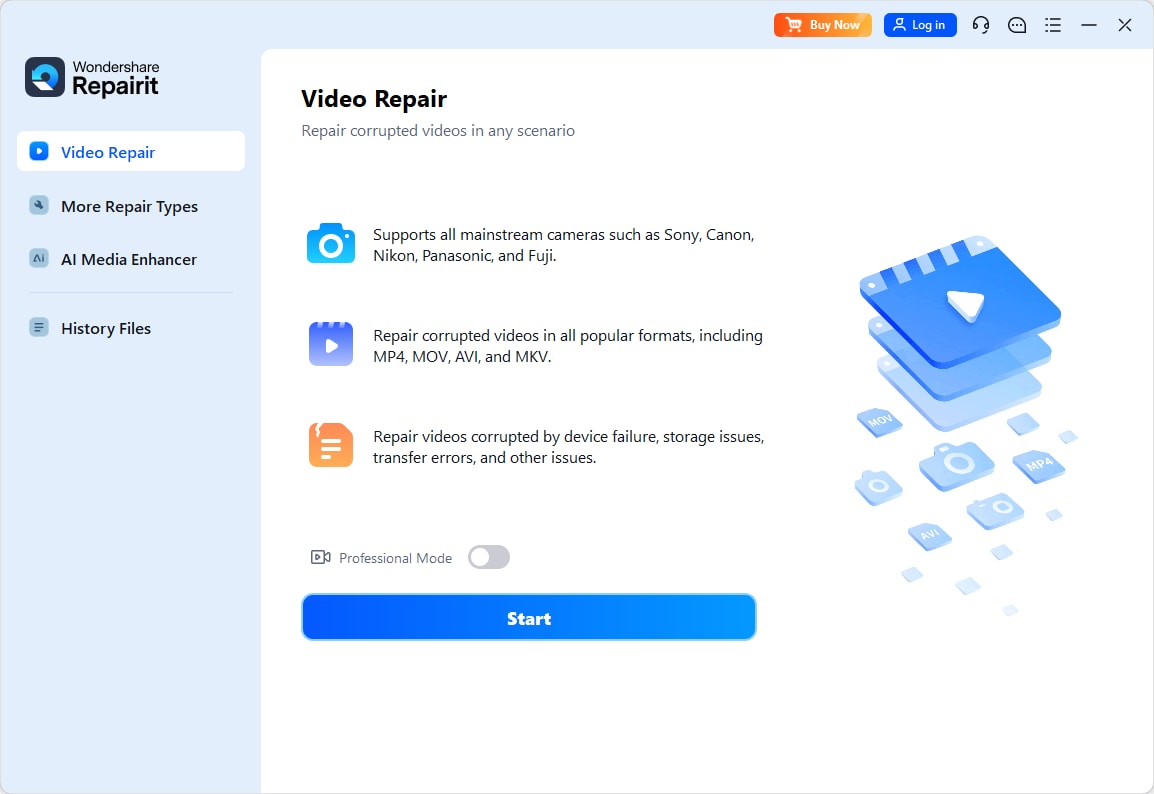
- Add corrupted video files
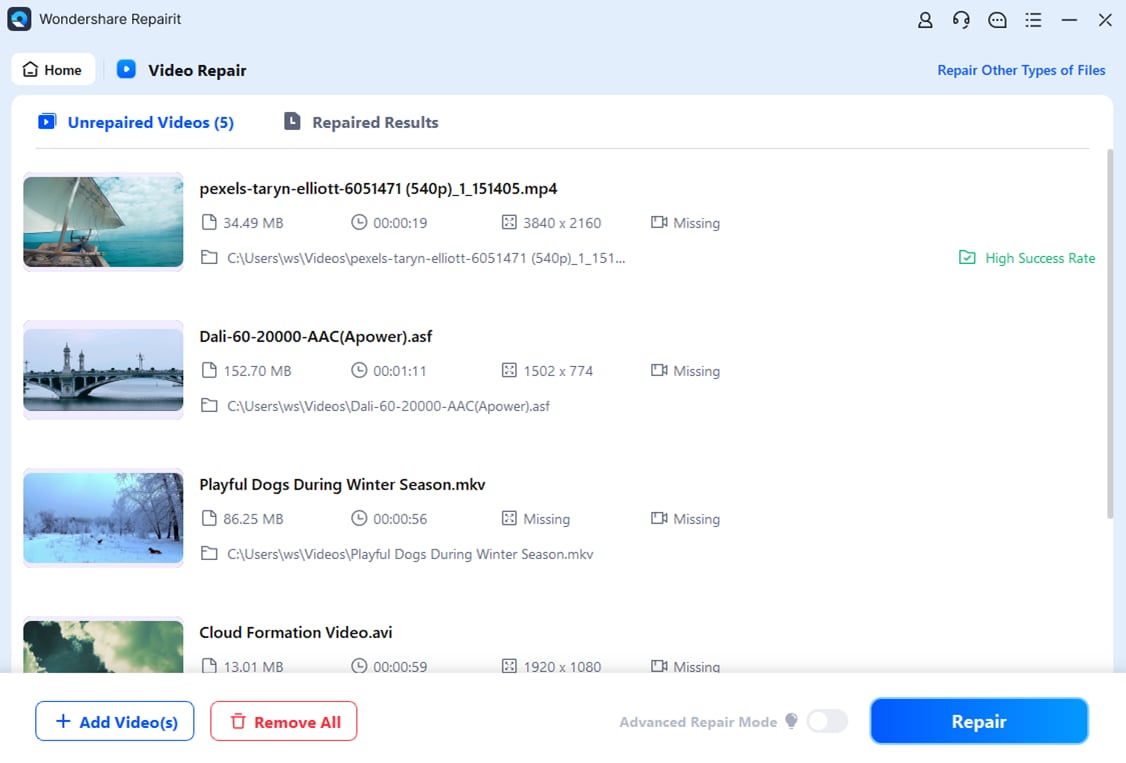
- Repair video files
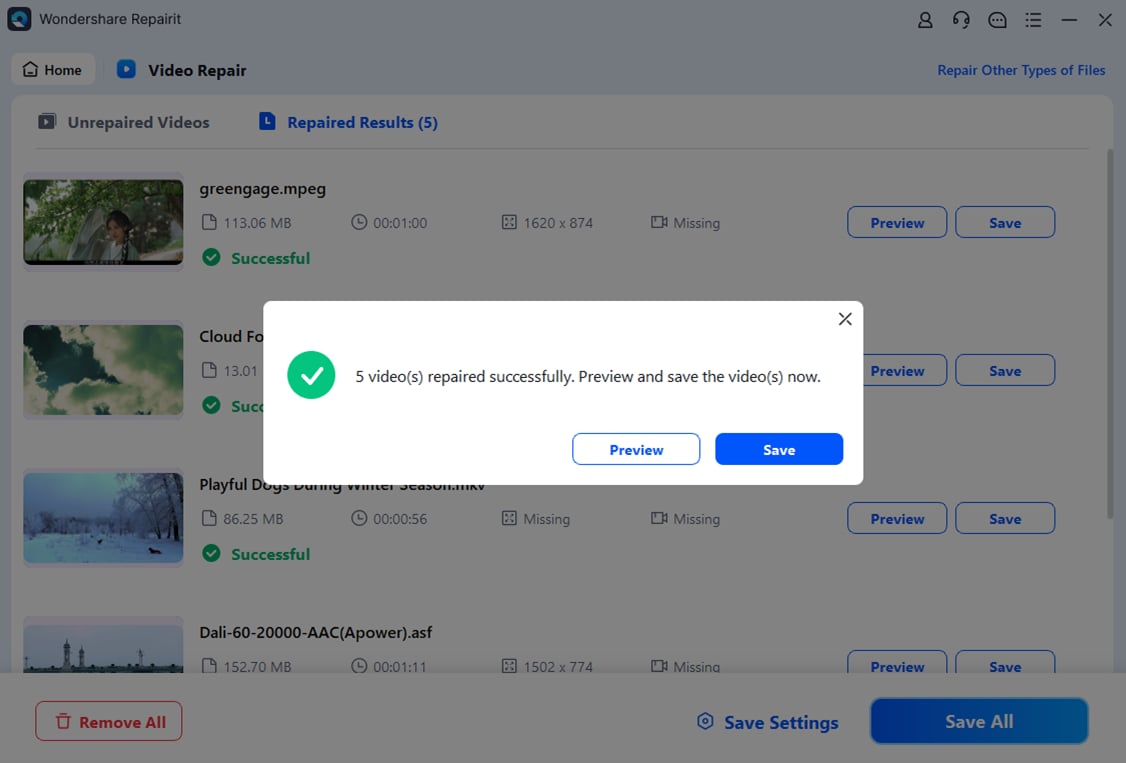
- Save the repaired video files
Conclusion
Understanding video shutter speed is essential if you want consistent, professional-looking footage. By balancing shutter with your frame rate and available light, you control motion blur, exposure, and the overall mood of your shots from the moment of capture through editing and final export.
Use the 180 degree shutter rule as a reliable starting point, then adjust for creative style or difficult lighting. And if technical problems damage your clips beyond what camera settings can fix, Wondershare Repairit gives you a practical way to repair corrupted video files and protect the work you have already captured.
Next: What is Camera Iso For Video
FAQ
-
1. What is the best shutter speed for 24 fps video?
A widely used guideline is the 180 degree shutter rule, which suggests using a shutter speed roughly double your frame rate. For 24 fps, that means about 1/48 second. Since many cameras do not offer 1/48, 1/50 second is typically chosen to get natural-looking motion blur. -
2. How does shutter speed affect video quality?
Video shutter speed affects both exposure and how motion is rendered. A slower shutter lets in more light and increases motion blur, making movement appear smoother but possibly smeary. A faster shutter darkens the image and reduces blur, which can make footage look crisp, or if pushed too far, jittery and staccato. -
3. Can I use a very fast shutter speed in low light video?
You can, but it is usually not ideal. Very fast shutter speeds cut down the light reaching the sensor, so your footage will be darker and noisier unless you raise ISO or open the aperture. In low light, most filmmakers keep shutter near double the frame rate and adjust aperture, ISO, or lighting instead. -
4. Why does my video look jittery even at the correct shutter speed?
Jittery video can come from camera shake, rolling shutter, or mismatched recording and playback frame rates, even if your shutter is set correctly. Use stabilization, avoid extreme pans, match your timeline frame rate to your recording, and avoid excessively high shutter speeds unless you want a deliberately choppy look. -
5. Can corrupted video files be fixed if I used the wrong shutter speed?
Incorrect shutter speed will not corrupt a video file, but it can make motion look unnatural. If the file becomes unplayable due to recording errors or storage problems, tools like Wondershare Repairit can often repair the damaged container and data so the clip opens again, though they cannot change the original shutter speed used during recording.




