
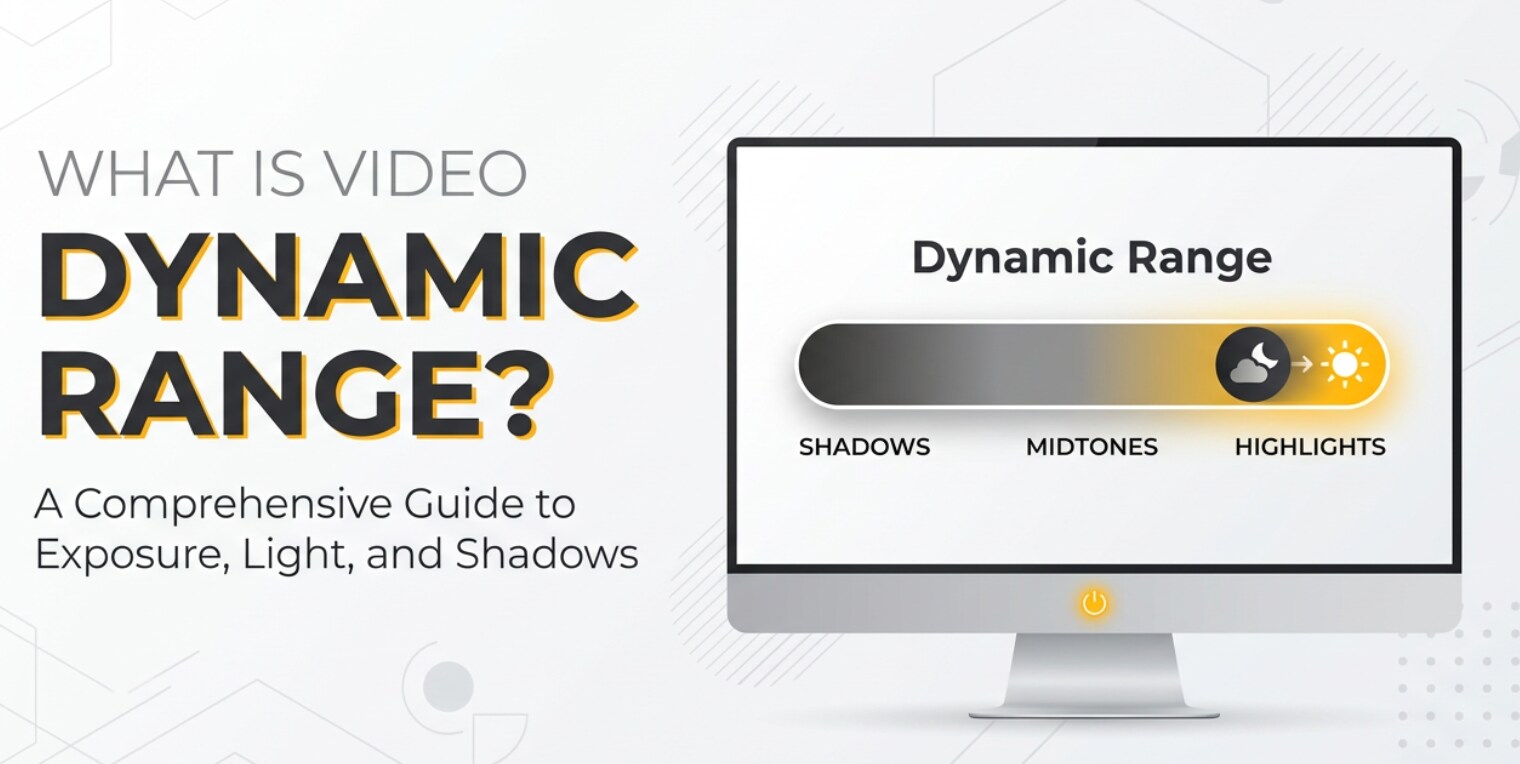
Video dynamic range is a term you will see in camera specs, editing software, HDR streaming platforms, and grading tutorials. It describes how much detail your video can hold from deep shadows to bright highlights. Understanding it helps you choose better exposure settings, pick between SDR, log, or HDR, and avoid blown-out skies or crushed blacks in your footage, whether you shoot on a phone, mirrorless camera, or cinema rig.
Repair Corrupted Files To Save Your Data
 Security Verified. Over 7,302,189 people have downloaded it.
In this article
What Is Video Dynamic Range?
Dynamic range in video is the span between the darkest and brightest areas a camera or video file can record with usable detail at the same time. Technically, it is a video image parameter that describes the ratio between minimum and maximum brightness levels the system can capture or display.
In simple terms, think of video dynamic range as how far your image can stretch from shadows to highlights before blacks turn into featureless mush or bright areas turn into pure white. Cameras with higher DR in video can handle tougher lighting, like backlit windows, sunset skies, or stage lighting, without losing as much information. It matters during recording, grading, encoding, exporting, streaming, and playback because each step can protect or reduce this range.
What Does Video Dynamic Range Affect?
Exposure, contrast, and detail
Dynamic range directly shapes how your footage looks and how flexible it is in post-production.
- Highlight detail: Higher dynamic range in video lets you keep texture in bright areas like clouds, white clothing, or reflections instead of turning them into flat white blobs.
- Shadow detail: With more range, dark regions like hair, clothing, or night streets still show shape and texture instead of crushing into solid black.
- Contrast handling: In high-contrast scenes, a camera with low dynamic range forces you to choose: expose for shadows and blow out highlights, or protect highlights and lose shadow detail. More range reduces that compromise.
- Grading headroom: High dynamic range footage (especially from log profiles or RAW) gives colorists more room to push exposure, contrast, and color without banding, noise, or strange artifacts.
| Dynamic range level | Typical visual result |
|---|---|
| Low dynamic range | Quickly clipped highlights, crushed shadows, "video-ish" look, less grading flexibility |
| Medium dynamic range | Balanced everyday look, some highlight roll-off, workable in normal lighting |
| High dynamic range | Detailed skies and shadows, smooth highlight roll-off, strong grading potential |
Workflow, formats, and viewing experience
Dynamic range also influences how you record, process, and deliver video.
- Recording formats: Log gamma, RAW, and some high-bit-depth codecs capture more usable dynamic range than heavily compressed 8-bit SDR formats, making them better for critical work.
- HDR video vs SDR: HDR formats (like HDR10, Dolby Vision, or HLG) store a wider range of brightness so compatible TVs and phones can show more lifelike highlights and shadow detail than standard SDR video.
- Encoding and exporting: Poor export settings, low bit depth, or aggressive compression can shrink effective dynamic range even if the original footage was excellent.
- Streaming platforms: Sites that support HDR (like some content on YouTube and major streaming services) can preserve that range end-to-end, while SDR-only platforms may map or clip it to a smaller range.
- Playback and display: If a viewer watches an HDR master on an SDR screen or with wrong tone-mapping, the image can look washed out or overly contrasty, even if the file has great dynamic range on paper.
How Does Video Dynamic Range Work in Real Use?
In real projects, dynamic range shows up at nearly every stage: from the way your camera meters a scene to how your edited video looks on someone else's phone or TV.
On cameras and smartphones
- Camera specs: Manufacturers often quote dynamic range in "stops" (for example, 12+ stops, 14+ stops). More stops mean more usable brightness levels between black and white.
- Picture profiles: Standard/Rec.709 profiles capture a more contrasty, ready-to-watch image but use less of the sensor's dynamic range. Log or "flat" profiles spread that range across a gentler curve, protecting highlights and shadows for later grading.
- Smartphone HDR modes: Phones labeled with HDR video or "extended dynamic range" often combine multiple exposures or advanced processing to simulate higher dynamic range, especially in backlit scenes.
- Exposure decisions: In high-contrast scenes, videographers often "expose to protect highlights" on high-dynamic-range cameras, knowing they can lift shadows later.
In editing, encoding, and delivery
- Log to Rec.709 conversion: Editors use LUTs or manual grading to turn log footage into standard SDR output while retaining as much of the captured dynamic range as possible.
- HDR workflows: When creating HDR video, you choose an HDR standard (HDR10, HLG, Dolby Vision), grade to that standard, and export with appropriate metadata so compatible devices can display the extended range properly.
- Compression choices: Higher bit depth (10-bit or more) and better codecs (like ProRes, DNxHR, or high-bitrate HEVC) help preserve gradients and subtle detail during export and streaming.
- Platform compatibility: Some platforms auto-detect HDR metadata and serve different streams depending on the viewer's device and app support. Others may tone-map HDR down to SDR, reducing visible dynamic range.
Common Mistakes and Quick Tips
- Assuming HDR always looks better: Shooting HDR without understanding your delivery platform can backfire. On SDR-only screens, poorly mapped HDR looks flat and dull.
- Overexposing log footage: Many beginners overexpose log because it looks washed out. This can still blow highlights; a good waveform or false color helps set proper exposure.
- Ignoring monitoring tools: Relying only on the LCD image is risky. Use histograms, waveforms, zebra patterns, or false color to see whether you are clipping shadows or highlights.
- Crushing dynamic range in the grade: Heavy contrast curves or extreme LUTs can destroy the dynamic range you worked to capture, even if the source file is great.
- Skipping bit-depth considerations: Exporting high-dynamic-range footage to low bit-depth 8-bit with strong compression can introduce banding and reduce usable range.
Quick takeaways:
- Know your camera's real-world dynamic range and test it in tough lighting.
- Use log or flat profiles when you plan to grade, and monitor exposure carefully.
- Match your recording format (SDR vs HDR) to your final platform and audience.
- Export with sufficient bit depth and bitrate to protect gradients and subtle detail.
How to Use Repairit to Fix a Corrupted Video File
Why use Repairit for corrupted video files?
Even carefully shot, high-dynamic-range footage is useless if the file becomes corrupted during recording, transfer, or storage. Repairit by Wondershare is designed to rescue damaged clips, including HDR and log videos, so all your work capturing the right video dynamic range is not lost. It can analyze problematic files, repair structure and playback errors, and help you get back to editing or delivery with minimal hassle. To explore everything it offers, visit the Repairit official website.
Key features of Repairit
- Repairs multiple corrupted video formats from various cameras and devices.
- Supports batch repair so you can recover many damaged clips in one session.
- Offers a straightforward preview-and-save process for restored video files.
Step-by-step: Fix a corrupted video file with Repairit
- Add corrupted video files
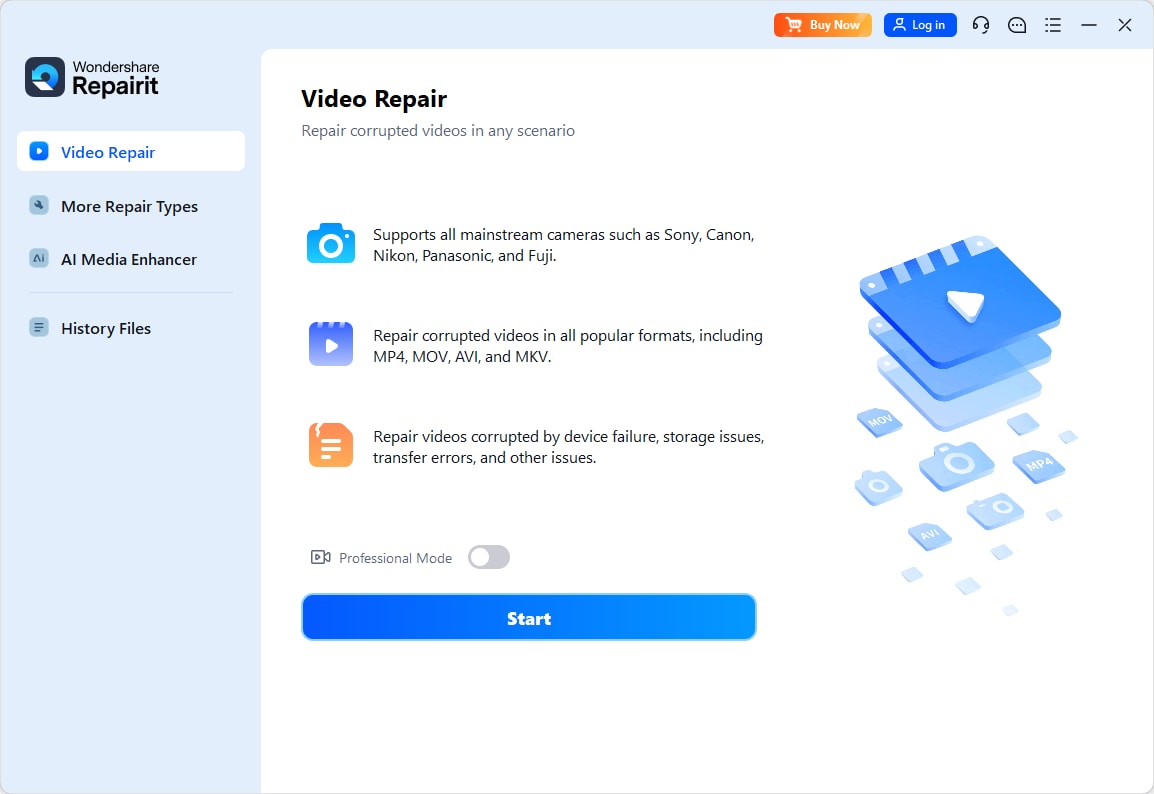
Open Repairit and switch to the Video Repair module. Click the add button or drag and drop your damaged clips into the window. You will see each corrupted file listed with its basic information so you can confirm you selected the right footage.
- Repair video files
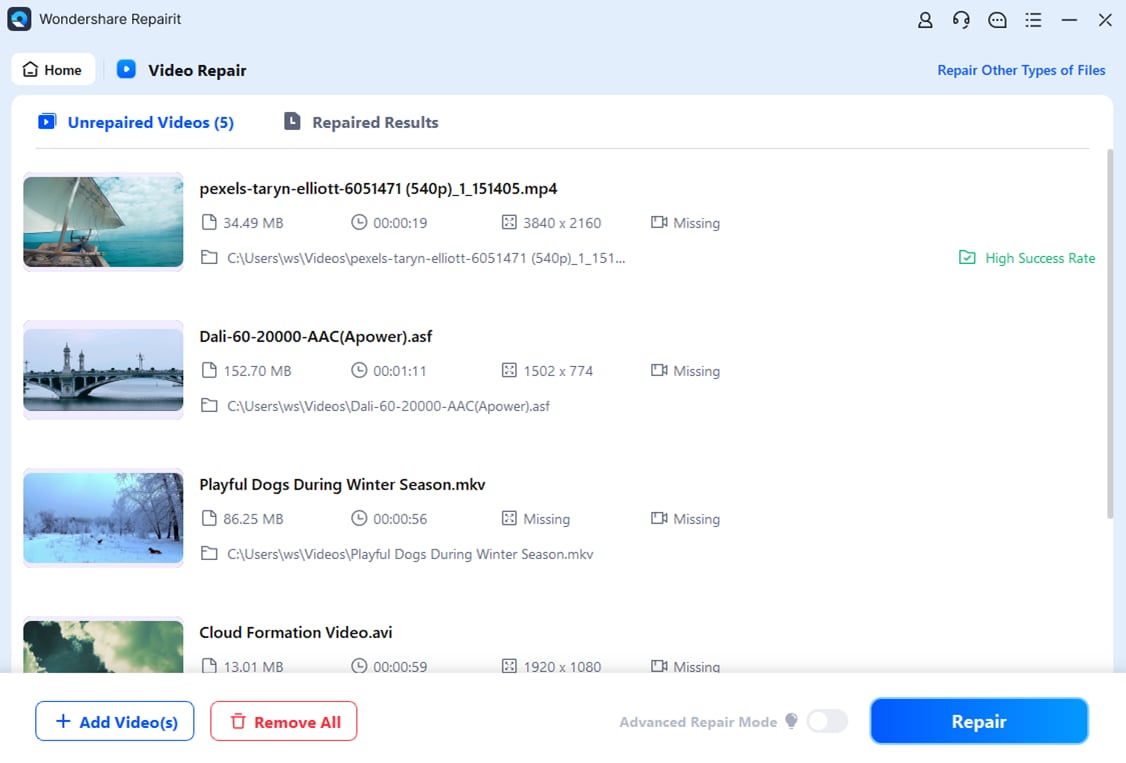
Select the clips you want to fix and start the repair process. Repairit scans the structure of each video, looks for issues like unreadable headers, playback errors, or visual glitches, and then applies the appropriate repair routines. When the analysis is finished, you can preview the repaired result to check picture and sound.
- Save the repaired video files
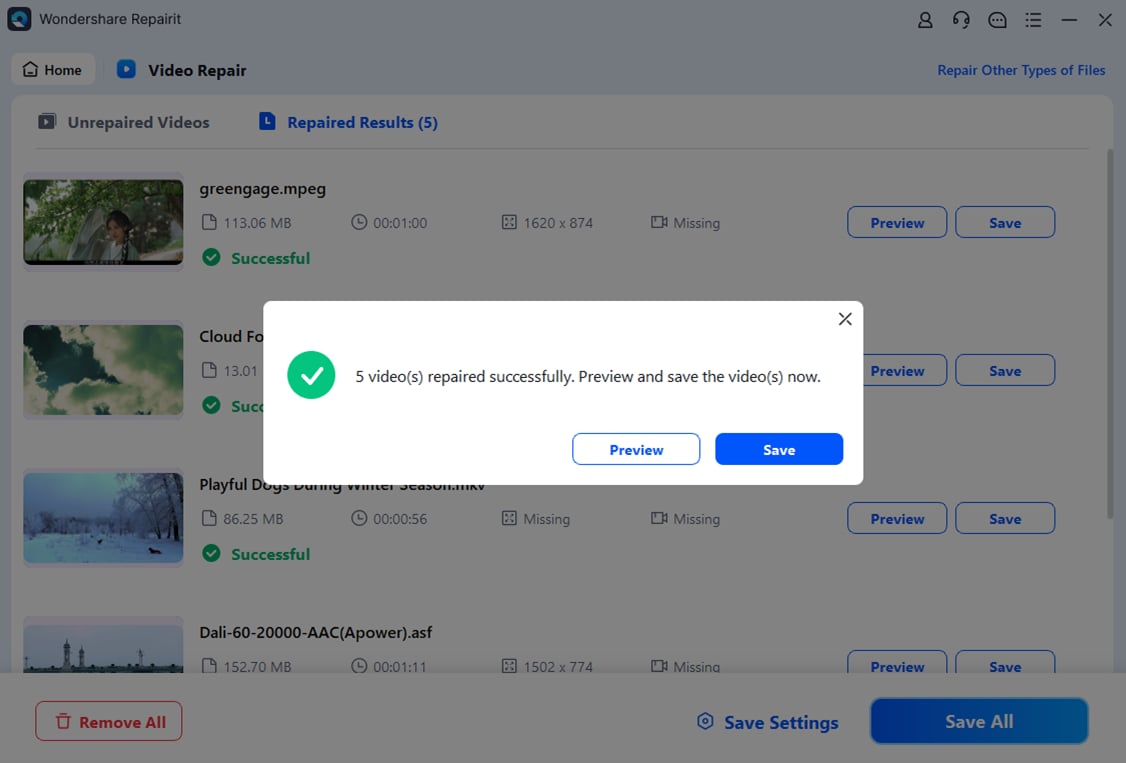
If the preview looks good, choose a safe output folder that is different from the original source location. Click Save to export the repaired files. The recovered clips can then be imported back into your NLE, color grading software, or playback device just like any other video.
Conclusion
Video dynamic range is one of the main factors that separates flat, harsh images from rich, cinematic footage. It describes how much detail your camera, codec, and display can preserve from the darkest shadows to the brightest highlights, and it affects everything from exposure decisions on set to grading, encoding, and final playback.
When you understand how dynamic range in video interacts with log profiles, HDR formats, compression, and platform support, you can make smarter choices and keep more information in your images. And if technical problems corrupt your files along the way, a repair tool like Repairit gives you a practical way to restore valuable clips instead of losing them.
Next: What is Video Shutter Speed?
FAQ
-
1. What is video dynamic range in simple terms?
Video dynamic range is the difference between the darkest and brightest parts of a scene that your camera or video file can record with visible detail. A higher range means you can see more texture in both shadows and highlights at the same time. -
2. Is higher dynamic range always better for video?
Higher dynamic range generally gives you more flexibility and protection against clipped highlights or crushed shadows, but it is not the only factor. Lighting, exposure, color grading, and how you deliver the video (SDR or HDR) all influence the final look. -
3. How can I maximize dynamic range in my footage?
You cannot change the sensor's native dynamic range, but you can get closer to its full potential by exposing carefully, using log or flat picture profiles, controlling contrast with lighting and diffusion, and exporting with sufficient bit depth and bitrate. -
4. What is the difference between HDR video and dynamic range?
Dynamic range is the underlying capability to capture or display a spread of brightness values. HDR video is a recording and delivery system (like HDR10 or Dolby Vision) that uses greater dynamic range along with specific metadata so compatible displays can reproduce brighter highlights and deeper shadows. -
5. Can I repair a corrupted HDR or log video file?
Yes, if the file structure is damaged but the data is still present, a repair tool such as Repairit can often rebuild headers, correct errors, and restore playback for SDR, HDR, or log clips. However, if parts of the file have been overwritten or physically lost, full recovery may not be possible.