
Video chroma subsampling is a behind-the-scenes setting you will see on cameras, capture cards, editing software, streaming encoders, TVs, and even Blu-ray discs. It controls how much color detail is stored compared with brightness, which affects video quality, file size, and playback smoothness. Understanding this concept helps you pick the right settings for shooting, color grading, exporting, and streaming so your videos look clean and efficient everywhere they play.
Repair Corrupted Files To Save Your Data
 Security Verified. Over 7,302,189 people have downloaded it.
In this article
What Is Video Chroma Subsampling?
Video chroma subsampling is a video compression method that reduces the amount of color information (chroma) stored for each frame while keeping the full brightness (luma) resolution. It is a technical setting used in recording, encoding, and exporting video to save bandwidth and storage with minimal visible quality loss.
In most digital video, every pixel's brightness is recorded at full resolution, but its color is shared with neighboring pixels. This is possible because the human eye is more sensitive to brightness detail than color detail. Common subsampling formats such as 4:2:0, 4:2:2, and 4:4:4 describe how densely the color information is sampled relative to brightness.
So, you can think of chroma subsampling as a smart shortcut that lets cameras, codecs, and platforms cut file sizes while keeping the picture looking sharp for most viewers.
What Does Video Chroma Subsampling Affect?
Chroma subsampling directly affects how color is rendered in your footage and how efficient your files are. Different sampling patterns change color precision, especially around edges, text, and fine details.
| Format | Main effect |
|---|---|
| 4:4:4 | Full color resolution; best for compositing, graphics, and heavy grading; largest files and highest bandwidth. |
| 4:2:2 | Reduced horizontal color detail; good balance for professional video workflows; cleaner edges than 4:2:0. |
| 4:2:0 | Reduced color detail horizontally and vertically; very efficient for streaming and distribution; standard for consumer formats. |
In real use, chroma subsampling influences:
- Perceived image quality: Fine colored edges, hair, and gradients look cleaner with 4:2:2 or 4:4:4, especially on large displays.
- Green screen and VFX work: Higher chroma detail improves keying around hair, fabric, and motion blur.
- Titles, overlays, and UI elements: Text and sharp graphics can look soft or fringed with 4:2:0, especially when highly saturated.
- File size and bitrates: 4:2:0 uses less data than 4:2:2 and 4:4:4 at the same resolution and frame rate, which is why it dominates streaming and consumer recording.
- Playback and streaming performance: Lower chroma data (4:2:0) is easier to stream over limited connections and plays more smoothly on lower-power devices.
- Compatibility: Many consumer devices and platforms expect 4:2:0 video, while some professional systems can handle 4:2:2 and 4:4:4 without issues.
How Does Video Chroma Subsampling Work in Real Use?
Chroma subsampling in recording and cameras
On many cameras and recorders, you will see subsampling options combined with bit depth and codec choices. For example:
- Consumer mirrorless or DSLRs: often record internally at 4K 4:2:0 8-bit to SD cards.
- Higher-end cinema cameras: offer 4:2:2 10-bit or 4:4:4 in ProRes, DNxHR, or RAW to external or internal media.
- HDMI and SDI outputs: may send 4:2:2 10-bit to external recorders even if the internal recording is 4:2:0.
Behind the scenes, the video signal is converted from RGB into YCbCr (luma + chroma). The luma (Y) remains at full resolution, while the chroma channels (Cb and Cr) are sampled less frequently according to the pattern (4:4:4, 4:2:2, 4:2:0). The resulting data is then compressed by the codec (H.264, H.265, AV1, ProRes, etc.).
Common recording scenarios:
- Event and wedding shooters: Often use 4:2:0 for long recordings to balance card space and quality.
- Commercial and film sets: Prefer 4:2:2 or 4:4:4 because they expect heavy color grading and compositing later.
- Game capture and screen recording: 4:4:4 is ideal for preserving crisp UI text and pixel art, but many consumer cards still default to 4:2:0.
Chroma subsampling in editing, export, and streaming
In post-production, chroma subsampling affects how robust your footage is when you push it during grading or VFX.
- Editing and grading: Footage recorded at 4:2:2 or 4:4:4 holds up better when you adjust white balance, saturation, or apply strong looks. Skin tones and gradients show fewer artifacts.
- Keying and compositing: Chroma key (green screen) operations rely heavily on color edges. 4:4:4 or at least 4:2:2 gives cleaner keys and reduces noisy halos around hair and motion blur.
- Intermediate and mezzanine codecs: Many studios export intermediate masters in ProRes 422, ProRes 4444, or DNxHR 4:2:2 for editing and archive, then deliver in H.264/H.265 4:2:0.
- Streaming platforms: YouTube, Netflix, and most online services re-encode uploads to 4:2:0, even if you upload 4:2:2 or 4:4:4. Starting with higher-quality sources still matters, but the final stream will be chroma-subsampled for efficiency.
- Playback on TVs and devices: Consumer TVs, set-top boxes, and phones are optimized for 4:2:0 playback, so this format is widely used for compatibility and efficiency.
Typical export choices:
- Master/archival file: 4:2:2 or 4:4:4 in a high-bitrate codec.
- Web/social media: 4:2:0 H.264 or H.265 at bitrates tuned for platform recommendations.
- Broadcast: Often 4:2:2 in a standardized wrapper (e.g., MXF with ProRes or XDCAM).
Common Mistakes and Quick Tips
Because chroma subsampling works behind the scenes, it is easy to misunderstand or overlook. Here are common pitfalls and how to avoid them.
Common mistakes
- Confusing resolution with subsampling: Assuming 4K 4:2:0 is always sharper than 1080p 4:2:2. In some workflows, more chroma detail at lower resolution can be more useful (for keying or graphics-heavy work).
- Ignoring subsampling for green screen: Shooting 4:2:0 for chroma key and wondering why edges look noisy or frayed.
- Overvaluing 4:4:4 for casual content: Paying for huge storage and bandwidth gains while your final delivery is a compressed 4:2:0 stream to social media.
- Mixing footage blindly: Combining 4:2:0, 4:2:2, and 4:4:4 clips without checking how they respond to grading, leading to inconsistent color and edges.
- Blaming everything on subsampling: Many visible artifacts actually come from low bitrate or aggressive compression, not just the chroma pattern.
Quick tips
- Use 4:4:4 or at least 4:2:2 if you plan heavy color work, VFX, or green screen. It gives cleaner, more flexible footage.
- Use 4:2:0 for general shooting, live streaming, and social media content where efficiency and long record times matter more than extreme color precision.
- Match your workflow to delivery: If the final product is TV or web streaming in 4:2:0, 4:2:2 is often a good balance for acquisition and editing.
- Watch edges and text: If you see color fringing on titles or UI, check whether your capture/export is locked to 4:2:0 and consider upping it for those elements.
- Test your workflow: Shoot test clips in different subsampling formats, run them through your full pipeline, and compare side by side on your final display.
How to Use Repairit to Fix a Corrupted Video File
Repairit introduction
When you work with highly compressed video, advanced codecs, or complex formats using different chroma subsampling schemes, files can sometimes become corrupted during recording, transfer, or export. Wondershare Repairit is designed to repair damaged or unplayable video files from cameras, phones, drones, or computers so you can recover your work quickly. It handles a wide range of formats and workflows, so you can focus on production instead of troubleshooting broken clips. To explore all features, supported formats, and plans, visit the Repairit official website.
Key features of Wondershare Repairit
- Repairs corrupted or unplayable videos from a wide range of devices and formats, including files affected during recording, transfer, or editing.
- Supports batch repair so you can fix multiple damaged video files at once and streamline your recovery workflow.
- Provides an instant preview of repaired videos before saving, helping you verify playback, audio, and image quality.
Step-by-step: Fix a corrupted video file with Repairit
- Add corrupted video files
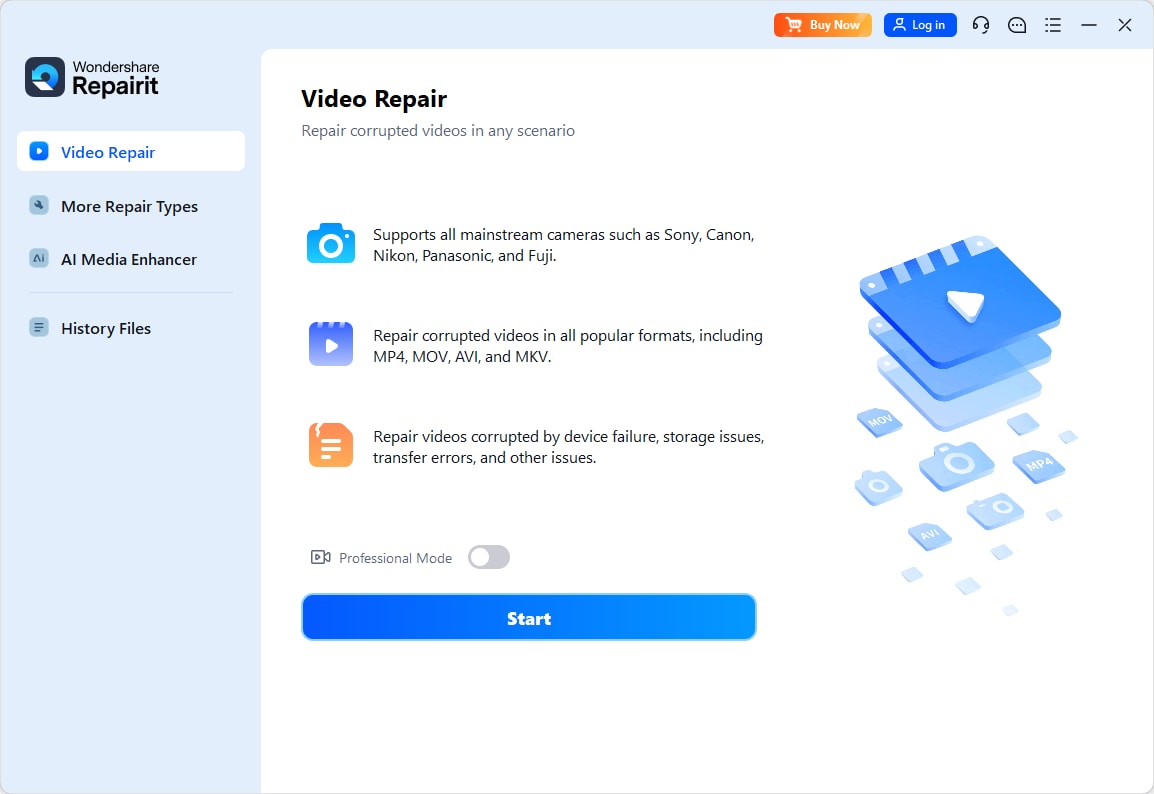
Download and install Wondershare Repairit on your computer, then open the program and choose the Video Repair module. Click the button to add videos, browse to your corrupted or unplayable clips on local drives, SD cards, or external storage, and import them into the list. You can add multiple files if you need to repair a batch of damaged videos at once.
- Repair video files
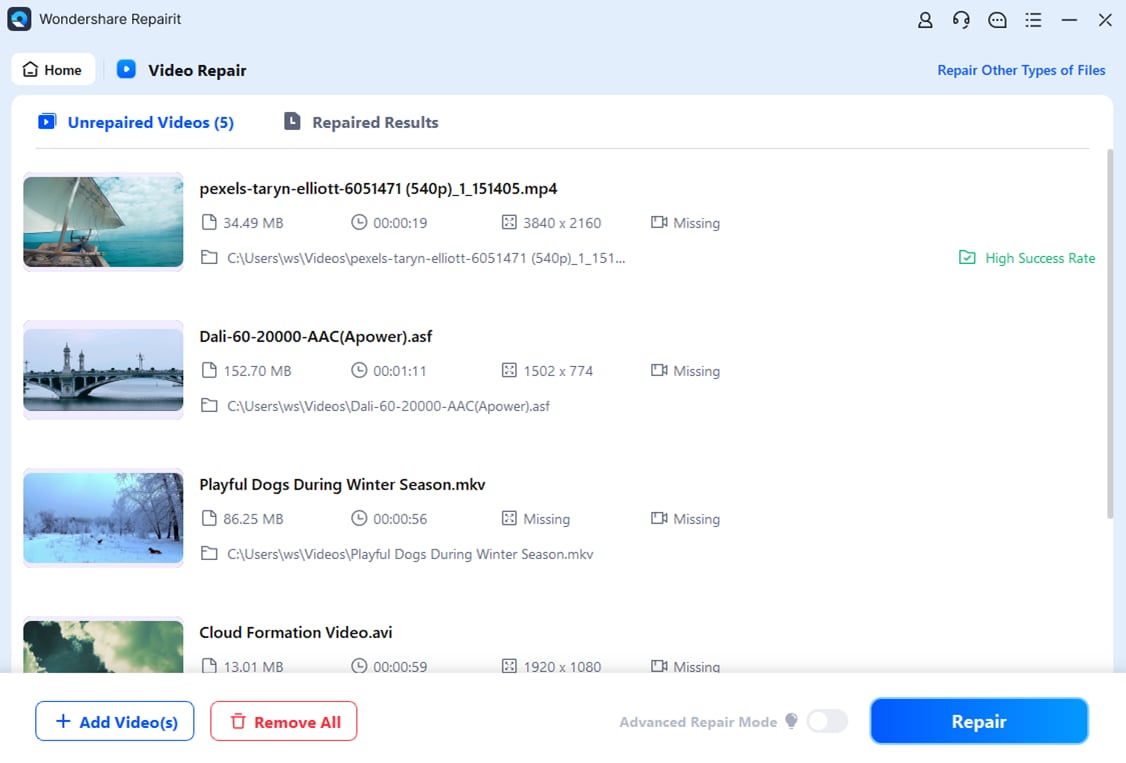
After your videos are loaded, select the clips you want to fix and start the repair process. Repairit will scan each file, analyze its structure, and automatically fix issues in headers, frames, timecode, and audio/video streams. Once the process completes, the software will show you the repair results and let you preview each video to confirm that it now plays correctly.
- Save the repaired video files
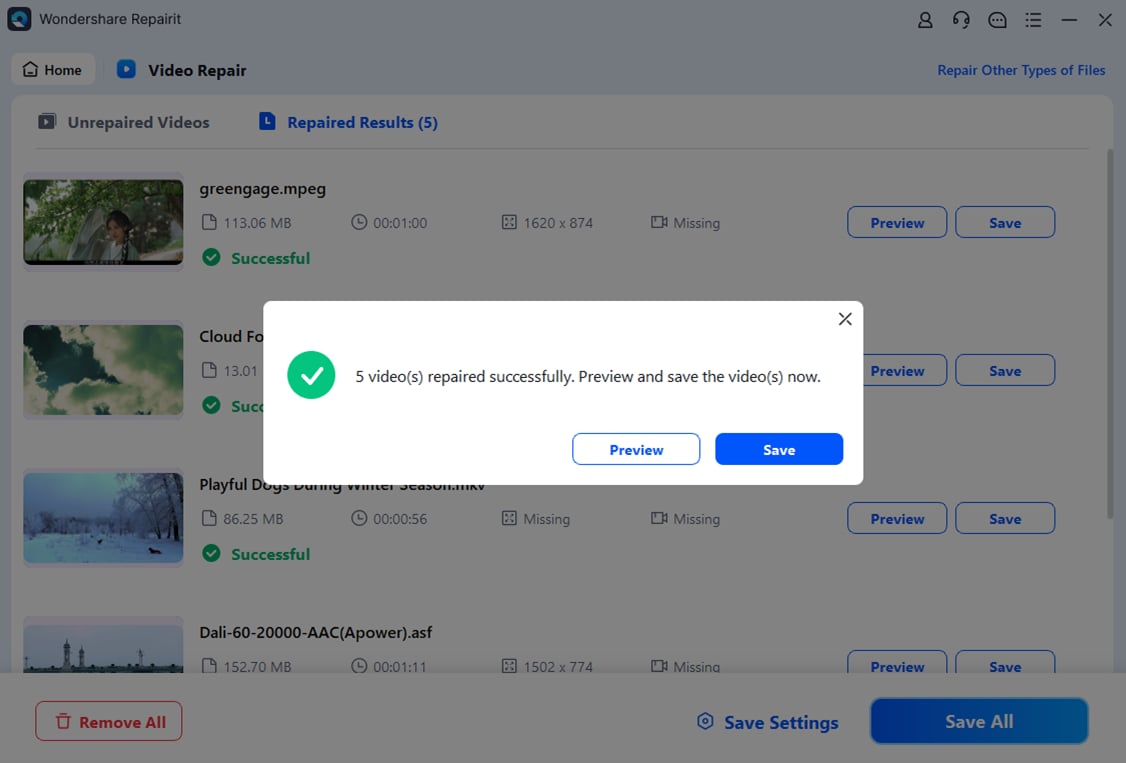
When you are satisfied with the preview, choose a safe output folder that is different from the original location to avoid overwriting damaged files. Click to save, and Repairit will export the repaired versions to your selected destination. You can then open these fixed clips in your editing software, player, or sharing platform and continue your workflow without the previous playback errors.
Conclusion
Video chroma subsampling is a practical compromise between color detail and efficiency. By storing color at a lower resolution than brightness, formats like 4:2:0 and 4:2:2 keep files smaller and streams smoother while still looking sharp enough for most viewers and platforms.
For color-critical projects, green screen work, or intense grading, it is often worth using higher chroma detail such as 4:2:2 or 4:4:4. For everyday recording, streaming, and social media delivery, 4:2:0 is usually sufficient and much more efficient. Knowing how subsampling interacts with recording, editing, export, and playback lets you choose settings that fit your workflow instead of guessing.
Next: What is Video Color Space?
FAQ
-
1. What is video chroma subsampling in simple terms?
Video chroma subsampling is a way of storing less color information than brightness for each frame of video. Since our eyes notice brightness detail more than color detail, this trick makes videos smaller and easier to stream while still looking sharp to most viewers. -
2. What is the difference between 4:4:4, 4:2:2, and 4:2:0?
4:4:4 keeps full color information for every pixel and offers the highest quality, typically used for high-end production, graphics, and VFX. 4:2:2 halves horizontal color resolution and is common in professional cameras and broadcast workflows. 4:2:0 reduces color information both horizontally and vertically and is widely used for consumer cameras, Blu-ray, and streaming because it is very efficient. -
3. When should I choose 4:2:2 or 4:4:4 instead of 4:2:0?
Choose 4:2:2 or 4:4:4 when you plan to do heavy color correction, VFX, or chroma key (green screen), or when you need the cleanest possible edges for text and graphics. For casual shooting, social media uploads, screen recordings for tutorials, or general delivery, 4:2:0 is usually enough and saves a lot of space and bandwidth. -
4. Does chroma subsampling affect sharpness?
Chroma subsampling does not change the resolution of the brightness channel, which is what mainly defines perceived sharpness. However, aggressive subsampling like 4:2:0 can soften colored edges and make small colored text or UI elements look a bit less crisp, especially on large or high-resolution screens. -
5. Can chroma subsampling cause banding or other artifacts?
Chroma subsampling can contribute to banding, blockiness, or muddy edges when combined with low bitrates or heavy compression. The reduced color resolution alone is not always the main problem, but when it is paired with strong compression, artifacts become more visible in gradients, skin tones, and highly saturated areas.