
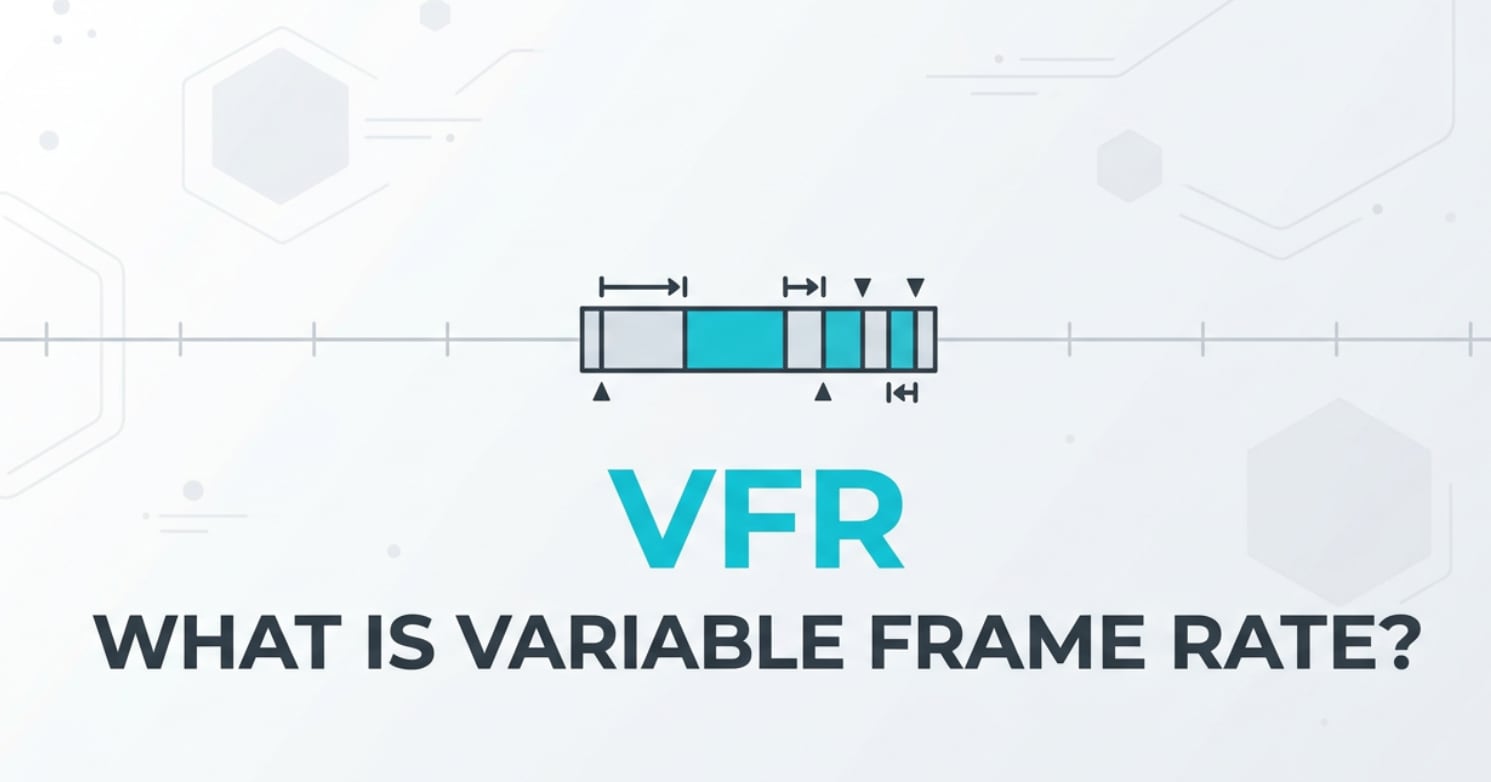
Variable frame rate shows up in smartphone videos, game captures, streaming platforms, and even social media clips. Instead of locking your footage to one frame rate, VFR lets it change while you record. That can make files smaller and smoother on limited hardware, but it can also cause editing problems, audio sync errors, or playback glitches. Understanding how VFR video behaves will help you choose the right settings, fix issues, and keep your final exports looking and sounding correct on any platform.
Repair Corrupted Files To Save Your Data
 Security Verified. Over 7,302,189 people have downloaded it.
In this article
What Is Variable Frame Rate (VFR)?
Variable frame rate (VFR) is a video recording and encoding method where the number of frames per second can change throughout the clip instead of staying fixed. It is a video parameter and a technical setting that controls how smoothly motion is captured over time.
With VFR vs CFR (constant frame rate), the key difference is consistency. A constant frame rate might always be 30 fps or 60 fps, while a VFR video may record fast-moving scenes at a higher effective fps and slower or static scenes at a lower fps. This dynamic behavior helps devices balance quality, performance, and file size, especially on phones, webcams, and streaming tools.
What Does Variable Frame Rate (VFR) Affect?
Quality, smoothness, and file size
Because variable frame rate allows fps to change, it directly influences how smooth your video looks and how large the file becomes.
- When motion is intense (sports, games, quick camera moves), VFR may use more frames to keep motion fluid.
- When a scene is still (talking head, slides, static UI), VFR can reduce frames, lowering file size without a big visual penalty.
- Compared to a high constant frame rate, VFR usually produces smaller files at similar perceived smoothness.
However, if the recording or encoding is too aggressive in dropping frames, you might notice uneven motion or slight stutters, especially when scrubbing through a timeline in an editor.
Editing, playback, and platform compatibility
VFR does not just affect appearance; it also affects workflow and compatibility.
- Editing timelines: Many editors assume a constant frame rate. When imported VFR clips are treated like CFR, frame timing can be misread.
- Audio sync: Because timecodes and frame counts are inconsistent, audio that was in sync during recording may drift out of sync inside some editors or on older players.
- Exporting and streaming: Some platforms re-encode everything to a constant frame rate on upload. Others accept VFR but may transcode it differently, which can expose hidden timing issues.
- Hardware players and TVs: Older devices and basic media players may struggle with VFR, leading to choppy playback or skipping segments.
Choosing between VFR vs CFR matters most when you plan to edit heavily, sync multiple cameras, or deliver to strict broadcast or professional standards.
How Does Variable Frame Rate (VFR) Work in Real Use?
In real-world tools and devices, variable frame rate is often enabled by default, especially when the priority is convenience or file size.
- Smartphones: Many camera apps quietly use VFR for regular video and slow motion. They adjust fps based on lighting, motion, and CPU load to avoid dropped frames.
- Screen recorders and game capture: Popular PC and console recording tools use VFR to cope with fluctuating performance. When your game briefly drops from 120 fps to 80 fps, the recorder adapts instead of freezing.
- Streaming platforms: Some encoders, especially browser-based or lightweight stream tools, output VFR to handle network or CPU spikes more gracefully.
- Video editors: Modern NLEs like Premiere Pro, DaVinci Resolve, and others have improved VFR support, but timelines still usually run at a fixed constant frame rate. The software internally maps fluctuating VFR timestamps onto that fixed timeline, which is where tiny errors can creep in.
When exporting, you often get a choice between keeping the original VFR or forcing CFR. For maximum compatibility and smoother editing, re-encoding to CFR in tools like HandBrake or FFmpeg is common, especially before long-form editing or multi-cam projects.
Common Mistakes and Quick Tips
- Mistake: Assuming all video is constant frame rate. Many people do not realize their phone or screen recorder is producing VFR video until audio goes out of sync in an editor.
- Mistake: Blaming only the editor for audio drift. The issue is often the mix of VFR footage with a fixed timeline, not just buggy software.
- Mistake: Ignoring export settings. Keeping VFR through multiple re-encodes or uploads can amplify small timing problems.
Quick tips for beginners:
- For heavy editing or precise audio sync, convert VFR to a constant frame rate file before starting the project.
- When possible, turn off VFR in your camera or screen recorder and select a fixed fps like 24, 30, or 60.
- Test a short clip in your editor to see how it handles VFR before recording a full event or tutorial.
- If you notice glitches, stutters, or unplayable segments, check whether the file is VFR and consider a repair or re-encode.
How to Use Repairit to Fix a Corrupted Video File
When VFR recordings are interrupted, badly transcoded, or handled by incompatible software, clips can become corrupted, refuse to open, or show severe glitches. Wondershare Repairit is built to tackle exactly these problems. It repairs damaged, unplayable, or broken videos from cameras, phones, and screen recorders, including files affected by variable frame rate issues. You can learn more on the Repairit official website.
Key features of Repairit
- Repairs corrupted or unplayable videos from cameras, phones, and screen recorders.
- Supports multiple formats and resolutions, including HD and 4K footage.
- Offers both quick repair and advanced repair for severely damaged files.
Step-by-step: Repair corrupted VFR videos
- Add corrupted video files
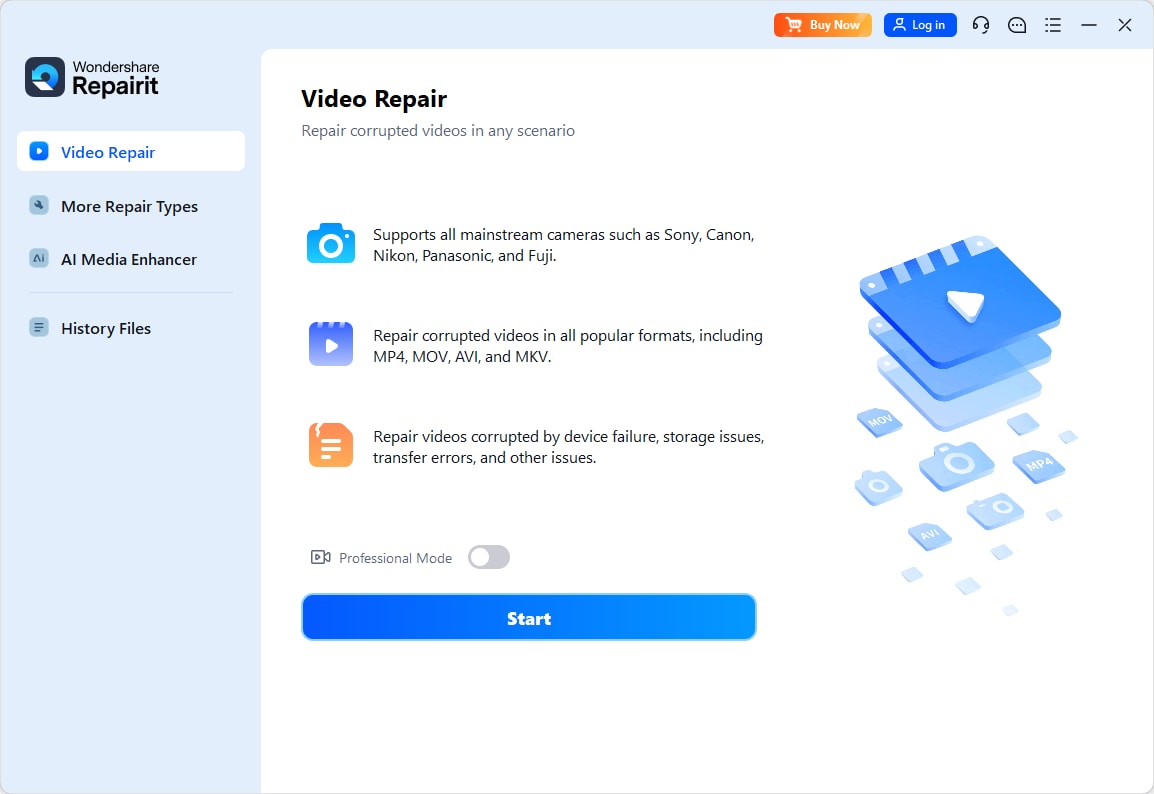
- Repair video files
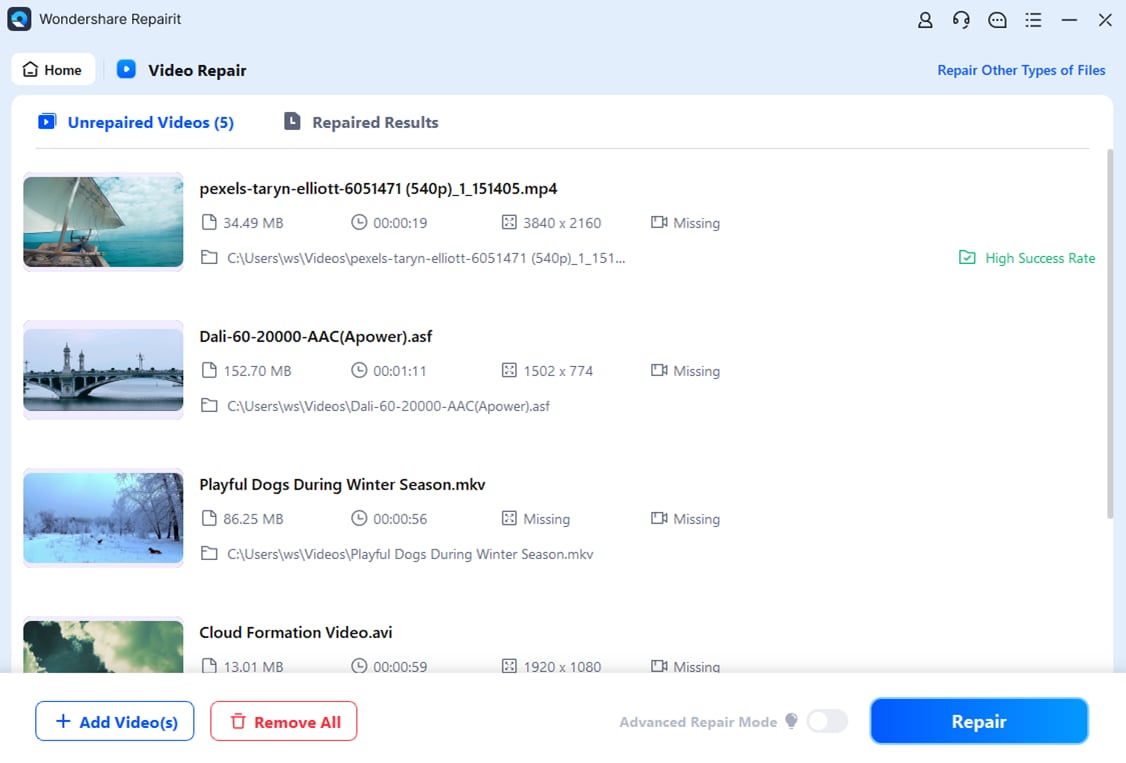
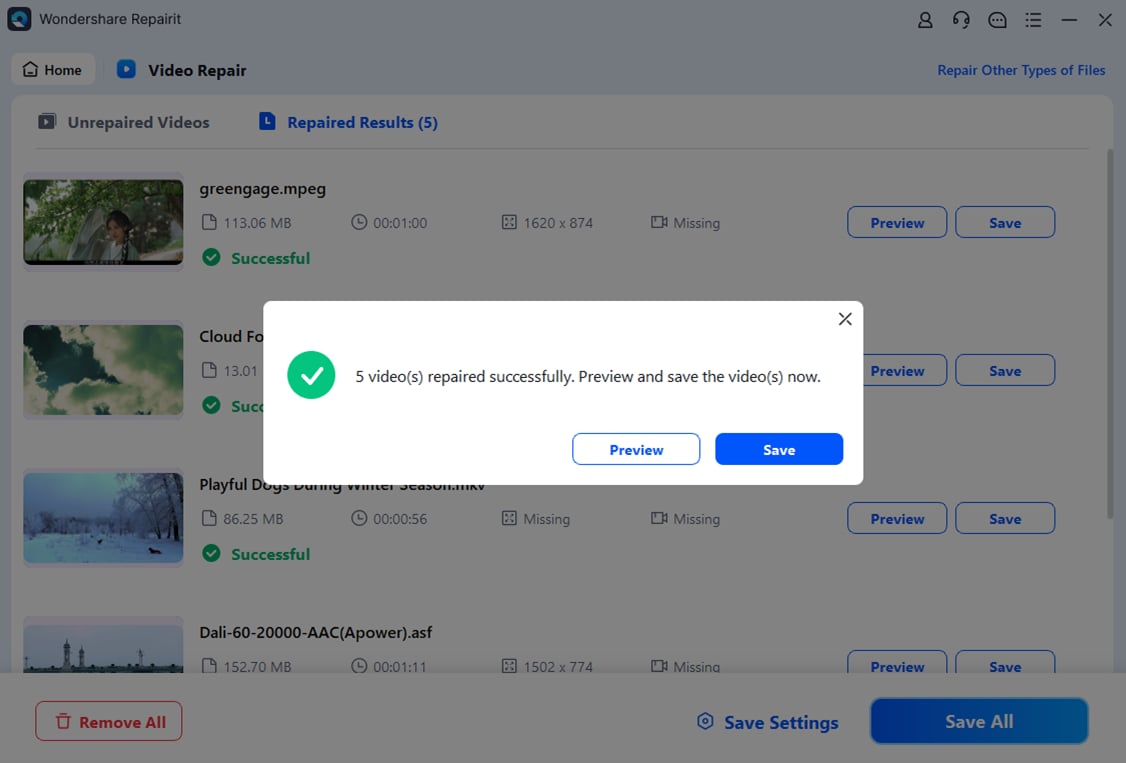
- Save the repaired video files
Conclusion
Variable frame rate (VFR) is a smart way for devices to balance motion smoothness, performance, and file size, which is why it is so common in smartphones, screen recordings, and streaming. However, the same flexibility that makes VFR convenient can create audio sync issues, editing headaches, and compatibility problems with software that expects a fixed timeline.
By understanding how VFR vs CFR differ, choosing the right settings when you record, and converting to a constant frame rate when your workflow demands it, you can avoid most of these issues. And if a recording becomes corrupted or will not play correctly, Repairit gives you a straightforward way to repair the file and recover your footage.
Next: What is Constant Frame Rate (Cfr)?
FAQ
-
1. What is Variable Frame Rate (VFR) in simple terms?
Variable frame rate means your video does not stay at one fixed frames-per-second value for the whole clip. Instead, the recording changes how many frames it stores each second based on motion or recording conditions, which can save space and help performance. -
2. Why does VFR cause audio out of sync in editors?
Many editors and players assume a constant frame rate when they line up audio and video. With VFR, the frame timings vary, so timecodes may not match the fixed timeline exactly, causing the audio to slowly drift ahead of or behind the picture. -
3. How can I convert VFR to Constant Frame Rate?
You can convert VFR to CFR using tools like HandBrake or FFmpeg. Import your VFR clip, choose a target fps (for example, 24, 30, or 60), enable the option to use a constant frame rate, then export a new file for editing or uploading. -
4. Can VFR damage or corrupt my video files?
VFR itself does not inherently corrupt videos, but interruptions during recording, incompatible software, or bad transcodes of VFR footage can lead to broken headers, missing data, or unplayable files. These problems are often blamed on VFR because the source was recorded that way. -
5. How do I fix a corrupted VFR video?
First, make a backup copy of the original file. Try opening it in different players or converting it to a constant frame rate with a reliable tool. If it still will not play or is heavily glitched, use a repair utility like Wondershare Repairit to analyze and rebuild the damaged video structure.




