
HDR10 video is everywhere today: on Netflix and Disney+, in PS5 and Xbox games, and on 4K TVs, monitors, and even phones. You will see HDR labels when recording, editing, exporting, or streaming videos, but many people are unsure what they really mean. Understanding what is HDR10 and how it behaves on different screens helps you avoid dull, washed-out images and get the best picture quality from your movies, clips, and games.
Repair Corrupted Files To Save Your Data
 Security Verified. Over 7,302,189 people have downloaded it.
In this article
What Is HDR10 Video?
HDR10 video is a type of high dynamic range (HDR) video standard that increases the range between the darkest and brightest parts of an image and expands the color gamut beyond standard dynamic range (SDR). Technically, it is a video format and mastering standard used when capturing, encoding, and displaying HDR content.
In technical terms, HDR10 sets rules for things like maximum brightness (up to 1,000 nits or more), 10-bit color depth, and the BT.2020 color space, plus static metadata that tells your TV how bright the content was mastered. It belongs to the category of high dynamic range video formats, alongside HDR10+, Dolby Vision, and HLG.
For beginners, you can think of HDR video format like HDR10 as an upgraded recipe for video: it contains more brightness and color information, so compatible screens can show images that look closer to what your eyes see in real life.
What Does HDR10 Video Affect?
HDR10 video changes how your content looks on screen rather than how it sounds or how big the file is by default. Here is what it affects most directly:
- Brightness and contrast: HDR10 allows much brighter highlights (sunlight, reflections, explosions) while keeping deep, detailed shadows. Compared with HDR10 vs SDR, SDR typically clips bright areas and crushes dark parts.
- Color richness: With 10-bit color, HDR10 can show up to 1.07 billion shades instead of 16.7 million on 8-bit SDR. This reduces banding in skies and gradients and gives more nuanced skin tones.
- Perceived detail: Because bright and dark areas retain detail at the same time, objects look more three-dimensional and realistic, especially in high-contrast scenes.
- Picture style and mood: Correctly set up, HDR10 makes scenes look punchier and more lifelike. Misconfigured, it can look too dark, washed out, or overly saturated.
- Compatibility: HDR10 is the most widely supported HDR standard, so most HDR TVs, monitors, consoles, and streaming boxes use it as the default HDR baseline.
HDR10 itself does not automatically double your file size, but HDR masters often come with higher resolutions (like 4K), higher bitrates, and 10-bit color, which can result in larger files compared with older SDR encodes.
How Does HDR10 Video Work in Real Use?
HDR10 in recording, editing, and exporting
You may encounter HDR10 video at several points in your workflow, from shooting to delivery.
- Shooting HDR10 on cameras and phones: Some mirrorless cameras, action cams, and phones can record in HDR modes that target HDR10. You might see settings like "HDR", "HLG", or "PQ". For HDR10 delivery, recording in a log or PQ-based profile and grading for HDR10 later is common.
- Editing HDR10 footage: In editors such as Adobe Premiere Pro, DaVinci Resolve, or Final Cut Pro, HDR-aware timelines handle the extra brightness and color. You may create a "HDR10" or "Rec.2100 PQ" project and monitor on an HDR display to see accurate results.
- Exporting HDR10: When exporting, you would choose a high dynamic range profile with 10-bit color and Rec.2020/Rec.2100 color space. The software writes static HDR10 metadata, including mastering display brightness and content light levels, so TVs know how to tone-map the video.
- Platform delivery: Streaming platforms like YouTube, Netflix, and Amazon Prime Video accept HDR10 masters and create multiple encodes for different bandwidths, while preserving HDR metadata for capable devices.
HDR10 in streaming and everyday playback
On the viewing side, HDR10 settings and device support determine how good your HDR looks.
- TVs and monitors: Most 4K HDR TVs and many PC monitors support HDR10 by default. On TVs, you typically enable "HDR", "HDMI UHD Color", or "Enhanced mode" on the specific HDMI port. On Windows and macOS, you can turn on HDR in system display settings on compatible monitors.
- Consoles and streaming boxes: Devices like PS5, Xbox Series X|S, Apple TV 4K, Roku, and Fire TV often use HDR10 as the base HDR format. You will see toggles such as "Allow HDR10" or general "HDR" options that need to be enabled.
- Apps and services: Streaming apps show badges like "HDR" or "HDR10" on supported titles. Correct HDR playback requires all three: HDR-capable display, HDR-capable device, and HDR content.
- PC playback and editing: On computers, playing HDR10 in players like VLC, MPC-HC, or built-in apps may require an HDR display and OS-level HDR enabled. Some software will tone-map HDR10 down to SDR if your monitor does not support HDR, which changes the look but keeps the video viewable.
When everything is set properly, you should see brighter but not blown-out highlights, detailed dark areas, and vivid but natural colors. If anything in the chain does not understand HDR10, the picture can quickly look flat, gray, or too dim.
Common Mistakes and Quick Tips
Frequent misunderstandings about HDR10
- Thinking HDR10 will always look better than SDR on every screen, even if the display is not truly HDR-capable.
- Assuming any "HDR" switch on a cheap monitor means it supports genuine HDR10 performance.
- Mixing HDR10 and SDR clips on a timeline with no color management and expecting consistent output.
- Judging HDR brightness in a fully sunlit room and then calling it "too dark" when the TV is actually following the HDR standard.
- Believing all HDR formats (HDR10, HDR10+, Dolby Vision, HLG) are interchangeable and will look the same.
Quick tips for better HDR10 results
- Confirm your TV or monitor lists HDR10 support and use the correct HDMI port, often labeled "4K HDR" or "HDMI 2.0/2.1".
- Select an accurate picture mode such as "Movie", "Cinema", or "Filmmaker", then enable HDR and any tone-mapping options recommended by the manufacturer.
- On consoles and streaming devices, run their HDR calibration tools so they set correct black and white points for your screen.
- When editing, use HDR-aware color management (Rec.2100 PQ) and monitor on a real HDR display whenever possible.
- If a specific clip looks bad, try playing it on another HDR device or in a different app to see if it is a file issue or a playback issue.
Key takeaways
- HDR10 video is a widely supported HDR standard that boosts brightness, contrast, and color range.
- The full benefit appears only when content, device, and display all support HDR10 and are configured correctly.
- When clips fail to play or appear badly distorted, there may be file corruption that requires repair, not just a settings tweak.
How to Use Repairit to Fix a Corrupted Video File
Why use Repairit for HDR10 video repair?
When corrupted HDR video files will not open, freeze in the middle, or show strange colors and artifacts, adjusting HDR settings alone cannot help because the data itself is damaged. Repairit official website offers a dedicated media repair solution that helps recover broken clips, including fix HDR10 video files from cameras, phones, capture cards, or streaming downloads. Instead of complex manual tools, Repairit provides a guided, click-through process to analyze and rebuild video structure so your footage becomes playable again.
Key features of Repairit
- Fix hdr10 video and many other formats, resolutions, and codecs using an automatic repair engine.
- Handle playback errors such as videos not opening, freezing, stuttering, or showing corrupted frames and colors.
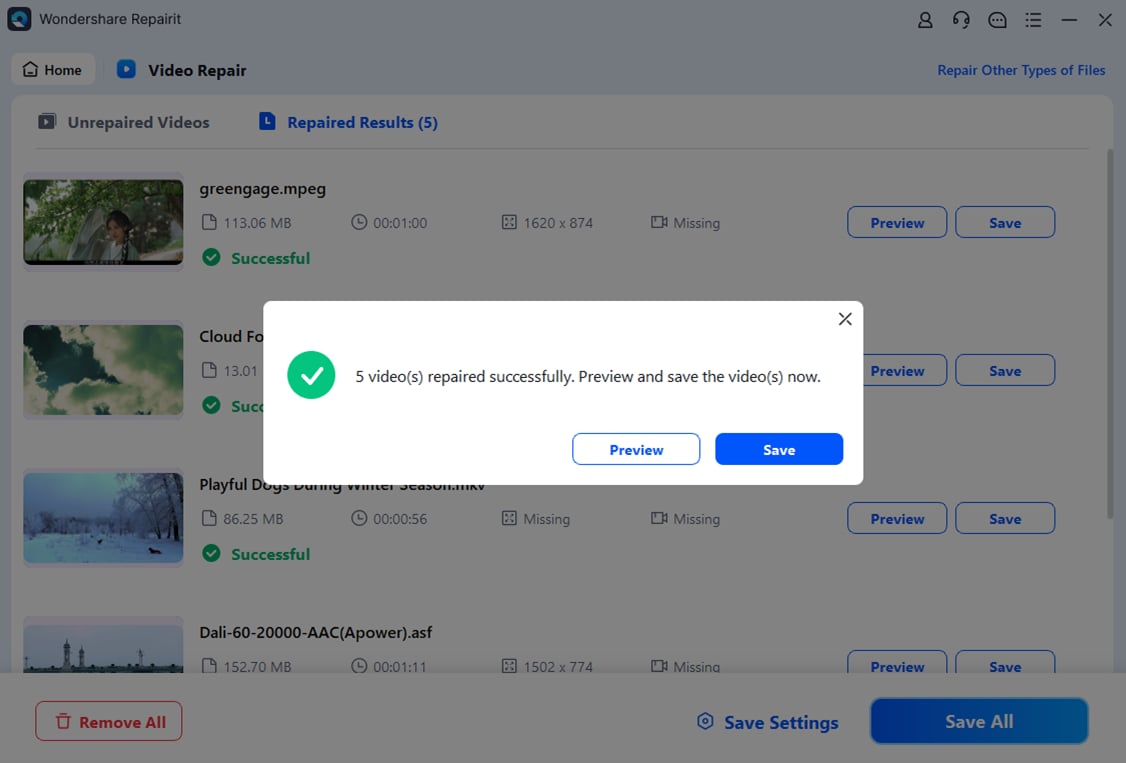
- Offer an intuitive interface with file preview after repair so you can confirm quality before saving.
Step-by-step: repair corrupted HDR10 video files
- Add corrupted video files
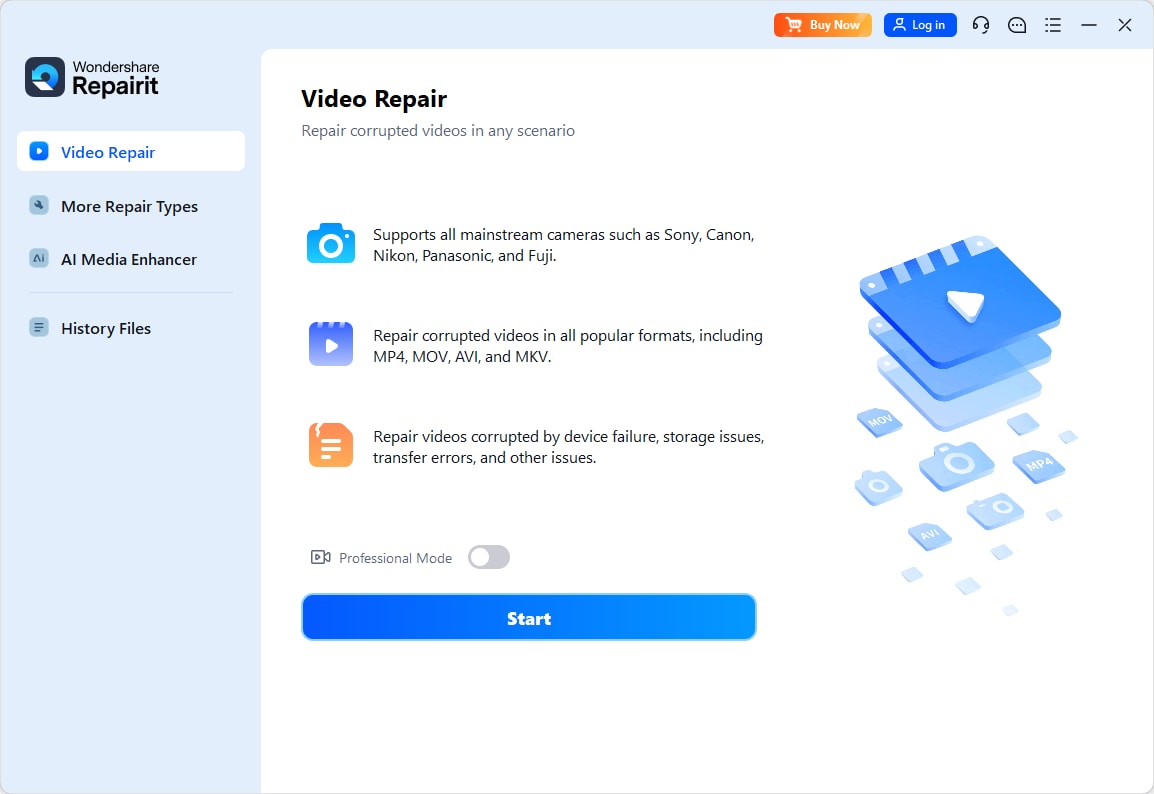
- Repair video files
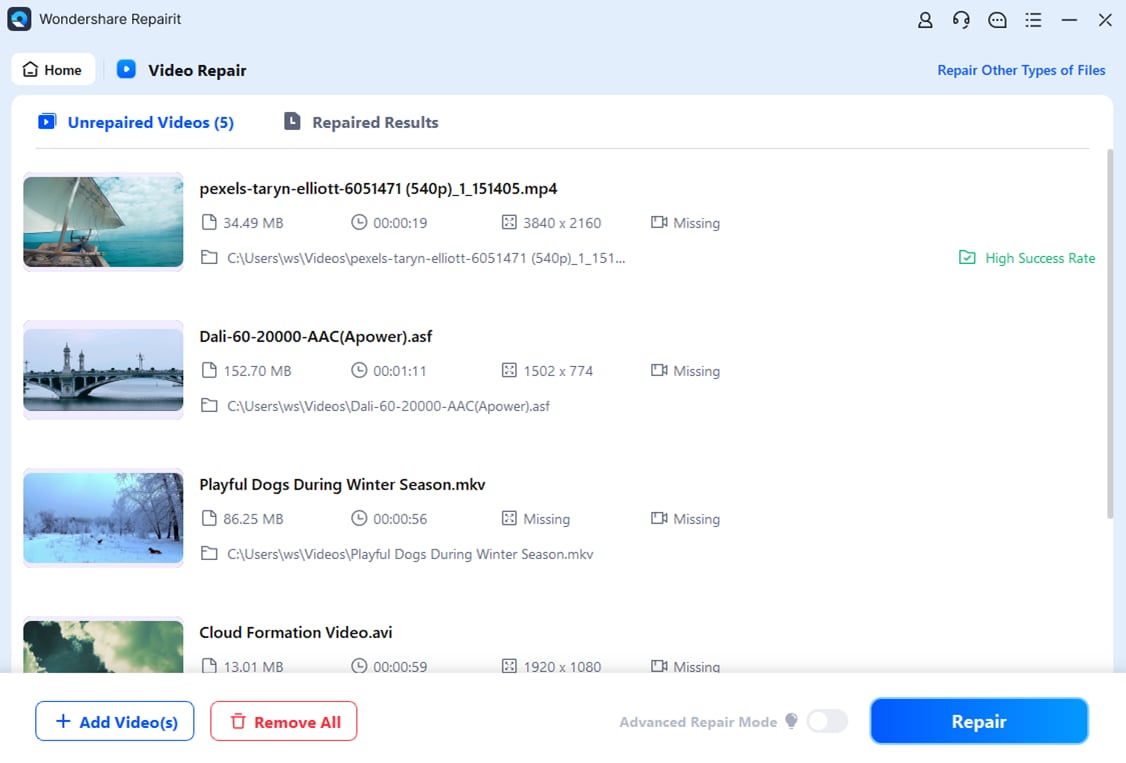
- Save the repaired video files
Conclusion
HDR10 video is a foundational HDR video format that significantly improves picture quality compared with SDR by extending brightness, contrast, and color. It is widely supported across TVs, monitors, game consoles, streaming boxes, and major video platforms, which makes it the most common way viewers experience high dynamic range today.
To get the best results, you need HDR10-capable hardware, properly configured settings, and well-mastered content. If your HDR clips become unplayable or show serious visual errors, the problem may be file corruption rather than simple misconfiguration. In those cases, using a dedicated video repair tool like Repairit helps you recover important HDR10 recordings and keep enjoying high-quality playback without reshooting or redownloading videos.
Next: What is Dolby Vision Hdr?
FAQ
-
1. What is HDR10 video in simple terms?
HDR10 video is a high dynamic range format that lets compatible screens show brighter highlights, deeper shadows, and a wider range of colors than standard dynamic range (SDR). This makes movies, shows, and games look more realistic and detailed, especially in high-contrast scenes.
-
2. Do I need a special TV or monitor for HDR10 video?
Yes. Your display must explicitly support HDR10, and HDR mode must be enabled in its settings. You also need an HDR-capable playback device (such as a 4K Blu-ray player, game console, or streaming box) plus HDR10 content from discs, apps, or files.
-
3. Why does my HDR10 video look too dark or washed out?
Usually this is caused by incorrect picture modes, disabled HDR options, or tone-mapping issues. Check that HDR is enabled on both the TV/monitor and your device, use the recommended HDR picture mode, select the correct HDMI port, and try running any built-in HDR calibration tools.
-
4. Can HDR10 video be converted to SDR?
Yes. Many video editors and converters can map HDR10 content down to SDR, a process called tone mapping. The final look depends on how well the software compresses the wider brightness and color range into SDR, so results can vary between tools.
-
5. How do I repair a corrupted HDR10 video file?
First, try playing the clip on another device or in another media player and copy it to local storage if it is on a card or external drive. If the video still will not play or shows heavy glitches, use a dedicated video repair tool like Repairit to scan, repair, and export a fixed version of your HDR10 file.