Dolby Vision HDR is a premium high dynamic range video format you will see on 4K TVs, Netflix, Disney+, UHD Blu-rays, iPhones, Android phones, game consoles, and professional cameras. It matters because it can deliver brighter highlights, deeper blacks, and richer color than regular video and many basic HDR formats, but only when your gear and files are set up correctly.
Repair Corrupted Files To Save Your Data
 Security Verified. Over 7,302,189 people have downloaded it.
In this article
What Is Dolby Vision HDR?
Dolby Vision HDR is an advanced high dynamic range video format created by Dolby. It is a type of high dynamic range video standard, similar to HDR10 and HLG, but designed to be more precise and flexible.
From a technical viewpoint, it is a combination of:
- A video signal (usually 10-bit or 12-bit color)
- Extra dynamic metadata that tells your TV or display how to map brightness and color for each scene or even each frame
In everyday language, when you see the Dolby Vision logo on your TV, streaming app, or smartphone, it means the video is encoded with this metadata so that compatible screens can show more detail in bright highlights, shadows, and color gradients than standard dynamic range (SDR) or some basic HDR formats.
As a category, Dolby Vision HDR is both:
- A video parameter that affects color, brightness, and contrast
- A content format and playback standard that impacts how you record, edit, export, stream, and view video
What Does Dolby Vision HDR Affect?
Picture quality and realism
The biggest impact of Dolby Vision HDR is on image quality and realism across TVs, monitors, phones, and projectors.
- Brightness and highlights – Dolby Vision content can be mastered up to 4,000 nits or more, letting you see intense sunlight, explosions, neon lights, and reflections without them turning into pure white blobs.
- Shadow detail – In dark scenes, you can still see detail in clothing, hair, and background objects instead of crushed blacks.
- Color accuracy and depth – With higher bit depth, the format helps reduce color banding in skies and gradients, and supports a wider color gamut for more saturated and nuanced tones.
- Scene-by-scene optimization – Because it uses dynamic metadata, the tone mapping changes from scene to scene, preserving detail in both very bright and very dark shots within the same movie.
If a movie is mastered in both HDR10 and Dolby Vision, a good Dolby Vision TV can often show smoother gradients, better mid-tone contrast, and more consistent brightness across different scenes.
Playback, compatibility, and workflow
Dolby Vision HDR also affects how your videos behave in the workflow from recording to streaming to playback.
- Playback compatibility – To see Dolby Vision, you need:
- Dolby Vision-capable TV or display
- A player or app that supports Dolby Vision (such as certain UHD Blu-ray players, streaming apps, or consoles)
- Content encoded in Dolby Vision
- File structure – Some Dolby Vision workflows store a base layer (often HDR10) plus an enhancement layer with metadata. Others use single-layer profiles. This affects how easily different devices can decode the file.
- Editing and exporting – When you edit or grade Dolby Vision footage, you must preserve its metadata or re-generate it in supported software. Otherwise, the result may look washed out, too dark, or lose its HDR advantages.
- Streaming performance – Streaming platforms sometimes use more bandwidth for high-quality HDR formats. If your connection is weak, the app may drop to lower-bitrate HDR10 or SDR.
How Does Dolby Vision HDR Work in Real Use?
In real workflows, Dolby Vision HDR shows up at several points: recording, editing, encoding, streaming, and playback.
Recording and capture
Many modern phones and some cameras can record directly in Dolby Vision.
- Smartphones – Recent iPhones and some Android models offer a Dolby Vision option in the camera app. When enabled, the phone captures video in HDR with Dolby Vision metadata baked in.
- Professional cameras – High-end cinema and broadcast workflows may capture in log or RAW formats, then create Dolby Vision masters later during color grading.
When recording, using Dolby Vision affects how your footage will look on HDR-capable displays, but the actual sensor data is still processed and mapped during post-production or within the device.
Editing and color grading
In editing tools like DaVinci Resolve, Adobe Premiere Pro (with plugins), or vendor-specific suites, Dolby Vision appears as an HDR mastering option.
- You may see:
- Dolby Vision analysis and trim controls
- Target peak brightness settings (for example, 1,000 nits, 4,000 nits)
- Profile or level selections depending on your intended distribution (streaming, disc, broadcast)
- Editors often:
- Grade in a wide-gamut HDR space
- Run Dolby Vision analysis so the tool can generate metadata
- Make per-shot trims to optimize how tone mapping appears on different classes of displays
If this process is skipped or misconfigured, the final Dolby Vision stream may look off—either too dim or overly bright on consumer TVs.
Encoding, exporting, and streaming
When exporting, you or your delivery platform must choose a Dolby Vision profile and container format (often MP4, TS, or MKV for files; specific streams for OTT platforms).
- UHD Blu-ray – Uses a base HDR10 layer plus a Dolby Vision enhancement layer and metadata. Compatible players read both and output Dolby Vision to supported TVs.
- Streaming services – Netflix, Disney+, Apple TV+, and others encode multiple versions of the same title:
- SDR
- HDR10
- Dolby Vision
- Local files – When you export from an editor to a file, you must use an encoder that supports Dolby Vision, otherwise it may fall back to HDR10 or SDR only.
Playback and TV settings
On your TV or device, Dolby Vision typically appears as a small logo in the corner when playback starts.
- TV modes – Many TVs have special picture modes like "Dolby Vision Bright" or "Dolby Vision Dark." These modes use the Dolby Vision metadata to adjust tone mapping and color. The "Dark" mode is tuned for a dim viewing room, while "Bright" compensates somewhat for bright environments.
- Source device settings – Consoles, streaming boxes, and media players often have switches like "Allow Dolby Vision" or "Enable HDR." If disabled, content plays back in HDR10 or SDR instead.
- Platform compatibility – Some platforms (like certain smart TV apps or OS versions) only support HDR10, even when the content is available in Dolby Vision elsewhere.
In practice, whether you see Dolby Vision or not depends on a chain: source app or device, HDMI cable quality, AV receiver, and TV. Any weak link can downgrade the signal.
Common Mistakes and Quick Tips
Common misunderstandings about Dolby Vision HDR
- Thinking any HDR equals Dolby Vision – A TV that only supports HDR10 or HLG cannot display Dolby Vision, even if the content is labeled as such on the streaming service. Look specifically for the Dolby Vision logo in your TV specs.
- Assuming Dolby Vision always looks perfect by default – Poor TV calibration, wrong picture modes, or bright viewing environments can make Dolby Vision appear too dark or flat.
- Mixing SDR and Dolby Vision footage without care – When editing, combining SDR and HDR material without proper color management can cause washed-out or oversaturated results.
- Ignoring device output settings – Even capable hardware may output SDR if HDR/Dolby Vision is disabled in menus.
- Overlooking file integrity – Corrupted Dolby Vision HDR files may show green blocks, flickering, or fail to open at all, which is not caused by HDR itself but by file damage.
Quick tips for better Dolby Vision results
- Confirm that your TV, streaming device, and cables all fully support Dolby Vision HDR.
- Use the appropriate Dolby Vision picture mode (Bright or Dark) depending on your room lighting.
- When editing, work in an HDR-aware timeline and use software that supports Dolby Vision metadata.
- Keep original camera files backed up, especially for HDR footage, as re-creating a Dolby Vision grade from scratch can be time-consuming.
- If a Dolby Vision file becomes unplayable or glitchy, use a dedicated video repair tool before assuming the footage is lost.
How to Use Repairit to Fix a Corrupted Video File
Repairit introduction
Because Dolby Vision HDR videos are richer and often larger than standard clips, corruption can be especially painful—those carefully graded highlights and colors suddenly refuse to play, freeze, or show visual artifacts. Wondershare Repairit is designed to solve exactly this problem. It focuses on repairing damaged or unplayable media files, including modern HDR formats, so that you can get your movies, show recordings, and personal projects back. You can learn more and download it from the Repairit official website.
Key features of Repairit
- Repairs corrupted or unplayable videos from various devices and formats, including advanced HDR content such as Dolby Vision HDR.
- Supports batch processing so you can fix multiple video files at once instead of repairing each clip separately.
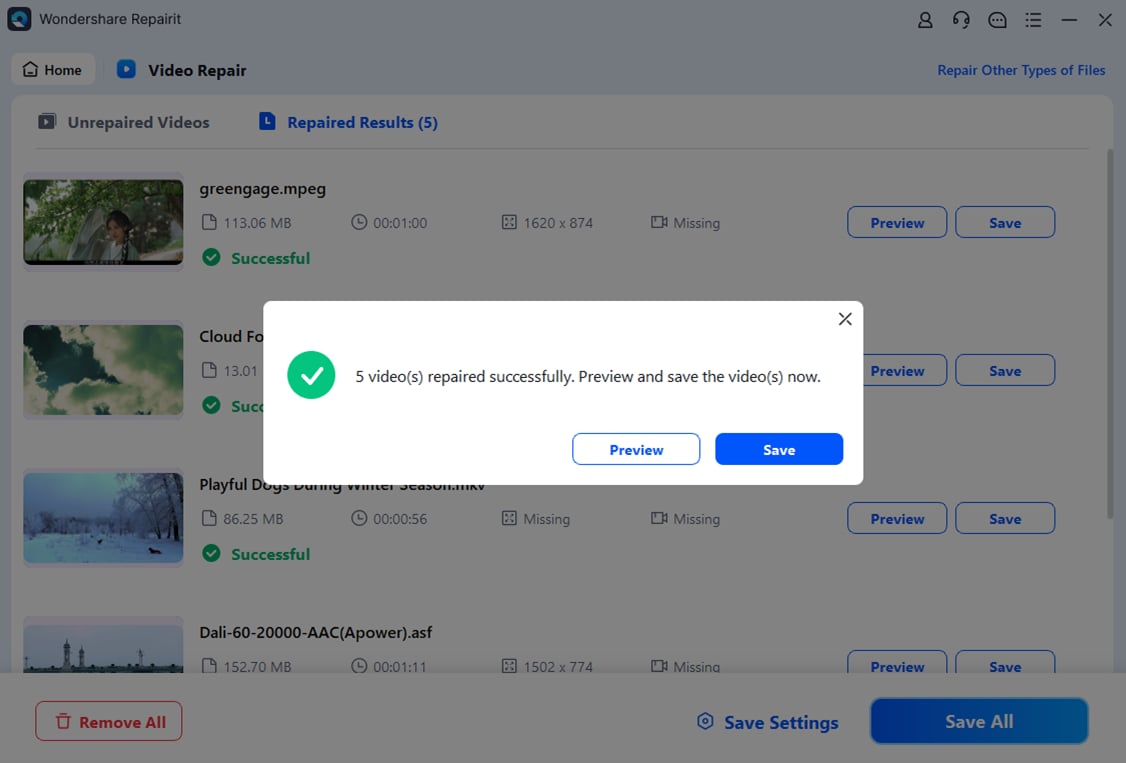
- Lets you preview repaired videos before saving them, ensuring picture and audio quality meet your expectations.
Step-by-step: repair corrupted Dolby Vision HDR video
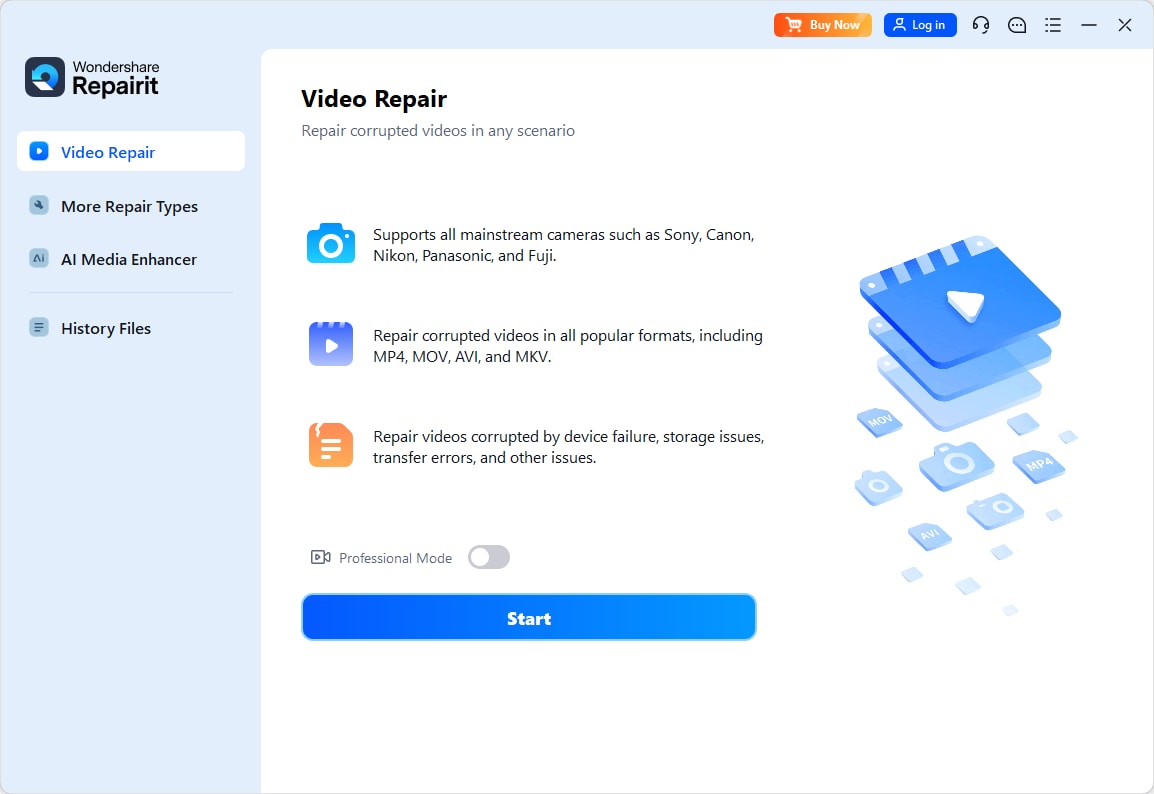
- Add corrupted video files
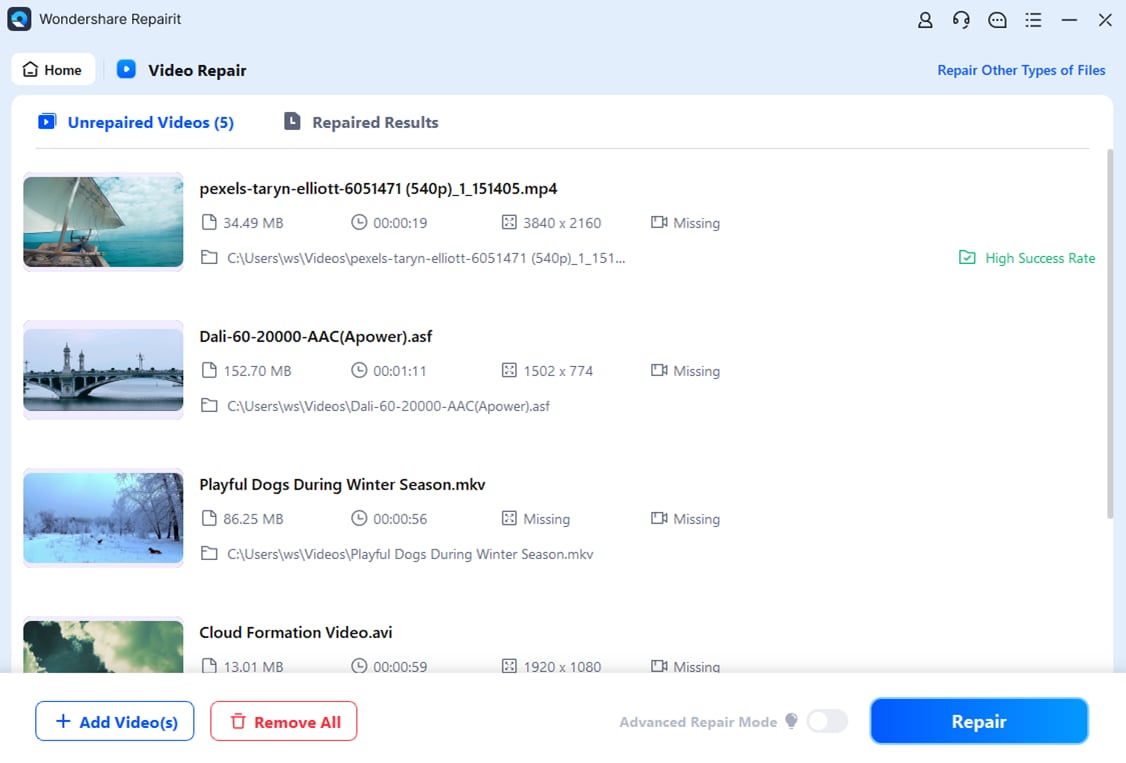
- Repair video files
- Save the repaired video files
Conclusion
Dolby Vision HDR combines high dynamic range imaging with scene-by-scene dynamic metadata and higher bit depth to deliver more lifelike brightness, contrast, and color than standard video and many basic HDR formats. It affects how you capture, grade, encode, and play video, and its full benefits only appear when your TV, playback device, and content all support Dolby Vision correctly.
To get the best experience, pay attention to compatible hardware, proper HDR settings, and a clean workflow from camera to screen. And if your Dolby Vision videos become corrupted or start showing strange artifacts, tools like Wondershare Repairit can often restore them so you can keep enjoying premium HDR visuals instead of losing valuable footage.
Next: What is Hlg Hdr?
FAQ
-
1. What is Dolby Vision HDR in simple terms?
Dolby Vision HDR is an advanced high dynamic range video format that makes movies and shows look more realistic. It uses dynamic metadata to adjust brightness, contrast, and color for each scene, giving you brighter highlights, deeper blacks, and smoother color gradients than standard video. -
2. Do I need a special TV for Dolby Vision HDR?
Yes. Your TV must explicitly support Dolby Vision HDR. Basic HDR10 or HLG support is not enough. Check the specifications or look for the Dolby Vision logo; otherwise the content will play back as HDR10 or SDR instead. -
3. Is Dolby Vision always better than HDR10?
Dolby Vision can look better than HDR10 because it supports dynamic metadata and potentially higher bit depth. However, the difference you see depends on your TV quality, how the content was mastered, your viewing environment, and calibration. On some setups, the gap may be subtle. -
4. Why does my Dolby Vision content look too dark?
Dolby Vision can appear dark if your TV is set to an inaccurate picture mode, if the room is very bright while you are using a "Dark" mode, or if your source device sends the wrong HDR signal. Try switching between Dolby Vision picture modes, lowering room brightness, and checking HDR settings on your TV and player. -
5. How can I fix a corrupted Dolby Vision HDR video file?
If a Dolby Vision HDR video will not play, freezes, or shows heavy artifacts, you can use a video repair tool like Wondershare Repairit. It scans the damaged file, repairs structural issues in the video stream and metadata, and then lets you preview and save a clean, playable version.