
HDR video shows more detail in bright and dark areas than regular video, so scenes look closer to what your eyes see in real life. You will run into HDR video when watching movies on a 4K TV, streaming from Netflix or YouTube, or shooting on modern phones and cameras. Understanding how high dynamic range video works helps you choose the right settings, avoid washed-out images, and keep your footage compatible across players, editors, and social platforms.
Repair Corrupted Files To Save Your Data
 Security Verified. Over 7,302,189 people have downloaded it.
In this article
What Is HDR Video?
HDR video, short for High Dynamic Range video, is a video imaging technology that captures and displays a wider range of brightness and color than standard dynamic range (SDR) video. It is a visual quality and display parameter that controls how bright highlights can be, how deep shadows look, and how many colors are available between them.
In practical terms, high dynamic range video lets you see glowing windows, bright clouds, neon signs, and dark interiors in the same shot without everything turning gray or losing detail. It is used in recording (cameras and phones), encoding and exporting (HDR10, Dolby Vision, HLG), streaming (Netflix, Disney+, YouTube), and playback on HDR TVs, monitors, and mobile screens.
HDR itself is not a single file format; it is a combination of higher bit depth, wider color gamut, and special metadata that tells compatible displays how to map brightness and color. When a device or app does not support HDR correctly, the same file can look washed out, too dark, or completely normal, depending on how it is interpreted.
What Does HDR Video Affect?
HDR video mainly affects how your footage looks, but it also influences your workflow and compatibility.
Brightness and contrast
The biggest change is in perceived brightness and contrast. With hdr brightness and hdr contrast, an HDR-capable screen can show very bright highlights (like sunlight reflections or explosions) while still keeping subtle detail in shadows (like textures in a dark jacket).
On a true HDR display:
- Highlights can be much brighter without clipping to pure white.
- Shadows can show more texture instead of collapsing into flat black.
- Midtones look less muddy because the whole range is stretched more naturally.
On an SDR display, the same HDR file might look dim, gray, or blown out if tone mapping is poorly handled.
Color depth and saturation
HDR color uses more bits per channel (often 10-bit or more) and wider gamuts such as Rec. 2020 compared to the Rec. 709 space used in SDR. This means smoother gradients in skies and skin, fewer banding artifacts, and richer, more precise colors.
However, if you export HDR as SDR or mix SDR and HDR clips without proper color management, you can get:
- Oversaturated or neon-looking colors.
- Desaturated, flat images that look "washed out."
- Visible banding in gradients when reduced to 8-bit SDR.
File size, performance, and compatibility
Because high dynamic range video often uses higher bit depth and more complex encoding, files can be larger and more demanding to decode. This affects:
- Performance: Older devices or weak GPUs may stutter or drop frames when playing 4K HDR.
- Editing: Some NLEs need specific color management settings or plugins to handle HDR correctly.
- Compatibility: Not every platform supports all hdr formats (HDR10, HDR10+, Dolby Vision, HLG), so your choice can determine how your video looks on different TVs, phones, and browsers.
How Does HDR Video Work in Real Use?
In real workflows, hdr video shows up as a chain of settings and standards that start at the camera and end at the viewer's screen. Getting each link right keeps your footage looking correct from recording to final playback.
HDR in recording and editing workflows
Many modern cameras, drones, and phones can record hdr video. You might see options like HDR10, HLG, Dolby Vision, or "HDR" mode in the settings. Enabling these tells the camera to capture more brightness range and encode metadata.
Typical real-world steps:
- Recording: You enable an HDR profile (for example, HDR10 or HLG) in the camera menu. The camera records 10-bit video with extra dynamic range.
- Importing: In editing software (Premiere Pro, Final Cut Pro, DaVinci Resolve, etc.), you must set the project color space and gamma to match your footage (Rec. 2100 PQ or HLG for many HDR workflows).
- Grading: You grade highlights and shadows carefully, watching for clipping and ensuring skin tones stay natural on an HDR preview monitor.
- Exporting: You choose an HDR preset or configure metadata so platforms know the video is HDR. This is where you also pick between different hdr formats, depending on your target platform.
If you want to deliver both HDR and SDR, your editor may create an SDR version via tone mapping, so people without HDR displays still see a good-looking image.
HDR playback and platform compatibility
On the viewing side, hdr playback depends on three main parts: the file, the player, and the display.
- File: The video must be encoded as HDR (HDR10, Dolby Vision, HLG) with proper metadata.
- Player or app: It must recognize HDR and output the right signal (for example, Windows Movies & TV, VLC with settings, streaming apps like Netflix or YouTube).
- Display: The TV, monitor, or phone has to support HDR and be set to an HDR mode.
If any step fails, you run into classic problems:
- HDR on SDR monitor: The video may look low contrast, gray, or overly bright.
- Wrong color space: Locked to Rec. 709 while the file is Rec. 2020, leading to strange skin tones and saturation.
- Bandwidth limits: Using an old HDMI cable or port that does not support full HDR can drop the connection back to SDR or cause flickers.
Streaming services detect your device and adjust automatically: if you have full support, you get HDR; if not, you often receive an SDR version that has been tone-mapped from the original high dynamic range video.
Common Mistakes and Quick Tips
Frequent HDR video misunderstandings
- Assuming HDR is just "extra saturation" instead of a wider brightness and color range.
- Mixing SDR and HDR clips on a timeline without setting a matching color space, causing inconsistent brightness.
- Exporting HDR files but labeling them incorrectly, so players treat them as SDR and display them badly.
- Forcing HDR mode on a non-HDR display, which results in washed-out or exaggerated images.
Quick tips for better HDR results
- Match your camera's HDR profile (HDR10, HLG, Dolby Vision) to your editing project's color space and gamma.
- Test a short clip first, then check it on multiple devices before committing to a full HDR workflow.
- If your HDR looks washed out, check your OS color settings, player HDR toggle, and TV picture mode.
- Keep an SDR-safe copy for platforms or clients who cannot reliably handle hdr playback.
- Back up original HDR masters, because re-converting compressed HDR files between formats can introduce artifacts or crush detail.
Key takeaways: Know whether you truly need HDR, confirm that your entire chain (camera, editor, output, display) supports it, and always monitor what viewers will actually see.
How to Use Repairit to Fix a Corrupted Video File
Repairit introduction
When a valuable hdr video clip refuses to open, freezes halfway, or shows strange color blocks, the footage itself might be corrupted rather than simply misconfigured. Wondershare Repairit is a dedicated repair tool that can analyze and fix damaged video files, including modern hdr formats recorded on cameras, phones, and action cams. It offers a straightforward, guided process that does not require technical knowledge, and you can learn more or download it from the Repairit official website.
Key features of Wondershare Repairit
- Fixes corrupted videos from cameras, smartphones, drones, and action cams, including hdr video footage.
- Supports multiple formats and lets you preview repaired clips before saving them to ensure hdr brightness and color look normal.
- Provides an advanced repair mode for severely damaged files that standard repair cannot fully restore.
Step-by-step guide: repair corrupted HDR video files
- Add corrupted video files
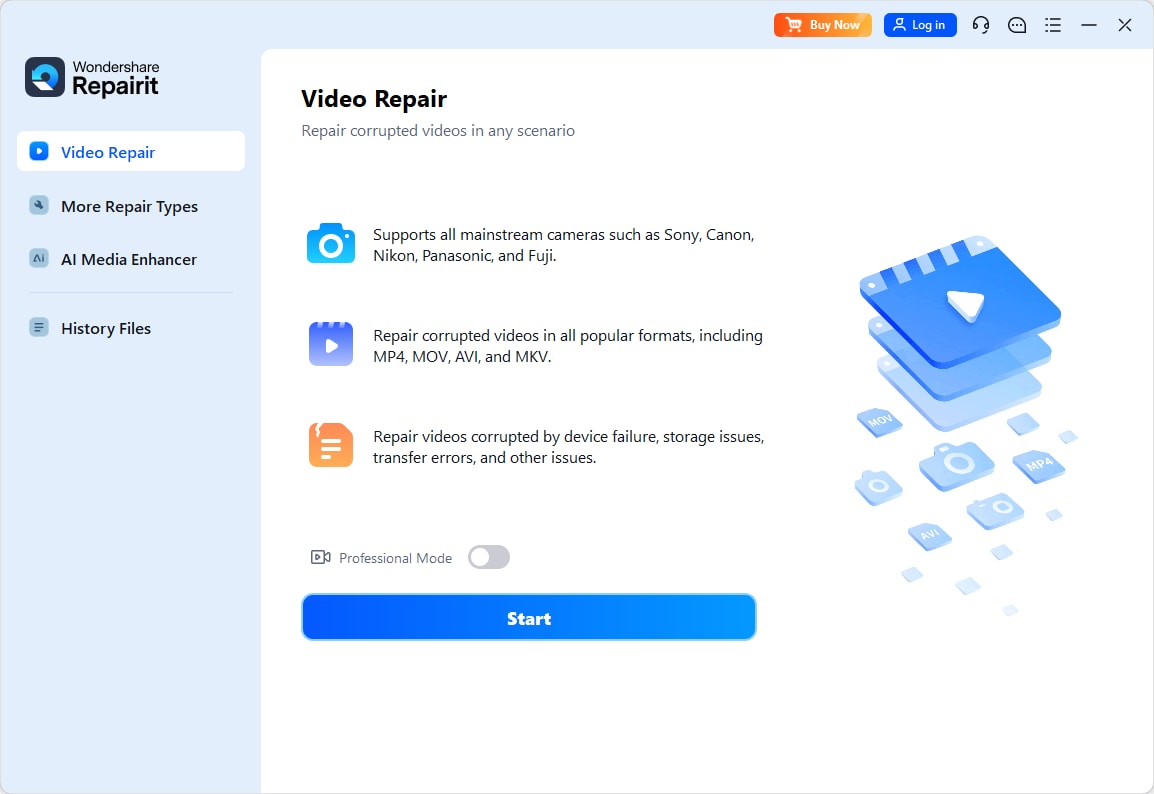
Click the button to add videos, then browse to the folder where your corrupted HDR clips are stored (local disk, memory card backup, or external drive).
- Repair video files
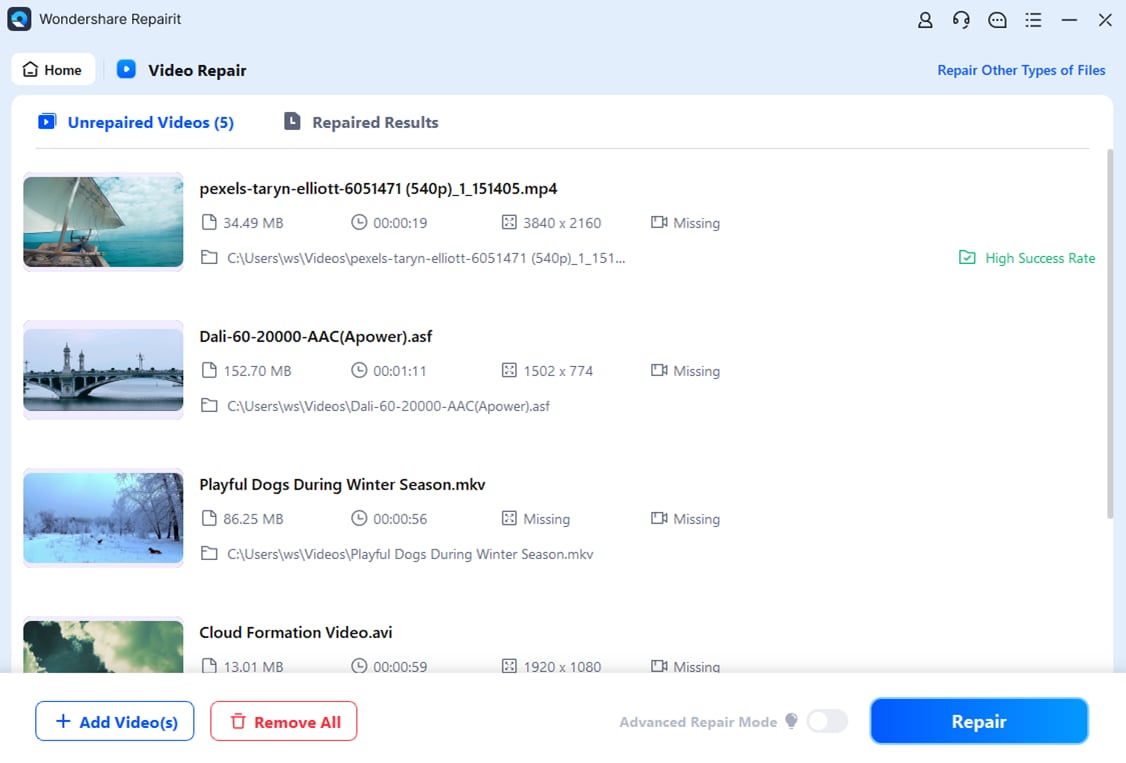
After adding your clips, start the repair process. Repairit scans each selected high dynamic range video file for structural errors, broken headers, and playback issues such as freezing or missing frames.
- Save the repaired video files
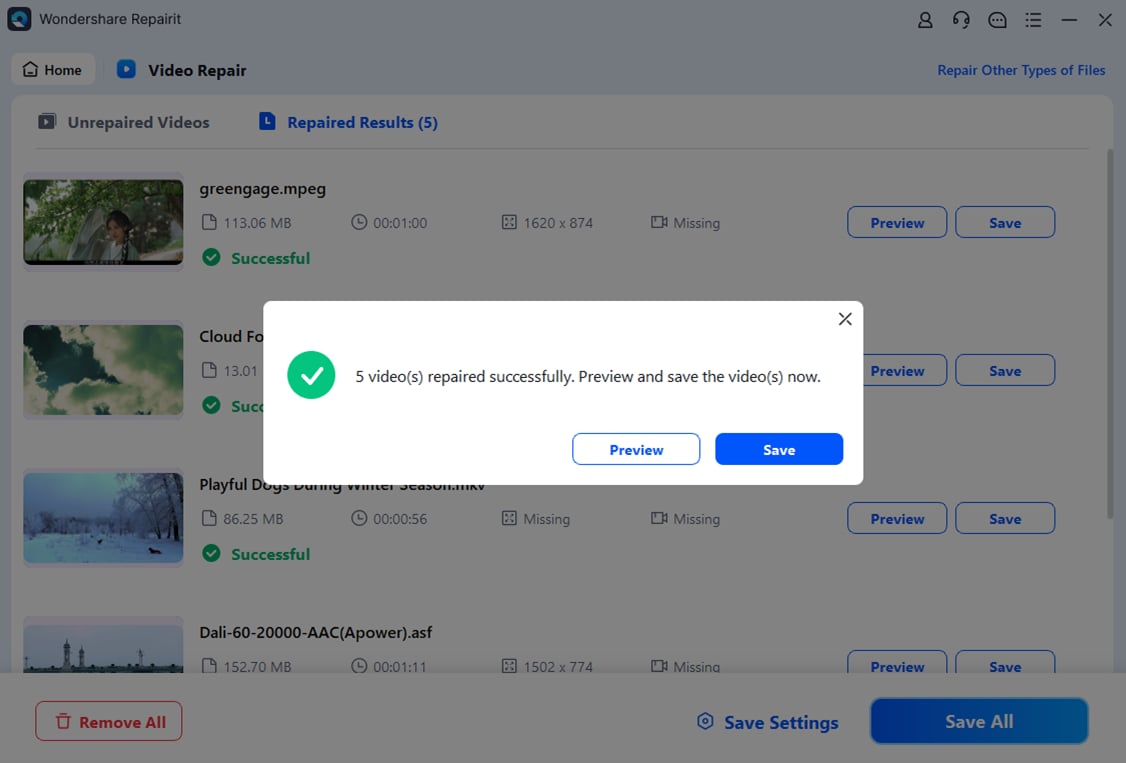
Once you are satisfied with the previews, click Save and choose a secure output folder on a different drive than your originals. Avoid overwriting the source files so you always keep a fallback copy.
Conclusion
HDR video expands the range of brightness and color your footage can display, making highlights more vivid, shadows more detailed, and scenes more lifelike. From camera settings and editing projects to hdr playback on TVs, monitors, and phones, every step in your workflow needs to understand high dynamic range video for it to look right.
With the right combination of devices, formats, and export settings, HDR can transform flat-looking footage into immersive images that stand out on modern screens. And if your HDR clips ever become corrupted or unplayable, tools like Wondershare Repairit can help you recover important content and keep your projects moving forward.
Next: What is Hdr10 Video?
FAQ
-
1. What is the difference between HDR and SDR video?
SDR (Standard Dynamic Range) uses a narrower brightness and color range, typically 8-bit color and Rec. 709 gamut. HDR (High Dynamic Range) uses higher bit depth (often 10-bit), wider color spaces such as Rec. 2020, and metadata that allows displays to show brighter highlights and deeper shadows. As a result, HDR looks more lifelike and detailed on compatible screens. -
2. Why do some HDR videos look too dark or washed out on my screen?
This usually comes from a mismatch between the HDR file, the player, and your display settings. If your monitor is SDR or HDR is disabled in the OS, the video may be tone-mapped poorly, causing low contrast or odd colors. Enabling system-level HDR, selecting the correct HDR mode on your TV or monitor, and using an HDR-aware player often fixes this. -
3. Which HDR formats are most common for video?
The most widely used hdr formats are HDR10 (open standard, static metadata), HDR10+ (dynamic metadata), Dolby Vision (dynamic metadata, licensed), and HLG (Hybrid Log-Gamma, broadcast-friendly). HDR10 is the baseline supported by most HDR TVs and streaming services, while Dolby Vision and HDR10+ offer finer control over scene-by-scene brightness. -
4. Can I edit HDR video with regular editing software?
Many modern editors such as Adobe Premiere Pro, Final Cut Pro, and DaVinci Resolve support HDR, but you must enable the right color management, choose an HDR timeline (Rec. 2100 PQ or HLG), and export with proper HDR metadata. Older or entry-level software may treat HDR as SDR, leading to clipped highlights or incorrect color. -
5. How can I fix a corrupted HDR video file without losing quality?
First, copy the file to a reliable drive and try playing it in different HDR-capable players. If it still fails, use a repair tool such as Wondershare Repairit, which analyzes the corrupted structure and rebuilds it while preserving the original resolution, bit depth, and HDR characteristics as much as possible. After repair, always preview the clip to confirm color and brightness look normal.




