

An IDR frame is a behind-the-scenes concept you will meet when recording with DSLRs or mirrorless cameras, streaming via OBS, exporting from Premiere, or checking advanced settings in YouTube or Netflix-style workflows. It defines how cleanly a video can restart during playback, so understanding it helps you improve seek smoothness, reduce visual glitches, and choose smarter export and streaming settings.
Repair Corrupted Files To Save Your Data
 Security Verified. Over 7,302,189 people have downloaded it.
In this article
What Is an IDR Frame?
An IDR frame (Instantaneous Decoder Refresh frame) is a special type of intra-coded picture used in modern video codecs such as H.264 and H.265. It belongs to the category of frame types and is closely related to the idea of a intra coded frame or keyframe.
Like a regular I-frame, an IDR frame is self-contained: it does not need information from previous frames to be decoded. What makes it special is that, when a decoder reaches an IDR frame, it can discard all older reference data and safely restart decoding from that point. In practice, IDR frames define clean entry points in a video stream that are vital for seeking, channel changes, and restarting playback after network hiccups.
In most real workflows, IDR frames appear as part of the GOP (Group of Pictures) structure. They control how robust your video is when viewed on different platforms, from desktop players to social media, OTT apps, and camera playback.
Why Is IDR Frame Important in Video Compression?
The core problem that idr frame logic solves is how to balance compression efficiency with reliable playback and seeking. Inter-frame compression (using P-frames and B-frames) cuts file size by reusing data from neighboring frames, but this creates long dependency chains. If one frame is damaged or dropped, errors can spread across many following frames.
An IDR frame breaks that dependency chain. Once the decoder hits an IDR frame, it stops referencing any earlier pictures. This improves robustness and makes it easier for a player or streaming service to jump into the middle of a video without showing partially decoded or corrupted images.
How IDR frames affect different aspects of your video:
- Bitrate and file size: More frequent IDR frames increase the bitrate because each IDR is a heavy, self-contained picture. Long gaps between IDR frames are more efficient but risk longer visible corruption after errors.
- Image quality after errors: When packets are lost in a stream or a file is slightly damaged, the decoder can recover quickly at the next IDR frame, limiting how long blocky or smeared artifacts stay on screen.
- Seeking and scrubbing: Video players usually seek to the nearest IDR (or similar keyframe) before your target timecode. Well-placed IDR frames make scrubbing responsive and reduce the chance of frozen or gray frames.
- Streaming performance: For live streaming and adaptive bitrate delivery (HLS, DASH), IDR frames align with segment boundaries. They allow smooth bitrate switches and fast startup when a viewer joins mid-stream.
- Editing friendliness: In GOP-based formats, clean IDR locations make frame-accurate editing and trimming more reliable, especially when you conform or re-wrap material for different platforms.
The main limitation is that IDR frames cost bits. If you set the keyframe interval or IDR spacing too short, your video encoding becomes less efficient and files grow. If you set them too far apart, playback can suffer after errors and editors may struggle with precise cuts.
How Does IDR Frame Work in the Encoding Workflow?
IDR frames inside the GOP structure
When you encode with video compression standards like h.264 or h.265, the encoder organizes frames into GOPs (Groups of Pictures). Each GOP usually starts with an I- or IDR frame, followed by predictive frames (P/B-frames) that reference it and each other.
An encoder decides when to insert an idr frame based on rules you configure (e.g., every 2 seconds) and internal analysis (scene changes). Here is how it fits in the workflow:
- Frame analysis: The encoder inspects incoming frames from your camera, NLE timeline, or capture card and estimates motion and complexity.
- GOP and reference planning: It plans which frames will be I/IDR, P, or B. IDR frames are chosen at regular intervals or at scene cuts to provide clean restart points.
- Prediction and reference management: For non-IDR frames, the encoder predicts content from surrounding frames. Once an IDR frame appears, all previous reference pictures are marked as unusable for future prediction.
- Bit allocation: The rate control system decides how many bits to give each frame. IDR frames typically receive more bits to preserve detail, while P/B-frames are compressed more aggressively.
- Packetization and muxing: In streaming, IDR frames are often aligned with segment boundaries (e.g., every 2 or 4 seconds), so decoders can start decoding on a segment boundary without needing earlier data.
This process is invisible to viewers, but it shapes how well your footage survives editing, exporting, and platform re-encoding.
Where you see IDR options in real tools
Even if the word "IDR" does not always appear, its behavior is controlled by settings you see in everyday software and hardware:
- FFmpeg / x264 / x265: Flags like
-g(GOP size) and-keyintor-x264-params keyint=...control how often IDR or keyframes are inserted. Scene-cut detection can insert additional IDR-like frames at hard cuts. - OBS Studio and streaming encoders: The "Keyframe Interval (seconds)" setting defines the spacing between IDR frames for live streams. Platforms like YouTube or Twitch usually recommend specific values (for example, 2 seconds).
- Adobe Premiere Pro / Media Encoder: Export presets often include options like "Key Frame Distance," "I-frame only," or GOP length. These determine where the codec places I/IDR frames during export.
- Camera codecs and hardware encoders: Many DSLRs, mirrorless cameras, and capture cards offer "All-I" vs "IPB" modes or a GOP length setting. All-I heavily uses intra frames (similar to having very dense IDR-like frames), while IPB creates longer dependencies.
- Streaming platforms and OTT pipelines: Transcoding profiles define segment durations and keyframe alignment, which indirectly dictate where IDR frames fall in the final HLS or DASH streams.
If you understand that these settings are controlling idr frame behavior, you can better match your exports to your target platforms and devices.
When Should You Care About IDR Frame? Common Mistakes and Quick Tips
Not everyone needs to think about IDR frames daily, but for certain roles they matter a lot.
Who should pay attention:
- Streamers: Incorrect keyframe intervals can cause platforms to reject your stream or produce choppy playback and slow seeking in VODs.
- Video editors and post-production teams: Poorly placed IDR frames make conforming, trimming, and re-encoding less predictable, especially when round-tripping between tools.
- Encoding engineers and media managers: For OTT services or corporate video platforms, IDR placement impacts startup time, bandwidth cost, and user experience.
- Camera operators and DITs: Certain camera recording modes (long-GOP vs all-intra) behave differently in fast motion, VFX workflows, and multi-generation grading.
When it matters most:
- When configuring live streaming in OBS, vMix, or hardware encoders.
- When exporting mezzanine files for further editing or broadcast.
- When your platform requires strict keyframe alignment for ads or inserts.
- When troubleshooting strange playback issues, like long-lasting artifacts after a glitch.
Common misunderstandings:
- Thinking any I-frame is the same as an IDR frame. In many codecs, some I-frames can still reference earlier frames, while IDR frames fully reset decoding.
- Believing "more IDR frames always improves quality." More IDR frames can make playback more robust, but they increase bitrate; quality gains are situational.
- Assuming platforms ignore your GOP settings. In reality, many services expect specific keyframe intervals and may re-encode if your settings are far off.
- Ignoring IDR spacing in camera recording, which can later cause issues when editing fast-moving or highly compressed footage.
Quick tips and takeaway:
- For live streaming, follow the platform recommendation (often a 2-second keyframe/IDR interval).
- For editing-heavy workflows, avoid extremely long GOPs; moderate intervals make cuts and re-exports safer.
- For archive or mezzanine exports, choose reasonable GOP lengths and consistent IDR placement so downstream tools behave predictably.
- If you see persistent corruption around IDR points, the file may be damaged; consider specialized video repair software.
The key idea: IDR frames are not just abstract codec jargon. They directly shape how reliably your video plays, seeks, and survives across different apps and platforms.
How to Use Repairit to Fix a Corrupted Video File
Introduce Repairit for corrupted IDR and GOP issues
When a recording stops abruptly, storage fails, or a transfer goes wrong, critical structures like the GOP headers and idr frame markers can become corrupted. Instead of digging through binary data or re-encoding by trial and error, you can turn to Wondershare Repairit. It is a dedicated media repair solution created to restore broken, unplayable, or glitchy clips with just a few clicks. You can learn more and download it from the Repairit official website.
Key features of Wondershare Repairit
- Repairs multiple corrupted video formats from cameras, phones, and drones, even when the IDR frames or GOP headers are damaged.
- Offers both quick repair and advanced repair options, so you can handle anything from minor glitches to severely corrupted footage.
- Provides a guided, beginner-friendly workflow that also fits professional environments needing fast, reliable video repair.
Step-by-step guide: repair corrupted video files with Repairit
- Add corrupted video files
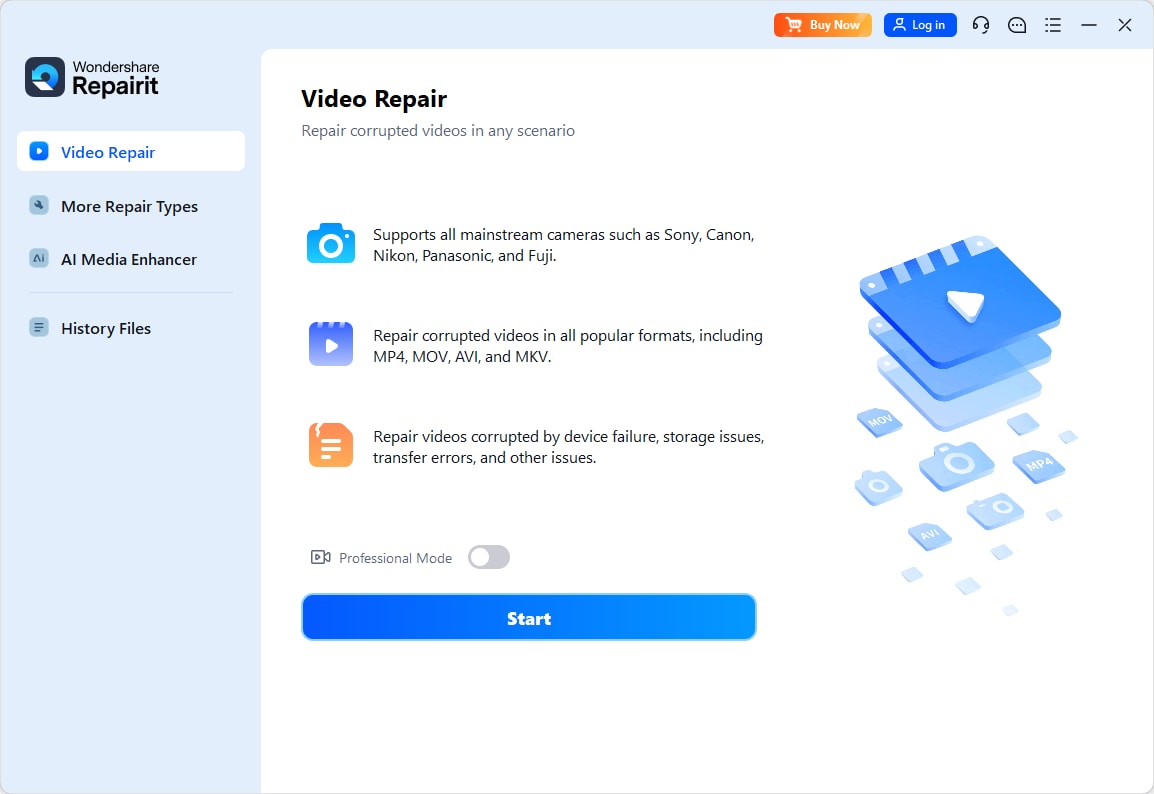
Install and open Wondershare Repairit, then go to the Video Repair module. Click the "Add" or plus button to browse your computer or external drive and select the damaged clips. Repairit lets you import several videos at once so you can fix multiple files in a single session.
- Repair video files
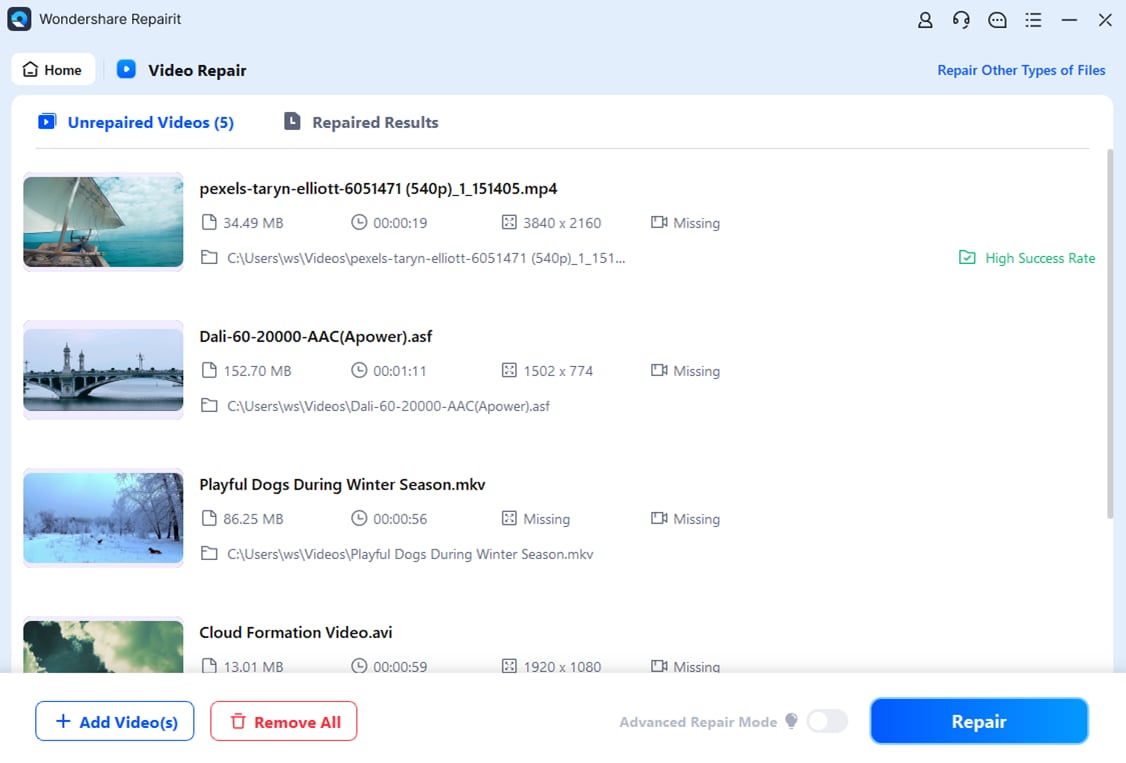
After the broken videos are listed in the interface, select the ones you want to process and click the "Repair" button. Repairit will scan each file, reconstruct damaged headers, timecode information, and structures related to gop structure and idr frame, then rebuild playable video and audio. When the repair is finished, use the built-in preview window to quickly check that playback, seeking, and sound are back to normal.
- Save the repaired video files
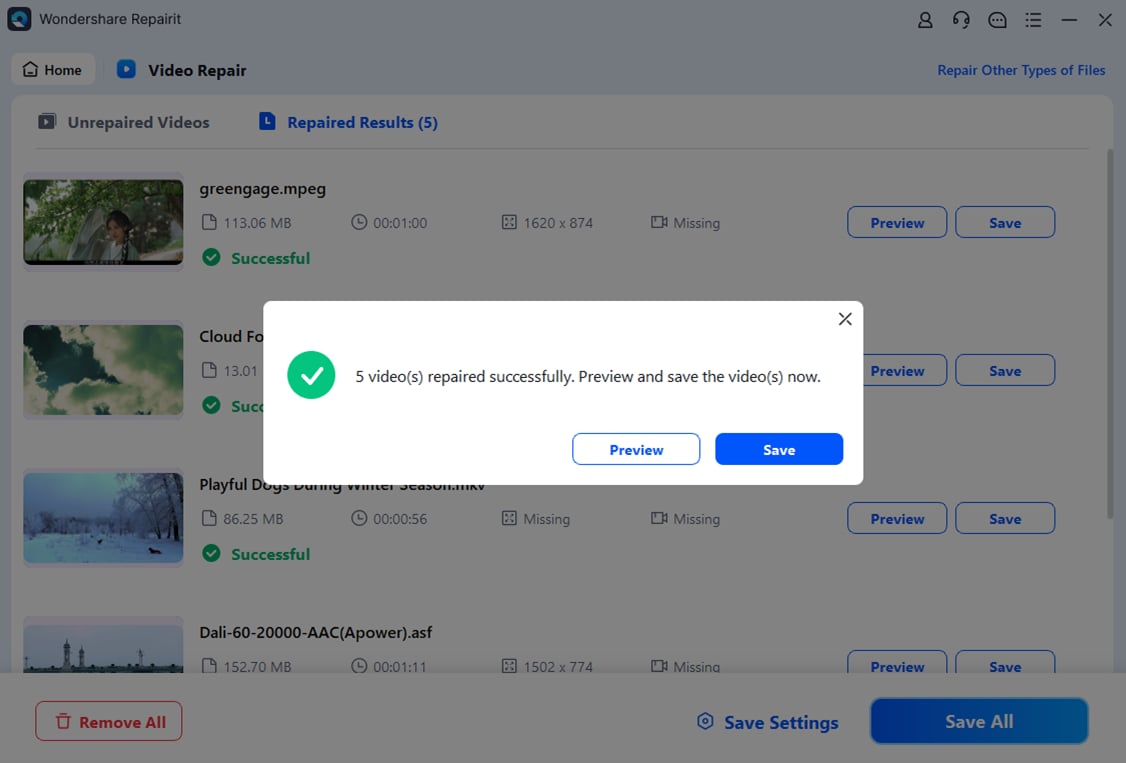
If the preview looks good, click "Save" to choose a secure location for the restored clips. It is best practice to save them on a different drive or folder than the originals. Keep your repaired files separate until you are sure everything works across your preferred players, editing software, and platforms, then archive or delete the damaged versions as needed.
Conclusion
IDR frame behavior defines how cleanly a decoder can restart within a compressed stream. By forcing a refresh of all references, IDR frames keep playback, seeking, and streaming stable even when network conditions fluctuate or minor errors occur. They are a fundamental part of how h.264 and h.265 achieve efficient video encoding without sacrificing user experience.
For creators, streamers, and engineers, understanding IDR frames and the surrounding gop structure leads to smarter choices about export settings, recording modes, and streaming configurations. When corruption still damages your files around these critical frames, a dedicated tool like Wondershare Repairit can often rescue the material and keep your footage usable on all your favorite platforms.
FAQ
-
1. What is an IDR frame in simple terms?
An IDR frame is a special kind of intra frame that lets a video decoder start cleanly from that point in the stream. When an IDR frame appears, the decoder can ignore everything before it and still reconstruct the video correctly from there onward. -
2. How is an IDR frame different from a regular I-frame?
Both IDR and I-frames are self-contained, but only an IDR frame forces the decoder to drop all references to earlier frames. A normal I-frame may still sit inside a longer dependency chain, while an IDR frame fully resets decoding and defines a safe entry point. -
3. Why do IDR frames matter for streaming and seeking?
Streaming platforms and players align segments and seek points with IDR frames. When you jump to a new position or change streams, the player decodes from the nearest IDR frame to avoid showing half-decoded or corrupted images and to minimize startup delay. -
4. Can wrong IDR settings cause quality or playback problems?
Yes. If IDR frames are too far apart, any errors or packet loss may stay visible for several seconds, and seeking can feel sluggish. If they are too frequent, your bitrate becomes less efficient, producing larger files or forcing the encoder to compress harder between IDR frames. -
5. How can I fix a video that looks damaged around IDR frames?
If you still have the original project or camera files, try re-exporting with stable settings for GOP length and keyframe interval. When that is not possible, use a repair utility like Wondershare Repairit to scan the file, reconstruct damaged headers and GOP data, and restore normal playback.