

Compression artifact is a term you will see when recording, editing, exporting, or streaming video, especially on platforms like YouTube, TikTok, or streaming software like OBS. It describes the ugly visual glitches that appear after heavy compression. Understanding why these artifacts show up, how they affect digital video quality, and what you can do to reduce them helps you keep your footage looking clean and professional across devices and platforms.
Repair Corrupted Files To Save Your Data
 Security Verified. Over 7,302,189 people have downloaded it.
In this article
What Is Compression Artifact?
A compression artifact is any visible or audible defect created when a video or image is compressed with a lossy codec. In practical terms, it is what you see as blockiness, macroblocking, color banding, smearing, ringing around edges, or mosquito noise after encoding. Technically, compression artifacts belong to the category of quality side effects of lossy compression methods such as H.264, HEVC, VP9, or AV1. Their basic role in video encoding is not intentional: they are the unwanted byproduct of discarding data to reduce file size and bitrate for recording, editing, exporting, streaming, and playback across devices and platforms.
In photography and video, these video compression artifacts show up during:
- Camera recording with low-bitrate or high-compression settings
- Editing and exporting in tools like Premiere Pro, DaVinci Resolve, or Final Cut Pro
- Streaming via OBS, hardware encoders, or online platforms that re-encode uploads
- Playback on TVs, phones, or browsers when bandwidth is limited
Whenever a codec removes too much detail, some form of image artifacts becomes visible.
Why Is Compression Artifact Important in Video Compression?
How Compression Artifacts Impact Quality and Bitrate
Video compression is always a trade-off: keep quality high or shrink file size and bitrate. Video compression artifacts are the visible evidence that the encoder has pushed compression too far for the content, resolution, or motion in your footage.
Common ways artifacts affect your video include:
- Perceived sharpness loss – Fine textures, skin detail, or grain turn into blurry patches.
- Blockiness and macroblocking – Square blocks appear in dark areas, gradients, or fast motion.
- Color banding – Smooth skies or gradients break into obvious steps instead of smooth transitions.
- Motion smearing – Moving objects leave trails or smear because not enough data is allocated to motion changes.
From a compression perspective, artifacts signal that bitrate is too low for that resolution and frame rate, or that the codec is not configured well. This directly impacts:
- Bitrate efficiency – A well-tuned encoder uses bits where they matter most, keeping artifacts minimal for a given bitrate.
- File size – Chasing tiny files usually increases artifacts, especially in complex scenes.
- Streaming performance – Platforms lower bitrate on weak connections, which can heavily increase artifacts for viewers.
Benefits and Limitations of Lossy Compression
Lossy codecs exist for a reason: they allow us to store and stream HD and 4K content without enormous files. Allowing a controlled amount of digital video quality loss provides these benefits:
- Smaller files and faster uploads for social media, client deliveries, and archiving.
- Lower bandwidth requirements for live streaming and VOD playback on mobile connections.
- Better device compatibility because common codecs and bitrates play smoothly on TVs, phones, and browsers.
However, lossy compression has clear limitations:
- Irreversible detail loss – Once discarded, original pixels and texture cannot be perfectly restored.
- Accumulated damage – Repeated re-encoding of the same footage amplifies artifacts quickly.
- Editing headaches – Heavily compressed material can be harder to color grade or key because blockiness and banding become obvious.
Understanding this balance helps you choose export and streaming settings that keep artifacts acceptable while still managing file size and performance.
How Does Compression Artifact Work in the Encoding Workflow?
Where Artifacts Appear in the Encoding Pipeline
To see where compression artifact comes from, think about the encoding workflow as a series of stages:
- 1. Capture and preprocessing – Your camera, screen recorder, or NLE renders clean frames. Noise reduction, sharpening, and scaling are often applied here. Over-aggressive sharpening or denoising can already make later artifacts worse.
- 2. Color space and chroma subsampling – Many formats convert from RGB to YUV and use 4:2:0 subsampling. This reduces color detail and can introduce soft edges or color bleed if pushed too far.
- 3. Block or transform stage – Codecs split frames into blocks (macroblocks or coding tree units) and perform transforms (like DCT) to represent image data more compactly. Blockiness and macroblocking arise when too few bits are allocated per block.
- 4. Motion estimation and prediction – Inter-frame prediction reuses information from previous and future frames. If motion is complex or poorly estimated, you see smearing, ghosting, or trailing artifacts.
- 5. Quantization – This is where most of the lossy magic happens. Pixel information is coarsely rounded to reduce precision. High quantization produces stronger artifacts but smaller files.
- 6. Entropy coding – Finally, lossless compression (e.g., CABAC, CAVLC) packs the remaining data efficiently. This stage itself does not create artifacts; it just encodes whatever is left after quantization.
Artifacts are therefore not a separate feature; they are the visible side effect of decisions made at each encoding stage to save bits.
How Real-World Tools Expose Compression Settings
In real tools like FFmpeg, x264/x265, OBS, HandBrake, Adobe Media Encoder, or hardware encoders in GPUs and cameras, you control artifacts indirectly via options such as:
- Bitrate or quality slider – In HandBrake or Premiere, a lower bitrate or higher compression level generally means more artifacts.
- CRF or QP values – In x264/x265 and FFmpeg, higher CRF (e.g., CRF 28 vs 18) leads to heavier quantization and more visible video compression artifacts.
- Preset speed – "Faster" presets do less complex analysis, which can make compression less efficient and artifacts more pronounced at the same bitrate.
- Resolution and frame rate – Encoding 4K at the same bitrate as 1080p usually increases blockiness because bits are spread thinner over more pixels.
- Profile and level – Some hardware players or platforms force simpler profiles that are less efficient, which again raises artifact risk at constrained bitrates.
When exporting from editing tools or setting up OBS, you are essentially telling the encoder how much detail it is allowed to throw away. Understanding how these settings influence artifacts gives you control over the final look of your footage on different platforms.
When Should You Care About Compression Artifact? Common Mistakes and Quick Tips
Who Needs to Worry About Compression Artifacts
Most people encounter compression artifact issues when:
- Uploading videos to YouTube, Instagram, or TikTok and seeing quality drop after platform re-encoding.
- Streaming gameplay or webinars with OBS or hardware encoders at low upload speeds.
- Delivering client work where clean gradients, brand colors, and fine text matter.
- Editing smartphone or drone footage that was recorded at a very low bitrate.
It matters most to editors, colorists, VFX artists, streamers, and content creators who care about digital video quality and must balance visual clarity with file size and bandwidth. For casual screen recordings or rough drafts, minor artifacts may be acceptable and not worth chasing.
Common Mistakes and Practical Fixes
Here are frequent mistakes that worsen image artifacts and simple ways to fix them:
- Using the lowest bitrate presets – "Smallest file" or "Email quality" presets are often too aggressive.
- Fix: Use platform-recommended bitrates (e.g., YouTube guidelines) and test your own sweet spot.
- Re-exporting from already compressed files – Editing and exporting multiple times from MP4s compounds video compression artifacts.
- Fix: Work from the original camera files or an intermediate codec (e.g., ProRes, DNxHR) when possible.
- Upscaling low-res footage too much – Enlarging 720p to 4K exposes blockiness and banding.
- Fix: Avoid unnecessary upscaling; if needed, use high-quality scaling filters and noise/grain to hide artifacts.
- Over-sharpening and heavy noise reduction – These can amplify edges and flatten textures, making artifacts easier to see.
- Fix: Apply subtle sharpening and moderate noise reduction; always preview at 100% zoom.
- Ignoring platform re-encoding – Uploading low-bitrate files to sites that compress again often doubles artifacts.
- Fix: Upload at reasonably high bitrate and proper resolution so the platform encoder has cleaner material.
Takeaway: Most compression artifacts can be controlled by better capture settings, smarter export choices, and avoiding unnecessary recompression. Once data is removed, no tool can fully restore the original detail.
How to Use Repairit to Fix a Corrupted Video File
Sometimes, visual glitches that look like compression artifact are actually caused by file corruption: missing data, header damage, or playback errors. In those cases, re-exporting will not help. Wondershare Repairit is a dedicated file repair solution that specializes in restoring damaged or unplayable videos from cameras, phones, drones, and other devices. It analyzes the internal structure of your video, rebuilds broken segments, and outputs a playable file while preserving as much original quality as possible. You can learn more on the Repairit official website.
Key Features of Repairit for Video Issues
- Repairs corrupted or unplayable video files from a wide range of devices and formats.
- Offers an intuitive interface that guides you through the repair process in a few clicks.
- Supports advanced video repair for badly damaged files using sample clips from the same device.
Step-by-Step: Repair a Corrupted Video File
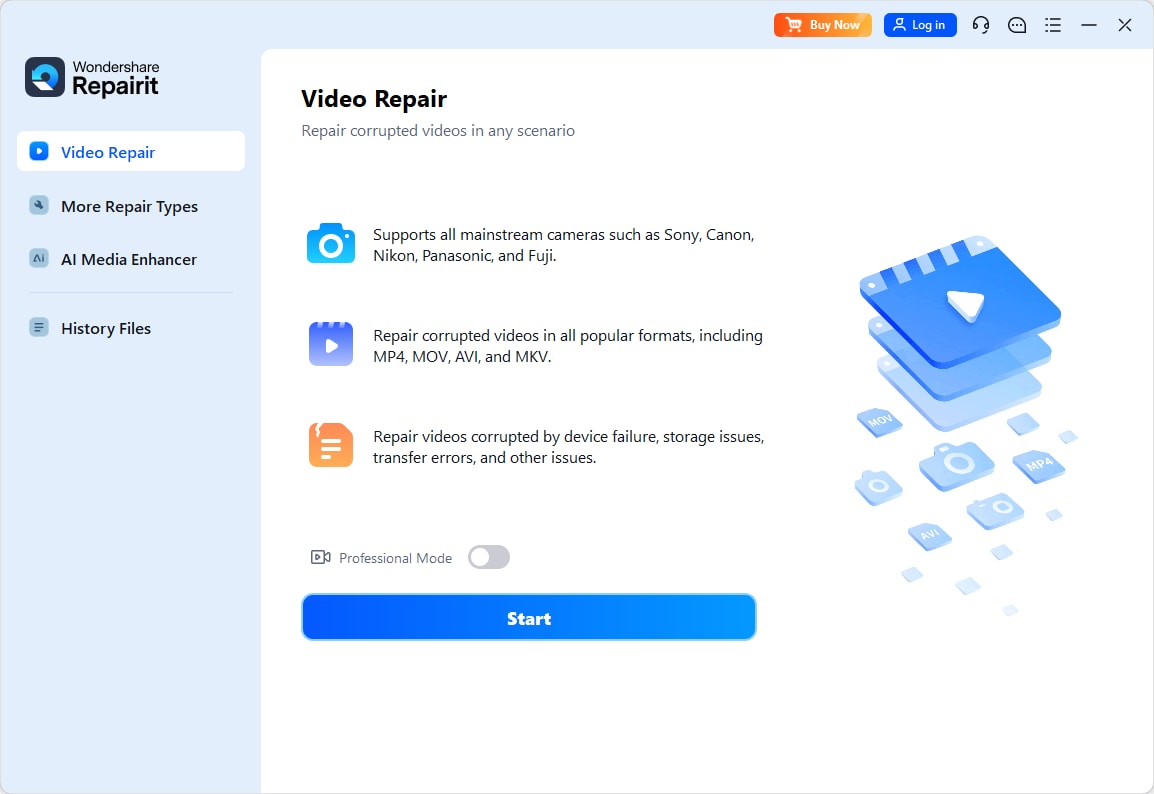
- Add corrupted video files
Open Wondershare Repairit on your computer and choose the Video Repair section. Click the add button in the interface and select the corrupted or unplayable clips from your local drive, memory card, or external storage. You can import several files at once if you need to repair multiple recordings in a single run.
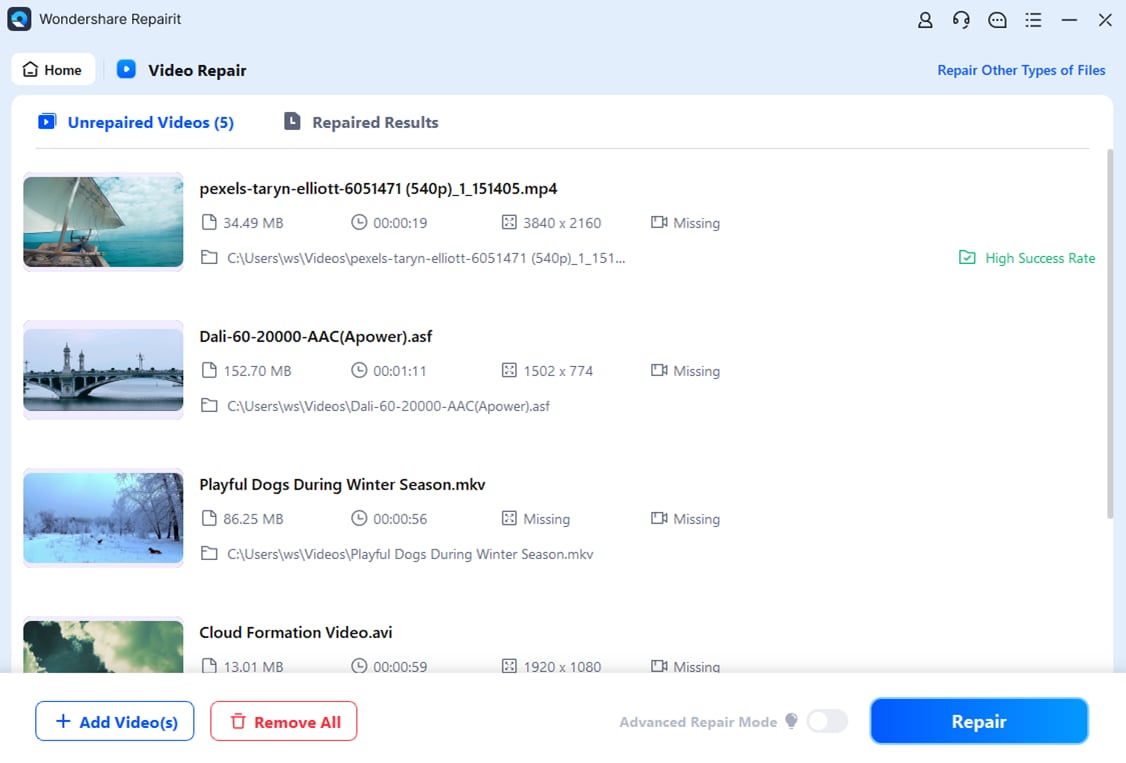
- Repair video files
After the videos are loaded, click the Repair button to start automatic analysis and fixing. Repairit scans each file, reconstructs damaged headers and data segments, and attempts to resolve issues such as freezing, stuttering, or failure to open. When the process completes, use the built-in player to preview the repaired result and confirm that video and audio play correctly.
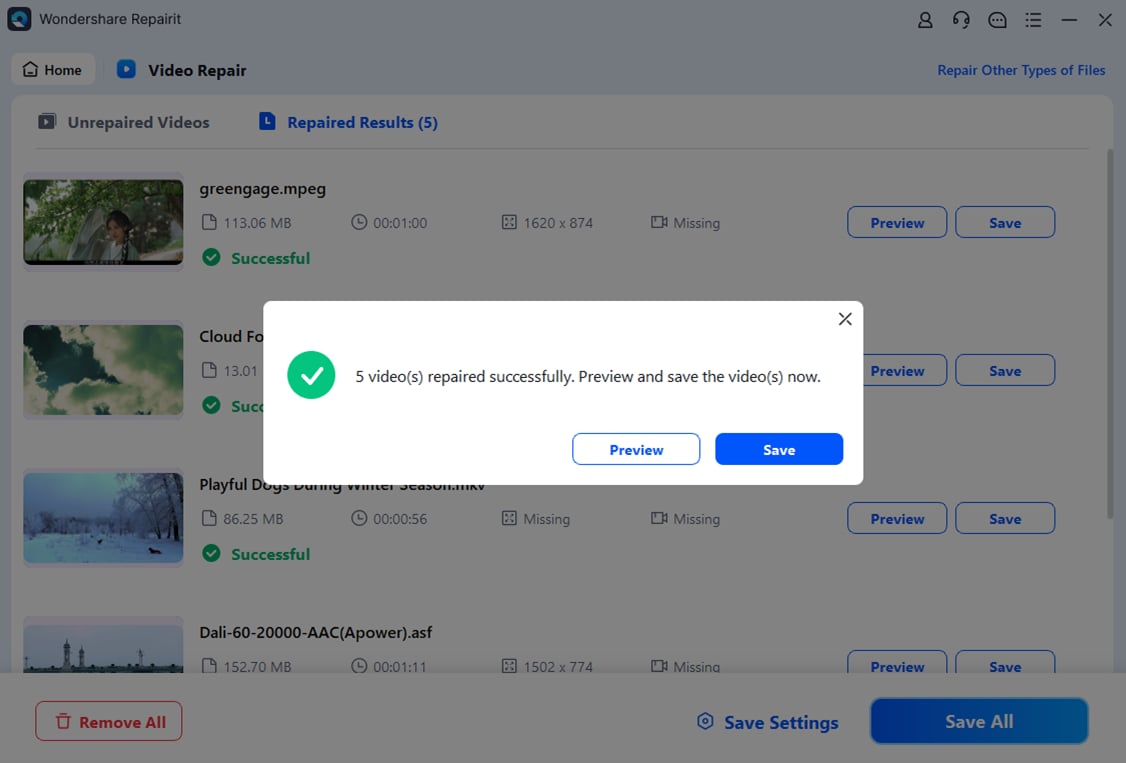
- Save the repaired video files
If the preview looks good, choose a secure folder on your computer as the output location, then click Save to export the repaired clips. For files that are severely corrupted, you can run Advanced Repair by adding a sample video from the same device and settings. Once the deeper repair finishes, save the restored footage and use it normally in your editing or playback workflow.
Conclusion
Compression artifact issues appear whenever lossy codecs remove too much visual information while trying to shrink file size and bitrate. Blockiness, banding, smearing, and noise can creep in during recording, editing, exporting, streaming, and platform re-encoding, especially when bitrates are too low or when the same clip is re-compressed repeatedly.
By understanding where artifacts come from in the encoding workflow and how settings like bitrate, resolution, and codec presets affect digital video quality, you can keep your footage looking cleaner across cameras, editors, and streaming platforms. When defects are caused by actual file corruption rather than normal compression limits, a specialized repair tool such as Wondershare Repairit can help restore unplayable or glitchy videos so your final delivery remains stable and professional.
Next: What Is Rate-Distortion Optimization (RDO) in Video Encoding?
FAQ
-
1. What is a compression artifact in video?
A compression artifact is a visible defect introduced by lossy compression, such as blockiness, macroblocking, color banding, smearing, or random noise. It appears because the encoder discards detail to reduce file size and bitrate, and the remaining data cannot perfectly reconstruct the original image. -
2. What causes compression artifacts to appear?
Artifacts usually come from low bitrates, aggressive quality settings, repeated re-encoding of the same footage, or very complex scenes with fast motion, fine texture, or noise. When there are not enough bits to describe the content accurately, video compression artifacts become visible. -
3. How can I reduce compression artifacts when exporting video?
Use a higher bitrate or lower CRF value, match resolution and frame rate to your content, avoid unnecessary recompression, and choose modern codecs like H.264, HEVC, or AV1. Also, avoid extreme sharpening or noise reduction that can emphasize artifacts, and export from the highest quality source files you have. -
4. Are compression artifacts the same as corrupted video files?
No. Compression artifact problems are normal side effects of encoding decisions. Corruption usually means structural damage to the file, such as broken headers or missing data, which can cause the video not to play, freeze, or crash the player. Corrupted files often need dedicated repair software like Wondershare Repairit. -
5. Can software completely remove compression artifacts?
Some tools use filters or AI models to soften blockiness and banding, improving perceived digital video quality, but they cannot fully restore pixel-level detail that was discarded by lossy compression. Prevention is more effective: record at suitable bitrates, avoid repeated re-encoding, and use careful export and streaming settings.