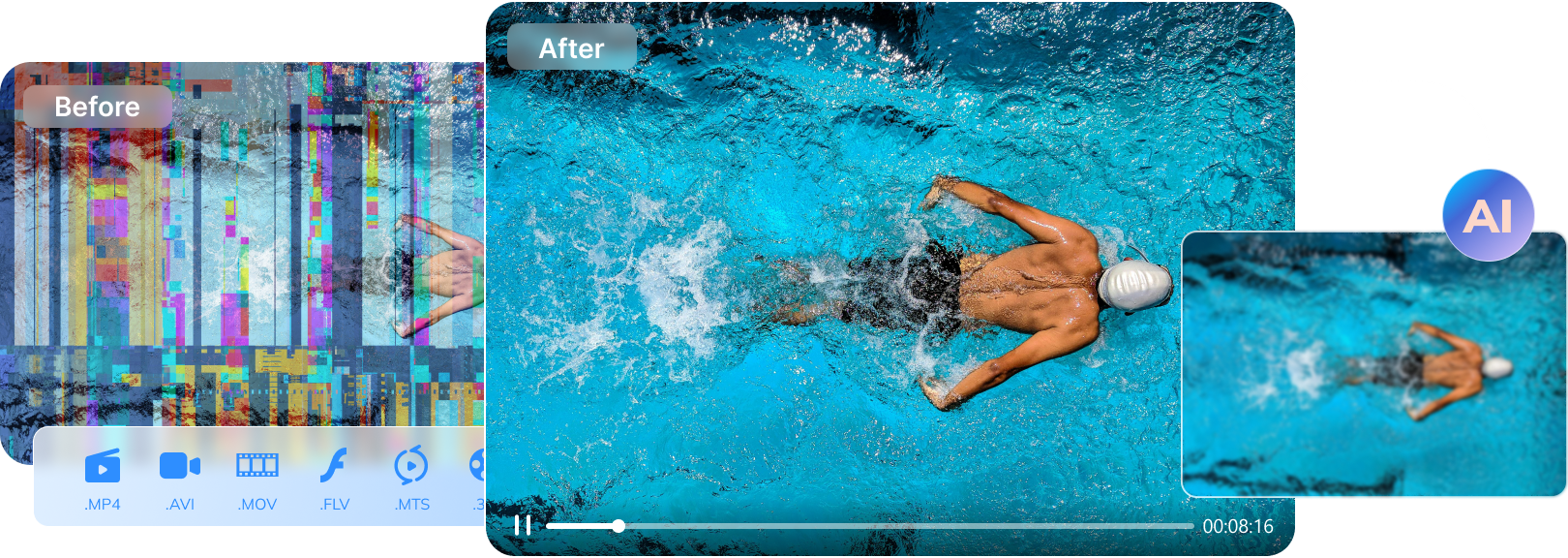

When a Sony camera stops recording unexpectedly, you may see an RSV file instead of a normal MP4. The safest answer to rsv to mp4 is to identify whether the file is a playable stream or an incomplete recovery file. If it opens in the camera's original software, export it to MP4 there. If it will not open, do not repeatedly rename, compress, or upload the only copy; make a backup first and repair a duplicate before attempting conversion.
This distinction matters for large XAVC S 4K recordings. An RSV file created after a dead battery, camera crash, or interrupted card write may contain valuable video data but lack the finalized MP4 header, index, or closing metadata. A normal converter may therefore reject it even though the file is very large. This guide compares the original online options, explains their limits, and shows how to repair corrupted RSV or MP4 footage with a separate output.

In this article
Part 1. What Is an RSV File and Why Convert It to MP4?

RSV is not one universal video format. In Sony camera workflows, an RSV file is commonly a temporary or incomplete recording created when the camera cannot finish writing the normal video container. That can happen after a battery dies, the camera powers off, the card is removed too early, or a recording is interrupted. Other software may use the RSV extension for unrelated data, so confirm the source device before choosing a converter.
MP4 is a widely supported container for phones, computers, editing applications, and publishing platforms. Converting a valid, readable RSV stream to MP4 can make the footage easier to play, edit, archive, and share. However, conversion is not the same as repairing corruption: if the RSV is missing essential structure, an ordinary rsv to mp4 converter may not be able to decode it.
| File state | What it means | Best first action |
| RSV opens in the camera or original software | The stream may still be readable | Use the vendor's Export, Save As, or Backup function to create MP4. |
| RSV opens partially or has audio only | The container or video index may be damaged | Copy the file and try repair before conversion. |
| RSV does not open anywhere after an interrupted recording | The file may be incomplete or missing header data | Preserve the card and use a supported repair workflow. |
| RSV came from a DVR or another application | The extension may represent a different proprietary format | Use the original player or export tool for that device. |
There are still practical reasons to convert a readable RSV file to MP4:
- Compatibility: MP4 is supported by common phones, tablets, computers, browsers, and editing applications. A normal MP4 workflow is easier to share than a device-specific recovery file.
- Editing: MP4 can be imported into many editing programs, while an incomplete RSV file may not expose a usable timeline or audio track.
- Archiving: A verified MP4 copy is easier to catalog and preview, although the original RSV should still be retained until the output is checked.
- Streaming and delivery: MP4 is commonly accepted by web and social platforms, but the exact codec, frame rate, and file-size limits still matter.
- Quality control: A careful export lets you match the source resolution and frame rate instead of letting an online service apply unknown defaults.
Part 2. How to Convert RSV File to MP4
Start with the least destructive option. If the original camera or vendor application can read the RSV file, export it there. If not, you can test an online rsv file to mp4 converter with a copy, but do not assume that every service supports Sony recovery files. An 86GB XAVC S 4K file may exceed upload limits, take a long time to transfer, or fail because the file is incomplete rather than because the extension is wrong.
1. Convert RSV to MP4 with FileProinfo
FileProinfo is a browser-based option that may be useful for a small, readable RSV file when the service accepts the extension and you have checked its current privacy and file-size terms. It does not guarantee recovery of an interrupted Sony recording. Verify the current official URL, file-size limit, retention policy, and supported RSV variant before uploading.
Features to verify before use:
- The service may be available without registration or installation; verify its current requirements before use.
- The workflow is browser-based and uses drag-and-drop or file selection.
- Check whether the current service supports RSV and MP4 files before uploading.
- Online processing requires a stable upload and download connection.
To test an rsv to mp4 converter with FileProinfo, follow below:
Step 1: Open the FileProInfo website in a current browser and review the service's file-size, privacy, and deletion terms.

Step 2: Add the copied RSV file by selecting it or dragging it into the upload area. Do not upload the only copy of private or unreleased footage.
Step 3: Select Convert if the service accepts the file. Download the MP4 to a new folder, then play it from beginning to end and check its duration, audio, picture, and final seconds.
2. File-Extensions.org RSV to MP4 Converter
File-Extensions.org is an online RSV to MP4 converter that provides file-extension information and conversion guidance. Use it as a compatibility reference, not as proof that every Sony RSV recovery file can be converted. Before uploading a large recording, verify that its current service accepts the file size and the specific RSV variant.
Features to verify before use:
- Provides information about many video file formats, including RSV and MP4.
- Offers conversion guidance and file-extension information.
- Uses an online workflow without requiring a local converter installation.
- Output quality depends on whether the source file is complete and how the service handles its codec and metadata.
To test this option:
Step 1: Open the File-Extensions.org website and review its current RSV and MP4 guidance.

Step 2: Add a duplicate RSV file only if the service accepts the extension and the file is appropriate for third-party processing.
Step 3: Select Convert, download the MP4 to a separate path, and verify the output before deleting any source or temporary file.
3. Use the Original Camera or Vendor Software First
For RSV files created by a camera, the original camera, card-management utility, or vendor software is often the most appropriate place to try an export. Look for options named Export, Save As, Backup, Recover, or Finalize. A vendor workflow can understand device-specific metadata that a generic converter cannot.
If the camera can preview the clip, export it to MP4 or another supported completed format, then copy the result to a new drive. If the camera cannot read the file, stop testing on the card and move to a duplicate-based repair workflow. Do not format the card or record new footage on it while trying to recover the RSV file.
Part 3. How to Repair Corrupted RSV and MP4 Videos?
Sudden power interruptions, software crashes, incomplete transfers, file-system errors, and format changes can leave RSV or MP4 files unplayable. Symptoms include a black screen, missing duration, no audio, audio without video, a frozen frame, a broken header, or a converter that stops immediately. Repair should come before repeated conversion when the file itself is damaged.
RSV files can represent different workflows, so confirm that the file came from a Sony camera or the device that created it. If the file is from an unrelated application, use that application's recovery or export process. For supported corrupted video files, Repairit RSV File Repair can help attempt repair, and the dedicated guide explains how to repair corrupted RSV. It can also address supported MP4 video files, but results depend on the file condition, format, and available data.
Wondershare Repairit - Sony RSV File Repair
1,010,994 people have downloaded it.
-
Works with various storage devices, including cameras, SD cards, mobile phones, USB flash drives, and hard drives.
-
Fixes all levels of RSV and MP4 video corruption. These include issues like videos not playing, no sound, out-of-sync audio, playback errors, header corruption, flickering, missing codecs, and more.
-
Repairs many video formats, including RSV, MOV, MP4, M2TS, MKV, MTS, 3GP, AVI, FLV, MXF, KLV, INSV, M4V, WMV, MPEG, ASF, and others.
-
Addresses corruption caused by power surges, system crashes, video compression, and format changes.
-
Offers quick and advanced scanning modes to handle different levels of file corruption.
-
Known for its superior success rate in repairing files compared to competitors.
-
No restrictions on the number or size of videos that can be repaired.
Before starting, copy the RSV or MP4 file to a safe location and do not save the repaired output over the original. For a large 86GB file, make sure the destination drive has enough free space for both the source and the repaired output. If the source is on an SD card, avoid recording new footage or formatting the card.
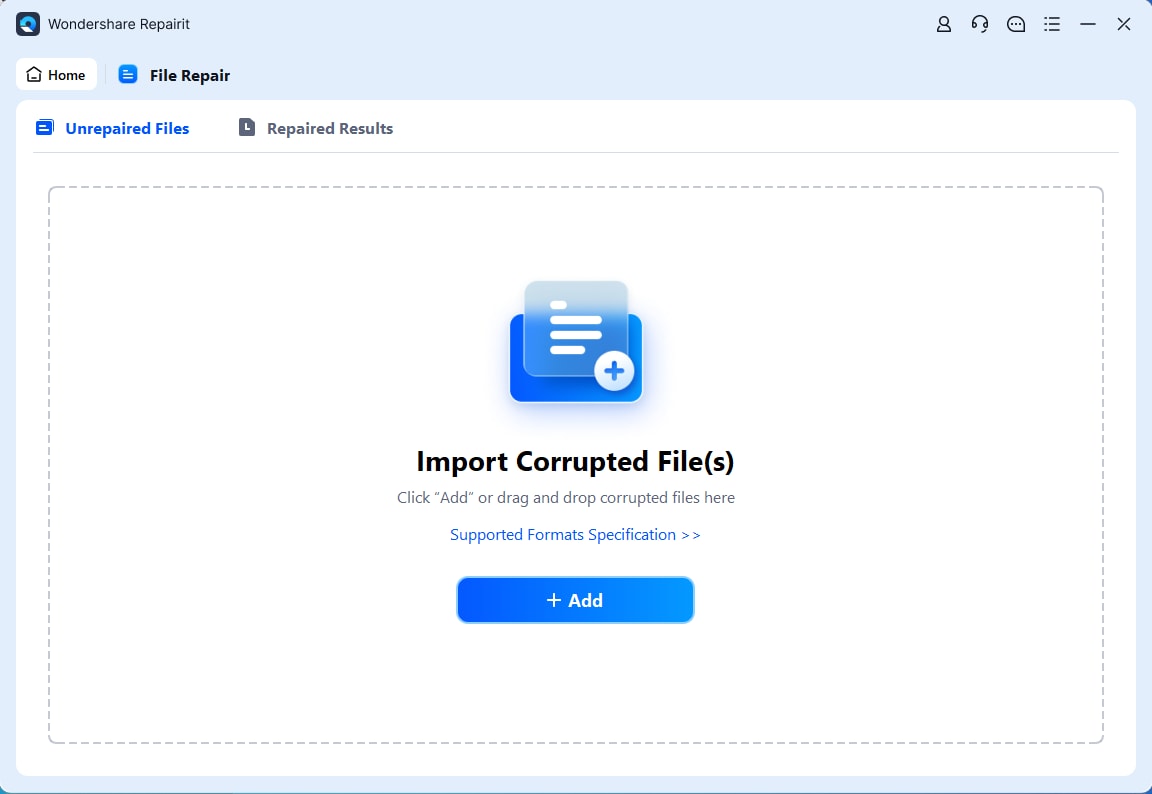
Step 1: Select File Repair under More Types Repair. Click +Add to import a copied RSV or MP4 file. Batch processing can be useful when several clips from the same recording session are damaged.
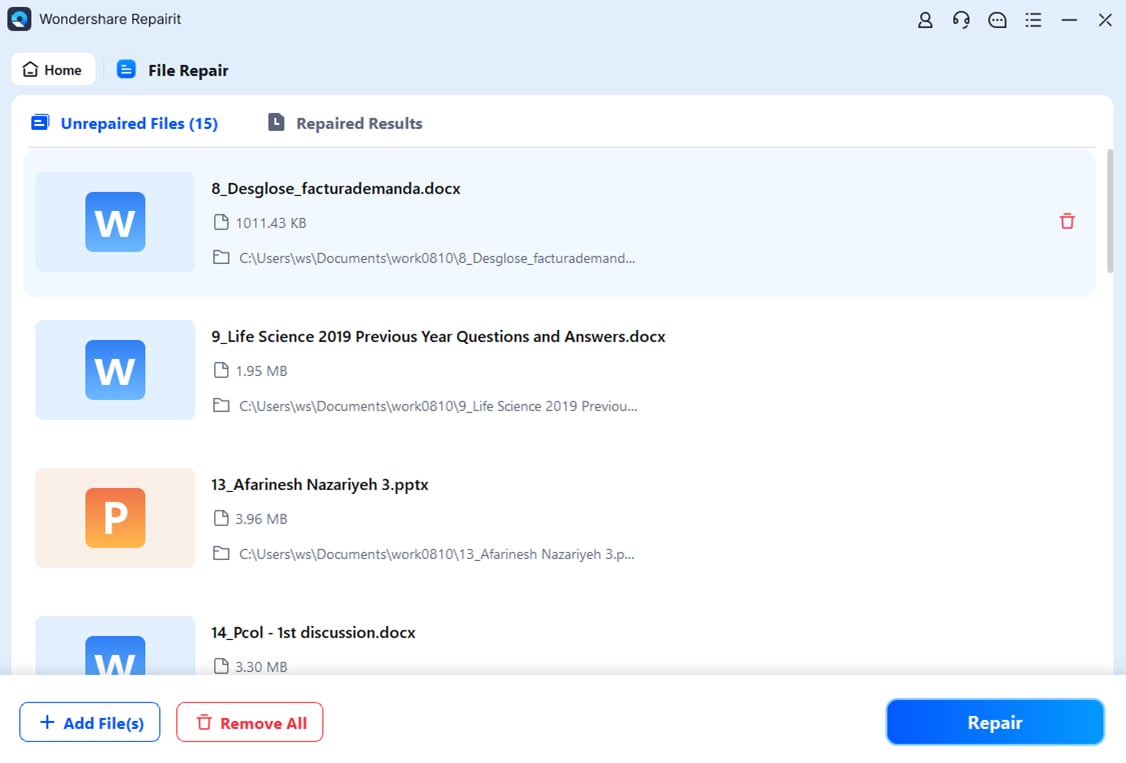
Step 2: Click Repair to scan the imported files. Let the process finish, and do not disconnect the source drive while the scan is running.
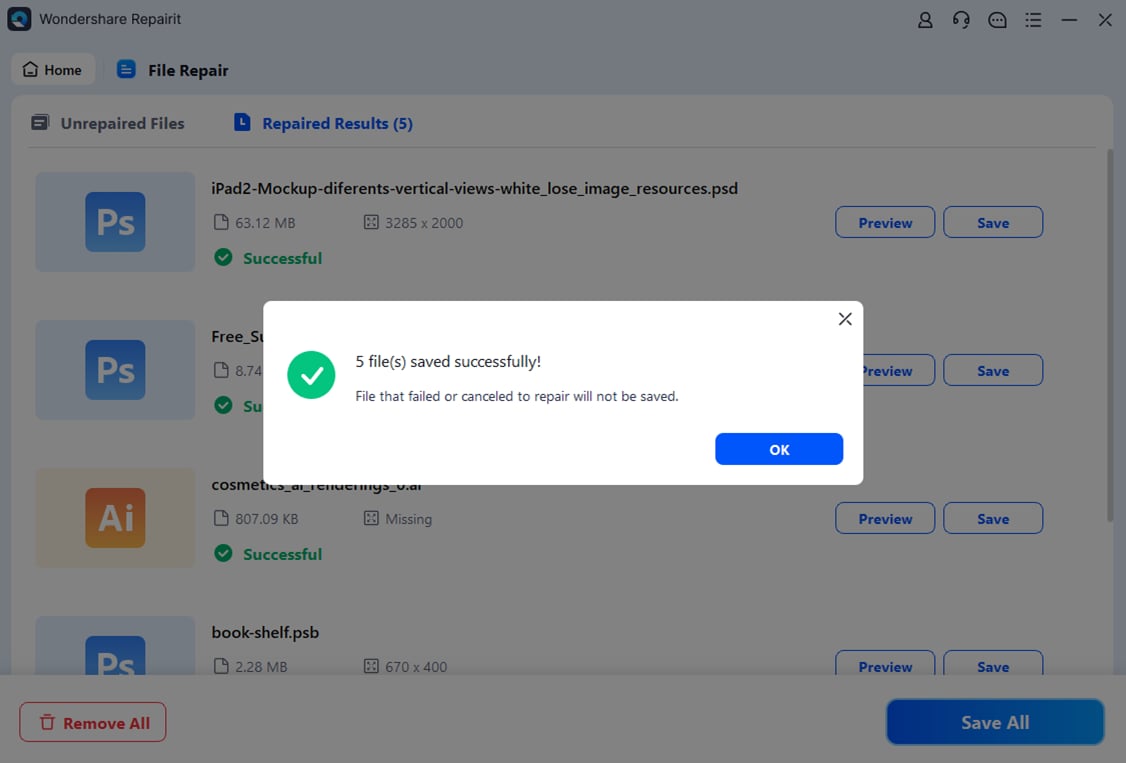
Step 3: Preview the repaired result and check the image, sound, duration, synchronization, and final seconds. Click Save or Save All and choose a new folder. Test the saved output before using it as the MP4 source for editing or upload.
Repair Corrupted RSV or MP4 Files Using Repairit Video Repair Now
 Security Verified. Over 7,302,189 people have downloaded it.
How to Repair Corrupted MP4 File? This video shows the repair workflow and can help you understand where to add, scan, preview, and save a repaired video.
Part 4. How to Preserve Quality After RSV to MP4 Conversion
After an rsv file to mp4 conversion, inspect the output before deleting the source. A successful download does not prove that the MP4 contains the full recording. Play the beginning, middle, and end; check for missing frames, audio drift, unexpected cropping, color changes, and a correct duration.
- Match the source resolution when possible, such as 1920x1080 or 3840x2160 for 4K footage.
- Keep the original frame rate rather than forcing 24, 30, or 60 fps without a reason.
- Use a standard H.264 or H.265 video stream and AAC audio when broad playback compatibility is the priority.
- Choose a bitrate appropriate for the resolution and motion. The original article's 8-12 Mbps for HD and 20-40 Mbps for 4K are starting points, not universal requirements.
- For a large file, export to a drive with sufficient free space and avoid writing the output back to the camera card.
- Keep the repaired RSV and the verified MP4 separately until the editing project has been opened and checked.
| Conversion result | Next step |
| MP4 plays fully with correct duration and audio | Keep the source backup and use the MP4 for editing or sharing. |
| MP4 plays only partly or has no video | Stop re-encoding and repair the RSV or an untouched duplicate. |
| Online converter rejects the file | Try the original camera/vendor export or a local repair workflow. |
| Output quality is lower than expected | Export again with matched resolution, frame rate, codec, and an appropriate bitrate. |
Conclusion
To convert RSV to MP4, first determine whether the RSV is a readable file or an incomplete Sony recovery file. FileProinfo and File-Extensions.org can be tested with a small, non-sensitive copy when their current support and limits are suitable, but they may not convert a large or damaged recording. For an interrupted XAVC S 4K clip, use the original camera software when possible, preserve the source, and repair a duplicate with Repairit before exporting a verified MP4. This approach protects the footage and avoids confusing ordinary format conversion with video repair.
FAQ
-
Can I convert an RSV file to MP4 directly?
Sometimes, if the RSV file is a readable stream and the original camera or converter recognizes it. If the recording was interrupted and the file is missing MP4 header or index data, repair or vendor recovery may be required before conversion. -
What is the best RSV to MP4 converter?
The best option depends on the file state. Use the original Sony camera or vendor software first, test an online converter only with a copied small file, and use a local repair workflow for large, private, or corrupted footage. -
Why does my RSV to MP4 conversion fail?
Conversion can fail because the RSV is incomplete, the service does not support that Sony variant, the file exceeds an upload limit, or the video stream is corrupted. Check the source file locally, preserve the camera card, and repair a duplicate instead of repeatedly converting the only copy. -
Can I convert an 86GB XAVC S 4K RSV file online?
An 86GB upload may exceed an online service's file-size or processing limits and can take a long time. A local workflow is usually more practical for a file of this size, provided you have enough storage for the source and output. -
Can I rename RSV to MP4?
Renaming the extension does not repair missing headers or incomplete recording data. It is a quick diagnostic that may help a readable stream open in a compatible player, but it does not create a valid MP4 container and should be done only on a copy. -
Can Repairit repair a corrupted RSV file?
Repairit can attempt to repair supported corrupted RSV and MP4 video files. Results depend on the format, damage level, and available data. It cannot recover footage that was never written, was overwritten, or is not supported by the repair workflow.