
When you need to repair corrupted or unplayable audio, both Repairit Audio Repair and Steinberg SpectraLayers can help, but they approach the job very differently. Repairit Audio Repair focuses on guided file-level repair, while Steinberg SpectraLayers offers advanced spectral audio editing with a highly visual workflow. Understanding how each tool handles deep repair work, complexity, and real-world projects helps you pick the right option for your sessions.
Repair Corrupted Audio Files With Repairit Audio Repair
 Security Verified. Over 7,302,189 people have downloaded it.
In this article
- Repairit Audio Repair vs Steinberg SpectraLayers: Quick Verdict
- Repairit Audio Repair vs Steinberg SpectraLayers: Key Differences
- Repairit Audio Repair vs Steinberg SpectraLayers: Comparison Table
- What Repairit Audio Repair and Steinberg SpectraLayers Are Best For
- Repairit Audio Repair vs Steinberg SpectraLayers: Audio Repair Capabilities
- Repairit Audio Repair vs Steinberg SpectraLayers: Supported Audio Formats and Use Cases
- Repairit Audio Repair vs Steinberg SpectraLayers: Workflow and Ease of Use
- Repairit Audio Repair vs Steinberg SpectraLayers: AI Processing and Automation
- Repairit Audio Repair vs Steinberg SpectraLayers: Pricing and Accessibility
- Who Should Choose Repairit Audio Repair
- Who Should Choose Steinberg SpectraLayers
- Pros and Cons of Repairit Audio Repair and Steinberg SpectraLayers
- How to Repair Corrupted Audio Files After Choosing the Right Tool
Repairit Audio Repair vs Steinberg SpectraLayers: Quick Verdict
The key difference is that Repairit Audio Repair is more suitable when you need guided file-level repair for corrupted or unplayable audio, while Steinberg SpectraLayers fits users who want deep, manual spectral work and already handle technical editing workflows.
In most real-world cases where the file itself will not play, glitches, or throws errors, Repairit Audio Repair gives a faster path to restoring usable playback. When the file opens fine but contains complex noises, overlapping events, or you need forensic-style cleanup, Steinberg SpectraLayers can offer the precision needed, provided you have time and experience with spectral tools.
Repairit Audio Repair vs Steinberg SpectraLayers: Key Differences
The main difference is that Repairit Audio Repair focuses on automated file-level audio repair, whereas Steinberg SpectraLayers emphasizes layer-based spectral editing and visual manipulation of sound content.
Repairit Audio Repair is designed around a simple pipeline: add a damaged file, let the engine interpret structural issues, and export a repaired version. Steinberg SpectraLayers instead exposes a dense spectral view where you can paint over noise, move events between layers, and dial in precise corrections. This matters if you are deciding between a quick repair pass for accessibility vs investing time into detailed spectral surgery.
Repairit Audio Repair vs Steinberg SpectraLayers: Comparison Table
This comparison table summarizes how each tool handles audio repair depth, workflow, and automation so you can match them to your projects.
| Dimension | Repairit Audio Repair | Steinberg SpectraLayers |
|---|---|---|
| Best for | Users who need guided file-level repair to fix corrupted or unplayable audio quickly. | Advanced users needing detailed spectral manipulation and forensic-style audio repair. |
| Ease of use | Simpler, step-based workflow focused on loading and repairing damaged files. | High learning curve due to deep spectral tools and layer-based editing. |
| Repair depth | Strong for automated file-level repair of damaged playback and artifacts. | Very deep manual repair with precise spectral control and detailed interventions. |
| AI capability | Relies on guided automated processing to interpret and repair corrupted audio files. | Focuses more on visual spectral operations than fully automated AI-style file repair. |
| Workflow | Upload, analyze, repair, then export repaired audio files. | Layer-based, highly visual spectral editing and detailed manual corrections. |
| Strengths | Fast, accessible way to repair damaged recordings without specialist skills. | Precise control, advanced spectral tools, and a powerful visual workflow. |
| Weaknesses | Less control over individual spectral components than full editing suites. | High complexity and requires experience to avoid over-editing or artifacts. |
What Repairit Audio Repair and Steinberg SpectraLayers Are Best For
Repairit Audio Repair is a stronger choice for making corrupted or unplayable audio files open and play again, while Steinberg SpectraLayers is better suited to experienced engineers who need to reshape audio content inside a detailed spectral editor.
According to the overview, Steinberg SpectraLayers is advanced spectral audio editing software with a visual repair approach, built for users who need detailed spectral manipulation and forensic repair. Repairit Audio Repair instead concentrates on interpreting file-level damage and restoring stable playback without forcing you into a full DAW-style interface. This becomes important if your main goal is simply to rescue a damaged recording vs performing high-end spectral retouching.
Repairit Audio Repair vs Steinberg SpectraLayers: Audio Repair Capabilities
The key difference is that Repairit Audio Repair emphasizes automated repair of corrupted or unplayable audio files, while Steinberg SpectraLayers emphasizes precision editing of already accessible audio using spectral tools.
From the core features summary, both tools can repair damaged recordings, but they do so at different levels. Repairit Audio Repair works at the file level to fix damaged playback, help stabilize glitchy or unopenable files, and output listenable results with minimal user input. Steinberg SpectraLayers instead shines when the file already opens but you need to dig into clicks, tones, and stray events using deep spectral repair options, layer-based editing, and targeted treatment of noise without affecting the entire file.
In most real-world cases, a practical workflow is to use Repairit Audio Repair first if the audio will not play correctly, then move the repaired, now-stable file into Steinberg SpectraLayers if you want further spectral cleanup, de-clicking, or other surgical edits.
Repairit Audio Repair vs Steinberg SpectraLayers: Supported Audio Formats and Use Cases
For everyday projects, both tools handle common audio formats, but they slot into different kinds of sessions and use cases.
Both Repairit Audio Repair and Steinberg SpectraLayers work with common formats like MP3, WAV, M4A, AAC, or FLAC, which covers most podcast, music, and dialog recordings. The main difference is that Repairit Audio Repair is centered on uploading corrupted files for direct repair, making it a natural fit for recordings from phones, cameras, or portable recorders that have become unplayable.
Steinberg SpectraLayers tends to live inside studio workflows, where audio is moved between DAWs and spectral editing sessions. Users often notice that it excels when they are already exporting stems or mixes from a DAW and need to fix detailed issues in a visual spectrum, rather than when they simply need a broken file to become playable.
Repairit Audio Repair vs Steinberg SpectraLayers: Workflow and Ease of Use
The main difference is that Repairit Audio Repair uses a straightforward, guided workflow, while Steinberg SpectraLayers expects a more technical, hands-on approach to editing.
Repairit Audio Repair follows a simple process: add a corrupted file, start the repair, preview, and then save the result. Users who are not audio engineers can usually get through this without needing to understand spectral graphs or complex toolsets. This matters if you are fixing occasional damaged recordings and do not want to learn an entire editing environment just to restore playback.
Steinberg SpectraLayers, by contrast, offers a highly technical and visual workflow where you work across spectral layers, paint out problems, and refine selections. A common limitation for new users is the learning curve: the tools are powerful, but you need practice to avoid over-editing, introducing artifacts, or spending too long on tasks that a guided repair engine could handle automatically.
Repairit Audio Repair vs Steinberg SpectraLayers: AI Processing and Automation
The key difference is how much automation you want: Repairit Audio Repair leans on guided, automated processing, while Steinberg SpectraLayers relies more on manual decisions inside a spectral view.
Because this comparison focuses on deep repair, automation can strongly influence which tool fits your workflow. Repairit Audio Repair uses guided processing to interpret corrupted or unplayable audio at the file level, attempting to fix structural issues and playback errors with minimal user intervention. This is helpful when you need consistent results across many broken files or when you are not comfortable making spectral selections by hand.
Steinberg SpectraLayers instead emphasizes manual, visual spectral work, where you decide what to remove, what to keep, and how aggressively to treat different frequency regions. This may be a better fit for engineers who prefer full control and are used to listening critically for subtle artifacts, but it also means you spend more time actively steering every repair move rather than relying on automation.
Repairit Audio Repair vs Steinberg SpectraLayers: Pricing and Accessibility
Repairit Audio Repair is generally more accessible for users who only need focused audio repair for corrupted files, while Steinberg SpectraLayers tends to align with broader studio investments.
Repairit Audio Repair is typically aimed at users who want a dedicated repair tool without adopting a full spectral editing workstation. This can make sense if you occasionally receive damaged audio from clients or devices and simply need a reliable way to restore playback. Steinberg SpectraLayers sits closer to professional post-production software and is often purchased or licensed as part of a deeper studio or post pipeline.
Exact prices, licensing models, and bundles can change, so it is best to check each vendor site for current plans, editions, and any available trials. In most cases, users try each tool on their own material to decide whether they need fast guided repair, deep spectral control, or a combination of both.
Who Should Choose Repairit Audio Repair
Repairit Audio Repair is more suitable when your primary goal is to repair corrupted or unplayable audio files with minimal setup rather than build a full spectral editing workflow.
- Users who mainly need to repair corrupted or unplayable audio files without deep editing.
- Creators who want a guided repair path instead of complex spectral manipulation.
- People handling occasional damaged recordings from phones, cameras, or recorders.
- Editors who prefer to repair files quickly, then finish mixing in another tool.
In most real-world projects, this profile covers podcasters, video editors, and content creators who just need their source audio to play cleanly so they can keep working in their usual apps.
Who Should Choose Steinberg SpectraLayers
Steinberg SpectraLayers may be enough if you mainly work on detailed spectral cleanup and forensic-style restoration rather than fixing files that will not open or play at all.
- Audio engineers who need advanced spectral manipulation and detailed forensic work.
- Post-production teams handling problematic dialog, complex noise, or layered issues.
- Users who are comfortable with technical, visual spectral workflows and fine-tuning.
- Studios that already rely on DAWs and want a spectral editor for surgical repairs.
This direction suits professionals who are used to spending time in spectral views, zooming into specific frequencies, and iterating on subtle corrections until a mix or dialogue track sits cleanly in the final production.
Pros and Cons of Repairit Audio Repair and Steinberg SpectraLayers
This section summarizes the main benefits and trade-offs, so you can quickly see how each tool fits your audio repair workflow.
Repairit Audio Repair Pros and Cons
Steinberg SpectraLayers Pros and Cons
How to Repair Corrupted Audio Files After Choosing the Right Tool
After comparing Repairit Audio Repair and Steinberg SpectraLayers, the next step is actually fixing the corrupted or unplayable audio that is blocking your project. A common workflow is to use a guided repair tool to restore basic playback, then decide whether you need further spectral editing.
When your main problem is that the file will not open, skips, or produces broken output, Repairit Audio Repair offers a practical, streamlined process to stabilize the audio before you do any optional cleanup elsewhere. Below is how that looks in practice.
Key Features
- Guided file-level audio repair for corrupted or unplayable recordings.
- Simple import-and-fix workflow that does not require spectral editing skills.
- Output repaired audio ready for further editing, mixing, or publishing.
Step-by-step guide
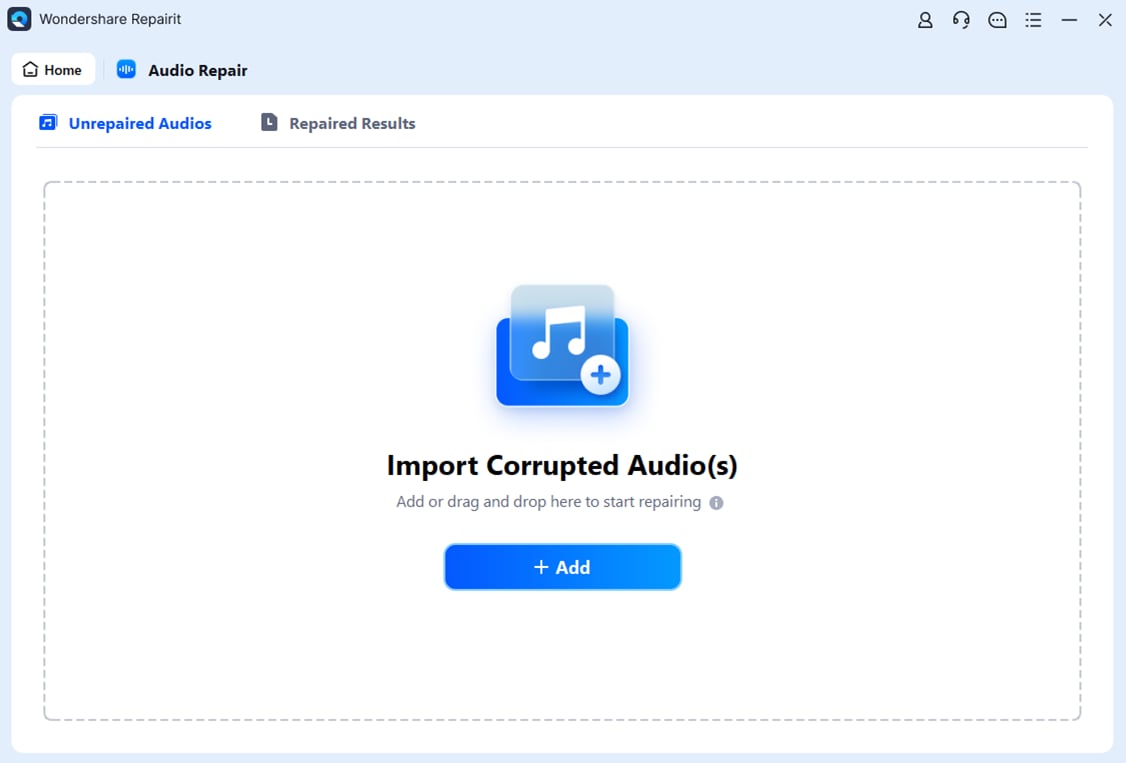
Step 1. Import the damaged audio files you want to fix into Repairit Audio Repair to begin the repair process smoothly.
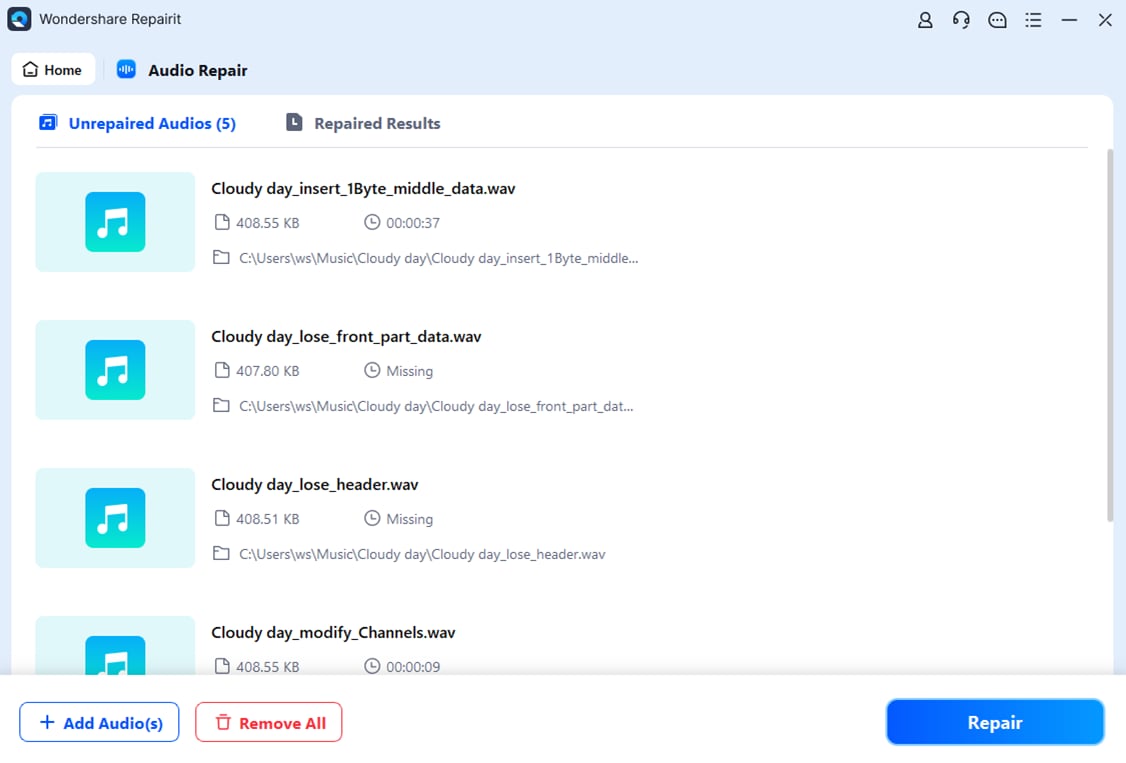
Step 2. Click the repair button to let Repairit Audio Repair automatically analyze and repair the corrupted audio files efficiently.
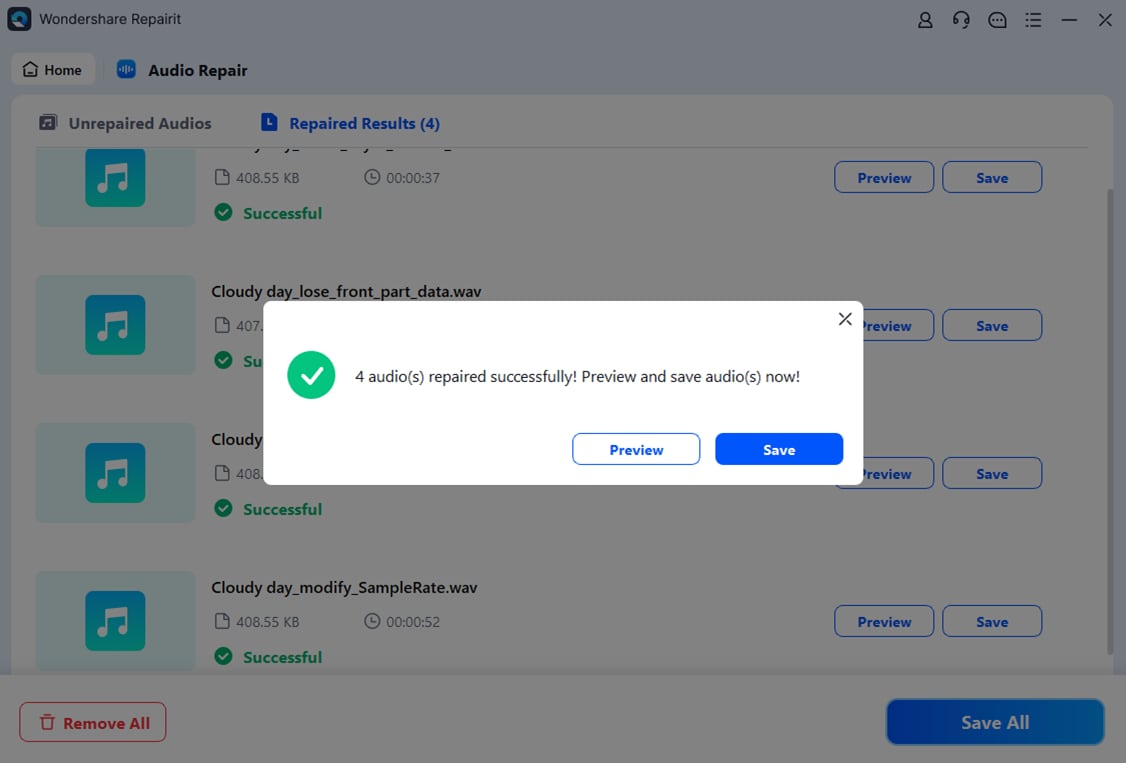
Step 3. Preview the repaired audio results, then save the successfully repaired files to your device.
Final Verdict
The key difference between Repairit Audio Repair and Steinberg SpectraLayers is depth versus simplicity in audio repair. Repairit Audio Repair is stronger when you need to repair corrupted or unplayable audio files quickly, with minimal setup and no need to draw inside a spectral view, focusing on restoring damaged playback and giving you a usable file fast.
Steinberg SpectraLayers may be the better fit when you are an experienced engineer who needs layer-based spectral control, wants to zoom into specific frequencies, and has time to perform detailed, forensic-style repairs on complex sessions. In many workflows, they complement each other: Repairit Audio Repair to stabilize and repair the file, and Steinberg SpectraLayers to perform any further spectral cleanup or enhancement once the audio is accessible.
Next: Repairit Audio Repair vs Acon Digital Acoustica Premium
FAQ
-
1. Is Repairit Audio Repair better than Steinberg SpectraLayers for all audio repair tasks?
No. Repairit Audio Repair is more suitable when you mainly need guided file-level repair for corrupted or unplayable audio, while Steinberg SpectraLayers is better when you require deep spectral editing and are comfortable with a technical, visual workflow. -
2. When does Steinberg SpectraLayers make more sense than Repairit Audio Repair?
Steinberg SpectraLayers makes more sense when the file already plays but needs forensic-style repairs, such as isolating individual noises inside a complex mix, working across spectral layers, or integrating tightly with a DAW-based post-production workflow. -
3. What is the difference between audio repair and audio enhancement or cleanup?
Audio repair focuses on fixing corrupted structures and restoring damaged playback, such as unplayable files or recordings that glitch, skip, or fail to open. Audio enhancement or cleanup focuses on improving an already playable file with denoise, de-click, de-hum, or EQ. Repairit Audio Repair prioritizes repairing damaged or unplayable files, while Steinberg SpectraLayers excels at deep cleanup and spectral editing once the audio is accessible.