
Repairit vs Remo Repair MOV is a common comparison for editors who shoot a lot of MOV repair tool focused footage on cameras or Apple devices. If you shoot a lot of video in MOV format, especially on cameras or Apple devices, you have probably come across tools like Remo Repair MOV and Repairit when a clip gets corrupted. Both aim to fix damaged files, but they take different approaches in terms of formats, workflow, and who they are best for. This guide breaks down how Repairit compares to Remo Repair MOV so you can pick a tool that matches your footage, your experience level, and how often you need video repair.
The choice between Repairit vs Remo Repair MOV usually comes down to how varied your footage is and how often you need to repair corrupted videos. Remo Repair MOV is more narrowly tuned to MOV files, while Repairit is designed as a broader video repair software that fits mixed-format libraries. Understanding these differences helps you decide which one fits your workflow instead of guessing when a clip suddenly becomes unplayable.
Repair Corrupted Files To Save Your Data
 Security Verified. Over 7,302,189 people have downloaded it.
In this article
- Repairit vs Remo Repair MOV: Quick Verdict
- Repairit vs Remo Repair MOV: Key Differences
- Repairit vs Remo Repair MOV: Comparison Table
- What Repairit and Remo Repair MOV Are Best For
- Repairit vs Remo Repair MOV: Features and Capabilities
- Repairit vs Remo Repair MOV: Supported Formats and Compatibility
- Repairit vs Remo Repair MOV: Workflow and Ease of Use
- Repairit vs Remo Repair MOV: Pricing and Trial Options
- Who Should Choose Repairit
- Who Should Choose Remo Repair MOV
- Pros and Cons of Repairit and Remo Repair MOV
- How to Repair Corrupted Videos After Choosing the Right Tool
Repairit vs Remo Repair MOV: Quick Verdict
In most everyday scenarios, Repairit suits users who deal with multiple video formats, while Remo Repair MOV can work well if you are almost entirely MOV-focused.
- Repairit: Better aligned with users who handle different video formats and varied corruption issues across multiple devices, and who prefer a guided interface.
- Remo Repair MOV: More suitable when you mainly fix corrupted MOV clips from Apple devices or cameras and want a format-specific routine.
If you often switch between cameras, phones, and editing apps, Repairit tends to feel like a more future-proof choice. If your editing life stays tightly centered on MOV clips, Remo Repair MOV may be enough for targeted repairs.
Repairit vs Remo Repair MOV: Key Differences
The main differences between Repairit vs Remo Repair MOV revolve around scope, workflow, and flexibility:
- Best for: Repairit focuses on mixed-format libraries and users who want to fix corrupted videos from various sources. Remo Repair MOV primarily targets MOV camera and Apple footage.
- Ease of use: Both are straightforward, but Repairit leans into a more visual, guided flow that suits beginners and frequent editors. Remo Repair MOV feels direct but more specialized around MOV.
- Repair depth and scope: Repairit is designed for a broad range of common and sometimes more severe video issues across multiple formats. Remo Repair MOV keeps its attention on structural and playback problems typically seen in MOV files.
- Workflow: Repairit offers a general-purpose interface where you can deal with different formats in one place. Remo Repair MOV is tuned around a MOV-centric repair path.
- Long-term fit: For users who expect their projects to diversify over time, Repairit can scale better. For users who stay in an MOV-only world, Remo Repair MOV can remain a focused option.
Repairit vs Remo Repair MOV: Comparison Table
| Dimension | Repairit | Remo Repair MOV |
|---|---|---|
| Best for | Users who handle different video formats and varied corruption issues across multiple devices. | Camera users focused mainly on fixing MOV clips from Apple devices or cameras. |
| Ease of use | Guided, visual workflow suited to beginners and regular editors alike. | Straightforward but more format-specific, best if you only work with MOV files. |
| Repair depth | Designed to handle a range of common and more severe video issues in many formats. | Targeted at MOV repairs, typically for structural or playback problems in MOV footage. |
| Workflow | General-purpose, step-by-step repair with options for multiple formats in one place. | Format-specific and direct, tuned around a MOV-focused repair routine. |
| Strengths | Broad format support, flexible use cases, helpful interface for mixed workflows. | Strong MOV angle and useful when you mainly discuss or handle Apple and camera MOV files. |
| Weaknesses | Can feel more than you need if you only ever repair basic MOV issues. | Limited breadth outside MOV-centric comparisons and not aimed at wider format needs. |
What Repairit and Remo Repair MOV Are Best For
Both tools aim to fix unplayable or glitchy videos, but they shine in different situations.
Repairit is a better match if:
- You juggle clips from DSLRs, mirrorless bodies, action cams, phones, and screen recordings.
- Your projects move between multiple editors and export settings, so you often see a variety of corrupted files.
- You want one central video repair comparison winner that supports many formats instead of maintaining several small tools.
Remo Repair MOV is better suited if:
- Your main pain point is fixing corrupted MOV files from specific cameras or Apple workflows.
- You rarely or never work with other formats and prefer a narrowly focused MOV repair tool.
- You only need occasional fixes when a single MOV file refuses to play properly.
In other words, Repairit follows a broad, flexible approach, whereas Remo Repair MOV aims to be a specialized option in MOV-centric environments.
Repairit vs Remo Repair MOV: Features and Capabilities
Repairit and Remo Repair MOV both focus on bringing corrupted footage back to a viewable state, but they differ in scope and how narrowly they are tuned to MOV. Repairit leans into versatility and guided usage, while Remo Repair MOV focuses more tightly on MOV structure and camera-style clips, which can be helpful if that is nearly all you shoot.
Typical capabilities you can expect from both tools include:
- Scan and analyze corrupted video files before attempting repair, so the software can understand what went wrong.
- Rebuild playable copies of damaged clips where possible, aiming to restore damaged video playback.
- Simple export flow that allows you to save fixed video files to a safe location once repairs are complete.
Where they start to diverge:
- Repairit supports broader video formats so you can handle more than just MOV in the same tool.
- Its workflow is more flexible for mixed-device libraries and editors who juggle many file types.
- Remo Repair MOV keeps a strong MOV angle that can suit Apple and camera file discussions but is less suited outside MOV-centric work.
If you frequently encounter different error messages, playback glitches, and corruption symptoms across formats, Repairit generally fits better. If your issues revolve mostly around a single camera profile that outputs MOV, the tighter focus of Remo Repair MOV can feel sufficient.
Repairit vs Remo Repair MOV: Supported Formats and Compatibility
Supported formats often decide which video repair tool you stick with long term.
Repairit is built to work with multiple common video formats from a variety of cameras, phones, and editing tools, which helps if your footage library is mixed. This broader compatibility is useful when you are unsure which file type might fail next or when collaborators send you different container formats.
Remo Repair MOV focuses more on MOV repair, especially files from cameras and Apple ecosystems. It can be a better situational fit when nearly all your problematic clips share that format and you like the idea of a specialized MOV fixer for camera footage.
From a planning perspective, Repairit may be more comfortable if you expect new cameras, phones, or editing presets to enter your workflow. Remo Repair MOV is more about going deep on a single, familiar format.
Repairit vs Remo Repair MOV: Workflow and Ease of Use
Both tools try to keep the process of fixing corrupted videos approachable, but they do it in slightly different ways.
Repairit provides a guided, step-based flow that supports different video formats in one place. This can feel reassuring if you are not technical and want the software to walk you through adding files, running repairs, and checking previews. The interface is designed for users who may run repairs regularly and want a predictable routine each time.
Remo Repair MOV sticks to a format-specific and direct workflow, which can make it feel simpler if all you need is MOV repair. Because it is not trying to accommodate as many formats, the flow tends to stay focused on MOV-related tasks. That same focus, however, can feel limiting when your projects span other file types or devices.
If you value a consistent, visual workflow independent of format, Repairit can be a more comfortable daily driver. If you mostly click through an MOV repair once in a while, Remo Repair MOV can do the job without much overhead.
Repairit vs Remo Repair MOV: Pricing and Trial Options
Both Repairit and Remo Repair MOV are typically offered as paid desktop applications. They often provide trial or limited modes so you can check whether your corrupted videos are supported before committing.
Rather than focusing on exact prices, which may change, it is more useful to think about value:
- If you repair corrupted videos regularly, a more comprehensive tool like Repairit can be a better investment because it covers many formats in one license.
- If you only repair the occasional MOV file from a single camera, Remo Repair MOV might meet your needs at a lower overall cost of ownership.
- Trials from both tools are helpful to test compatibility with your clips and ensure that the workflow feels comfortable before you pay.
When comparing plans, consider how many devices you use, which operating systems you rely on, and whether you anticipate needing additional capabilities beyond MOV in the future.
Who Should Choose Repairit
Repairit is likely the better fit if your video work extends beyond a single niche and you want one primary hub for repairs. According to its positioning, Repairit is designed to help creators, editors, and everyday users restore corrupted clips from many devices with a clear, guided process.
You should lean toward Repairit if you recognize yourself in these situations:
- Editors and creators who work with a mix of video formats, not just MOV, including files from different cameras, phones, and screen captures.
- Users who want a more guided interface for handling different corruption scenarios instead of tweaking many technical settings.
- People managing footage from multiple devices and platforms over time, such as cross-platform teams, freelancers, or agencies.
- Anyone planning for ongoing repair needs across projects, where a single-format tool would quickly feel restrictive.
In short, if your main question is not only how to fix corrupted MOV files but how to keep an entire mixed library healthy, Repairit tends to make more sense.
Who Should Choose Remo Repair MOV
Remo Repair MOV is aimed at users who are firmly rooted in MOV and expect to stay there. Its format focus can be appealing when you do not want or need a more expansive feature set.
Remo Repair MOV may be the more suitable choice if:
- Camera users mainly shoot and store footage as MOV files and rarely branch into other formats.
- You want a focused, format-specific and direct MOV repair routine that does not bring in unnecessary options or complexity.
- Your work revolves around Apple or camera MOV discussions and file workflows, and other formats are rare edge cases.
- You prefer a tool centered on MOV because you only need to repair damaged MOV videos occasionally, often from the same device.
If you are confident that your needs will stay MOV-only, a specialized tool like Remo Repair MOV can be a straightforward, targeted option.
Pros and Cons of Repairit and Remo Repair MOV
Looking at pros and cons side by side helps clarify which tool naturally falls into your workflow.
Repairit Pros and Cons
Remo Repair MOV Pros and Cons
How to Repair Corrupted Videos After Choosing the Right Tool
Once you have compared Repairit vs Remo Repair MOV and identified which one aligns with your workflow, the next step is actually fixing your corrupted videos. This is where a guided tool can make the process feel much less stressful, especially when you are under deadline pressure or dealing with important camera footage.
Even if you occasionally use Remo Repair MOV for MOV-only issues, many users appreciate having a more general-purpose option like Repairit ready when clips from different devices fail. Below is how Repairit approaches the repair process in a clear, predictable way.
Key Features
In the context of repairing damaged videos, Repairit emphasizes practicality:
- Supports multiple popular video formats from different cameras and devices.
- Provides a straightforward, guided workflow for scanning and repairing clips.
- Helps handle a range of common corruption scenarios in one place, from unplayable files to videos that will not open cleanly in your editor.
Step-by-step guide
Here is a simple, three-step overview of how you can use Repairit to fix corrupted video files.
- Add corrupted videos
Launch Repairit and import your corrupted video files from your computer, camera card, or external drive using the add button so they appear in the repair list.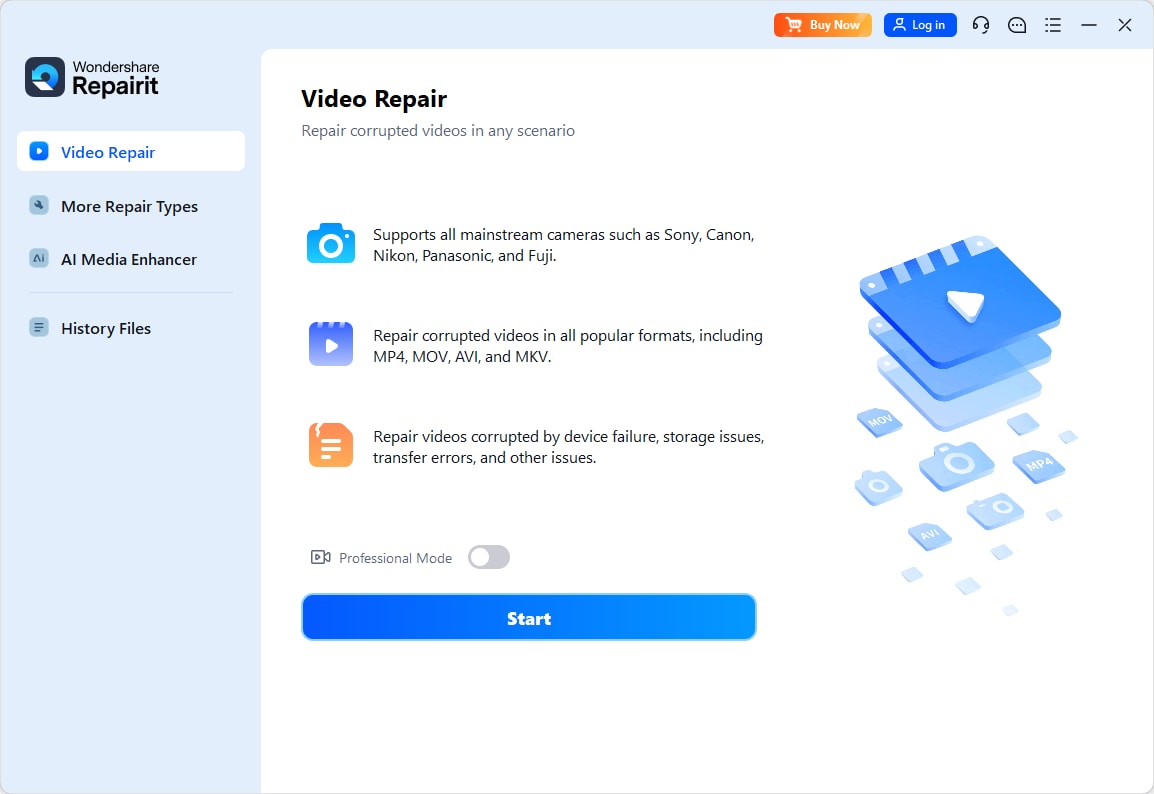
- Run the repair
Start the repair process and let Repairit analyze each file, attempting to rebuild a playable version of the damaged video without changing your original.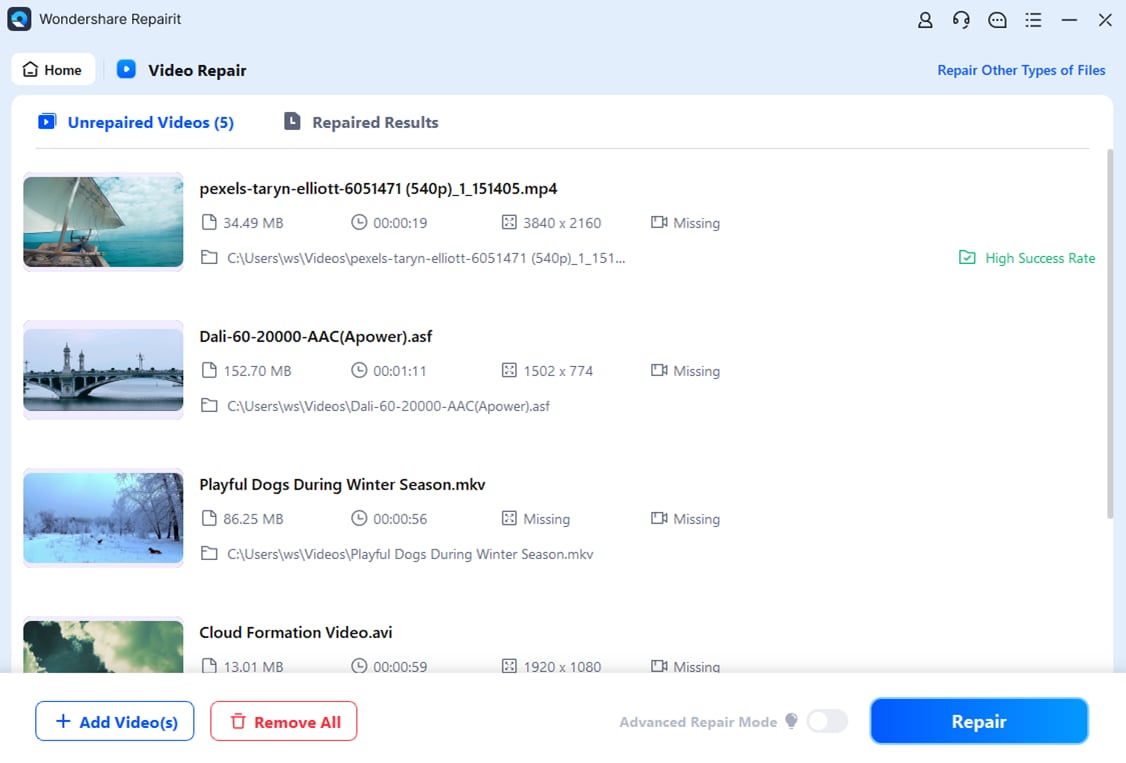
- Preview and export
When the repair finishes, preview the results inside Repairit to confirm that playback looks acceptable, then export and save the fixed videos to a safe folder.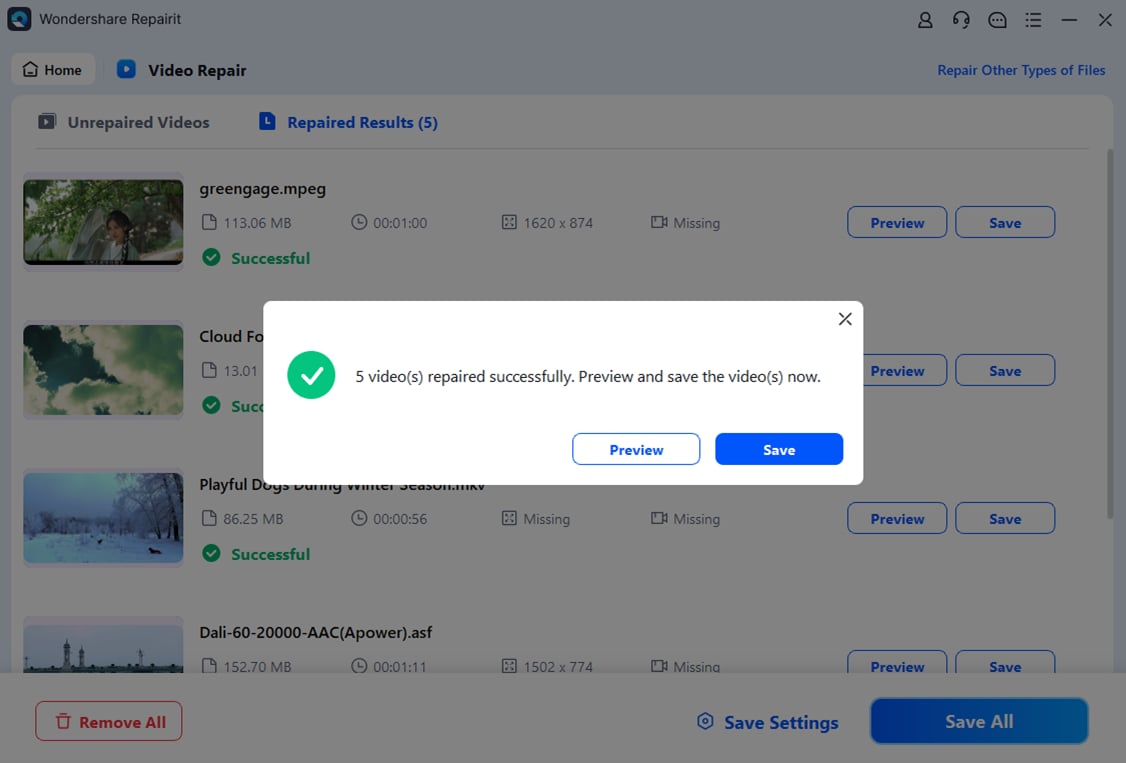
Final Verdict
Choosing between Repairit vs Remo Repair MOV is less about which tool is universally better and more about which one matches your real-world projects.
Repairit is a stronger choice for users who work with different video formats, juggle footage from multiple devices, or expect to encounter varied and sometimes more severe corruption issues. Its broader scope and guided workflow make it a practical hub for long-term video maintenance and for users who want a single, flexible solution.
Remo Repair MOV may still be enough if your main concern is repairing MOV-based camera or Apple footage and you prefer a format-specific and direct workflow. If your editing life is almost entirely MOV-centric, its focused approach can be sufficient, while Repairit becomes more compelling as soon as your needs expand beyond that single format.
For many editors, the most balanced setup is to rely on Repairit as the general-purpose tool and keep MOV specialists like Remo Repair MOV in mind for narrower use cases, especially when comparing outcomes on tricky clips.
FAQ
-
1. Is Repairit better than Remo Repair MOV for all video repairs?
Not in every situation. Repairit is stronger for mixed formats and varied corruption, while Remo Repair MOV can be enough if you mostly fix MOV camera clips. -
2. When should I choose Remo Repair MOV over Repairit?
You should lean toward Remo Repair MOV if your workflow is almost entirely MOV-based, especially with camera or Apple footage, and you prefer a format-specific and direct tool. -
3. Which tool handles more video formats, Repairit or Remo Repair MOV?
Repairit is positioned to handle a wider range of common video formats, whereas Remo Repair MOV focuses mainly on MOV files and MOV-centric use cases.