
Choosing between a guided tool and a command line workflow can be confusing when you just want to repair corrupted videos quickly. Repairit offers a visual, step driven interface, while the FFmpeg Repair Method relies on terminal commands and manual flags. This comparison walks through how Repairit and FFmpeg differ in usability, repair depth, and everyday use so you can decide which approach fits your workflow and comfort level.
The FFmpeg Repair Method is typically used by running FFmpeg commands that try to remux, re encode, or bypass damaged parts of a file. Repairit, in contrast, lets you add videos into a dedicated repair environment and run automated analysis without scripting. Understanding these differences makes it easier to pick the option that matches your skills and the kinds of video issues you face.
Repair Corrupted Files To Save Your Data
 Security Verified. Over 7,302,189 people have downloaded it.
In this article
- Repairit vs FFmpeg Repair Method: Quick Verdict
- Repairit vs FFmpeg Repair Method: Key Differences
- Repairit vs FFmpeg Repair Method: Comparison Table
- What Repairit and FFmpeg Repair Method Are Best For
- Repairit vs FFmpeg Repair Method: Features and Capabilities
- Repairit vs FFmpeg Repair Method: Supported Formats and Compatibility
- Repairit vs FFmpeg Repair Method: Workflow and Ease of Use
- Repairit vs FFmpeg Repair Method: Pricing and Trial Options
- Who Should Choose Repairit
- Who Should Choose FFmpeg Repair Method
- Pros and Cons of Repairit and FFmpeg Repair Method
- How to Repair Corrupted Videos After Choosing the Right Tool
Repairit vs FFmpeg Repair Method: Quick Verdict
In many day to day situations, Repairit is a stronger choice for users who want a guided, click based way to fix unplayable or damaged video files. You add your clips, let the repair engine run, and then preview results before exporting.
The FFmpeg Repair Method can be a better fit when you are comfortable with command line tools and want granular control over remuxing, codecs, and parameters. It often suits users who enjoy scripting or need to integrate video repair style workflows into automated pipelines.
For most beginners or busy professionals, starting with Repairit will usually feel faster and less error prone. If you already know FFmpeg or need very specific tweaks, FFmpeg may cover your needs without extra software.
Repairit vs FFmpeg Repair Method: Key Differences
The two approaches differ mainly in workflow and who they are built for:
- Ease of use: Repairit offers an interface with guided steps. FFmpeg uses text commands that require understanding flags, codecs, and containers.
- Repair depth vs control: Repairit focuses on automated logic to restore damaged video playback with minimal setup. FFmpeg gives fine grained control for remuxing and workaround based fixes, but you design the process yourself.
- Consistency: Repairit encourages a repeatable import, scan, and export process. FFmpeg workflows can vary widely depending on which scripts and parameters you use.
- Learning curve: Repairit is approachable for non technical users. The FFmpeg Repair Method assumes more technical confidence, especially with media concepts and terminals.
Repairit vs FFmpeg Repair Method: Comparison Table
| Dimension | Repairit | FFmpeg Repair Method |
|---|---|---|
| Best for | General users and professionals who need guided, automated video repair with minimal setup. | Technical users comfortable with terminals who want precise control over remuxing and codec level tweaks. |
| Ease of use | Visual interface with step by step repair, suitable for beginners. | Command line only; requires familiarity with FFmpeg syntax and media concepts. |
| Repair depth | Focused on repairing structural and playback issues through an automated engine. | Stronger for remuxing and codec level workarounds; true repair depends on manual commands and cases. |
| Workflow | Upload, scan, preview, and export in a guided, repeatable process. | Technical and manual command line repair or remux workflow using FFmpeg scripts and flags. |
| Strengths | User friendly, consistent repair steps, supports a range of common corruption scenarios. | Highly flexible, powerful for remuxing, re encoding, and handling complex codec or container issues. |
| Weaknesses | Less granular control than raw command line tools for edge case encoding workflows. | Steep learning curve, not beginner friendly, more manual effort and trial and error required. |
What Repairit and FFmpeg Repair Method Are Best For
The FFmpeg Repair Method is positioned as a command line repair or remux workflow using FFmpeg, suited to users who are happy to experiment with terminal based fixes. It can be particularly handy when you already use FFmpeg for encoding or transcoding.
Repairit, on the other hand, is built for people who prefer an interface driven path to fix corrupted video files. You do not have to remember commands or options, which can help when you only face video issues occasionally.
- Choose Repairit if you want a visual, guided way to restore damaged video playback with as few decisions as possible.
- Choose the FFmpeg Repair Method if you feel comfortable testing different command combinations and tweaking parameters to see what helps.
- Using both can make sense: try a fast automated pass with Repairit, then turn to FFmpeg for more experimental command level attempts.
Repairit vs FFmpeg Repair Method: Features and Capabilities
Both Repairit and the FFmpeg Repair Method can help you rescue problematic videos, but they approach the task very differently. Repairit focuses on guided repair with preset logic, while FFmpeg leans on powerful remuxing and codec level workarounds driven by manual commands. The tradeoff is flexibility versus ease of use, especially for users who are not comfortable with the steep learning curve of FFmpeg.
At a basic level, they share some overlapping goals:
- Repairit offers a graphical interface for importing, scanning, and repairing corrupted video files.
- FFmpeg Repair Method relies on command line operations to remux or re encode damaged videos into new containers.
- Both options can help restore playback issues in many everyday corruption cases, depending on severity.
When you look at more advanced use:
- Repairit focuses on dedicated repair logic that aims to fix structural issues and improve playability without requiring technical tuning.
- FFmpeg Repair Method provides highly flexible control over codecs, bitrates, and containers for users who can design their own workflows.
- With FFmpeg, technical users can chain multiple operations to attempt workarounds when simple repairs are not enough, at the cost of more manual effort.
If you need predictable, repeatable repair for client work or regular projects, Repairit may feel more stable. If you enjoy experimenting with different flags and scripting solutions, FFmpeg gives you a larger toolbox, with the understanding that it may take more time to get good results.
Repairit vs FFmpeg Repair Method: Supported Formats and Compatibility
Repairit is designed to handle a wide range of popular consumer and professional video formats, aiming to simplify compatibility for most users. The idea is that you can bring footage from phones, cameras, or editing tools into one place and attempt repairs without worrying too much about technical details.
The FFmpeg Repair Method can work with many formats and devices because FFmpeg itself supports numerous codecs and containers. However, taking advantage of this breadth typically requires command line knowledge, including how to reference the right streams or remux to specific containers.
For non technical users, Repairit will generally feel more straightforward because it hides the complexity behind a consistent interface. Advanced users may prefer FFmpeg when they are dealing with niche formats or custom encoding settings that they want to control directly through commands.
Repairit vs FFmpeg Repair Method: Workflow and Ease of Use
The key difference is workflow. Repairit provides a guided, click based process with minimal configuration, while the FFmpeg Repair Method uses a technical and manual command line workflow.
With Repairit, you typically follow a predictable path: add your corrupted clips, run the repair, then preview and export. The interface helps you stay on track and reduces the need to understand how containers and codecs work under the hood.
With FFmpeg, you usually:
- Identify the issue based on error messages or playback behavior.
- Search for appropriate FFmpeg commands or flags (for example, remuxing to another container, copying streams, or re encoding).
- Run commands, review output logs, and test the resulting file in a player.
- Iterate with different parameters until playback improves or you conclude the file is too damaged.
This more manual, experimental workflow can be powerful for users who like scripting, but it may be overwhelming if you just want a quick way to repair a few broken videos.
Repairit vs FFmpeg Repair Method: Pricing and Trial Options
Repairit is commercial software and typically offers a trial so you can test video repair before committing, though exact pricing can vary by plan and region. This paid model often includes interface updates and support resources that help guide you through the process.
The FFmpeg Repair Method is usually based on FFmpeg, which is free to use. There is no dedicated visual repair interface bundled with it, and support mostly comes from community documentation, forums, and tutorials.
In practice, you trade license cost for convenience and guided tools with Repairit, or invest your time and learning effort with FFmpeg in exchange for a free, scriptable approach.
Who Should Choose Repairit
Repairit may be the better fit if your priority is a simple, predictable way to fix unplayable video files without diving into technical documentation. It suits users who want to focus on their footage, not on command syntax.
- Users who want a simple, visual workflow for repairing corrupted videos.
- Professionals who handle client footage and need predictable, repeatable repair steps.
- Creators and businesses who prefer guided tools over command line utilities.
- Anyone facing more severe corruption where automated repair logic may help beyond simple remuxing.
If you frequently receive clips from different sources and cannot control how they were recorded or encoded, Repairit can serve as a central place to attempt repairs before you continue editing or sharing.
Who Should Choose FFmpeg Repair Method
The FFmpeg Repair Method is often preferable for technically inclined users who already use FFmpeg for encoding, transcoding, or automation. It is especially helpful when you want full control over how streams are handled.
- Technical users comfortable with terminal based fixes and scripting.
- People who mainly need powerful remuxing or codec level workarounds rather than full automated repair.
- Users willing to accept a steep learning curve in exchange for high flexibility and control.
- Those who occasionally fix mildly damaged files and do not mind a manual, command line workflow.
If you are already familiar with media concepts like bitrates, GOP structure, and container types, the FFmpeg Repair Method lets you translate that knowledge into targeted commands for handling partially corrupted videos.
Pros and Cons of Repairit and FFmpeg Repair Method
Both options have strengths and tradeoffs. Understanding these helps you decide which tool to reach for first when you encounter a corrupted video.
Repairit Pros and Cons
FFmpeg Repair Method Pros and Cons
How to Repair Corrupted Videos After Choosing the Right Tool
After comparing Repairit vs FFmpeg Repair Method, the next step is actually repairing your corrupted videos. If you decide that command line workflows are right for you, you can build FFmpeg based scripts and iterate until you see acceptable results. If you prefer a guided experience with fewer technical decisions, using a dedicated application can streamline the process.
Repairit is a practical, interface based option that focuses on diagnosing and repairing playback issues without requiring you to manage codec parameters yourself. Here is how it fits into the process once you have chosen it as your main repair tool.
Key Features
Some capabilities that matter when you are trying to restore damaged video playback include:
- Guided video repair with a simple import, scan, and export flow.
- Support for many common camera, phone, and editing formats.
- Preview of repaired results before you finalize and save the output.
Step-by-step guide
Once you have installed Repairit, you can follow these steps to attempt repairs on corrupted videos.
- Add corrupted videos
Open Repairit and import your damaged video files from your computer or external drive. You can add multiple clips if you need to process a batch of videos in one session.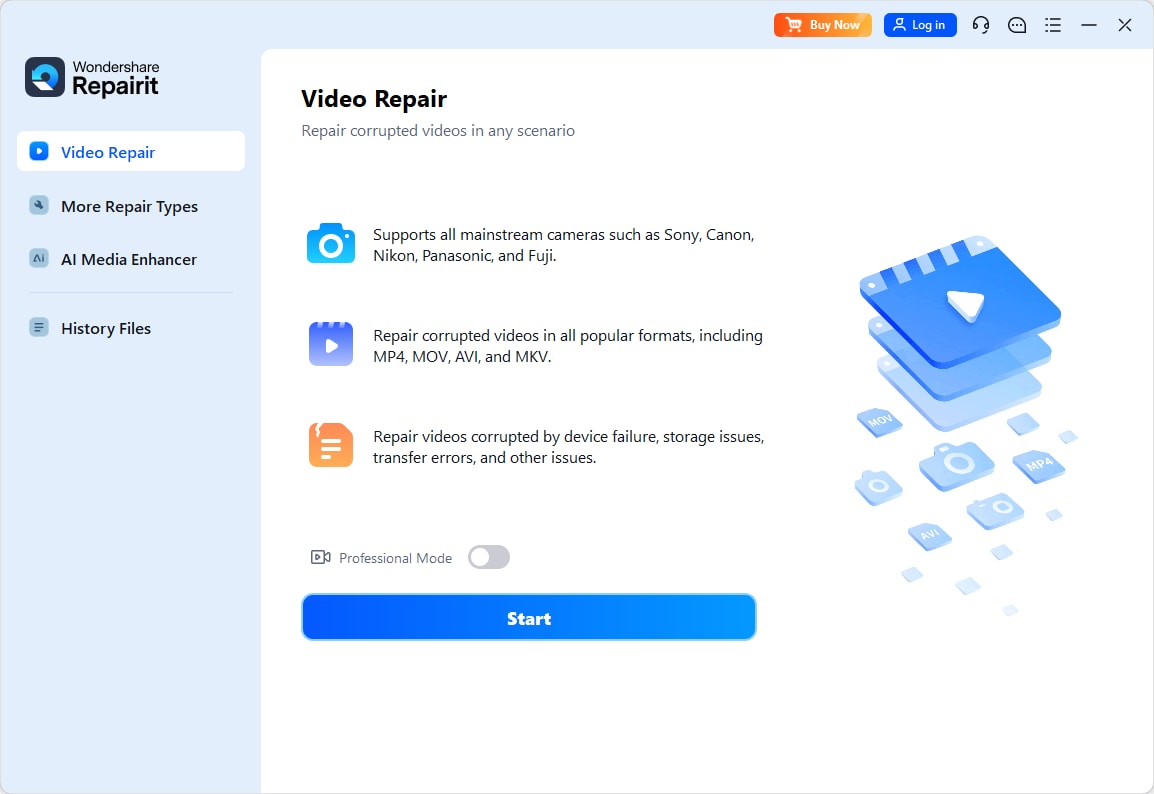
- Run the repair
Start the repair process so Repairit can analyze structural and playback issues automatically. The tool applies its built in repair logic, so you do not need to configure codecs or flags manually.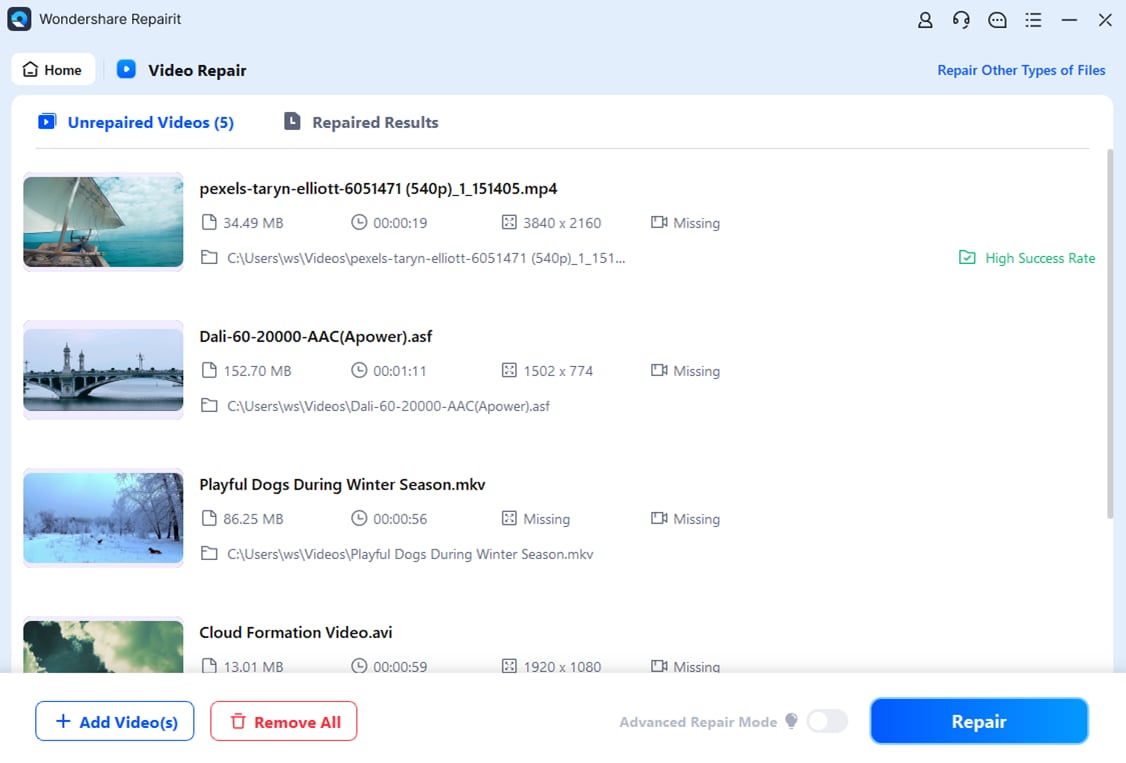
- Preview and export
After the repair completes, review the preview to confirm that playback is improved. If you are satisfied, export and save the repaired video to a safe location for further editing or sharing.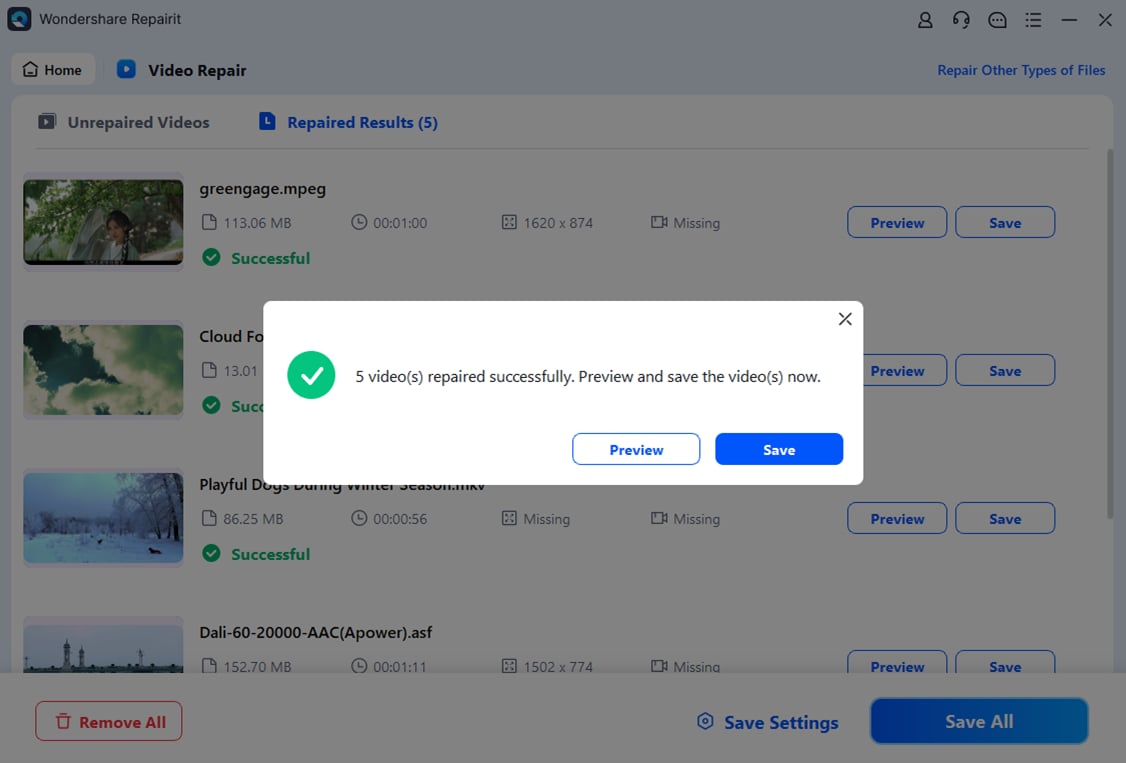
Final Verdict
Repairit is a stronger choice for users who value a guided, visual repair process and need help with more severe or confusing corruption issues. Its interface, automated scanning, and preview workflow reduce the risk of mistakes for people who do not want to learn complex media commands.
The FFmpeg Repair Method may be enough if you are a technical user comfortable with terminals, primarily need remuxing or codec level workarounds, and prefer a free, scriptable approach. It can be particularly attractive when you already use FFmpeg in your video pipeline and want to extend that knowledge to basic repair tasks.
In many cases, combining both approaches makes sense: start with Repairit for a straightforward, automated attempt, then turn to FFmpeg when you need highly customized, command line control or want to experiment with specific encoding strategies.
FAQ
-
1. Is Repairit better than the FFmpeg Repair Method for fixing corrupted videos?
Repairit is usually better for non technical users who want a guided interface, while the FFmpeg Repair Method can suit technical users who prefer manual, command line workflows. -
2. When should I use the FFmpeg Repair Method instead of Repairit?
Use the FFmpeg Repair Method if you are comfortable with terminal commands, mainly need remuxing or codec tweaks, and do not mind experimenting with manual settings. -
3. Can I use both Repairit and FFmpeg Repair Method on the same video?
Yes, you can try one tool and, if the results are not satisfactory, attempt additional fixes with the other. It is safest to work on copies of your files to avoid further damage.