
A TIFF File guide helps you understand the TIFF image format, why professionals rely on it, and how you can use it in your own projects. Below, you will learn what a TIFF file is, how it compares to other formats, how to open and convert it, and what to do if a TIFF becomes corrupted.
Repair Corrupted Files To Save Your Data
 Security Verified. Over 7,302,189 people have downloaded it.
In this article
What Is TIFF File: Understanding This High-Quality Image Format
A TIFF file (Tag Image File Format), usually saved with the .tif or .tiff extension, is a flexible, high-quality raster image format. It supports high bit depths, multiple color spaces, and optional compression, making it a favorite for photographers, designers, scanners, and printers who need precise detail.
Unlike JPEG, which always uses lossy compression, a TIFF format image can be lossless or even uncompressed, so it preserves as much original information as possible. This makes a tiff image ideal for editing stages, archives, and print production, where every pixel matters more than file size.
| Feature | TIFF |
|---|---|
| Typical use | Professional photography, scanning, printing, and archiving |
| Compression | Optional, often lossless (e.g., LZW, ZIP) |
| Key benefit | Maximum image quality and editing flexibility |
Because of its robustness and support for metadata and multiple layers/pages, TIFF is often used as a master file format, while smaller formats like JPG or PNG are used for sharing and web use.
How to Open TIFF File
You can open a tiff file on almost any modern system, from built-in image viewers to advanced editing applications. The best choice depends on whether you just want to view the image or perform detailed edits.
Open TIFF files on Windows and macOS
For quick viewing, your operating system already includes tools that can open tiff image files without extra software.
- Windows: Use the built-in Photos app or Windows Photo Viewer (on older versions). Right-click the TIFF, choose "Open with," and select Photos.
- macOS: Double-click the file to open it in Preview, or right-click and choose "Open with" > Preview.
- Web browsers: Some browsers can display TIFF via plugins or conversion tools, but they are less reliable for complex files.
If a TIFF does not open properly, the file may be associated with another program or may be partially corrupted, in which case repair or conversion might be required.
Open TIFF files in professional editors
For editing or color-critical work, software that fully understands the tiff format is recommended.
- Adobe Photoshop / Lightroom: Industry standards for photographers and designers, supporting layers, color profiles, and batch processing.
- GIMP: A free, open-source editor that can open and edit most TIFF files on Windows, macOS, and Linux.
- Affinity Photo / Corel PaintShop Pro: Alternative pro editors with robust TIFF support.
- Scanning and printing suites: Many scanners and RIP (Raster Image Processor) tools create and handle TIFF directly for print workflows.
If you cannot open a specific TIFF in any of these programs, the file may be damaged. In that case, a dedicated repair solution like Wondershare Repairit can help restore the image structure so it becomes readable again.
How to Convert TIFF File to JPG
Because TIFF files are large, you may want to convert them to JPG for sharing, emailing, or uploading to websites. JPG uses lossy compression, so it is much smaller but may sacrifice some detail compared to the original tiff image.
Convert TIFF to JPG on desktop
Desktop software gives you more control over quality and batch processing when you convert tiff to jpg.
- Using built-in tools (Windows): Open the TIFF in Photos, click the menu, choose "Save as," and select JPEG if available, or export via an editor like Paint.
- Using Preview (macOS): Open the TIFF, go to File > Export, choose JPEG as the format, and adjust the quality slider to balance size and clarity.
- Using image editors: In Photoshop, GIMP, or similar apps, open the TIFF and use File > Save As or Export As > JPEG/JPG. You can often set quality, color profile, and metadata options.
When converting, select a high-quality setting (e.g., 80–95) to minimize visible compression artifacts. Keep the original tiff file as your archive master whenever possible.
Convert TIFF to JPG online
If you only need a quick one-off conversion, online tools can be convenient.
- Online converters: Sites like CloudConvert, Zamzar, or Convertio let you upload a TIFF and download a JPG version without installing software.
- Browser-based editors: Some web editors support drag-and-drop TIFF import and simple exports to JPG or PNG.
- Privacy considerations: For sensitive or confidential images, avoid uploading to third-party servers. Instead, use offline desktop software.
Most online tools automatically choose a default compression level. If you care about detail, look for settings that allow you to control JPEG quality before downloading.
How to Use Repairit to Fix a Corrupted TIFF File
Why choose Repairit for TIFF repair
When your important TIFF images refuse to open, display with glitches, or trigger error messages, a dedicated repair tool can be the fastest way to recover them. Wondershare Repairit specializes in repairing damaged photo, video, and document files, including problematic TIFF images. You can learn more and download the tool from the Repairit official website.
Instead of manually trying to rebuild a broken tiff file in an editor, Repairit automatically analyzes the file structure, detects issues such as header corruption or read errors, and attempts to reconstruct a healthy version that you can view and use normally.
Key features of Repairit for TIFF images
- Repairs multiple damaged TIFF images in one batch, saving time when many photos are affected.
- Handles a wide range of corruption problems, from incomplete downloads and bad sectors to header or metadata damage.
- Lets you preview repaired TIFF files before saving them, so you only recover images that meet your quality expectations.
Steps to repair corrupted TIFF files with Repairit
The Repairit workflow is streamlined so you can fix damaged tiff images without technical skills. Follow these steps to scan, repair, and restore your files.
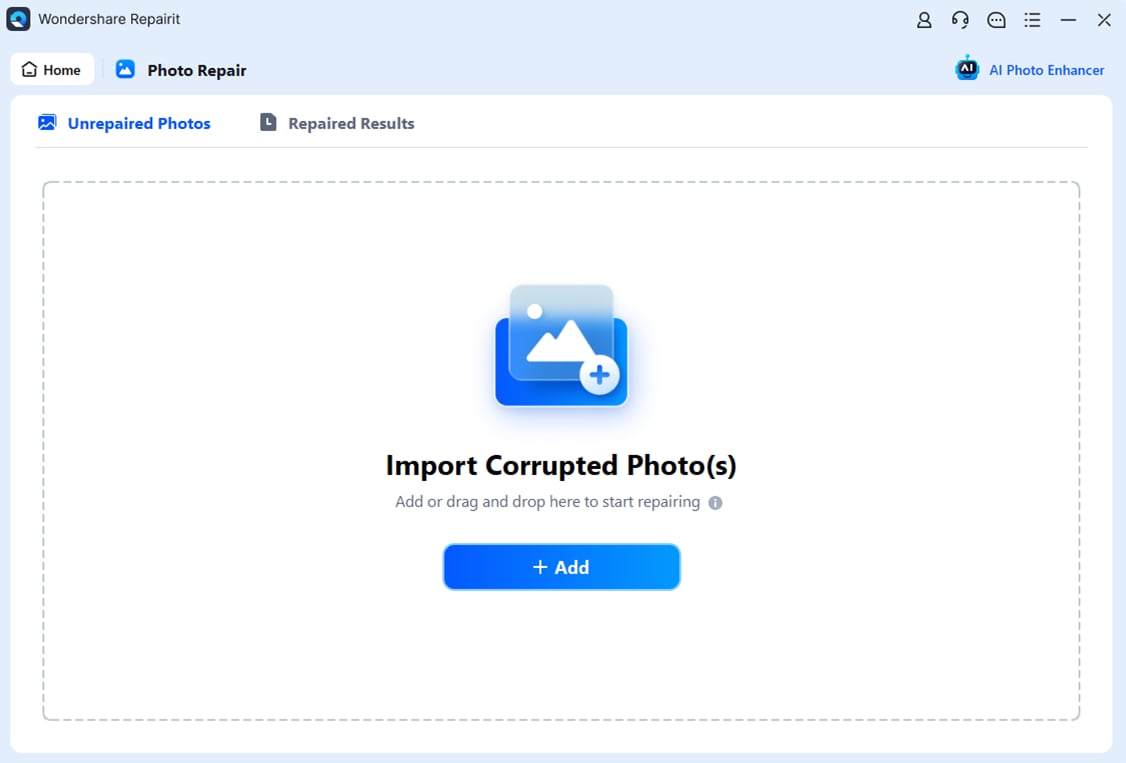
- Choose a Location to Repair Data
Install and launch Wondershare Repairit on your computer. On the main interface, select the data recovery or file repair module that supports photos, then point Repairit to the exact location where your corrupted TIFF files are stored. This can be a local drive, a specific folder, a memory card, or an external disk. Selecting the right path helps the software quickly find all problematic tiff file items.
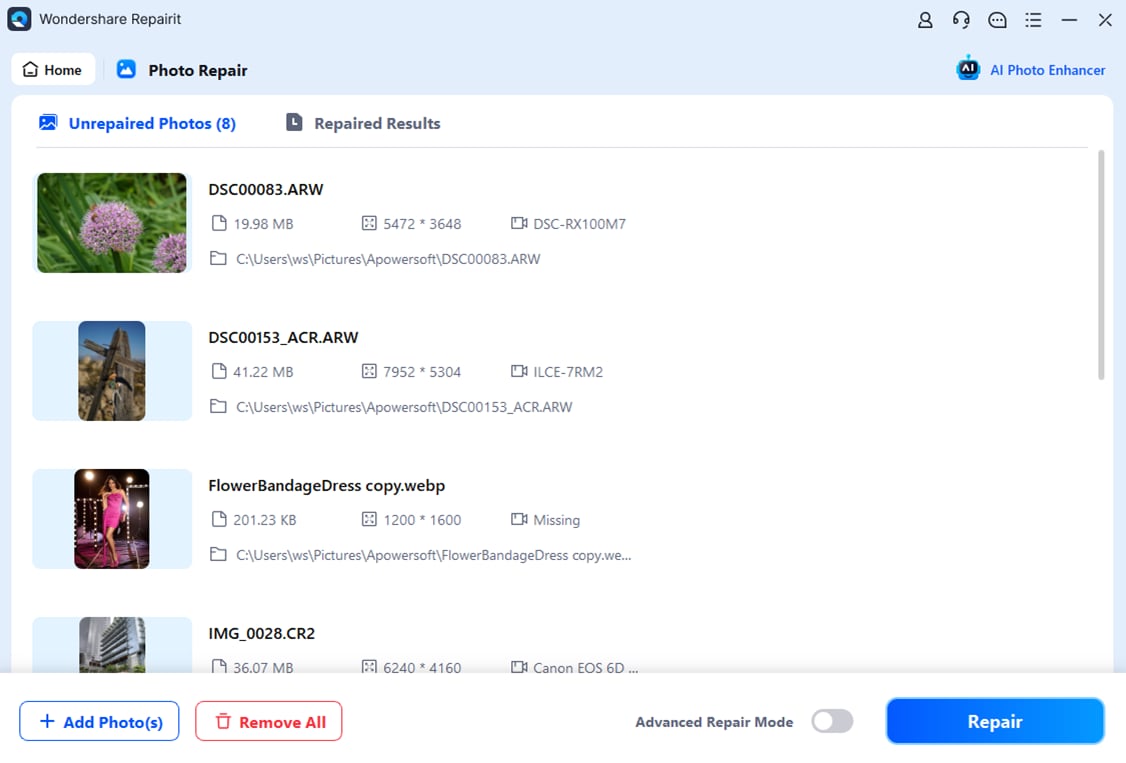
- Deep Scan the Location
Start the scan so Repairit can thoroughly examine the selected storage. The tool looks for recoverable and corrupted tiff image files, reading sector by sector if needed. During this deep scan, you can monitor progress and see discovered files appear in the list. Let the scan finish so Repairit can collect as much repairable data as possible, especially from severely damaged drives or folders.
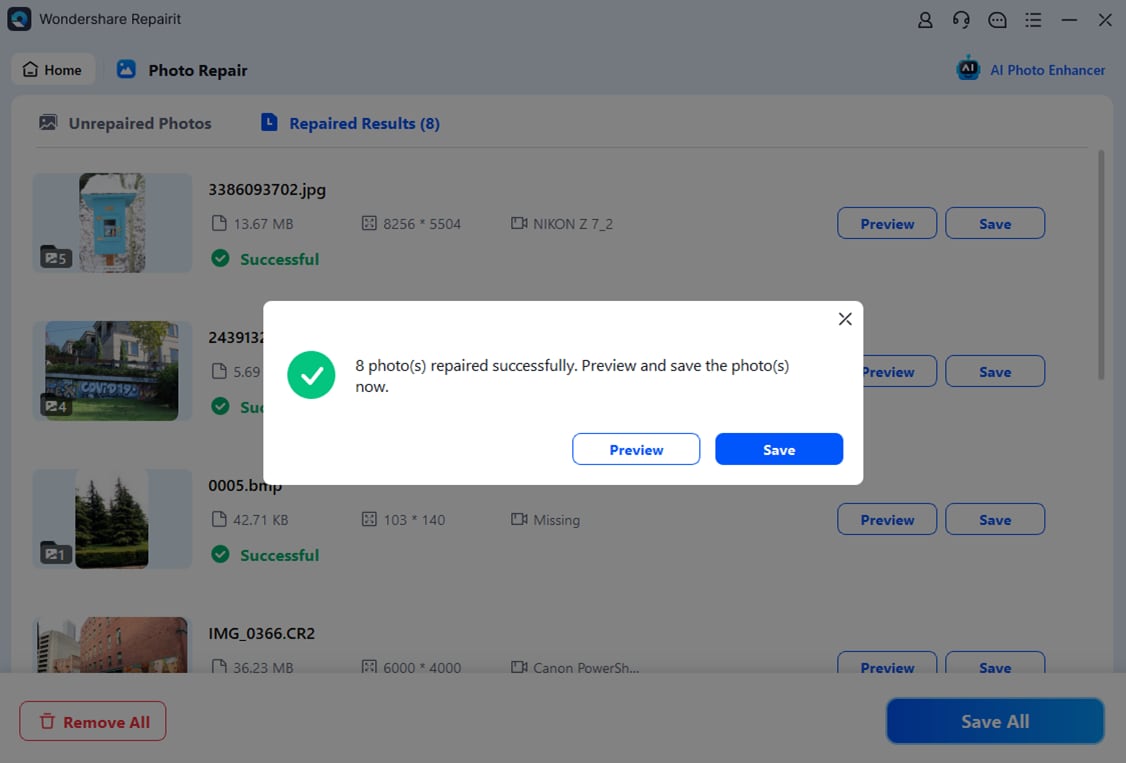
- Preview and Repair Your Desired Data
When the scan completes, Repairit displays all found TIFF files along with other supported formats. Select the images you care about and use the preview feature to check whether visual issues like distortion, missing areas, or artifacts have been fixed. Once you are satisfied with the repair results, click to save the restored files to a safe destination, preferably on a different drive than the source. This way, your repaired tiff format images are preserved without overwriting potentially recoverable data.
Conclusion
The tiff format remains a core choice for professionals who need uncompromising image quality, accurate color, and flexibility in editing and archiving. Understanding what is tiff file, how it compares to JPG, and when to use each format helps you design a workflow that balances quality with practicality.
By knowing how to open, convert, and repair a tiff image, you can safeguard your photos, scans, and design assets from compatibility issues and corruption. With the help of dedicated repair tools like Wondershare Repairit, even damaged TIFF files often have a second chance at being fully usable again.
Next: What Is Dng File
FAQ
-
1. What is a TIFF file used for?
A TIFF file is mainly used for high-quality images in professional photography, graphic design, document scanning, and printing workflows. Because it supports high bit depth and lossless storage, it is ideal for master files and long-term archives where quality and flexibility matter more than file size. -
2. Is TIFF better than JPG?
TIFF is generally better for editing and archiving because it can store more image data with little or no compression, preserving detail and color accuracy. JPG is better for web sharing, social media, and email because its lossy compression produces much smaller files that load quickly but may lose some quality. -
3. How can I open a TIFF file on my computer?
On Windows, you can open TIFF images with the Photos app or other viewers. On macOS, Preview opens TIFF by default. For advanced editing or color management, use programs such as Adobe Photoshop, Lightroom, GIMP, or other professional graphics editors that fully support the TIFF format. -
4. Can I convert a TIFF file to JPG without visible quality loss?
Every TIFF-to-JPG conversion adds some compression, but you can minimize visible loss by using a high JPEG quality setting (for example, 80–95) in your export dialog. For critical work, keep the original TIFF as your master and use JPG only for distribution or online display. -
5. How do I repair a corrupted TIFF file?
First, try opening the TIFF in several different viewers or editors to rule out software issues. If it still fails, restore the file from a backup if available. When no backup exists, use a specialized repair tool like Wondershare Repairit, which scans the damaged TIFF, fixes structural errors such as header or metadata corruption, and lets you preview the repaired result before saving.