
A What is 3FR File question usually comes up when photographers start working with Hasselblad cameras and encounter unfamiliar raw images. 3FR files store untouched sensor data for exceptional editing flexibility, but they can be harder to open, convert, or share than standard JPGs. This guide explains what a 3FR file is, how to open it on different platforms, how to convert 3FR to JPG, and what to do if your valuable Hasselblad 3FR photos become corrupted.
Repair Corrupted Files To Save Your Data
 Security Verified. Over 7,302,189 people have downloaded it.
In this article
What Is 3FR File
A 3fr file is a Hasselblad 3FR raw image captured directly from the camera's sensor with minimal in-camera processing. Instead of baking in white balance, sharpening, and noise reduction the way JPG does, a 3FR file stores data in a way that allows photographers to make these choices later in editing software.
Because a 3FR file is a type of camera raw file, it can contain:
- High bit-depth sensor data that preserves subtle tonal transitions
- Broader dynamic range, giving you more room to recover highlights and shadows
- Metadata such as lens information, camera model, and shooting settings
3FR files are primarily used by professionals and advanced enthusiasts who want maximum image quality and editing control from their Hasselblad systems.
3FR vs JPG and Other Raw Formats
While 3FR is specific to Hasselblad, it serves the same purpose as other raw types like CR2/CR3 (Canon), NEF (Nikon), ARW (Sony), and PEF (Pentax). The main differences relate to how each brand encodes sensor data and color science.
| Format | Main Characteristics |
|---|---|
| 3FR | Hasselblad proprietary raw image format with very high dynamic range and color depth, ideal for professional workflows. |
| JPG | Compressed, widely compatible format; smaller file size but less latitude for heavy editing. |
| Other raw (CR2, NEF, ARW, etc.) | Brand-specific raw formats with similar goals: capture maximum image data before editing. |
Compared with JPG, a raw image format such as 3FR gives you more flexibility to adjust exposure, white balance, and color grading without quickly degrading the image.
Pros and Cons of Using 3FR Files
Advantages of 3FR:
- Maximum image quality from Hasselblad sensors
- Better ability to correct exposure and white balance in post
- More headroom for creative color grading and retouching
Disadvantages of 3FR:
- Larger file sizes compared to JPG
- Requires compatible software to open and process
- May need conversion before sharing or printing
Understanding 3fr file and how it fits your workflow helps you decide when to shoot in this format and how to manage the resulting files efficiently.
How to Open and Convert 3FR Files
How to Open 3FR File
To open 3fr files, you need photo software that understands Hasselblad's raw specifications. Many mainstream raw editors offer built-in or plugin support.
Supported programs on Windows and macOS
- Hasselblad Phocus: Free software from Hasselblad designed specifically for 3FR and other Hasselblad raw formats. It is often the most accurate for color and lens corrections.
- Adobe Lightroom Classic / Lightroom: Popular among professionals. It can import and process 3FR images with extensive adjustment tools.
- Adobe Camera Raw (ACR): Opens 3FR files directly into Adobe Photoshop for detailed editing.
- Capture One Pro: Some versions support Hasselblad raw formats, offering an alternative color pipeline.
For the most up-to-date compatibility details, check each application's official documentation or support list.
Steps to open 3FR in Adobe Lightroom (example)
- Launch Lightroom, then go to the Library module.
- Click "Import" and browse to the folder containing your 3FR files.
- Select the images you want to add, choose "Copy" or "Add" as your import method, and click "Import".
- Switch to the Develop module to start editing the 3FR photos.
Common issues when opening 3FR files
- Outdated software: Older versions of Lightroom, ACR, or Capture One might not recognize newer Hasselblad cameras. Updating the software or camera raw plugin often solves this.
- Corrupted files: If a file refuses to open or shows errors, it may be damaged due to an interrupted transfer, faulty memory card, or storage issues.
- Unsupported viewer: Basic image viewers, operating system previews, or low-end editors might not support 3FR at all.
If updates or re-copying from the memory card do not help, you may need to repair 3fr file data with specialized software.
How to Convert 3FR File to JPG
While 3FR is perfect for editing, you often need a more common format to share or deliver your work. Learning how to convert 3fr to jpg without unnecessary quality loss is an important part of your workflow.
Tools to convert 3FR to JPG
- Hasselblad Phocus: Offers high-quality export options tailored to Hasselblad cameras.
- Adobe Lightroom / Photoshop: Convert 3FR images to JPG, TIFF, or other formats via export or "Save As".
- Capture One: Provides batch export for processing multiple 3FR files into JPG or TIFF.
- Third-party converters: Some dedicated raw converters or batch processors support Hasselblad 3FR as input.
Example: Convert 3FR to JPG in Phocus
- Open Phocus and import your 3FR files into the catalog or browse directly to their folder.
- Select the images you want to convert and apply any desired edits such as exposure and color adjustments.
- Go to the export or processing section, choose JPG as the output format, select your preferred resolution and quality settings, and start the export.
Best practices for preserving quality when converting
- Use a high quality or low compression setting when exporting JPGs.
- For critical work, also export a TIFF alongside JPG so you retain more detail for future editing.
- Always keep the original 3fr file as your "digital negative" in case you need to re-edit or re-export later.
Remember that any JPG conversion involves some compression, so if you want the utmost quality, consider maintaining a parallel archive of TIFF or other high-bit-depth formats.
How to Use Repairit to Fix a Corrupted 3FR File
Repairit Introduction
When a valuable Hasselblad raw image refuses to open, appears blank, or triggers an error, the file may be corrupted. Instead of giving up on it, you can use Wondershare Repairit, a professional data repair tool, to fix corrupted 3fr photos and other important files. Repairit supports photos, videos, and documents from multiple storage devices, and you can learn more or download it from the Repairit official website.
Key Features of Repairit for 3FR and Other Files
- Repairs corrupted photos, videos, and files from various cameras and devices, including Hasselblad raw images.
- Supports multiple storage locations such as memory cards, external drives, USB sticks, and computer disks.
- Lets you preview repaired files before saving so you only recover the images that meet your quality needs.
Step-by-Step: Repair a Corrupted 3FR File with Repairit
-
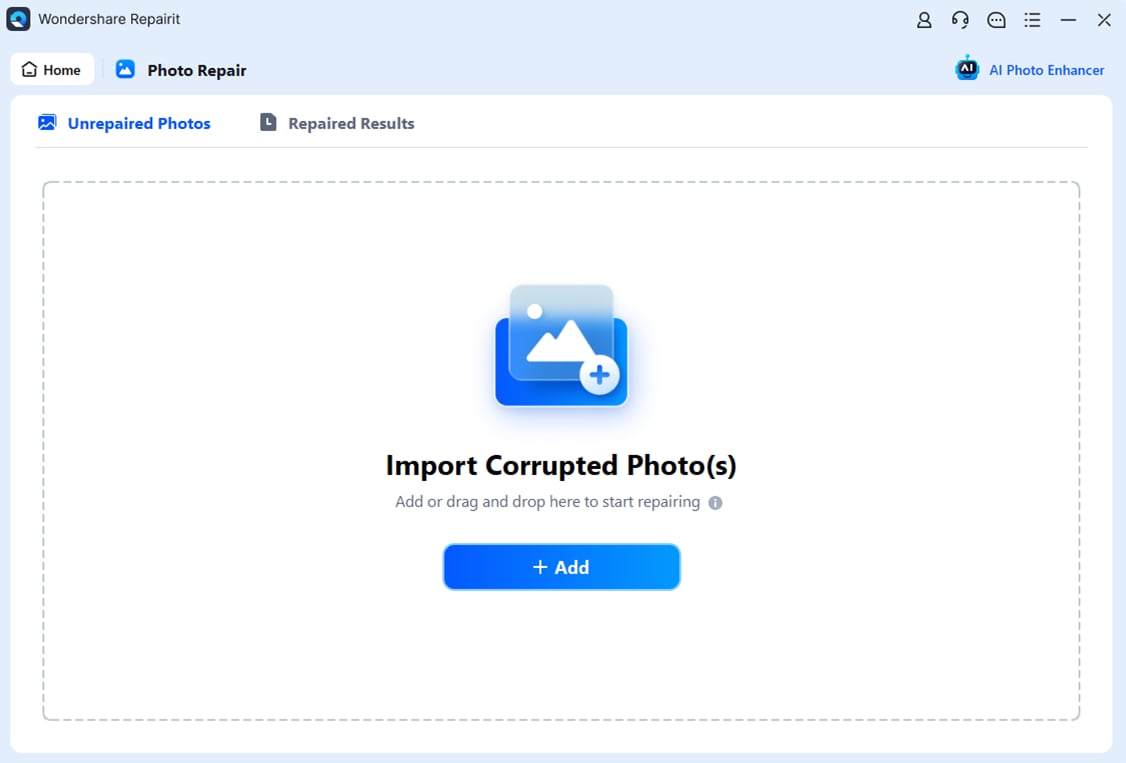
Choose a Location to Repair Data
Install and open Wondershare Repairit on your computer. On the main screen, select the drive, memory card, or specific folder where your corrupted 3FR photos are stored. Confirm the source location so the software can focus its scan on the area most likely to contain the damaged files.
-
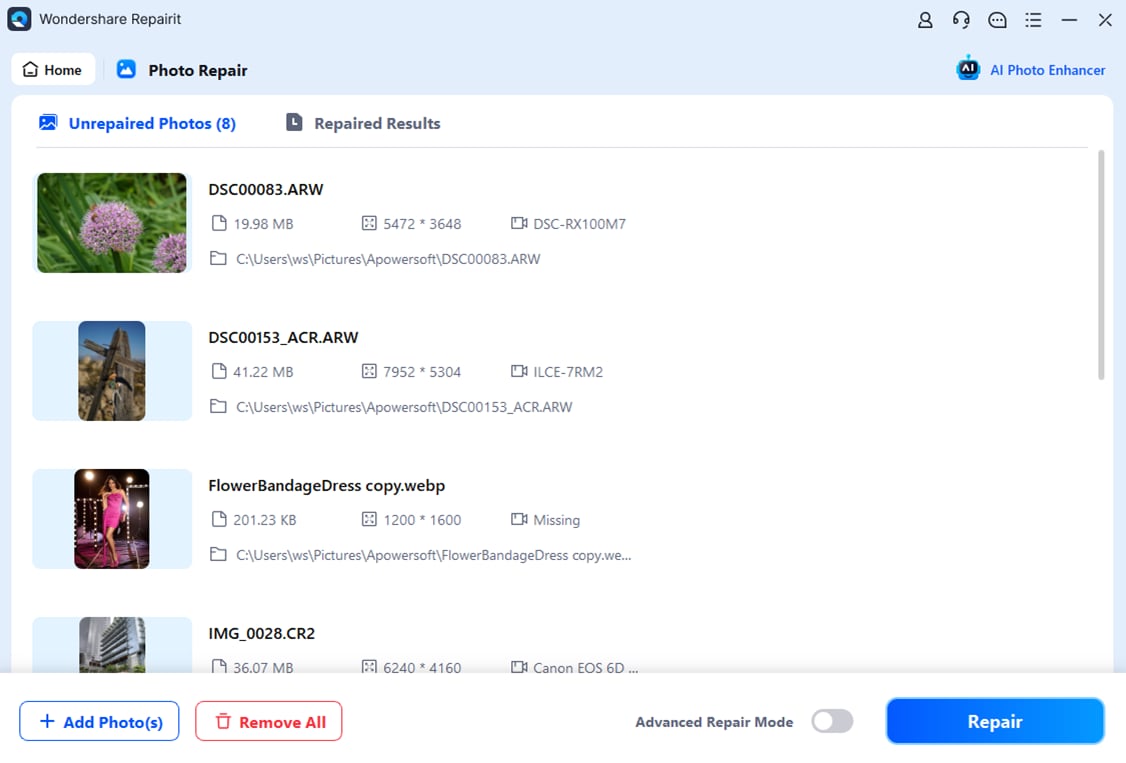
Deep Scan the Location
Click the scan button to let Repairit perform an in-depth analysis of the selected storage. The program automatically searches for broken or unreadable 3FR images and attempts to reconstruct their data structures. You can monitor the progress while the tool examines the file system and identifies items that can be repaired.
-
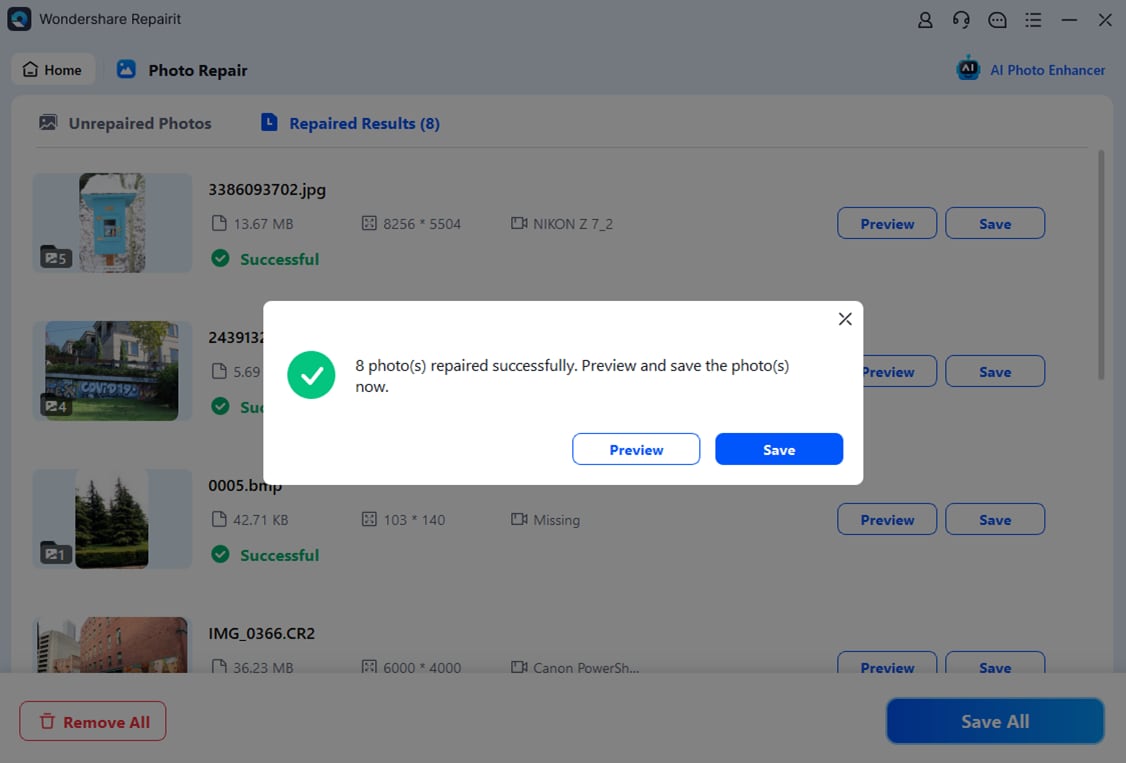
Preview and Repair Your Desired Data
Once the scan and repair processes are done, Repairit will display the recoverable 3FR photos along with a preview. Open the preview window to verify that details, colors, and composition look correct. Finally, select the images you want to keep and save them to a safe, separate location from the original source to avoid overwriting any remaining data.
Conclusion
Understanding what is 3fr file helps you get the most from Hasselblad's medium-format cameras. As a dedicated raw image format, 3FR preserves extensive sensor information for high-end retouching, but it also requires compatible software for viewing and editing, plus proper conversion steps when you need JPGs or other common outputs.
When a 3FR image becomes corrupted or unreadable, you do not have to lose your work. Tools like Wondershare Repairit provide a straightforward way to repair 3fr file data and rescue important shots from memory cards, external drives, or computers. By combining careful shooting habits, reliable backup practices, and a capable repair solution, you can keep your Hasselblad photos safe and ready for any project.
Next: What Is Pef File
FAQ
-
1. What program opens 3FR files?
You can open 3FR files with Hasselblad Phocus, Adobe Lightroom, Adobe Camera Raw, and some versions of Capture One or other advanced editors that support Hasselblad raw formats. Check each program's compatibility list to confirm support for your specific camera model. -
2. Can I convert 3FR to JPG without losing quality?
You can export high-quality JPGs from Phocus, Lightroom, or similar tools, but JPG always uses compression. To minimize visible quality loss, choose the highest quality (lowest compression) settings and consider also saving a TIFF copy for archival purposes. -
3. Why will my 3FR file not open?
A 3FR file may fail to open if your software is outdated, the file is corrupted, or the transfer from the camera or card reader was interrupted. Update your raw editor, try copying the file again, and if it still fails, use Repairit or similar tools to attempt a repair. -
4. Are 3FR files the same as other raw formats?
No. 3FR is Hasselblad's proprietary raw format, similar in purpose to NEF, CR3, or ARW but tailored to Hasselblad sensors and color science. Because of this, support and rendering may differ between software applications. -
5. Can I delete 3FR files after exporting JPGs?
It is technically possible, but not recommended. The 3FR file acts like your digital negative and contains the most detail and editing flexibility. Keeping the original raw images allows you to re-edit or re-export in the future using improved techniques or software.