
 TL;DR:
Quick Fix: How to Fix VLC Not Playing MP4 Files
If your MP4 videos won't play, lag, or show a black screen in VLC, apply these top 3 high-success methods instantly:
● Repair Corrupted MP4 Files: Media players cannot parse broken or truncated video containers. Use Wondershare Repairit MP4 Video Repair to automatically rebuild damaged video metadata and fix unplayable files with a few clicks.
● Disable Hardware Decoding: Navigate to Tools > Preferences > Input/Codecs. Change the Hardware-accelerated decoding dropdown to Disabled and click Save to bypass rendering crashes and frozen frames.
● Adjust Video Output Mode: Go to Tools > Preferences > Video. Switch the Output setting from Automatic to DirectX (DirectDraw) video output and click Save to resolve blank or distorted screens.
Ask AI for a summary
 ChatGPT
 Perplexity
 Gemini
 Claude
 Grok
Grok
If you are dealing with vlc not playing mp4, first determine whether the problem is VLC, the playback environment, or the MP4 file itself. Copy the video to your local drive, test it in another player, and check whether other MP4 files open normally. If only one file fails in every player, keep the original untouched and try a supported video-repair workflow; if VLC player alone fails, troubleshoot VLC settings and hardware decoding first.
This guide explains why mp4 not playing on vlc happens, which checks are safe to try first, when conversion may help, and when a corrupted MP4 repair tool is more appropriate. The steps apply to common Windows VLC installations; menu names can vary slightly by VLC version and operating system.
In this article
Part 1. Why Is VLC Not Playing MP4?
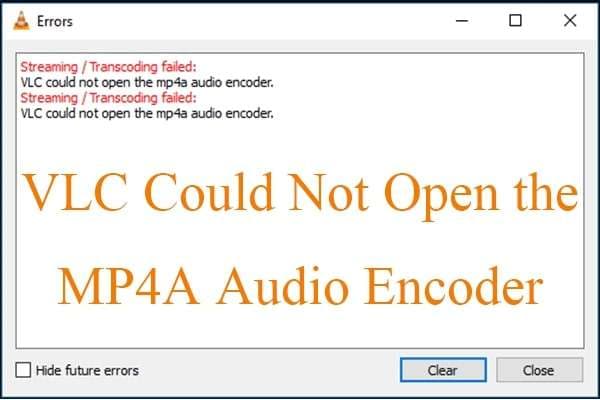
VLC usually plays MP4 files, but MP4 is a container rather than one single codec. An MP4 can contain different video and audio streams, and playback can fail when VLC settings, hardware decoding, the operating system, the graphics driver, the storage connection, or the file structure is the actual cause.
Read the symptom before changing settings
| What you see | Most likely area to check | Best first action |
| One MP4 fails, but other players open it | VLC preferences, output module, or hardware decoding | Reset VLC preferences and test software decoding |
| One MP4 fails in VLC and every other player | Incomplete or corrupted file structure | Work from a copy and consider supported MP4 repair |
| Every MP4 fails in VLC | VLC installation, settings, OS, or GPU driver | Reset/update VLC before touching individual files |
| Black screen but audio plays | Video output or hardware decoding | Disable hardware decoding and try another output module |
| Playback fails only from an external drive | USB cable, drive connection, permissions, or drive health | Copy the file to a local drive and test the copy |
| The file opens but the codec is not compatible with a target device | Container or codec compatibility | Convert a readable copy; conversion is not file repair |
Common causes of VLC MP4 playback errors
Codec or stream compatibility: VLC includes many built-in decoders, so a third-party codec pack is not normally the first solution. A particular MP4 may still contain a stream, profile, or encoding combination that your VLC build or hardware path cannot decode correctly. If VLC can't play your MP4 files, inspect the file and player separately rather than assuming a missing codec.
Incorrect preferences: Hardware-accelerated decoding, video output, caching, or a damaged preference file can cause freezing, a black screen, distorted frames, or an immediate playback stop.
Outdated software or drivers: An old VLC build, Windows installation, or GPU driver can cause compatibility and rendering problems. Update from official sources and restart the computer before retesting.
File corruption or incomplete writing: An interrupted recording, failed transfer, full card, sudden shutdown, or interrupted download can leave the MP4 index or media data incomplete. VLC cannot recreate bytes that were never saved.
Storage or permission problems: A disconnected external drive, read error, file permission issue, or unstable USB connection can look like a VLC playback failure even when the player is working correctly.
Part 2. Quick Checks Before Changing VLC Settings
These checks separate a VLC problem from an MP4 problem without modifying the source file.
- Make a working copy. Copy the MP4 to a local folder. Do not repair, convert, or save over the only original.
- Check the file size. A 0-byte file or a file much smaller than expected may not contain enough data for any player or repair tool.
- Test another player. Try a second trusted player. If the same file fails everywhere, focus on the file or storage rather than VLC.
- Test another MP4. If other MP4 files play normally, the issue is likely specific to the file, its codec, or its transfer history.
- Copy from external media. If the video is on a USB drive, memory card, or network location, copy a readable version locally before further testing.
- Check permissions and the extension. Confirm that you can read the file and that it has the expected extension. Renaming an extension does not repair a damaged container.
If these checks show that VLC alone is failing, continue with the VLC fixes below. If the MP4 cannot be opened by multiple players, skip directly to the repair section.
Part 3. How to Fix MP4 Not Playing on VLC
The following fixes target VLC or the playback environment. Try them in order and test the same MP4 after each change. If a setting does not help, restore the previous value or reset preferences.
Fix 1. Disable hardware-accelerated decoding
Hardware decoding can cause a black screen, a frozen picture, crashes, or audio without video on some GPU and codec combinations. Turning it off makes VLC decode through software and is a reversible test.
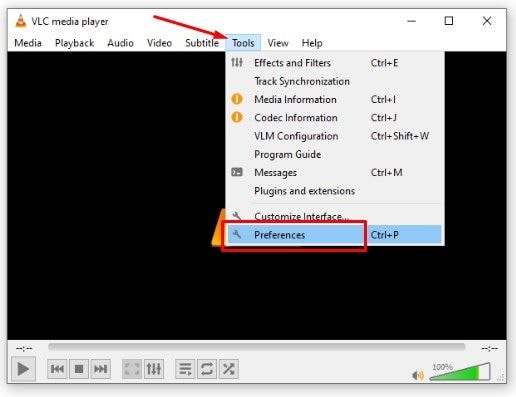
Step 1: Open VLC and choose Tools > Preferences.
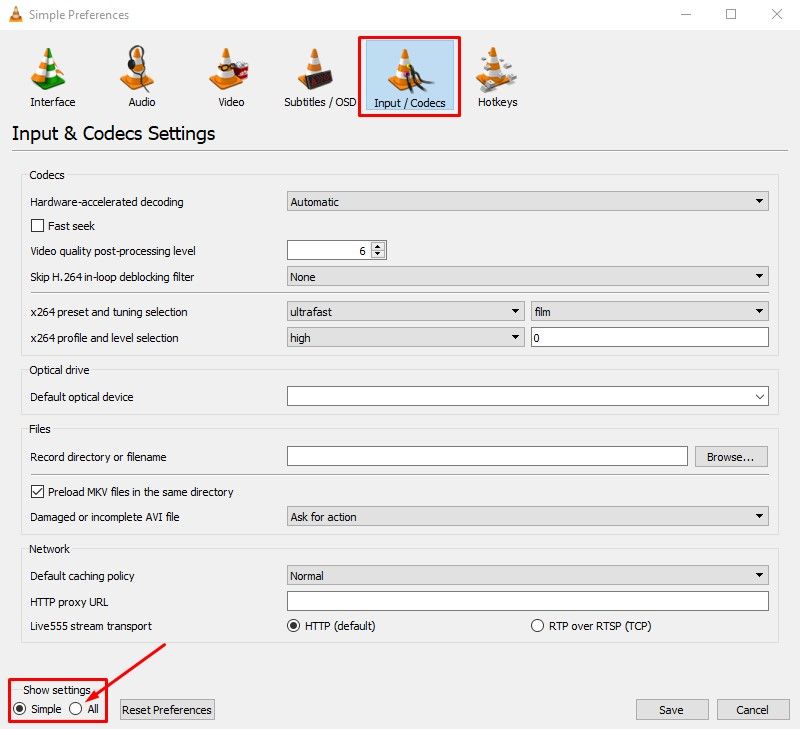
Step 2: Select Input/Codecs. If your version shows a Show settings option, choose All to display advanced settings.
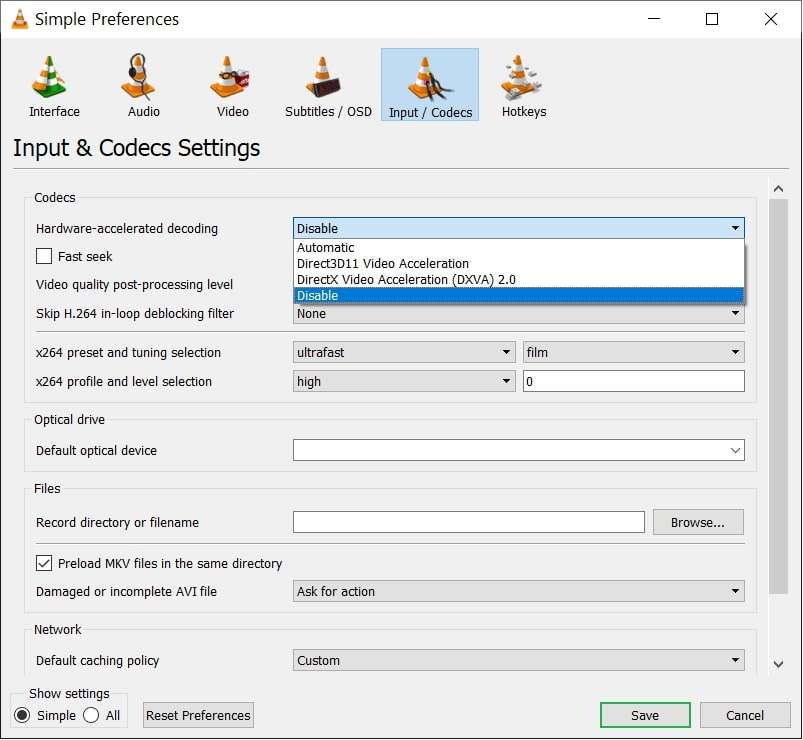
Step 3: Set Hardware-accelerated decoding to Disabled, select Save, restart VLC, and test the MP4 again.
Fix 2. Reset VLC preferences
A damaged or experimental preference can affect every video. In VLC, open Tools > Preferences and select Reset Preferences, then confirm and restart the player. The exact button placement can differ by version. Resetting removes custom VLC preferences; it does not repair the MP4 file.
After the reset, test a known-good MP4. If it plays, reapply settings one at a time instead of importing an old preference file.
Fix 3. Change video output for black-screen issues
Use this test only when VLC opens the file but the picture is black, white, or heavily distorted. It is not a general repair for a corrupted MP4.
Step 1: Open Tools > Preferences > Video.
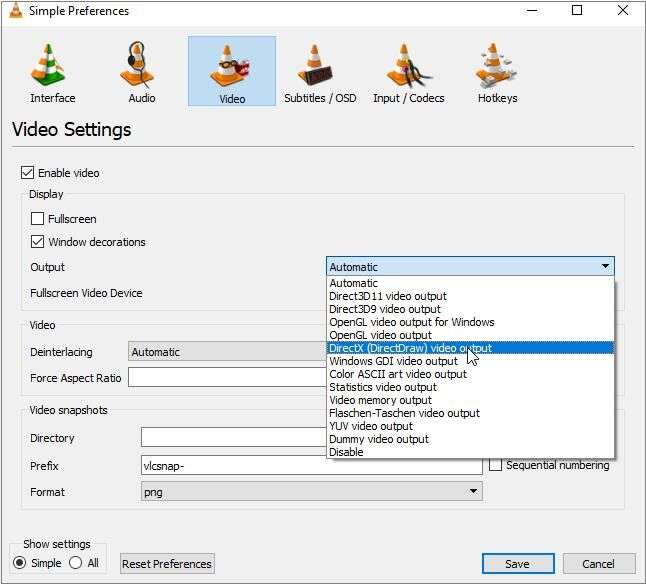
Step 2: In Output, try another available video output module, such as DirectX (DirectDraw) video output on supported Windows versions. Select Save, restart VLC, and test again.
If changing the output does not help, return it to Automatic. A different output module can help with rendering, but it cannot reconstruct missing MP4 data.
Fix 4. Update VLC, Windows, and the graphics driver
Install VLC from the official VideoLAN distribution rather than an unofficial repackaged installer. In VLC, use Help > Check for Updates when that option is available.
Step 1: Open VLC and select Help > Check for Updates.
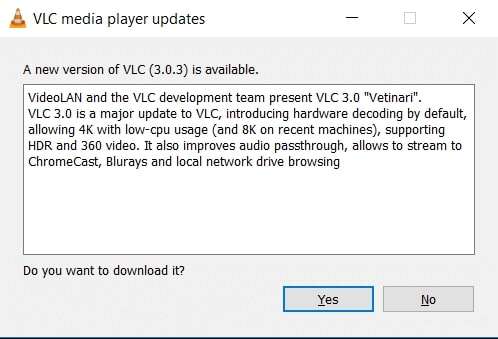
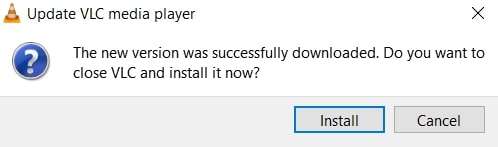
Step 2: If an update is offered, follow the installer and restart VLC.
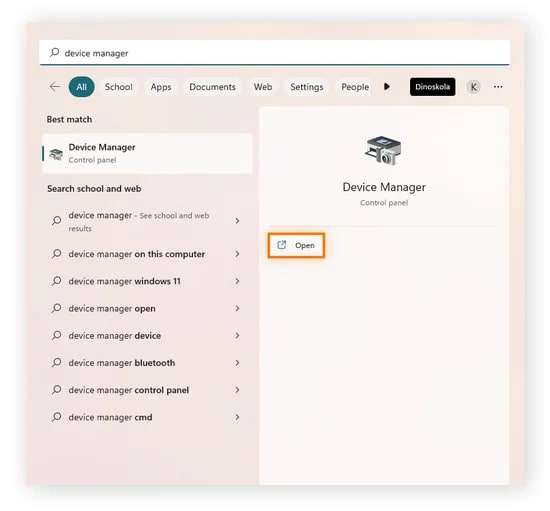
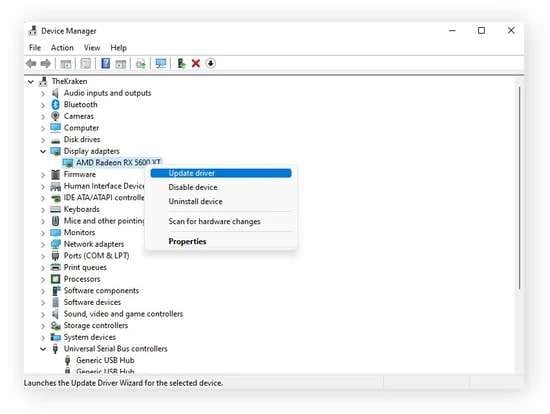
Also install pending Windows updates and restart the computer. If playback remains broken, open Device Manager > Display adapters, right-click the graphics adapter, and choose Update driver or install a current driver from the GPU manufacturer.
Fix 5. Avoid unofficial codec packs
VLC normally includes its own decoding components. Installing a random "MP4 codec pack" can add conflicts, outdated components, or unwanted software. First update VLC, inspect the file's media information, and test software decoding. If only one file fails in multiple players, installing another codec pack is unlikely to restore missing or corrupted MP4 data.
Part 4. How to Repair a Corrupted MP4 File
If the same MP4 fails in VLC and another trusted player, or shows a black screen, frozen frames, missing audio, a playback error, or an incomplete ending, the file may be damaged. Keep the original file and repair a duplicate. Repairit MP4 Repair can attempt to repair supported corrupted video files; it does not repair VLC, Windows, codecs, graphics drivers, external-drive hardware, deleted files, or data that was overwritten.
Repair an MP4 with Repairit Desktop
Use the desktop workflow when the file is large, private, severely damaged, or needs an advanced repair sample from the same device and format.
Step 1: Open Repairit, choose Video Repair, and select Add to import a copy of the corrupted MP4.
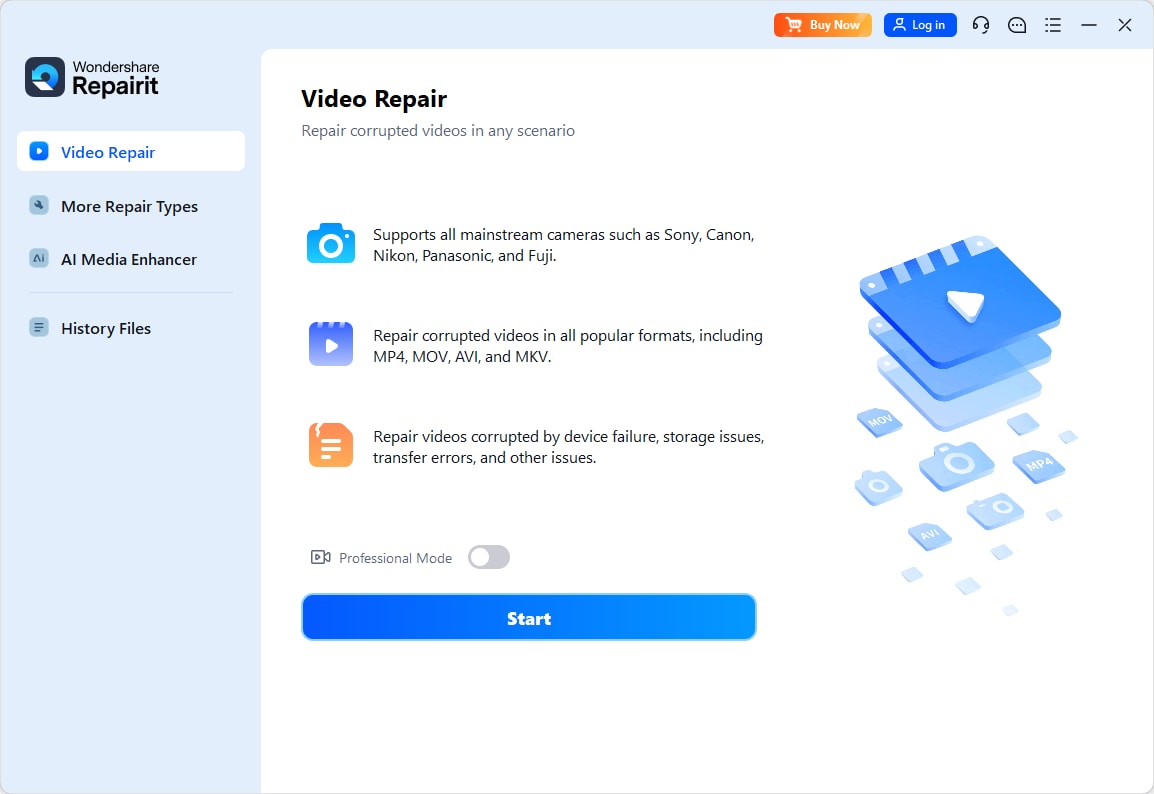
Step 2: Review the imported file and select Repair to start the standard repair attempt.
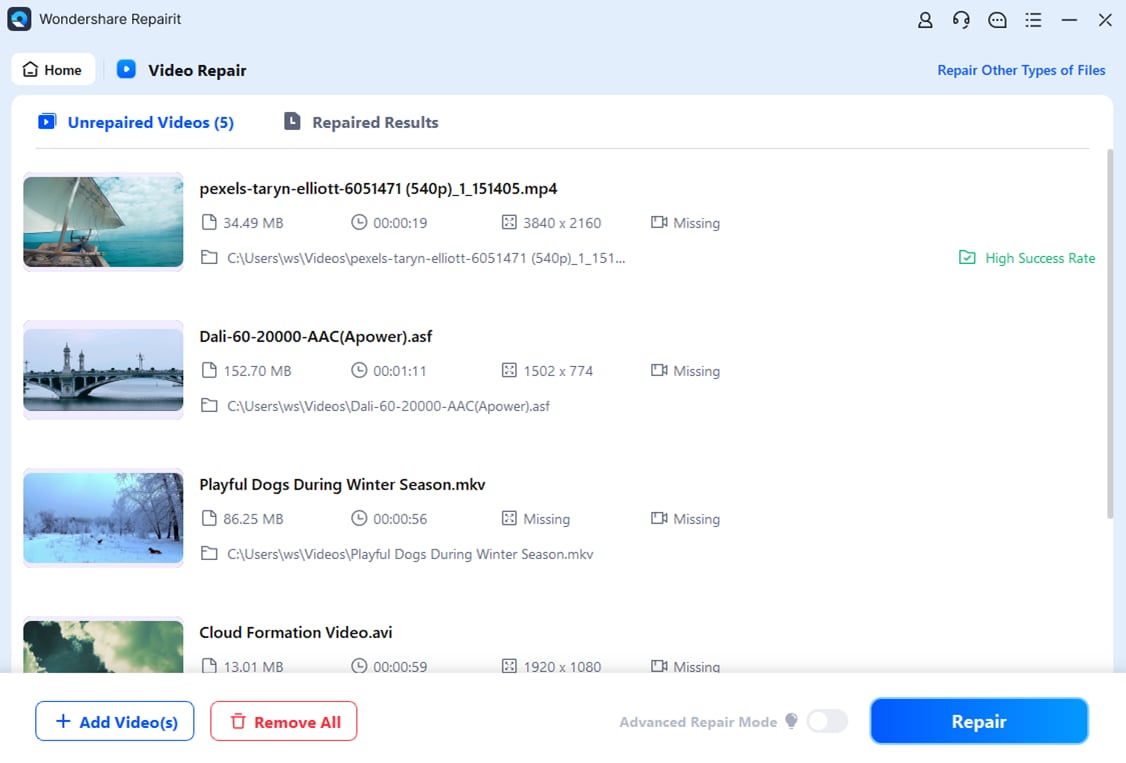
Step 3: Preview the result. If the output is usable, select OK and save it as a new file.
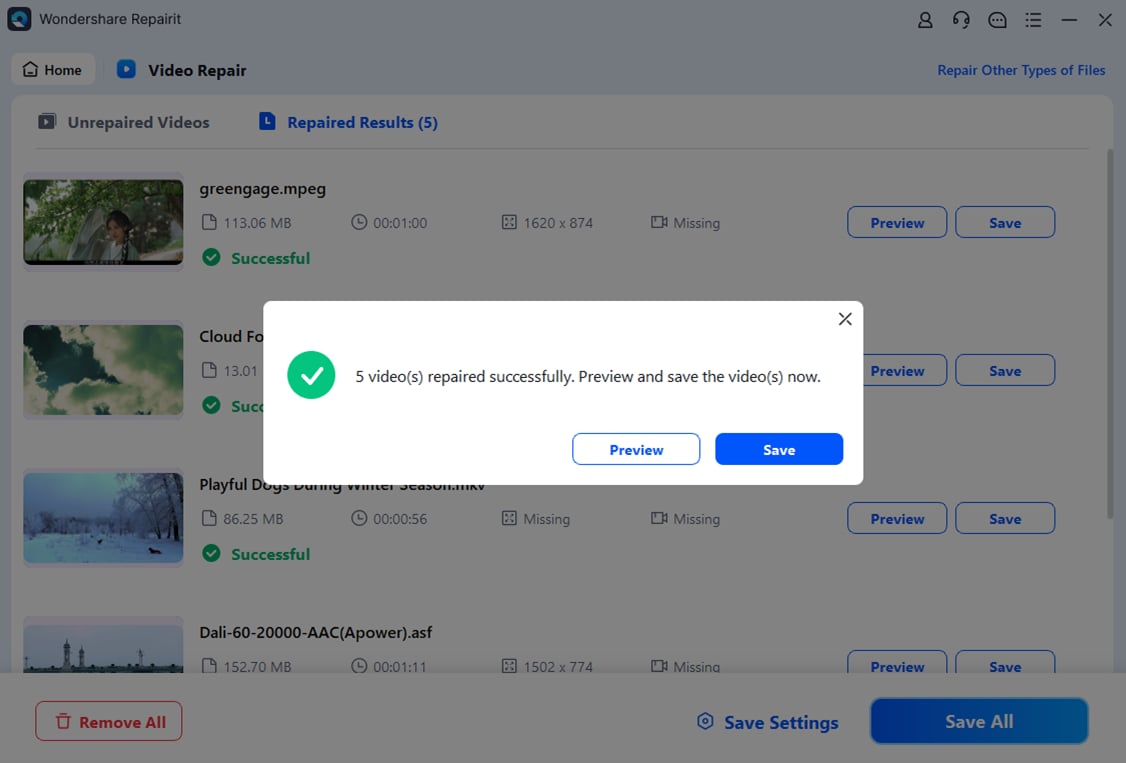
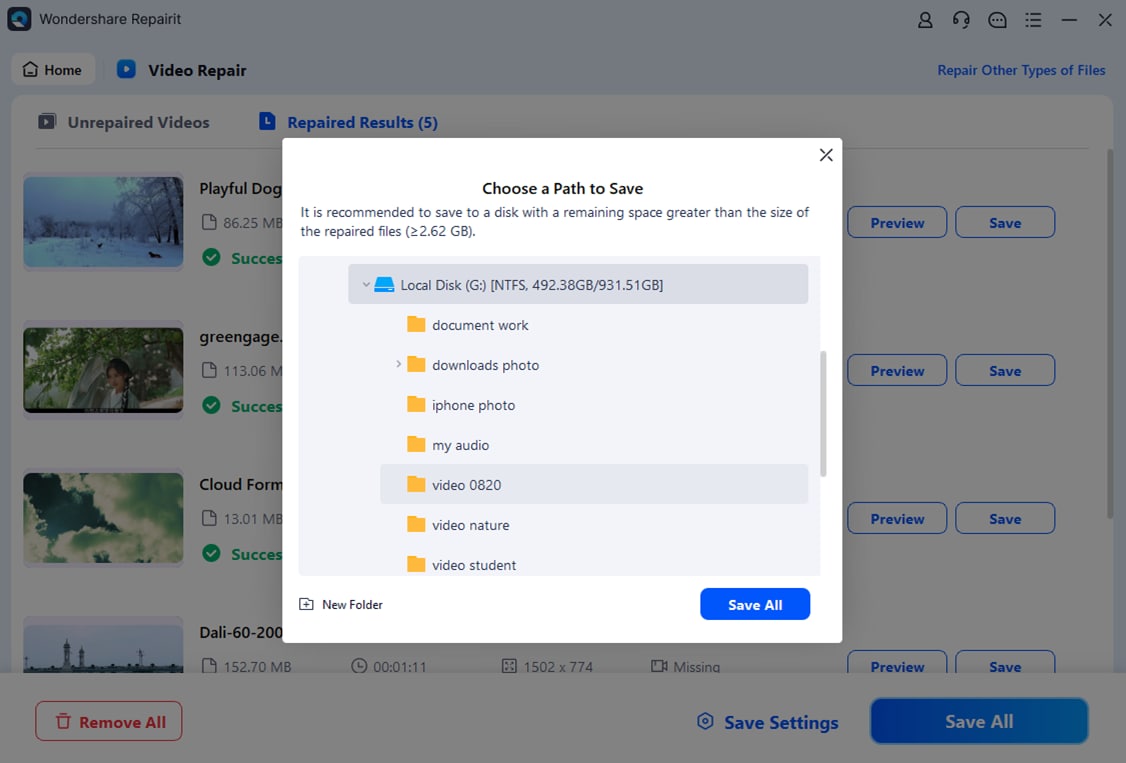
Step 4: Choose a separate destination and select Save All. Open the exported copy in VLC and another player before replacing any workflow files.
Advanced repair may ask for a healthy sample recorded by the same device with the same format and settings. A sample can help the software interpret the damaged structure, but it cannot recreate frames or audio that were never written to the source.
Use Repairit Online for supported smaller files

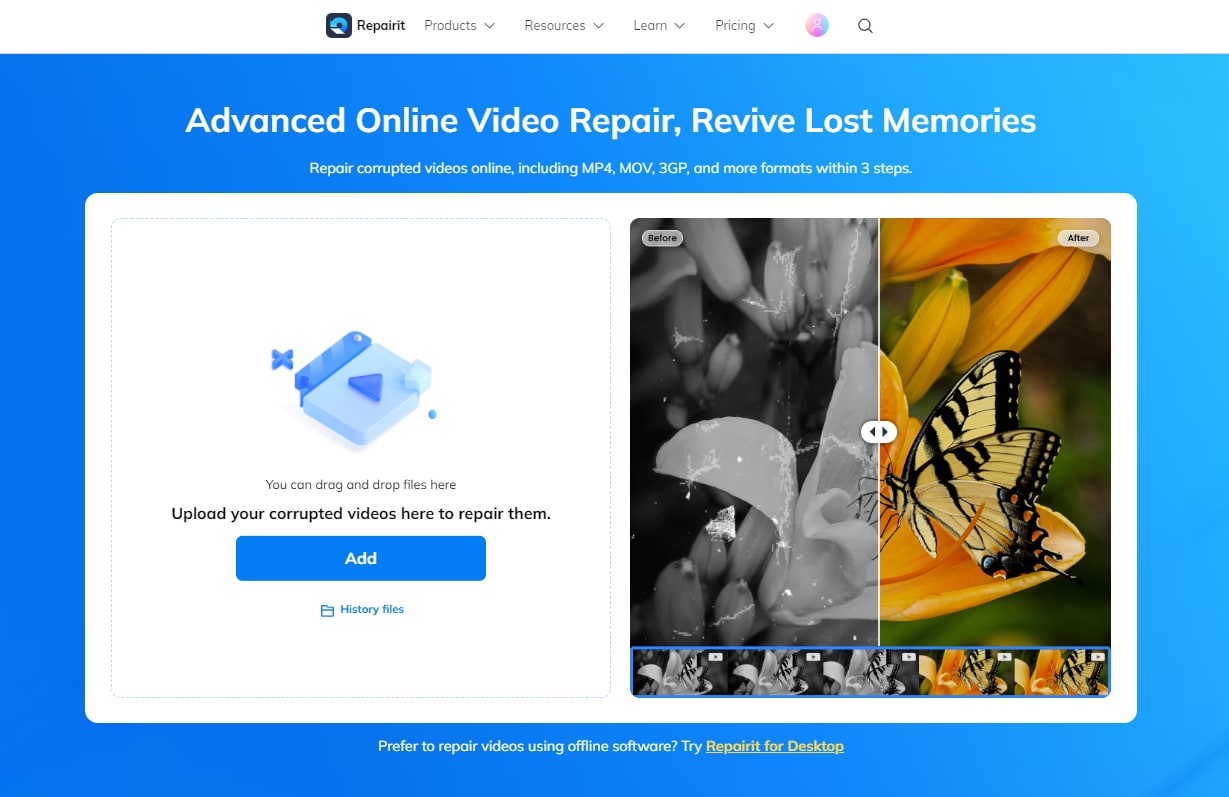
Step 1: Open the official Repairit Online page and select Add to upload a copy of the damaged video.
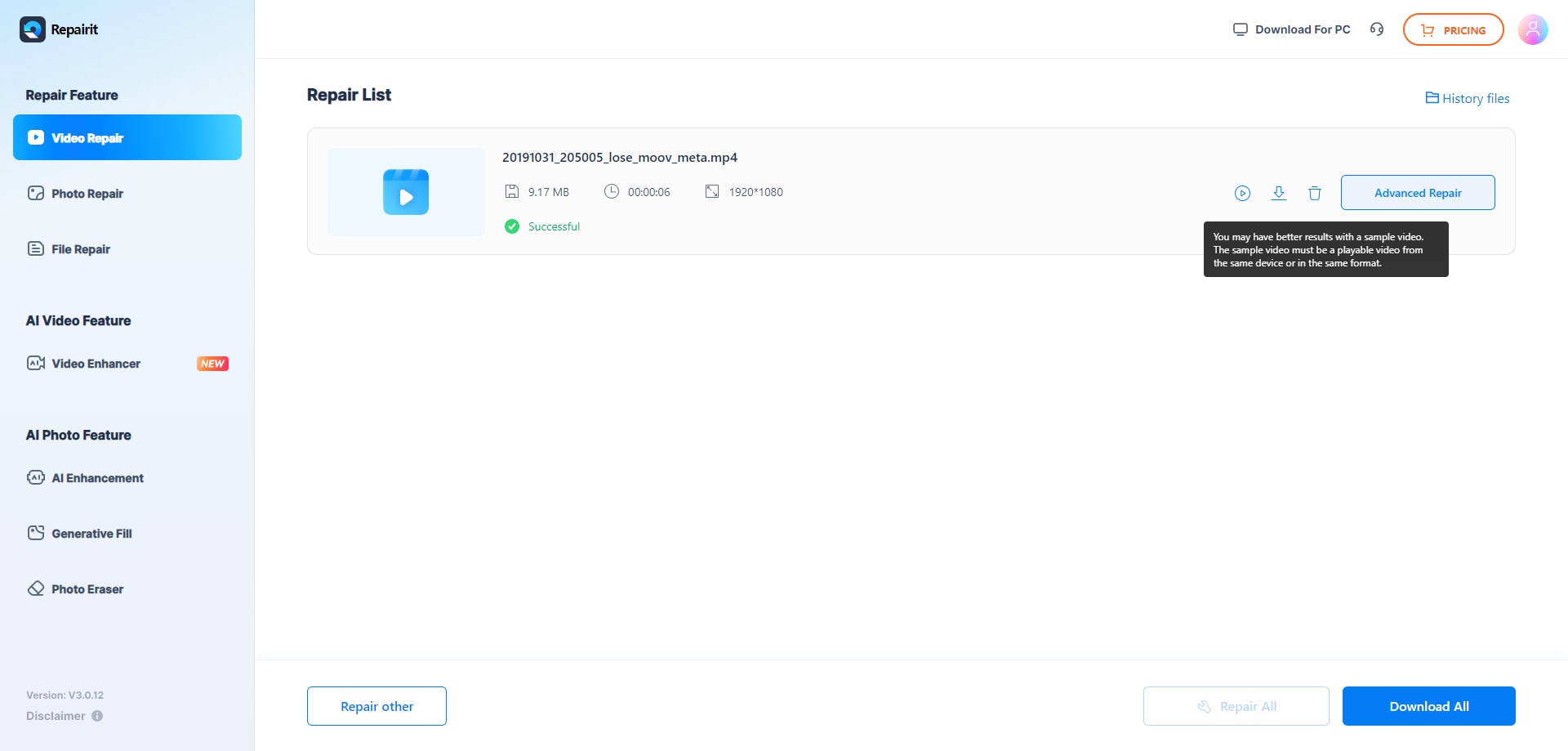
Step 2: Preview the available result and select Download All to save the repaired copy.
Online repair is not a solution for a VLC installation problem, a failed USB drive, or a deleted/overwritten file. If the source contains sensitive footage, review the current online service terms before uploading.
Part 5. When to Convert MP4 Instead of Repairing It
Conversion is appropriate when VLC or another player can read the source but a particular device or application does not support its codec profile, audio stream, or container settings. It is not a substitute for repairing a file that no player can read.
- Keep the original MP4 and write the converted output to a new file.
- Use a reputable converter or VLC's conversion function only when the source can be read successfully.
- If the conversion stops, produces a 0-byte file, or creates missing sections, return to diagnosis rather than repeatedly transcoding the damaged source.
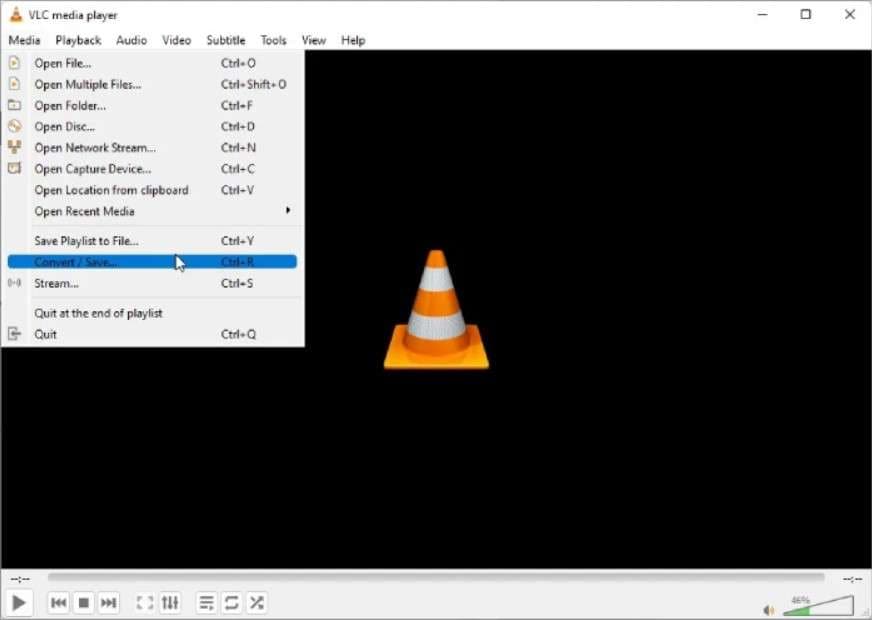
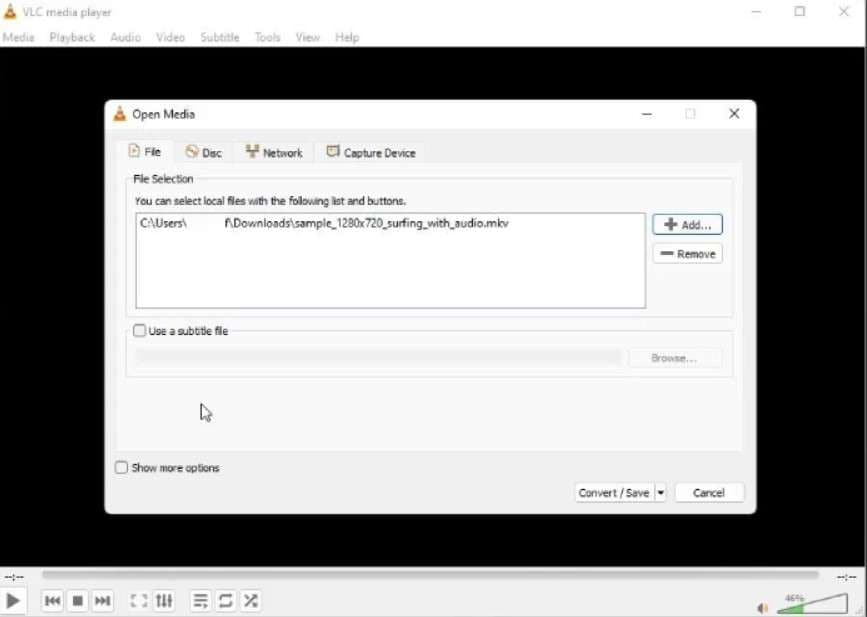
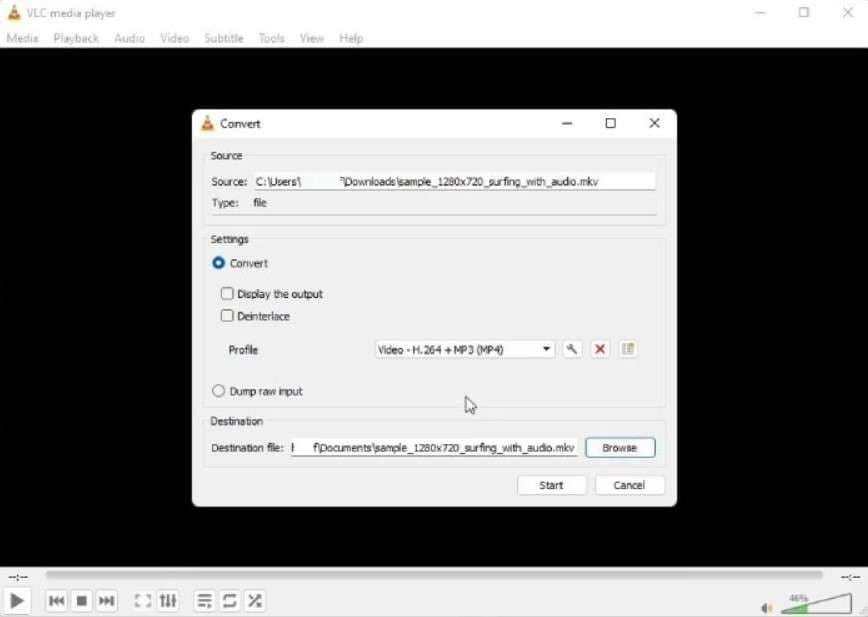
VLC can convert readable media through Media > Convert / Save. Select Add, choose Convert / Save, select a suitable profile, choose a new destination, and start the job. Available profiles and labels vary by VLC version.
Part 6. How to Prevent Future VLC MP4 Problems
After you solve a vlc player not playing mp4 problem, reduce repeat failures with these habits:
- Copy important recordings from memory cards or external drives before editing or playback.
- Safely eject removable storage and avoid disconnecting it during a transfer.
- Do not force-shut down the computer while a recording, download, export, or conversion is still running.
- Keep VLC and the operating system updated through official channels.
- Do not change advanced VLC settings without recording the original values.
- Maintain more than one backup of irreplaceable video.
- Never overwrite the only source with a repaired, converted, or re-encoded file.
- Investigate repeated read errors, drive disconnects, or SMART warnings before continuing to use the storage device.
How to repair a corrupted MP4 file? You can review the video workflow in the following guide, then verify the exported copy in VLC and another player.
Conclusion
When vlc not playing mp4 occurs, start with a copy of the file and determine whether VLC alone is affected. Reset preferences, test software decoding, update VLC and the graphics environment, and copy files from removable storage before making deeper changes. If the same MP4 fails in multiple players, treat it as a possible file-corruption problem rather than a missing codec-pack problem.
For a supported damaged video, Repairit can attempt to create a playable copy, but results depend on the format, damage level, and data that remains in the source. Keep the original, verify any repaired or converted output, and do not expect VLC or Repairit to fix deleted data, overwritten bytes, software installations, drivers, or failing hardware.
FAQ
-
Why is VLC not playing MP4?
VLC may fail because of hardware decoding, a damaged preference, an incompatible stream, an outdated installation, a storage connection, or a corrupted MP4. Test another MP4 and another player before deciding which area needs attention. -
Can VLC play every MP4 file?
No. MP4 is a container that can hold different video and audio streams. VLC supports many combinations, but a particular codec profile, damaged index, or incomplete file can still fail. -
Why does VLC show a black screen but play audio?
This usually points to a video-rendering or hardware-decoding issue. Disable hardware-accelerated decoding, restart VLC, and test another video output module. If the file fails in other players too, investigate file corruption. -
Do I need to install an MP4 codec pack for VLC?
Usually not. VLC includes many decoding components. Update VLC from an official source and check the file's stream compatibility before installing any third-party codec pack. -
Can VLC repair a corrupted MP4?
VLC can play supported media and includes some format-specific settings, but it is not a general MP4 repair tool. If an MP4 fails in multiple players, use a copy and consider a supported repair workflow. -
Should I convert or repair an MP4?
Convert a readable file when the problem is codec or device compatibility. Repair a file that is structurally damaged or unplayable in multiple players. Conversion cannot restore data that is missing from the source. -
Can Repairit fix VLC or a graphics driver?
No. Repairit can attempt to repair supported corrupted video files. It does not repair VLC, Windows, graphics drivers, codecs installed on the system, or storage hardware. -
Can Repairit recover a deleted or overwritten MP4?
No. Repair software needs usable source data. A deleted, 0-byte, or overwritten file may not contain enough information to reconstruct the original video.