The zebra pattern you see on many cameras and external monitors is not a glitch but a smart exposure aid. Photographers, filmmakers, vloggers, and live streamers encounter it when framing bright scenes, especially on mirrorless and cinema cameras. Understanding how this tool flags risky highlight areas helps you protect detail in your photos and zebra pattern video recordings, so your footage looks clean and consistent across editing, exporting, streaming, and playback platforms.
Repair Corrupted Files To Save Your Data
 Security Verified. Over 7,302,189 people have downloaded it.
In this article
What Is Zebra Pattern?
Zebra pattern camera mode is an exposure assist tool that overlays diagonal stripes on parts of the image reaching a chosen brightness level. It does not appear in the final photo or video file; it is only a live view guide on your LCD, EVF, or external monitor.
Technically, zebra pattern is a monitoring feature used in photography and videography to warn you when areas approach overexposure. By setting a threshold (often in IRE values such as 70, 90, or 100), you tell the camera when to start drawing stripes. This helps you judge exposure more accurately than relying on the screen brightness, so you can avoid clipped highlights while recording, streaming, or shooting stills.
How Does Zebra Pattern Affect Your Image or Footage?
Highlight protection and brightness control
Using zebra pattern does not directly change brightness, contrast, or color in the recorded file. Instead, it changes how you set those values in-camera:
- Controls highlight clipping: When stripes cover important details (like a white dress or cloud texture), you know those areas are close to or already blown out. You can then adjust shutter speed, aperture, ISO, or ND filters before you hit record.
- Guides skin tone exposure: Many shooters set zebra around 70–75 IRE in standard profiles to keep skin bright but not washed out, especially in interviews, weddings, and talking-head YouTube content.
- Stabilizes look across scenes: By using the same zebra threshold on all shots, you get consistent exposure from clip to clip, which means fewer brightness shifts and less noise when you correct exposure in post.
Impact on editing, encoding, and platform playback
Accurate exposure guided by zebra pattern video has several downstream benefits during editing, encoding, exporting, and playback:
- Cleaner grades in post: Properly exposed highlights retain detail and color information, giving you more flexibility when color grading and matching shots in software like Premiere Pro, DaVinci Resolve, or Final Cut Pro.
- Better compression and streaming: Well-exposed footage compresses more efficiently, resulting in fewer banding and macro-blocking artifacts when you export H.264/H.265 or stream to platforms such as YouTube, TikTok, or Twitch.
- Consistent viewing on different screens: When highlights are not blown, your videos hold up better on HDR TVs, SDR monitors, phones, and tablets, where overly bright clips can look harsh or flat.
How Does Zebra Pattern Work in Real Shooting?
On most mirrorless, DSLR, and cinema cameras, the zebra pattern option lives in the exposure or display-assist menu. Once enabled, diagonal stripes appear only in live view or in the EVF, sometimes also on connected HDMI monitors or recorders.
Here is how it fits into a typical workflow:
- Setting zebra levels: You choose a value such as 70 IRE for skin tones or 95–100 IRE for highlight warning. Some cameras let you store two zebra presets and toggle between them.
- Framing and adjusting: As you compose the shot, you watch where the stripes appear. If they cover a face, you lower exposure until stripes recede to just the brightest spots. If they only show on specular highlights (like sun reflections), you might accept that clipping.
- Combining with other tools: Many shooters pair zebra with histogram and focus peaking. Zebra manages brightness, focus peaking manages sharpness, and the histogram gives an overall tonal overview, so you can monitor exposure and focus simultaneously.
- Log and HDR workflows: When recording in log or HLG profiles, manufacturers often recommend specific zebra values (for example, 70 IRE for middle grey or skin) to ensure proper exposure that grades well in post.
Best Uses, Common Mistakes, and Quick Tips
When zebra pattern matters most
- High-contrast scenes with bright skies, windows, or stage lights.
- Interviews and portraits where skin tone consistency is critical.
- Live events and streaming where you cannot reshoot or heavily fix exposure later.
- Log/HDR recording, where the preview may look flat but the zebra helps you hold proper values.
Common mistakes with zebra pattern
- Setting zebra to 100+ IRE only and ignoring subtle clipping that starts before the warning appears.
- Assuming a single zebra setting works the same for all picture profiles and all cameras.
- Turning on zebra but never referencing the histogram, leading to underexposed shadows with noisy footage.
- Trying to remove zebra in post; remember, it never records into the file, so it cannot "leak" into exports.
Quick tips for proper use
- Start with 70–75 IRE zebra for skin in Rec.709 / standard gamma; test and adjust for your camera.
- Use a higher zebra (90–95 IRE) for highlight protection when the main subject is not skin.
- Glance at zebra, histogram, and live preview together instead of trusting only one tool.
- Practice in controlled lighting first so you recognize how your camera's zebra translates into final files on your computer and streaming platforms.
The takeaway: used correctly, zebra pattern camera mode is a fast, reliable way to protect highlights and keep exposure consistent, reducing the need for heavy rescue work in editing.
How to Use Repairit to Fix a Corrupted Photo File
If a card error, unexpected shutdown, or transfer issue leaves you with corrupted photos, exposure tools like zebra cannot help. This is where Wondershare Repairit comes in. It is a dedicated media repair solution that analyzes damaged files, fixes structural errors, and lets you preview the results before saving. You can learn more and download it from the Repairit official website.
Key features of Repairit
- Repair corrupted video files and photos from cameras, phones, drones, and other devices, even when they refuse to open or play correctly.
- Handle multiple damaged items together with batch repair for both pictures and video clips.
- Use a simple preview-and-save flow so you only keep the repaired media you are satisfied with.
Step-by-step: Repair corrupted photo files
- Add corrupted photo files
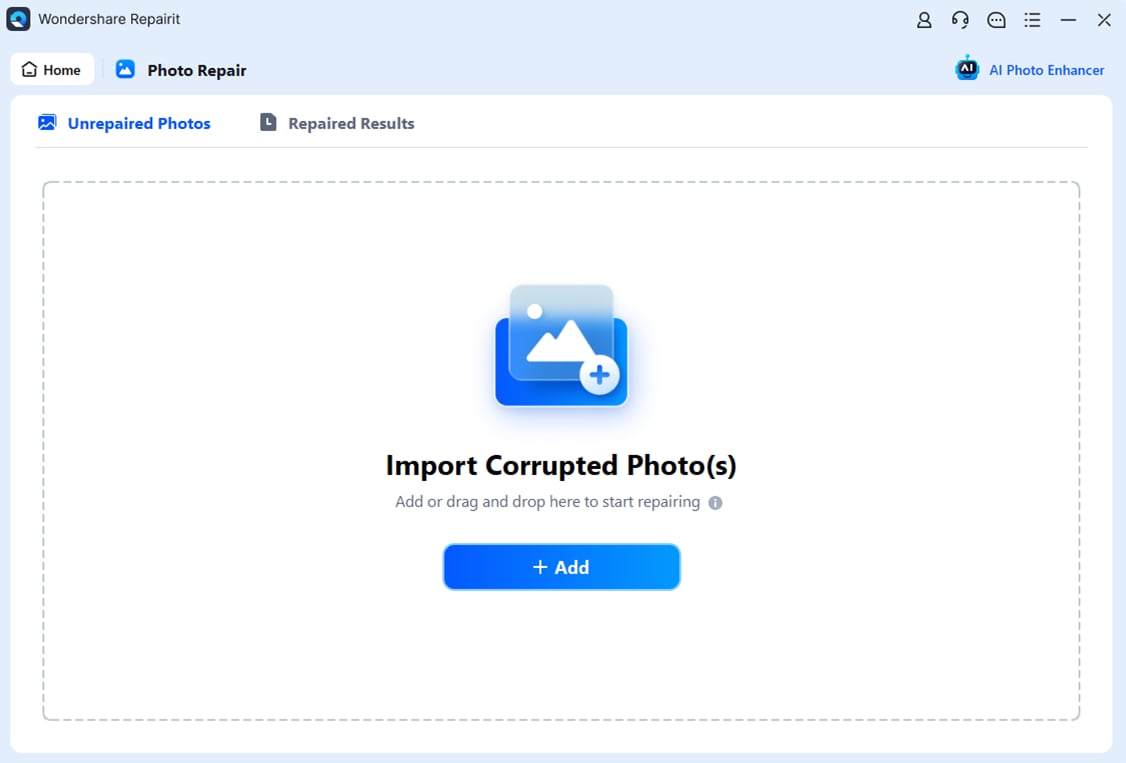
Open Wondershare Repairit and choose the Photo Repair mode from the main interface. Click the add button to import the corrupted or unreadable photos from your camera card, local drive, or backup folder. You can load a single file or a whole batch of damaged images at once.
- Repair photo files
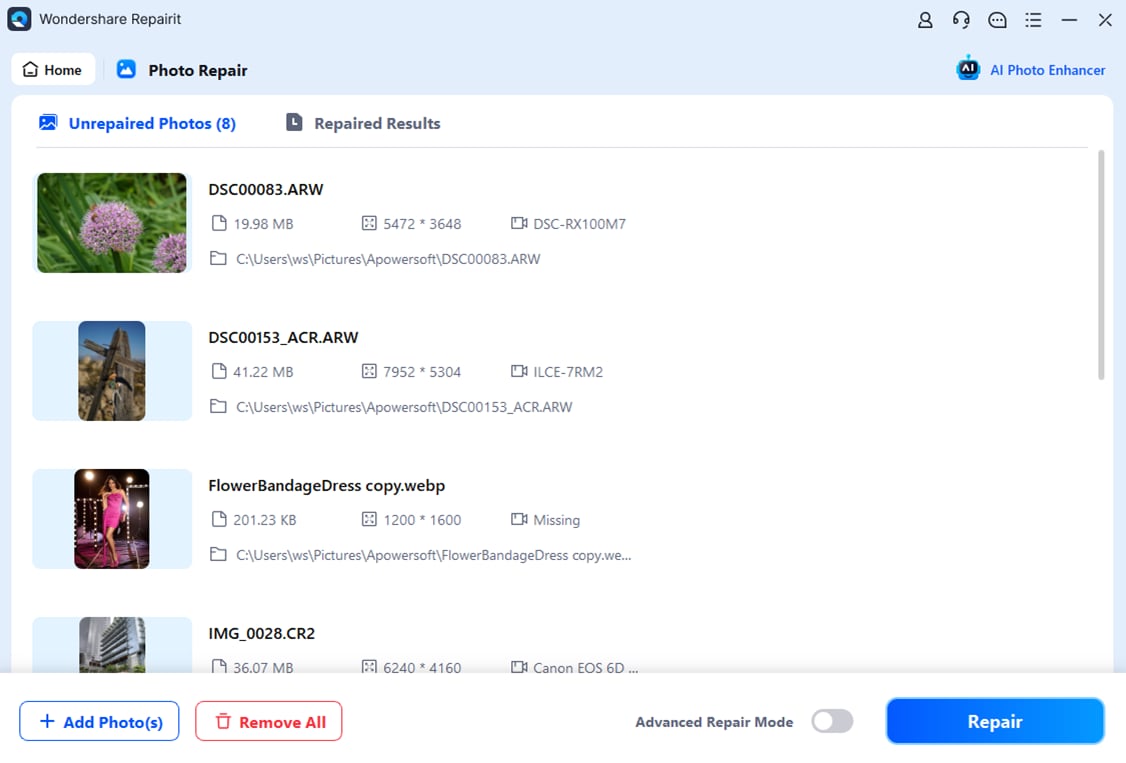
After the photos are listed, start the repair process. Repairit automatically scans each file for structural problems such as broken headers or missing data segments and then attempts to reconstruct a viewable image. You can track the progress on-screen while the tool works through all selected files.
- Save the repaired photo files
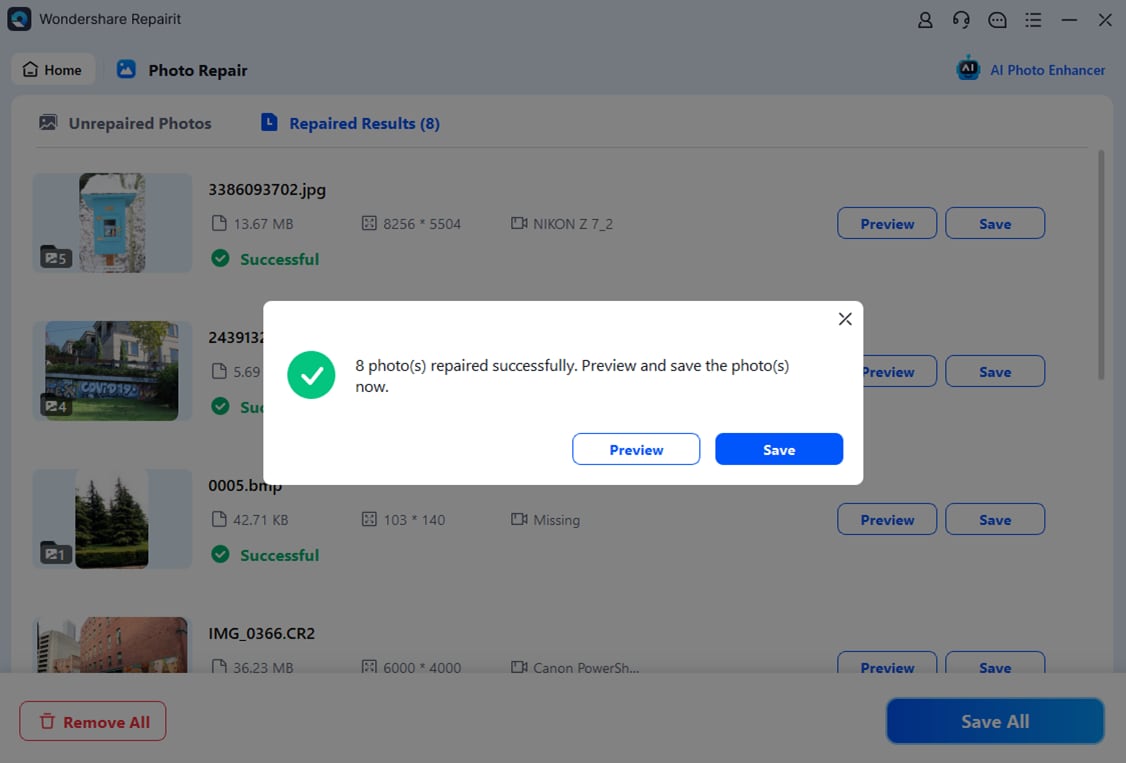
When the repair finishes, preview the restored photos inside Repairit to confirm that they display correctly. Finally, choose a safe output folder that is different from the original storage location and save the repaired photo files to your computer or an external drive.
Conclusion
Zebra pattern is a visual exposure guide that shows you which parts of the frame are nearing or hitting a selected brightness level. By tuning zebra thresholds for skin tones or highlight warning and combining them with tools like histograms and focus peaking, you can capture photos and videos with consistent exposure that hold up well from editing to final playback on any platform.
Even with precise exposure technique, technical glitches, power failures, or storage errors can still damage your image and video files. Keeping a repair tool such as Wondershare Repairit in your workflow helps you recover corrupted media, rescue important projects, and spend more time creating instead of troubleshooting.
Next: Manual Focus
FAQ
-
1. What is zebra pattern on a camera?
Zebra pattern is an exposure-assist feature that overlays diagonal stripes on areas of the live view image reaching a specified brightness level. It acts as an overexposure warning, helping you keep highlights within a safe range before you capture photos or start recording video. -
2. What zebra level should I use for skin tones?
A common starting point for skin tones in standard Rec.709 profiles is 70–75 IRE. However, you should test and fine-tune based on your camera, lighting conditions, and whether you are shooting standard gamma, log, or HDR profiles, as each can map brightness differently. -
3. Is zebra pattern the same as focus peaking?
No. Zebra pattern indicates brightness levels for exposure, while focus peaking highlights high-contrast edges to show what is in focus. Many cameras let you enable both at once so you can monitor exposure and focus simultaneously. -
4. Do I still need a histogram if I use zebra pattern?
Yes. Zebra pattern shows where certain brightness thresholds are hit, but the histogram shows the entire tonal distribution from shadows to highlights. Using both together gives a more complete view of your exposure and helps avoid crushed blacks or clipped whites. -
5. Can zebra pattern be used for still photos, or only for video?
Zebra pattern is widely used in video recording and live streaming, but it is also valuable for still photography, especially in high-contrast scenes. It helps you fine-tune exposure to avoid blown-out highlights in RAW or JPEG files before you press the shutter.