
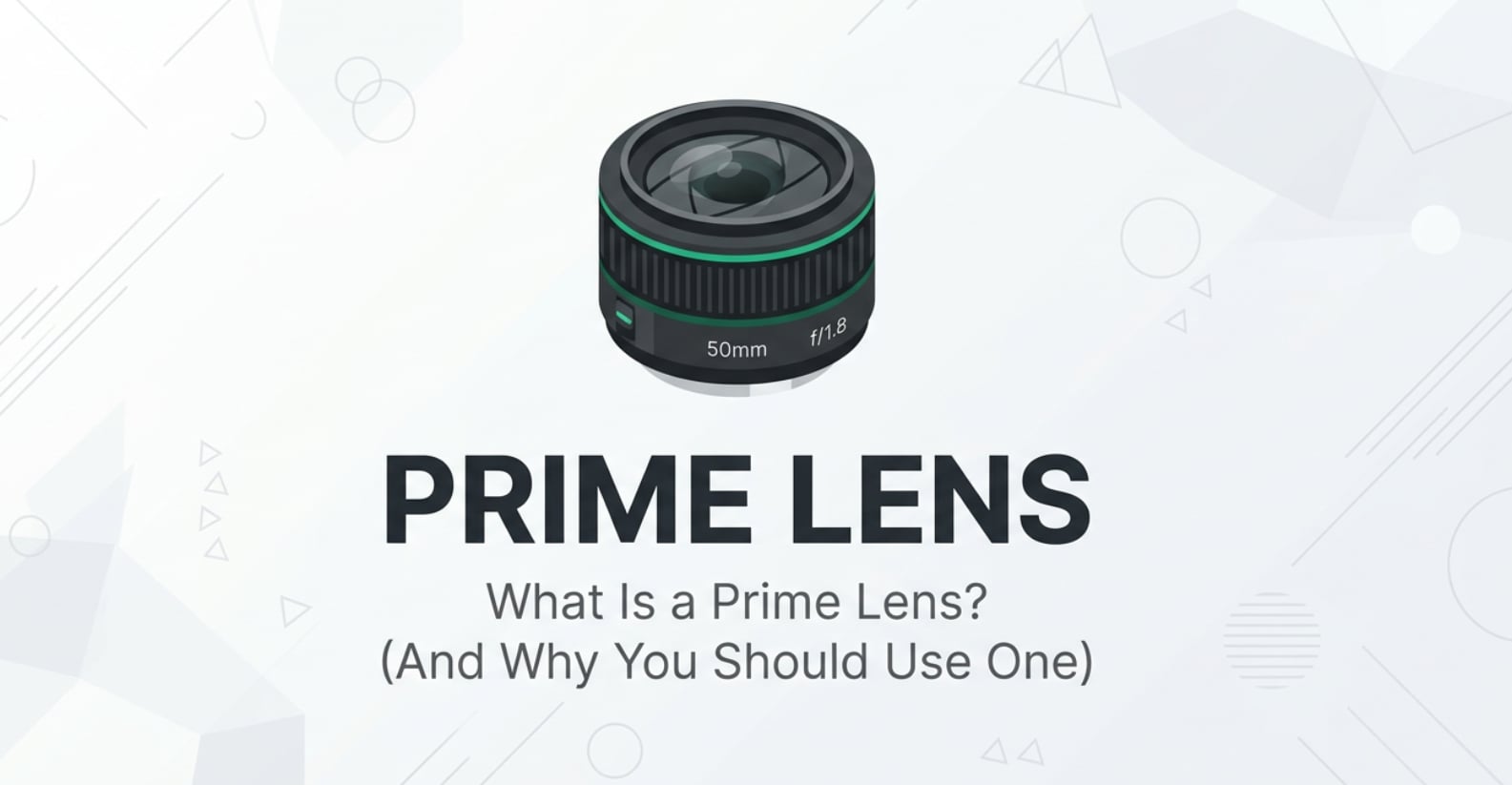
A prime lens is a favorite tool for photographers and videographers who want crisp images, creamy background blur, and reliable low-light performance. You will see the term whenever you shop for lenses, watch camera reviews on YouTube, or plan a shoot for social media, weddings, travel, or streaming. Understanding what a prime lens does helps you choose the right glass for recording, editing, exporting, and sharing consistently sharp photos and video across platforms.
Repair Corrupted Files To Save Your Data
 Security Verified. Over 7,302,189 people have downloaded it.
In this article
What Is Prime Lens?
A prime lens is a camera lens with a single, fixed focal length such as 24 mm, 35 mm, 50 mm, or 85 mm. Unlike a zoom lens, it cannot zoom in or out; you change framing by physically moving the camera. In photography and videography, a prime lens is a core optical tool known for high image quality, simple design, and bright maximum apertures that help when recording stills and video, from portraits and talking-head content to cinematic B-roll and live streaming.
Because it uses fewer glass elements than many zooms, a fixed focal length lens typically offers better sharpness, contrast, and low-light performance at a given price point. Creators often start with a kit zoom and then add a 35 mm or 50 mm prime as their first real upgrade.
How Does Prime Lens Affect Your Image or Footage?
Exposure, sharpness, and depth of field
One of the biggest advantages of a prime vs zoom is aperture. Many primes open to f/1.8, f/1.4, or even wider, letting in far more light than a typical kit zoom at f/3.5–5.6. This affects your recording in several ways:
- Brightness and ISO: A bright prime lets you shoot in dim rooms, concerts, or night streets while keeping ISO lower, which reduces noise in both photos and video.
- Sharpness: At the same focal length and aperture, a prime often delivers crisper details across the frame, which holds up better during editing, color grading, and exporting to 4K platforms.
- Depth of field: With a wide aperture, you can blur the background strongly, separating your subject with a smooth bokeh look. This is ideal for interviews, product shots, and thumbnails where subject isolation matters.
Perspective, distortion, and motion
Because a prime lens locks you into one focal length, it directly shapes perspective and framing:
- Perspective and distortion: A 24 mm prime exaggerates space and can stretch faces near the edges, useful for vlogs in tight rooms but less flattering for portraits. An 85 mm prime compresses space and gives a natural, flattering face shape.
- Stability and motion: With no zoom ring, you re-frame by moving. This encourages smoother, intentional camera movements on gimbals or sliders and avoids abrupt zoom jitters that can look amateurish in final playback.
- Consistency: Using the same focal length across a project creates a consistent visual style, making scenes cut together more naturally in the edit and feel coherent when streamed or viewed as a full series.
How Does Prime Lens Work in Real Shooting?
In real-world shooting, your choice of prime lens affects planning from pre-production to export. On the camera body, you will control it mainly through:
- Focal length choice: Mount a 35 mm prime for environmental portraits or handheld street video; use an 85 mm for tight headshots or interview A-cam angles.
- Aperture settings: On many primes, you set the aperture via the camera dials; some cinema-style primes feature an aperture ring on the lens itself for smooth, silent changes while recording video.
- Focus behavior: Photo-oriented primes may breathe slightly when focusing, while cine primes minimize focus breathing for more professional focus pulls when filming.
Example workflows:
- Portrait session: You use an 85 mm f/1.8 prime, shoot at f/2 to keep the subject sharp with soft background blur, and move your feet to adjust framing instead of zooming. The resulting RAW files export cleanly with rich detail.
- YouTube talking head: A 35 mm or 50 mm prime on a crop-sensor body gives a natural field of view. You lock the camera on a tripod, set aperture to f/2–f/2.8 for some blur but safe focus, record in 4K, then edit and upload to platforms like YouTube or Vimeo with a consistent, cinematic look.
- Run-and-gun street video: A 24 mm prime keeps things wide and stable for handheld walking shots. You rely on the bright aperture in low light, then stabilize slightly in post without worrying that soft footage will fall apart after export.
Best Uses, Common Mistakes, and Quick Tips
Prime lenses shine in many scenarios where image quality and low light matter more than framing flexibility.
| Use case | Why a prime lens works well |
|---|---|
| Portraits and headshots | 85 mm and 50 mm primes give flattering perspective and smooth background blur. |
| Street and travel | 35 mm and 28 mm primes are light, discrete, and great in low light for night scenes. |
| Cinematic video and streaming | Fast primes deliver shallow depth of field and clean detail that look professional on 4K screens. |
Common mistakes with prime lenses:
- Expecting them to "do everything" and feeling limited without a zoom for fast events.
- Shooting wide open (e.g., f/1.4) all the time, leading to out-of-focus eyes or jittery focus in video.
- Choosing the wrong focal length for tight rooms (e.g., 85 mm in a small bedroom studio).
- Not stepping back or forward to refine composition, assuming the lens will "fix" bad framing.
Quick tips:
- Start with a 35 mm or 50 mm prime; they are versatile for both photos and video.
- Learn your working distance: practice how far you stand for full-body, half-body, and close-up shots.
- Stop down slightly (from f/1.8 to f/2.2–f/2.8) for sharper, more forgiving results in 4K and 6K recording.
- Use focus peaking or eye-AF when available to improve hit rate, especially for moving subjects.
The takeaway: a prime lens rewards careful composition and good technique with cleaner, more cinematic footage and images that hold up beautifully through editing, encoding, and playback on any platform.
How to Use Repairit to Fix a Corrupted Photo File
Even when you use the best prime lens and camera settings, storage errors, sudden power loss, or faulty transfers can corrupt your photo files. Wondershare Repairit is a dedicated repair tool that helps you restore damaged images so your best shots from any fixed focal length lens are not lost. You can learn more and get the desktop and online solutions from the Repairit official website.
Key features of Repairit
- Repairs corrupted photos and videos from cameras, phones, drones, and memory cards, preserving your creative work.
- Supports batch repair so you can fix multiple damaged files from a shoot in one pass.
- Provides a guided workflow with preview, letting you confirm quality before exporting the repaired media.
Step-by-step: repair a corrupted photo
- Add corrupted photo files
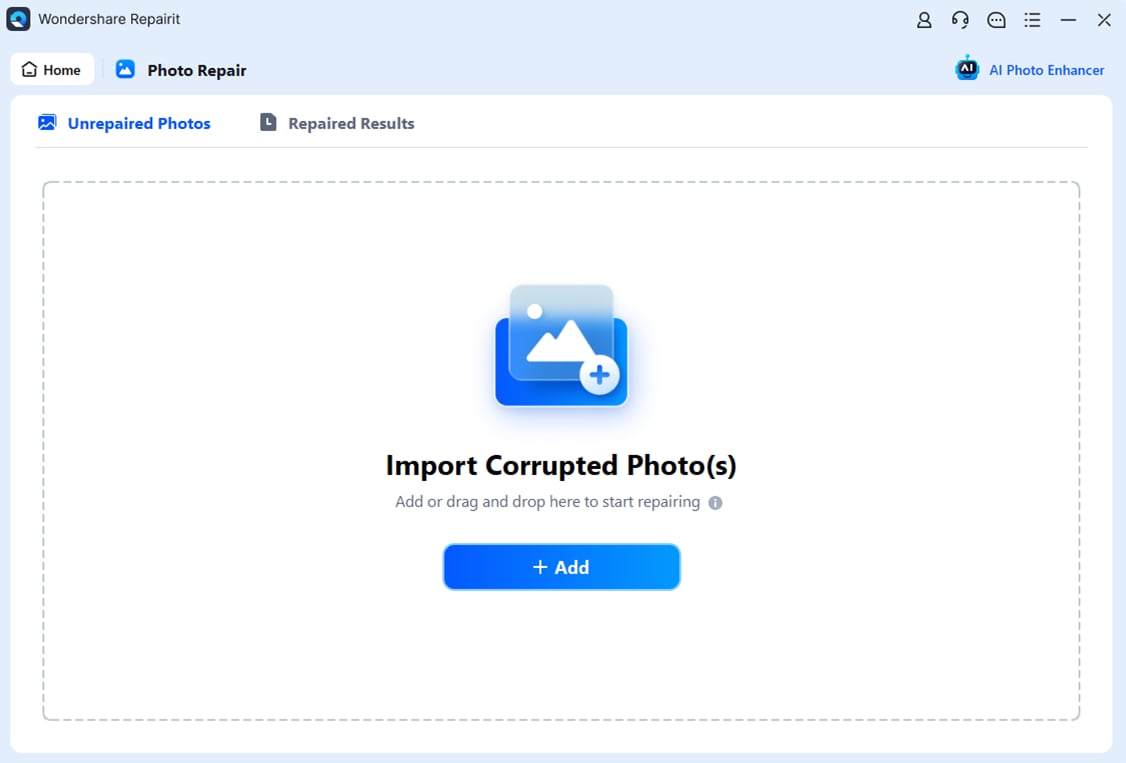
Download and install Repairit on your computer, then launch it and open the Photo Repair module. Click the add button to browse your hard drive, SD card, or external storage, and select the corrupted photos from your prime lens shoot. The files will appear in a list with basic information like name, size, and path.
- Repair photo files
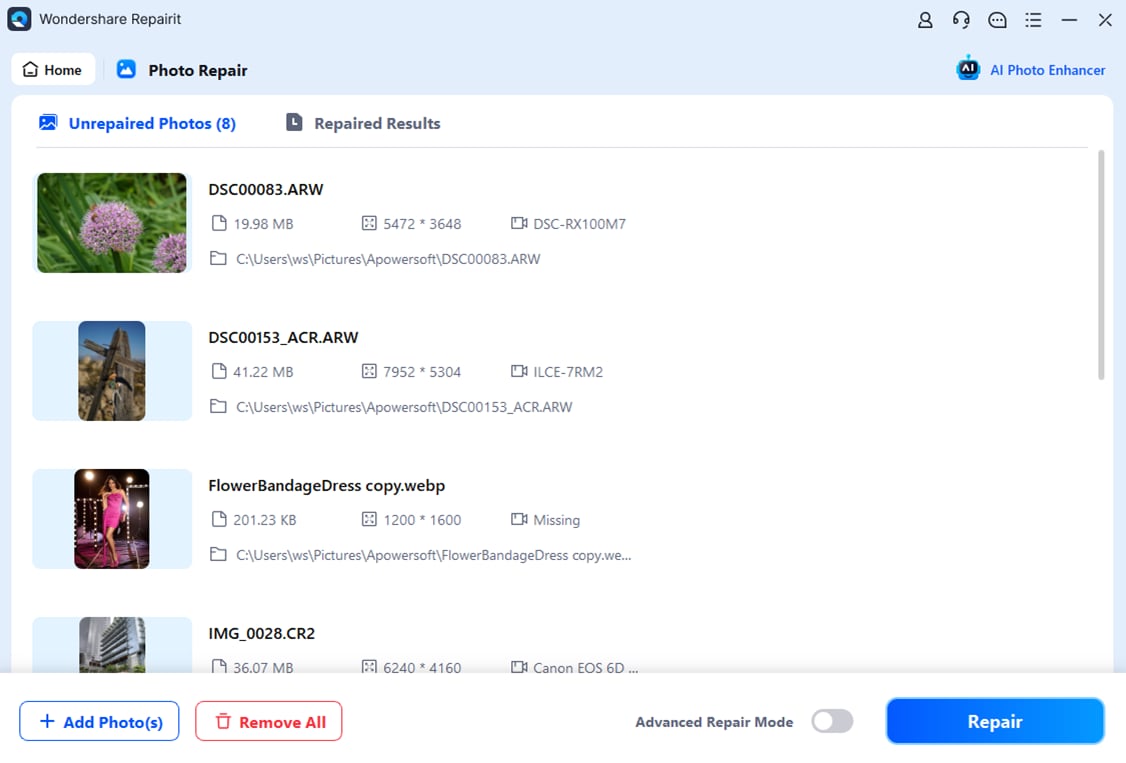
After importing the damaged images, start the repair process with a single click. Repairit quickly analyzes each file structure, reconstructs broken or missing data where possible, and fixes common issues that stop photos from opening or displaying correctly. When the first pass is complete, you can open the preview window to check colors, sharpness, and overall integrity before saving.
- Save the repaired photo files
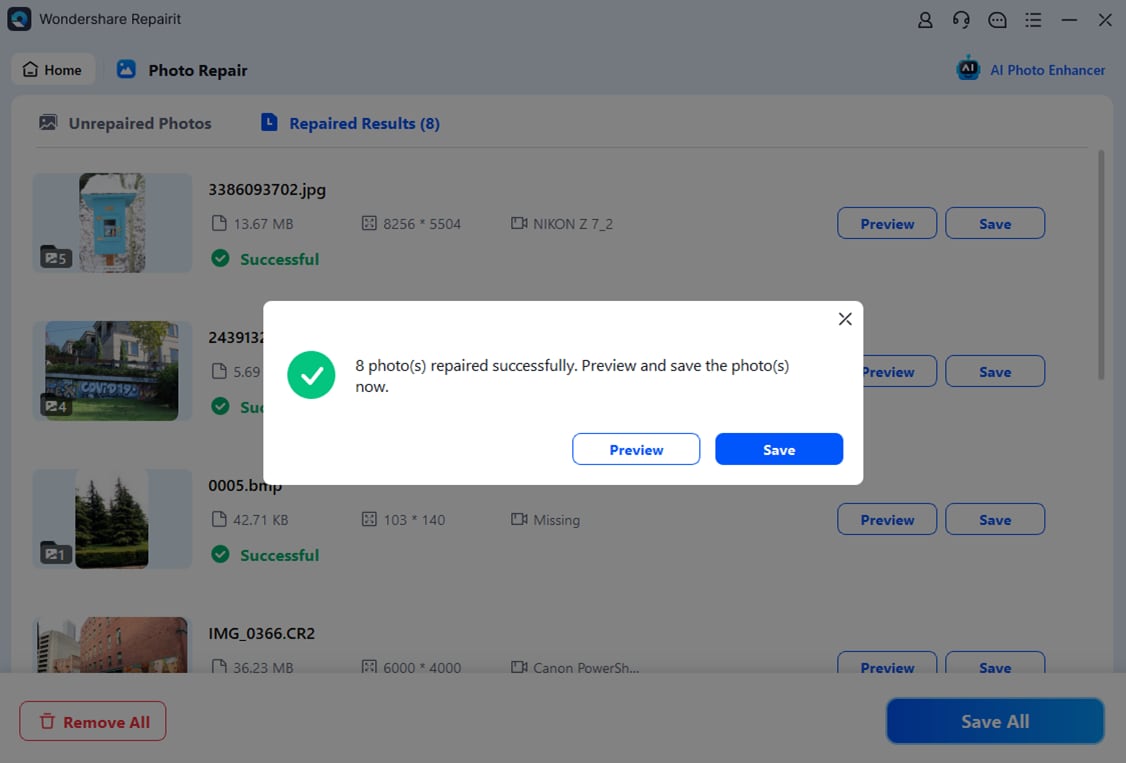
If the previews look good, choose a destination folder on a safe drive that is different from the original source location. Click Save to export all repaired photos in a usable format. You can then bring them back into your normal workflow for editing, retouching, exporting to JPEG or PNG, and delivering to clients or posting online.
Conclusion
A prime lens delivers high optical quality, bright apertures, and consistent perspective, making it one of the most effective upgrades for photographers and videographers. By understanding how a prime vs zoom changes depth of field, sharpness, distortion, and low-light performance, you can better match your lens choice to portraits, travel, events, or streaming work.
Combine the right fixed focal length lens with solid shooting technique, organized backups, and tools like Repairit to protect against file corruption. That way, your best images and clips will remain intact from capture and editing through encoding, export, and final playback on any platform.
Next: Zoom Lens
FAQ
-
1. What is a prime lens in simple terms?
A prime lens is a camera lens with a fixed focal length, such as 35 mm or 50 mm, so it cannot zoom. To change framing, you move closer or farther from your subject. In return, you usually get sharper images, wider apertures, and better low-light performance than with many zooms. -
2. Is a prime lens better than a zoom lens?
Neither is always better. A prime lens often provides higher image quality, smoother background blur, and brighter apertures, which is great for portraits, low light, and cinematic video. A zoom offers flexibility to reframe quickly without moving. Many creators use both, choosing a prime vs zoom depending on the shoot. -
3. What focal length prime lens should beginners buy first?
Most beginners start with a 35 mm or 50 mm fixed focal length lens. On full-frame cameras, 35 mm is versatile for street and indoor scenes, while 50 mm works well for portraits and everyday shooting. On APS-C bodies, a 35 mm behaves like a "normal" view similar to what your eyes see. -
4. Are prime lenses good for video and streaming?
Yes. A prime lens with a bright aperture helps you get clean, low-noise video and attractive background blur for talking-head content, interviews, and B-roll. Many creators use 24 mm, 28 mm, 35 mm, or 50 mm primes for YouTube, live streams, and short films because the results look more cinematic on high-resolution displays. -
5. Can Repairit fix corrupted photos shot with a prime lens?
Yes. If photos from your prime lens session become corrupted due to card errors, crashes, or transfer issues, you can use Wondershare Repairit to scan and repair them. The tool attempts to restore damaged image data so you can open, edit, and export the files again without reshooting.