A picture profile is one of those hidden camera settings you hear about in YouTube tutorials, cinema cameras, and mirrorless menu walkthroughs. You will see it when shooting weddings, YouTube videos, short films, or social content, and it also matters when you export, stream, or play footage on different platforms. Understanding it helps you control color, contrast, and dynamic range before you ever open your editor.
Repair Corrupted Files To Save Your Data
 Security Verified. Over 7,302,189 people have downloaded it.
In this article
What Is Picture Profile?
A camera picture profile is a preset group of image-processing settings that tells your camera how to interpret the raw signal coming from the sensor before it becomes a recorded file. It is a core imaging concept used in both photography and videography to control color, contrast, gamma curve, and sharpness at the capture stage.
Inside a video picture profile or photo picture profile, you typically find parameters such as gamma, color mode, saturation, black level, and noise reduction. Together, these determine whether your footage looks flat and low-contrast, punchy and saturated, or neutral and natural. Picture profiles are crucial when shooting for different outputs like cinema, YouTube, live streaming, TV broadcast, or mobile playback, because each destination benefits from a different base look and dynamic range.
Picture profiles are especially famous on cinema and mirrorless cameras that offer options like S-Log, C-Log, V-Log, HLG, or custom profiles. Each of these defines how the camera encodes the scene into the available bit depth and codec, which directly affects how much flexibility you have for grading, how the footage compresses, and how well it holds up when exported or streamed to various platforms.
How Does Picture Profile Affect Your Image or Footage?
Core image controls inside a picture profile
Choosing a particular flat picture profile, log curve, or standard look has visible consequences on your final images and clips.
- Contrast and dynamic range: Log and flat profiles spread brightness values more evenly, keeping highlights from clipping and shadows from crushing. A standard or vivid profile pushes contrast, which can look great straight out of camera but leaves less room for adjustment.
- Color rendering and skin tones: Different color profile camera modes change saturation, hue, and how skin tones roll off into highlights. Cinematic looks often favor softer, more subtle colors, while social-media-ready modes can be more saturated and warm.
- Gamma curve and midtone detail: The gamma curve in a gamma curve video profile defines how the camera maps scene brightness to recorded signal. Log profiles compress highlights and lift shadows, preserving information for grading. Rec.709 and similar curves resemble final display contrast and need less editing.
- Perceived sharpness and noise: Detail or sharpening settings inside a profile affect clarity and noise visibility. Strong sharpening can make footage appear crisp but may exaggerate noise and halos, especially after heavy compression for online platforms.
- Compression friendliness: A very contrasty or saturated profile can stress the codec when recording, encoding, or streaming, leading to banding and blocky artifacts, particularly at low bitrates. Flatter profiles tend to compress more gracefully, which matters on platforms like YouTube, Instagram, and live streaming services.
How picture profile choices show up later in editing and playback
Picture profile settings are baked into most JPEG photos and standard video formats (MP4, MOV, AVCHD). That means your choice at capture time affects how files behave across the rest of their life cycle: editing, exporting, streaming, and playback on different devices.
- Editing latitude: Footage shot in log or a flat profile lets you push exposure and color harder before breaking the image. This is ideal for color grading, matching multiple cameras, and delivering cinematic looks.
- Export and deliverables: If you shoot in a stylized, contrasty picture profile, you may need minimal grading before export. With log, you typically apply a technical LUT or color transform to get into a Rec.709 space before creative grading.
- Streaming and platform compatibility: Footage from a well-chosen cinematic look settings profile will usually survive recompression better and remain consistent across TVs, phones, and monitors. Overly crushed blacks or clipped highlights can look worse once the file is transcoded by streaming platforms.
- Playback consistency: Picture profiles influence how files appear on different players and displays. A neutral, standard profile is more likely to look "correct" everywhere, while aggressive creative looks might vary more depending on how each device handles color and gamma.
How Does Picture Profile Work in Real Shooting?
Where to find and set picture profiles in your camera
Most mid-range and advanced cameras have a dedicated menu area called Picture Profile, Picture Style, Creative Style, or similar. There you select and tweak built-in presets or create custom ones.
- Mirrorless and DSLR cameras: Brands like Sony, Canon, Panasonic, and Nikon let you choose profiles like Standard, Neutral, Portrait, or log and HLG options (e.g., s-log profile, C-Log, V-Log). You can often adjust contrast, saturation, black level, and sharpness within each.
- Cinema cameras: Higher-end cinema bodies offer advanced picture profile controls including detailed gamma curves, color matrices, and knee settings. These are designed to integrate into professional workflows for broadcast, cinema, and OTT streaming.
- Action cameras and smartphones: Even compact devices and phones now offer "Flat," "Log," or "Cinematic" modes. While less customizable, they still influence color and dynamic range for quick edits and social uploads.
Practical shooting scenarios and examples
Here is how picture profiles show up in real-world work:
- YouTube and social content: If you want minimal editing, you might choose a Standard or Portrait profile that looks good in-camera. This avoids complex grading and speeds up the edit–export–upload cycle.
- Cinematic short films or commercial spots: You are likely to choose a log-based or other cinematic look settings profile to capture a wide dynamic range and flexible color. You then grade shots to a consistent look before exporting a master file for theaters, TV, or online platforms.
- Event and wedding coverage: A mildly flat or neutral profile balances flexibility with sanity in post. It keeps skin tones natural while preserving some highlight detail in white dresses and bright venues.
- Mixed-camera shoots: When several cameras cover the same scene, aligning their camera picture profile choices (for example, all using a similar log curve or neutral profile) makes it far easier to match color and contrast in editing.
- Live streaming and direct-to-web: For live outputs with no time for grading, standard or broadcast-friendly profiles that deliver a finished look are preferred. The focus here is consistency and immediate compatibility with streaming encoders.
Best Uses, Common Mistakes, and Quick Tips
When picture profiles matter most
- High-contrast scenes where dynamic range settings decide whether you keep sky detail and shadow information.
- Projects intended for heavy color grading or a stylized cinematic look.
- Multiplatform releases where the same files are exported for cinema, TV, web, and mobile playback.
Common mistakes and misunderstandings
- Using log or a very flat profile without understanding exposure, resulting in noisy, underexposed footage.
- Expecting a log profile to look good straight out of camera; by design it needs LUTs or grading.
- Mixing vastly different profiles between cameras on the same shoot, making color matching painful.
- Assuming picture profiles deeply affect RAW photos; they mostly influence previews and default rendering, not the underlying sensor data.
Quick tips for better results
- Choose a flatter or log profile when you have time and skill for grading; choose Standard/Neutral when speed and simplicity matter.
- Test how your chosen profile behaves after export and upload to your target platform (YouTube, Instagram, Vimeo, or a streaming service).
- Create a few go-to profiles: one for fast turnaround, one for cinematic grading, and one for challenging high-contrast lighting.
- Always monitor exposure carefully when using log or flat profiles, ideally with waveform, zebras, or false color.
The core takeaway: your picture profile is the starting point for how your camera "draws" the scene. Pick it intentionally, and you gain control over style, flexibility, and how well your files survive editing, encoding, and playback.
How to Use Repairit to Fix a Corrupted Photo File
Key features of Repairit for photo and video creators
Even with careful management of picture profile and exposure, files can still become corrupted during recording, transfer, or export. Wondershare Repairit is a dedicated media repair tool designed to restore damaged photos and videos so you do not lose your work because of file errors. You can learn more and download it from the Repairit official website.
- Repairs corrupted or unreadable photo files in a wide range of popular formats.
- Uses sample files to improve repair results for severely damaged media.
- Provides an intuitive, step-by-step interface suitable for beginners and pros.
Step-by-step: Repair a corrupted photo file
- Add corrupted photo files
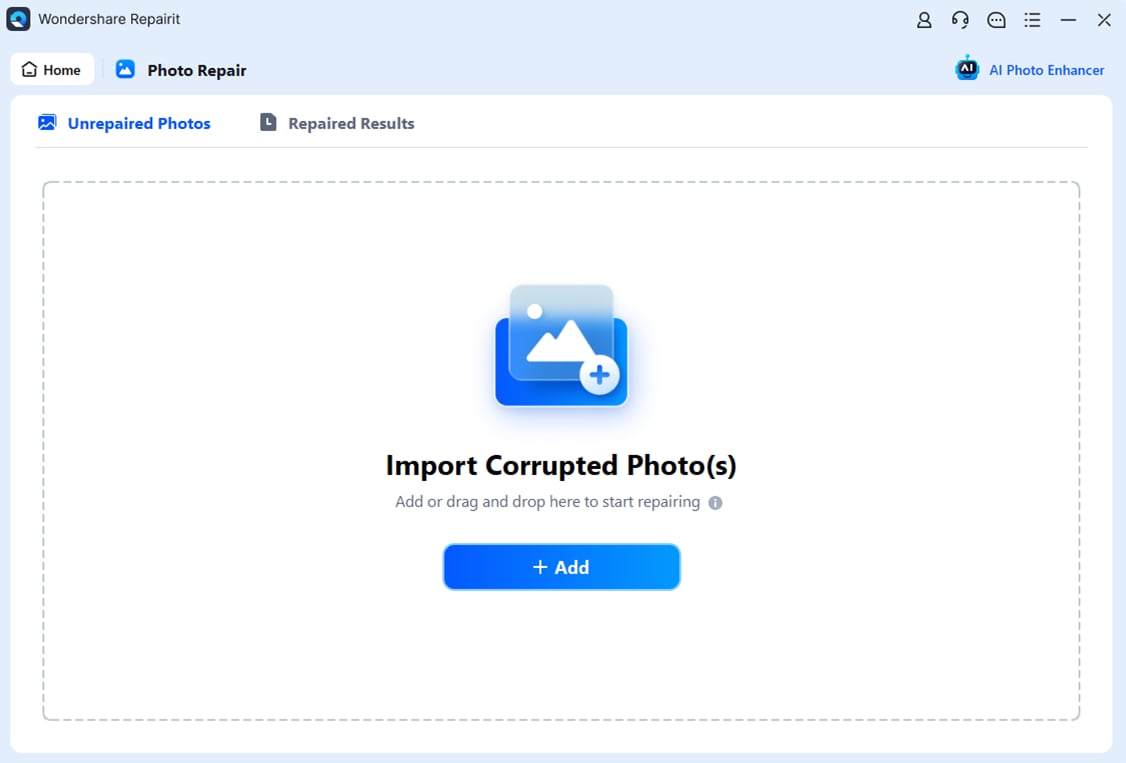
Install and open Wondershare Repairit on your computer, then switch to the Photo Repair module. Click the button to add files and navigate to the folder containing the images that will not open or show errors. Select one or multiple corrupted photos from your recent shoot and confirm to load them into the list, where you can review their names, sizes, and paths.
- Repair photo files
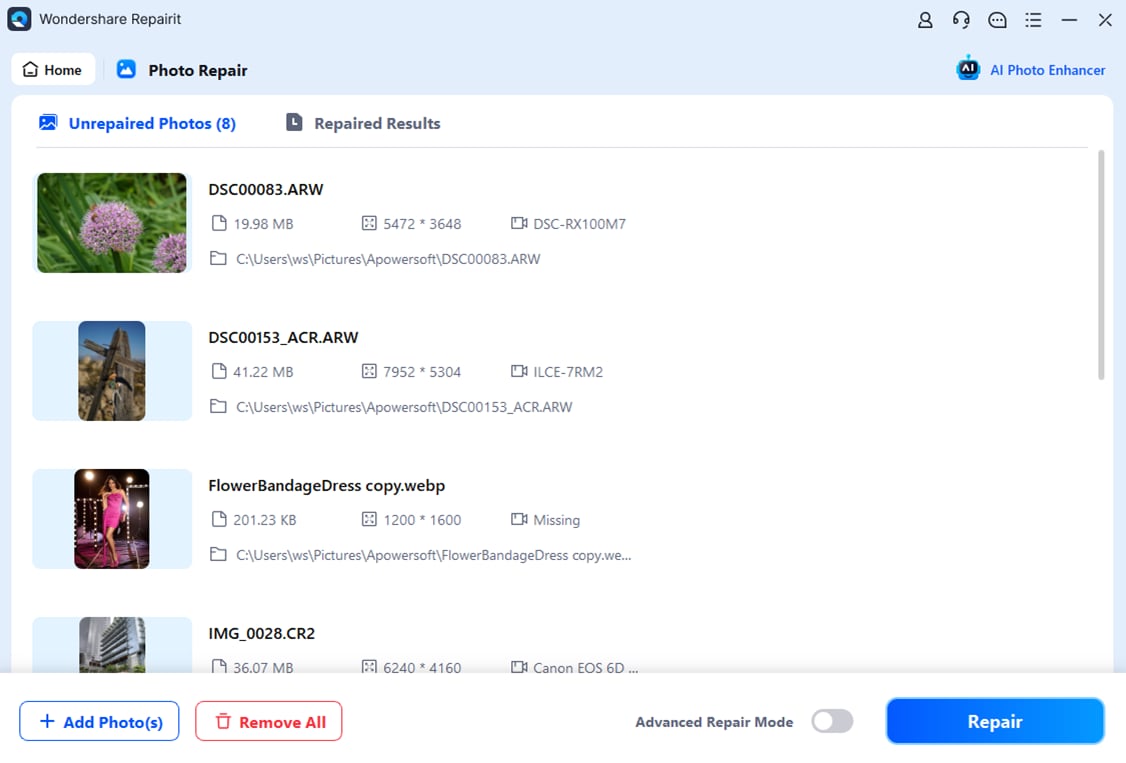
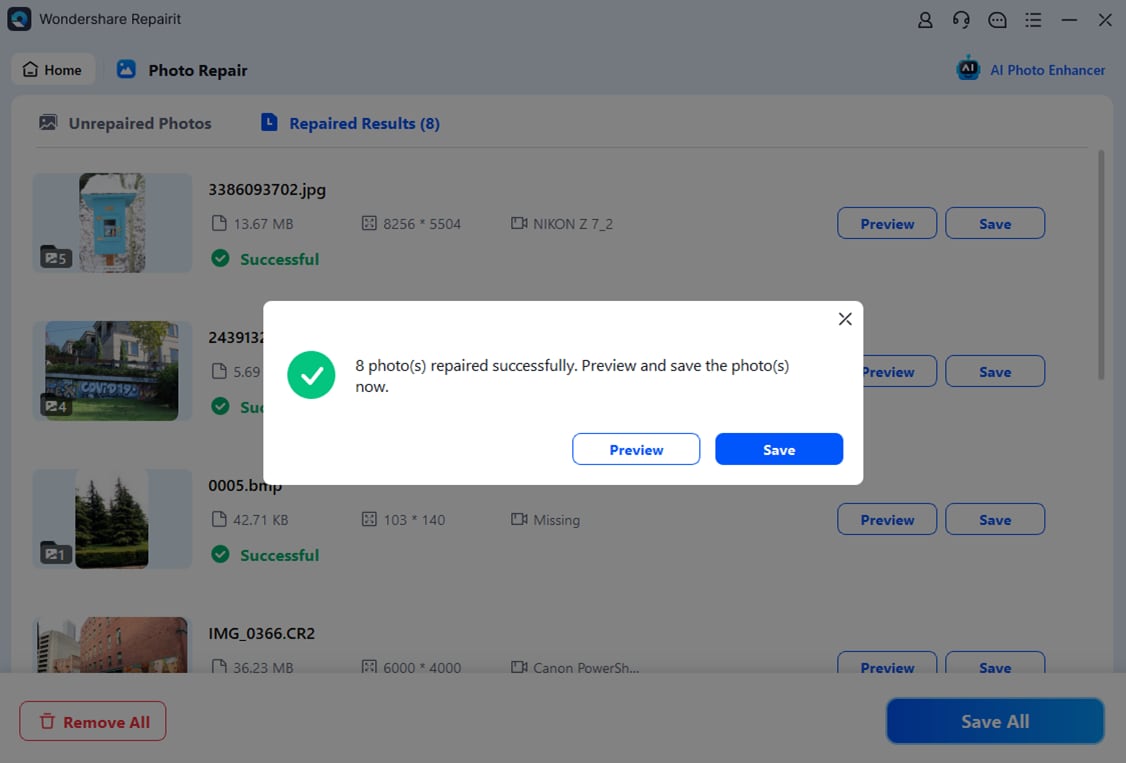
Once your damaged photos are listed, start the repair with a single click. Repairit scans each file, reconstructs broken data structures, and attempts to restore image information such as color and detail. When the process finishes, use the preview feature to inspect the repaired results so you can confirm that key areas, like faces or important textures, look acceptable for delivery or further editing.
- Save the repaired photo files
If the previews meet your needs, choose a safe destination folder that is different from where the corrupted photos were stored. Click Save to export clean copies of the repaired images. Repairit writes new, healthy files to the chosen location, allowing you to organize, back them up, or send them into your normal editing and exporting workflow without risking the recovered data.
Conclusion
Picture profiles are more than obscure menu options. They define how your camera converts the raw sensor signal into a viewable file, shaping color, contrast, and dynamic range from the moment of capture. Choosing the right profile for your project makes grading easier, preserves detail, and helps your footage stay consistent across editing, encoding, and playback on different platforms.
As you gain experience, you will learn when to use flat or log for flexibility and when to choose a ready-made profile for speed. And if technical issues leave your files corrupted, tools like Wondershare Repairit offer a practical way to rescue damaged photos and videos so that all the care you put into selecting your picture profile does not go to waste.
Next: Dynamic Range In Photography And Video
FAQ
-
1. What is a picture profile on a camera?
A picture profile is a group of image-processing settings in your camera that defines how color, contrast, sharpness, and gamma are applied before your photo or video is saved. It turns raw sensor data into the look you see in your final JPEGs, MP4s, or MOV files. -
2. Is a picture profile the same as a color profile?
No. A picture profile is broader: it usually includes contrast, gamma curve, noise reduction, and detail controls as well as color. A color profile focuses specifically on how colors are interpreted and mapped. -
3. Should I use a flat or log picture profile for video?
Use a flat or log profile when you plan to color grade and need maximum dynamic range and flexibility. For quick-turnaround work like vlogs or simple tutorials, a standard or neutral profile that looks good in-camera is often more efficient. -
4. Do picture profiles affect RAW photos?
Picture profiles do not permanently change the underlying RAW sensor data, but they do affect the preview on your camera and may influence the default rendering in some software. For JPEGs and most video formats, the profile is baked into the file. -
5. Can I change my picture profile after recording?
You cannot truly swap the original picture profile once a JPEG or standard video file has been recorded. You can adjust color and contrast in editing, but you will have more freedom and better image quality if you choose an appropriate profile at the time of capture.