
You will see the term anamorphic lens everywhere from cinema cameras and smartphone rigs to streaming platforms and editing presets. It describes a specific type of lens that gives your images a wider, more cinematic feel and striking flares. Understanding what it does and how it behaves in recording, editing, exporting, and playback helps you avoid surprises and make your footage look intentionally cinematic instead of accidentally distorted.
Repair Corrupted Files To Save Your Data
 Security Verified. Over 7,302,189 people have downloaded it.
In this article
What Is Anamorphic Lens?
An anamorphic lens is a special cinema lens that squeezes a wide scene horizontally to fit onto a camera sensor or film frame. It is a videography and filmmaking concept rather than a simple still-photo lens choice. During recording, the lens optically compresses the image; then, during monitoring, editing, or playback, the picture is stretched back (desqueezed) to create a wide, cinematic aspect ratio with the characteristic flares and bokeh you see in movies and high-end streaming content.
Anamorphic vs spherical lenses
In a standard setup, you use a spherical lens that renders the scene equally in all directions, so your captured frame looks normal and undistorted. A anamorphic lens, by contrast, uses cylindrical elements that only squeeze the image in the horizontal direction. After desqueeze, this gives you:
- Wider field of view from the same sensor size
- Oval-shaped bokeh instead of perfect circles
- Horizontal lens flares that streak across the frame
This is why discussions of anamorphic vs spherical are common in cinema, streaming series, and high-end content production.
Key technical characteristics
Technically, anamorphic lenses are defined by their squeeze factor, such as 1.3x, 1.5x, or 2x. This tells you how much horizontal compression is applied. When the footage is desqueezed in camera or in editing software, that squeeze factor determines the final aspect ratio, such as 2.39:1 cinema scope. The design also tends to lower corner sharpness, introduce more flare, and change how background blur appears, all of which contribute to the cinematic look.
How Does Anamorphic Lens Affect Your Image or Footage?
Using an anamorphic lens has visible consequences for framing, sharpness, distortion, and even how your footage behaves during encoding and playback.
Visual look and framing
First, anamorphic changes your framing. The lens captures a much wider horizontal field of view than a spherical lens at the same focal length, so you can include more scenery or multiple characters without moving the camera back. After desqueeze, you get a wide cinema-scope frame, with:
- Widescreen video that looks closer to theatrical releases
- Horizontal streak flares from bright light sources
- Oval bokeh and edge softness, especially at wider apertures
These traits are often labeled as anamorphic distortion. It is not a defect in the file itself but a characteristic warp in the image where vertical lines may bend slightly, and faces can stretch toward the edges of the frame.
Impact on workflow and delivery
Because the image is captured squeezed, you must account for it across your entire workflow:
- Monitoring: Some cameras and external monitors offer in-camera desqueeze so the preview looks normal. Without this, the live view looks tall and skinny.
- Editing: Your NLE (Premiere Pro, DaVinci Resolve, Final Cut, etc.) needs the correct desqueeze setting, or your footage exports with the wrong aspect ratio.
- Encoding and streaming: When delivering to YouTube, Vimeo, or streaming platforms, your export resolution and pixel aspect need to match the final widescreen format; otherwise players may add black bars or display a squashed image.
- Playback compatibility: On some TVs and older players, non-standard aspect ratios can trigger pillarboxing or letterboxing that does not match your creative intent.
Incorrect handling does not normally corrupt the media, but it can make footage appear "broken" or wrong even if the file itself is fine.
How Does Anamorphic Lens Work in Real Shooting?
On set, anamorphic lenses are not just a look; they change how you compose shots, pull focus, and manage gear from camera to monitor.
On set and in camera
When you mount an anamorphic lens, the camera records a squeezed image directly to the card. You may see the controls in several places:
- Camera settings: Some cinema cameras have an "anamorphic" project mode, changing resolution and metadata so the NLE knows to desqueeze.
- Monitor options: External monitors often have 1.3x, 1.5x, or 2x desqueeze presets, so composition looks correct even though the recorded file is still squeezed.
- Focus pulling: Because optical characteristics differ, breathing, distortion, and depth of field feel different versus spherical, so focus pullers need more rehearsal.
In practical terms, a 50mm 2x anamorphic lens gives a horizontal field of view similar to a ~25mm spherical lens while keeping the vertical field more like 50mm. This hybrid behavior is why many cinematographers love it for character-driven scenes.
Editing, exporting, and playback
Once you move to editing:
- Import and desqueeze: You import the squeezed clips into your NLE and apply the correct lens factor. The software stretches the footage horizontally to the intended aspect ratio.
- Color and VFX: Flares, distortion, and stretching can affect tracking and compositing. Many colorists treat anamorphic projects separately from spherical ones.
- Export: You render to a conventional pixel aspect ratio (usually square pixels) at a wide resolution like 3840x1600 or 4096x1716, so players and platforms can handle it normally.
- Playback: As long as your export is standard, most TVs, projectors, streaming boxes, and social apps will display the widescreen image correctly, adding letterbox bars if needed.
If software crashes or storage glitches occur during editing or export, the resulting file might become unplayable or corrupted, regardless of whether you used anamorphic lenses or regular glass. That is where repair tools come in.
Best Uses, Common Mistakes, and Quick Tips
Best use cases for anamorphic
An anamorphic lens matters most when you want an unmistakably cinematic look:
- Narrative films and streaming series with a wide, immersive scope
- Music videos, fashion films, and commercials where stylized flares and bokeh add atmosphere
- High-end YouTube or social content seeking a distinctive visual identity
- Landscape or cityscape shots that benefit from an ultra-wide frame without switching to an ultra-wide spherical lens
Mistakes to avoid and quick tips
Common misunderstandings around anamorphic lenses include:
- Forgetting to desqueeze: Exporting squeezed footage directly leads to tall, skinny subjects on every platform.
- Wrong aspect ratio in the timeline: Dropping anamorphic clips into a standard 16:9 timeline without adjustment causes unintended cropping or letterboxing.
- Overdoing flares: Constant bright sources can create overwhelming streaks, making footage look messy instead of cinematic.
- Ignoring edge softness: Placing important faces near the edge of the frame accentuates distortion and softness.
Quick tips: always confirm your squeeze factor, enable desqueeze on monitors when possible, test export settings with short clips before full renders, and keep backups of camera cards and project files to protect against corruption.
How to Use Repairit to Fix a Corrupted Photo File
Why use Repairit
Even carefully planned shoots with anamorphic lenses can be derailed by corrupted photos or videos caused by card errors, sudden power loss, or faulty transfers. Repairit official website offers a dedicated media repair solution that helps you bring damaged photos and videos back to a viewable state, so your carefully lit frames and hard-earned anamorphic images are not lost due to technical glitches.
Repairit by Wondershare is designed for creators of all levels, with an interface that guides you through adding problem files, repairing them, and previewing results before you save anything.
Key features of Repairit
- Fix corrupted or unplayable photos in multiple popular formats
- Preview repaired media before saving the final recovered files
- Simple workflow on desktop with clear steps for beginners and pros
Steps to repair corrupted photos
- Add corrupted photo files
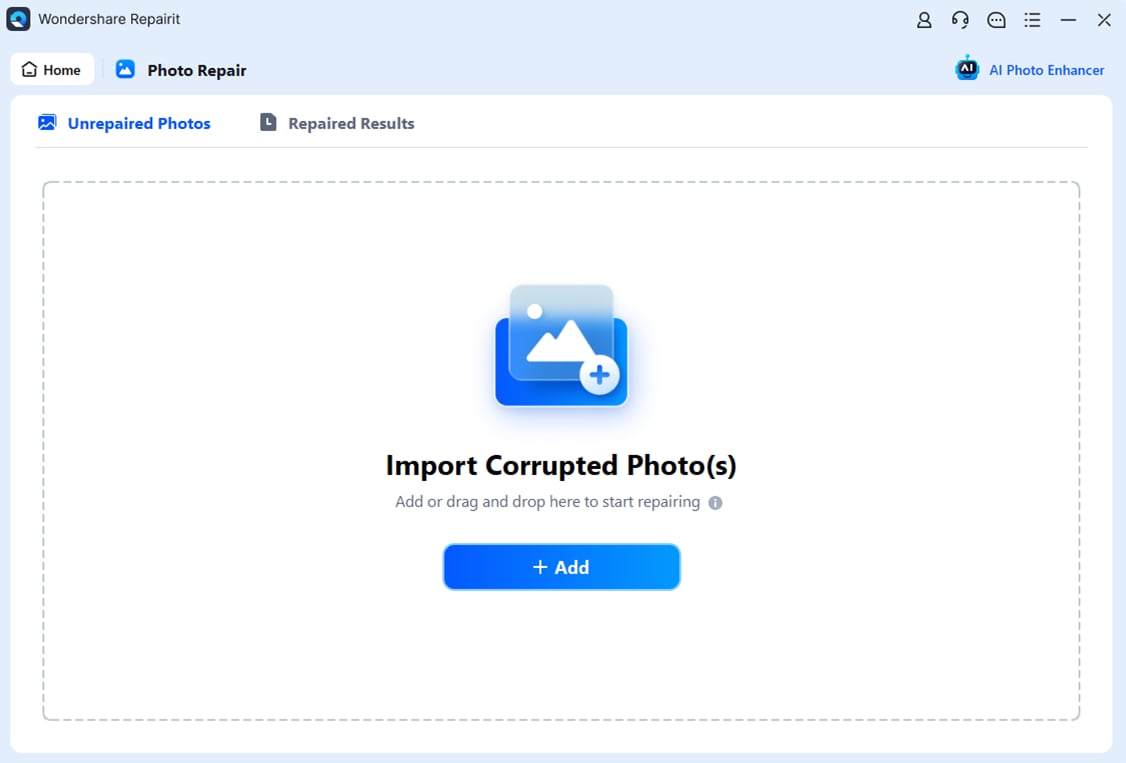
Open Repairit on your computer and go to the photo repair module. Click the add button and import the corrupted or unopenable photo files from your camera card, SSD, or local drive into the file list.
- Repair photo files
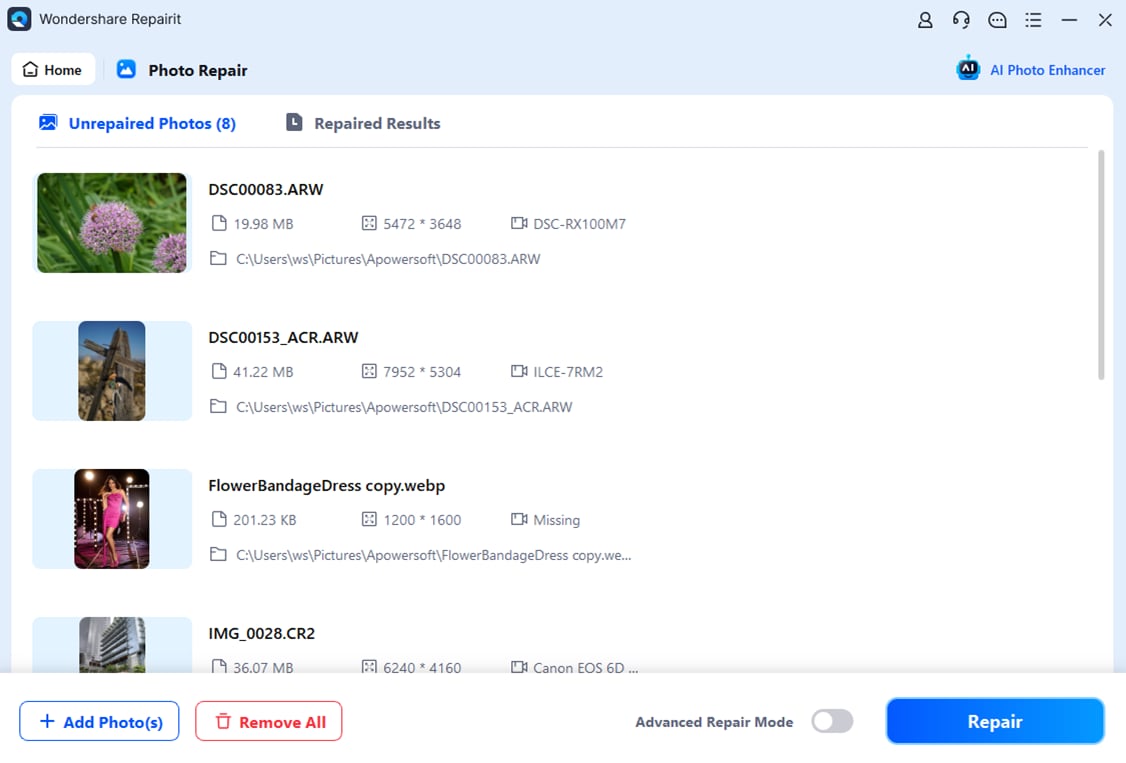
After your images are listed, start the repair process. Repairit quickly analyzes each file for structural errors or missing data and attempts to reconstruct a clean, viewable version without altering your original source files.
- Save the repaired photo files
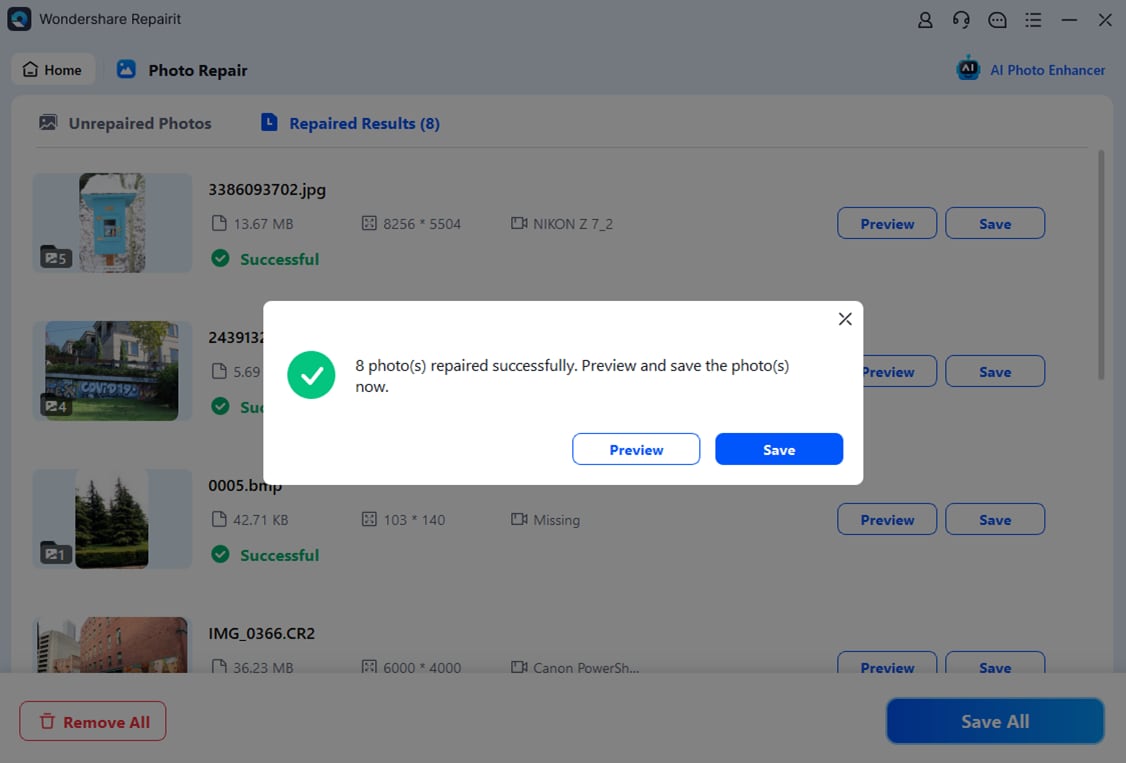
When the repair is complete, use the preview option to check the results. If everything looks right, choose a safe output folder that is different from the original location, then save the repaired photos so you can organize, edit, or share them confidently.
Conclusion
An anamorphic lens transforms ordinary frames into widescreen, cinematic images with distinctive flares, oval bokeh, and subtle distortion. By understanding how the lens squeezes the scene, how to desqueeze it correctly, and how that choice affects recording, editing, exporting, and playback, you can design a smooth workflow that delivers exactly the look you envision.
Because anamorphic projects often involve higher stakes, larger crews, and more complex setups, protecting your media is essential. Keeping reliable backups and using a dedicated repair tool like Repairit when files get corrupted ensures that a technical hiccup will not undo the time and creativity you put into your shots.
Next: Lens Distortion
FAQ
-
1. What is an anamorphic lens in simple terms?
An anamorphic lens is a type of cinema lens that squeezes a wider image onto your camera sensor. Later, the footage is stretched back (desqueezed) in camera or in editing software to create a widescreen, cinematic frame without losing horizontal detail. -
2. Why do filmmakers choose anamorphic lenses instead of spherical lenses?
Filmmakers choose anamorphic lenses for their ultra-wide aspect ratio, horizontal lens flares, and oval bokeh, which together create a distinctive big-screen look. They also like how anamorphic changes perspective, making scenes feel more immersive without resorting to extreme wide-angle spherical lenses. -
3. Do I need a special camera to shoot with an anamorphic lens?
You do not necessarily need a special camera. Many anamorphic lenses work with standard mirrorless and cinema cameras using the right mount or adapter. However, it helps if your camera or external monitor can desqueeze the image for monitoring, and your editing software must support anamorphic workflows. -
4. Why does anamorphic footage sometimes look distorted or soft at the edges?
Anamorphic distortion happens because the lens squeezes the image horizontally, so optical elements stretch and compress parts of the frame differently. This can lead to curved lines, stretched faces near the edges, and softer corners. These traits are usually considered part of the cinematic character rather than flaws. -
5. Can I fix a corrupted anamorphic video or photo file?
If a recording from your anamorphic shoot becomes unplayable or shows file errors, you cannot change the optical distortion with repair software, but you can often restore access to the file itself. A dedicated repair tool like Repairit can scan corrupted photos or videos, rebuild damaged data structures, and let you preview and save a repaired version.