
Shutter speed is a core camera setting that shows up on DSLRs, mirrorless cameras, action cams, even smartphone pro modes. You will see it while shooting stills, capturing sports, filming vlogs, live streaming, or setting export defaults in some video apps. Understanding how shutter speed controls light and motion is essential if you want sharp photos, smooth video, and footage that looks clean on every platform from YouTube to TV.
Repair Corrupted Files To Save Your Data
 Security Verified. Over 7,302,189 people have downloaded it.
In this article
What Is Shutter Speed?
Shutter speed is the amount of time your camera sensor is exposed to light for each photo or video frame. It is a fundamental photography basics setting and one side of the exposure triangle, alongside aperture and ISO.
In still photography, shutter speed is usually shown as fractions of a second (1/50, 1/250, 1/1000) or full seconds (1s, 5s, 30s). In video, it is closely tied to your frame rate and is a key part of setting the right video shutter speed for natural motion.
The basic role of shutter speed is to control:
- How bright or dark your image or clip appears
- How motion is rendered: frozen, slightly blurred, or heavily streaked
- How clean and stable your footage looks during playback and streaming
How Does Shutter Speed Affect Your Image or Footage?
Exposure and brightness
Shutter speed directly controls how much light hits the sensor. The longer it stays open, the more light you capture.
| Shutter speed type | Exposure result |
|---|---|
| Fast (e.g., 1/500, 1/1000) | Darker image, less light reaches the sensor |
| Moderate (e.g., 1/50, 1/125) | Balanced exposure in many daylight scenes |
| Slow (e.g., 1/4, 1s, 10s) | Brighter image, useful in low light or at night |
Because of this, changing shutter speed always interacts with aperture and ISO. If you make shutter speed faster to freeze motion, you may need a wider aperture or higher ISO to keep the exposure correct.
Motion blur, sharpness, and video look
The most visible effect of shutter speed guide settings is how it handles motion blur.
- Fast shutter speeds (1/500, 1/1000, 1/2000): Great for sports, wildlife, and action. Moving subjects appear tack sharp, and camera shake is less visible.
- Slow shutter speeds (1/30, 1/4, multiple seconds): Moving subjects blur across the frame, creating light trails, silky water, or streaking car headlights for creative long exposure images.
In video, shutter speed also defines how natural motion feels during playback and streaming:
- If video shutter speed is too fast for the frame rate, motion looks choppy and too crisp, especially on platforms like YouTube or TikTok.
- If it is too slow, footage can look smeared or jittery, and individual frames may be too blurry when paused.
Correct shutter choice improves perceived sharpness, reduces motion-related noise and flicker, and helps your footage look consistent across different screens and players.
How Does Shutter Speed Work in Real Shooting?
In real-world shooting, you adjust shutter speed from your camera's exposure controls:
- Mode dial: In Shutter Priority (S or Tv), you set the shutter speed and the camera handles aperture. In Manual (M), you choose both.
- On-screen display: Values like "1/50" or "1" are shown in the viewfinder, LCD, or external monitor.
- Smartphones: Pro or Manual modes often let you set shutter directly, while auto modes adjust it behind the scenes.
Some practical examples:
- Sports and wildlife: To capture a runner or bird in flight, you might choose 1/1000 s or faster. This freeze motion choice avoids blur even when you zoom in.
- Landscape long exposure: At a waterfall, you may use 1–10 seconds on a tripod. Water turns silky, and moving clouds streak for a dreamy look.
- Handheld street photography: Around 1/60 to 1/125 s balances sharp people with a touch of life-like motion.
- Video shooting: Following the 180-degree rule, a 1/50 s shutter for 25 fps or 1/60 s for 30 fps keeps motion blur natural for streaming and playback.
During editing, shutter speed is already baked into your clips and photos. However, its effects show up when you color grade, stabilize footage, denoise, or export. Extremely slow or fast settings can make stabilization and noise reduction harder, and can reveal flicker or rolling bands if lights do not sync well with your chosen shutter value.
Best Uses, Common Mistakes, and Quick Tips
When shutter speed matters most
- Shooting fast action (sports, pets, kids, wildlife)
- Low-light scenes without flash or with limited lighting
- Creative long exposure shots like star trails or car light trails
- Filming video that must look smooth and cinematic on different platforms
Common mistakes with shutter speed
- Using too slow a shutter when handholding, causing blur from camera shake
- Choosing ultra-fast settings in low light, forcing ISO so high that noise explodes
- Ignoring the frame rate in video and using a random shutter, resulting in jittery or smeared motion
- Forgetting that different platforms compress and display motion differently, so extreme blur or extreme sharpness can look worse after upload
Quick tips for better results
- For handheld stills, stay near 1 / focal length (e.g., 1/60 s for 50 mm, 1/250 s for 200 mm) as a starting point.
- For video, follow the "shutter at roughly double frame rate" rule (25 fps → 1/50 s, 30 fps → 1/60 s, 60 fps → 1/120 s).
- Use a tripod or stabilizer whenever shooting slower than 1/30 s for sharp stationary subjects.
- In bright daylight with slow shutters (for motion blur), add an ND filter instead of stopping down aperture too much or raising ISO.
- Test a sequence of shutter speeds on the same subject to see how motion blur and exposure change in your own workflow.
The key takeaway: treat shutter speed as both a technical control for exposure and a creative tool that defines the look and feel of your photos and videos.
How to Use Repairit to Fix a Corrupted Photo File
Repairit introduction
If a photo or video from an important shoot becomes unplayable, glitchy, or fails to open after transfer or editing, you can turn to Repairit by Wondershare. It is a dedicated media repair tool built for non-technical users, available from the Repairit official website. Repairit can repair damaged files from cameras, phones, memory cards, and drives so your carefully chosen shutter speed and other camera settings are not lost to corruption.
Key features of Repairit
- Repairs corrupted photos and videos from cameras, phones, drones, action cams, and memory cards.
- Supports batch repair so you can fix multiple damaged or unplayable files in a single run.
- Simple preview and save workflow, letting you check quality and only keep the repaired results you like.
Step-by-step: Fix a corrupted photo file
- Add corrupted photo files
Install and open Repairit on your computer, then choose the Photo Repair module from the main interface. Click the "Add" button and browse to the folder where your broken images are stored. You can highlight a single corrupted file or select a group of photos from your camera card, external drive, or local disk for batch repair.

- Repair photo files
After importing, check the file list and confirm that all the problem images are included. Next, start the repair with one click. Repairit will automatically analyze your photos, detect typical corruption issues such as gray areas, color blocks, or unreadable headers, and then apply targeted repair techniques in the background without needing any manual tuning from you.

- Save the repaired photo files
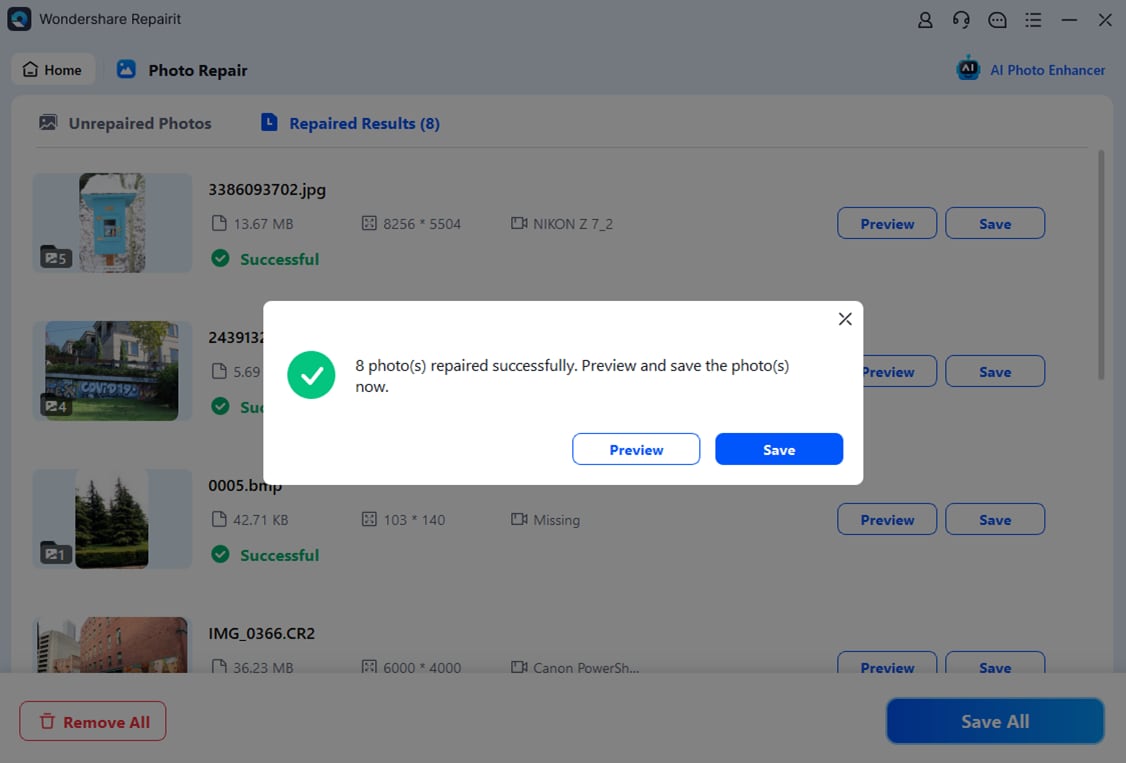
When the repair process finishes, preview each restored photo within Repairit to confirm that details, colors, and framing look correct. Select the images you want to keep, choose a safe output folder that is different from the original source, and click "Save". Your repaired files will be exported and ready for viewing, editing, or sharing again.
Conclusion
Mastering shutter speed gives you direct control over exposure and motion in both photos and videos. By understanding how fast and slow shutter values affect brightness, blur, and overall image quality, you can make deliberate choices that fit the scene, your style, and the final playback platform.
With regular practice, picking the right shutter setting becomes instinctive, letting you concentrate on timing, composition, and story. And if any of your carefully captured shots become corrupted along the way, tools like Repairit ensure your work is not lost to file errors.
Next: Camera Iso
FAQ
-
1. What is shutter speed in simple terms?
Shutter speed is the length of time your camera sensor is exposed to light for each photo or video frame. Fast speeds expose for a very short moment, while slow speeds keep the sensor exposed longer. -
2. How does shutter speed affect motion blur?
Fast shutter speeds, such as 1/500 or 1/1000 second, freeze motion and minimize blur. Slow shutter speeds, like 1/30 second, 1 second, or longer, record more movement over time and create visible motion blur or light trails. -
3. What shutter speed should I use for video?
A common guideline is to set shutter speed to roughly double your frame rate. For 24 or 25 fps, use around 1/50 second; for 30 fps, use about 1/60 second. This produces natural-looking motion and avoids choppy or smeared footage. -
4. When should I use a slow shutter speed?
Use slow shutter speeds in low light, at night, or when you want creative effects like smooth waterfalls, star trails, car light streaks, or blurred crowds. A tripod or stable support is usually needed to keep non-moving parts of the scene sharp. -
5. Why are my photos blurry even with a fast shutter speed?
Blur can still happen if focus is incorrect, your subject moves faster than your chosen speed, your hands shake with long lenses, or image stabilization is off. Check focus, increase shutter speed further, stabilize the camera, or use a wider aperture and higher ISO.