
Shutter angle is a term you will see in cinema cameras, video settings menus, and professional filmmaking tutorials. It controls how motion appears frame by frame, directly shaping your footage's blur, sharpness, and overall feel. Understanding it helps you get a consistent look when recording, editing, encoding, exporting, and streaming video on different platforms, so your shots stay cinematic and intentional instead of distracting or jittery.
Repair Corrupted Files To Save Your Data
 Security Verified. Over 7,302,189 people have downloaded it.
In this article
What Is Shutter Angle?
Shutter angle is a way of describing exposure time in video based on degrees instead of fractions of a second. It comes from film cameras where a rotating disc-shaped shutter had an open segment measured in degrees. In modern digital cameras, it is a video and filmmaking basics concept that links exposure directly to your frame rate.
Instead of setting a traditional shutter speed like 1/50 or 1/100 second, a camera using shutter angle calculates the exposure time from this formula:
Exposure time = Shutter angle / 360 × (1 / frame rate)
That means once you choose a shutter angle, your exposure time automatically adjusts as you change frame rate. This makes it easier to keep motion blur consistent whether you record at 24 fps for a cinematic look, 30 fps for web video, or 60 fps for smooth slow motion.
How Does Shutter Angle Affect Your Image or Footage?
Motion blur and perceived sharpness
The biggest visual effect of shutter angle is how much motion blur you see in each frame.
- At around 180 degrees, motion blur looks natural and cinematic. Moving subjects are clear but not razor sharp, similar to what we are used to from movies.
- At small shutter angles (like 45–90 degrees), exposure time is shorter. Motion blur is reduced, so action looks crisp and sometimes stuttery, which is popular in intense fight scenes or sports replays.
- At large shutter angles (like 270–360 degrees), exposure time is longer, creating heavy blur on movement. This can feel dreamy, smeared, or even disorienting if overused.
Because shutter angle ties directly to cinematic video motion, it affects how smooth action appears when your footage is played back, edited, encoded, and streamed on platforms like YouTube, Vimeo, or social media.
Exposure, noise, and platform compatibility
Shutter angle also controls how much light reaches the sensor during each frame, so it influences overall exposure control and noise levels.
- Smaller shutter angles let in less light, which can force you to raise ISO and introduce more noise or grain.
- Larger shutter angles allow more light, which can be helpful in dim scenes but may cause rolling flicker with certain artificial lights or overexposure if not balanced.
- Keeping a consistent shutter angle across shots helps maintain a uniform motion feel after encoding and exporting to different playback systems and streaming platforms, reducing jarring changes in blur from clip to clip.
For action-heavy content, game captures, and fast-moving vlogs, getting shutter angle right can be the difference between smooth, watchable footage and a choppy or smeared viewing experience.
How Does Shutter Angle Work in Real Shooting?
In real-world shooting, you will see shutter angle as an option on many cinema cameras and some mirrorless bodies in their camera settings menus. Instead of setting shutter speed, you choose a degree value that the camera uses to calculate exposure time based on the current frame rate.
- In the camera menu: Look for a "Shutter" setting that can switch between "Angle" and "Speed." Once you choose Angle, you will typically see 180°, 172.8°, 144°, 90°, 45°, and so on.
- On external monitors or recorders: Some recorders display both frame rate and shutter information, so you can confirm if your angle is behaving as expected while monitoring exposure and motion blur.
- During multi-camera shoots: Using the same shutter angle on all cameras helps match motion blur across different bodies and lenses, which makes editing and color grading more consistent.
Example: If you shoot an interview at 25 fps using a 180-degree shutter angle, your exposure time will be about 1/50 second. If you later switch to 50 fps slow motion but keep 180 degrees, the camera will automatically change the shutter speed to about 1/100 second, preserving the same style of motion blur even though you now have more frames for slow motion playback.
When preparing for delivery, such as encoding and exporting for streaming, having consistent shutter angle across scenes gives your whole project a cohesive rhythm and prevents one sequence from looking strangely sharper or blurrier than the rest.
Best Uses, Common Mistakes, and Quick Tips
When shutter angle matters most
- Narrative films and web series aiming for a classic movie look.
- Action scenes, sports, and fast camera moves where blur quality is very visible.
- Slow motion sequences that need to match normal-speed shots.
- Projects intended for multiple platforms (cinema, web, mobile) where consistent motion feel is important.
Common mistakes
- Using a very small shutter angle without intending a staccato look, which makes pans and movement look choppy.
- Accidentally changing frame rate but leaving shutter in speed mode, causing inconsistent motion blur between clips.
- Shooting under flickering lights with extremely large shutter angles, which can introduce exposure pulsing after encoding and playback.
Quick tips for better results
- Start with the classic 180-degree rule for natural motion and adjust from there for style.
- Lock shutter angle before rolling and only change it deliberately, especially in multi-camera or long-form productions.
- When changing frame rate (24, 25, 30, 50, 60 fps), keep the angle the same to maintain consistent blur.
- Test a short clip at your chosen angle, encode it, and review on your final platform (TV, phone, computer) to see how motion feels in real playback conditions.
The takeaway: treat shutter angle as a creative dial that shapes blur and exposure in your video settings, and use it intentionally so your footage looks the way you planned on every screen.
How to Use Repairit to Fix a Corrupted Photo File
Repairit introduction
Even when your camera settings, including shutter angle, are perfect, corrupted media can ruin an otherwise great shoot. Wondershare Repairit is a dedicated media repair solution that helps you fix damaged or unplayable photos and videos from cameras, phones, drones, and more. With an easy workflow and clear previews, it lets you recover important shots so you can focus on creative choices instead of technical failures. You can learn more on the Repairit official website.
Key features of Repairit
- Repairs corrupted or unplayable photo and video files from a wide range of devices and formats, including footage with custom shutter speed or frame rate settings.
- Offers an intuitive repair process with preview, so you can check the recovered media before saving the final fixed files.
- Supports batch repair to handle multiple damaged media files in one go, ideal for large projects or full shooting days.
Step-by-step: repair corrupted photos
- Add corrupted photo files
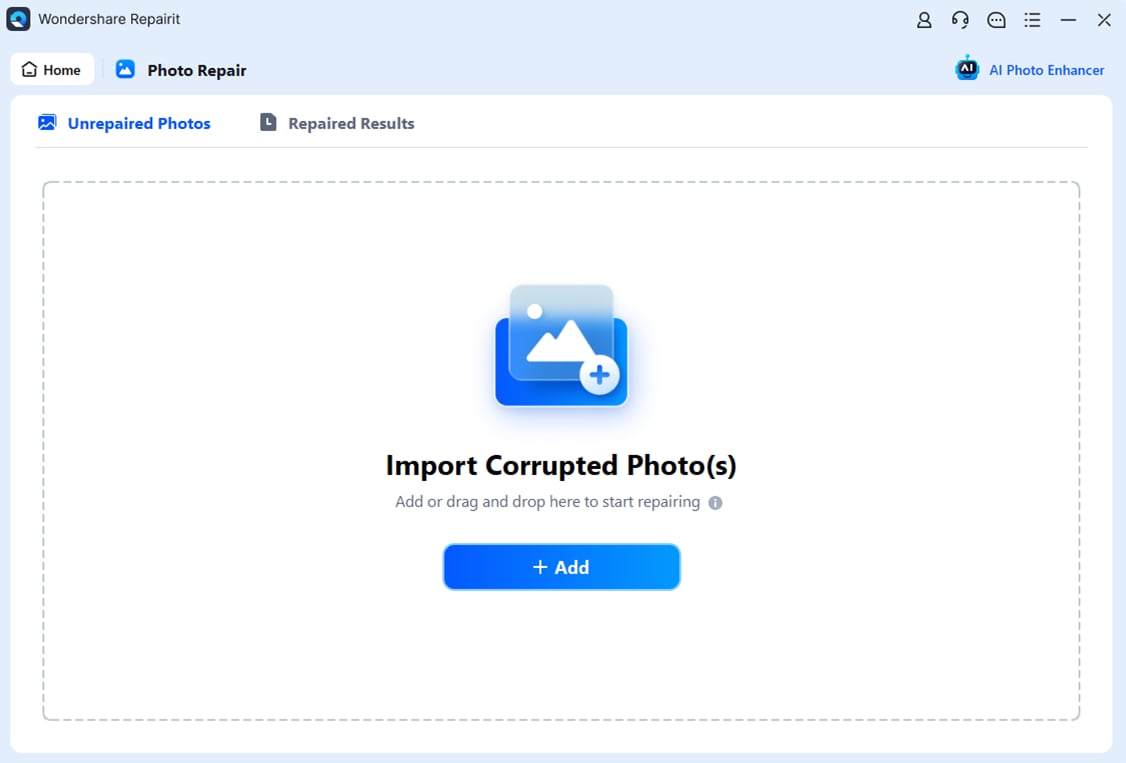
Open Wondershare Repairit and choose the Photo Repair module on the main screen. Click the "Add" button and browse to the folder containing your damaged images, whether they came from a camera card, SSD, or local drive. Select all the corrupted photos you want to restore and confirm so they appear in the file list, ready for repair.
- Repair photo files
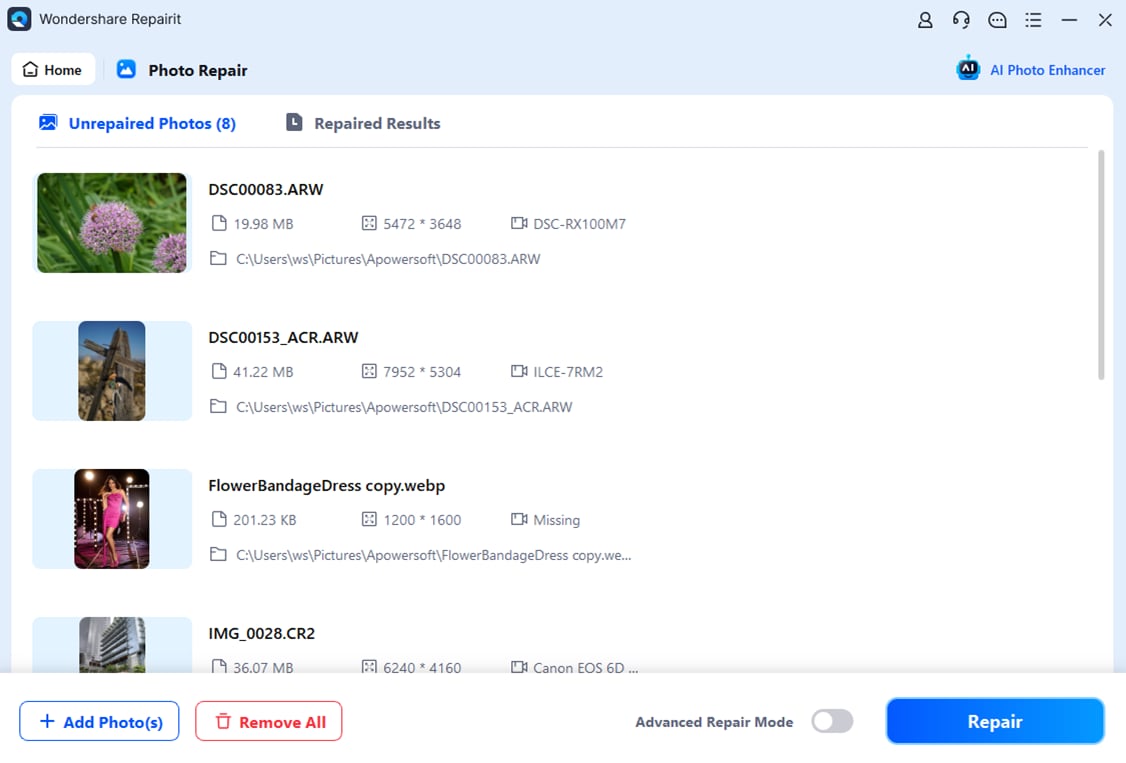
After the photos are loaded, start the repair by clicking the "Repair" button. Repairit will automatically analyze each image, detect structural issues, and attempt to rebuild the file data. When the process completes, you can preview the repaired photos one by one to confirm that important details, colors, and clarity look correct.
- Save the repaired photo files
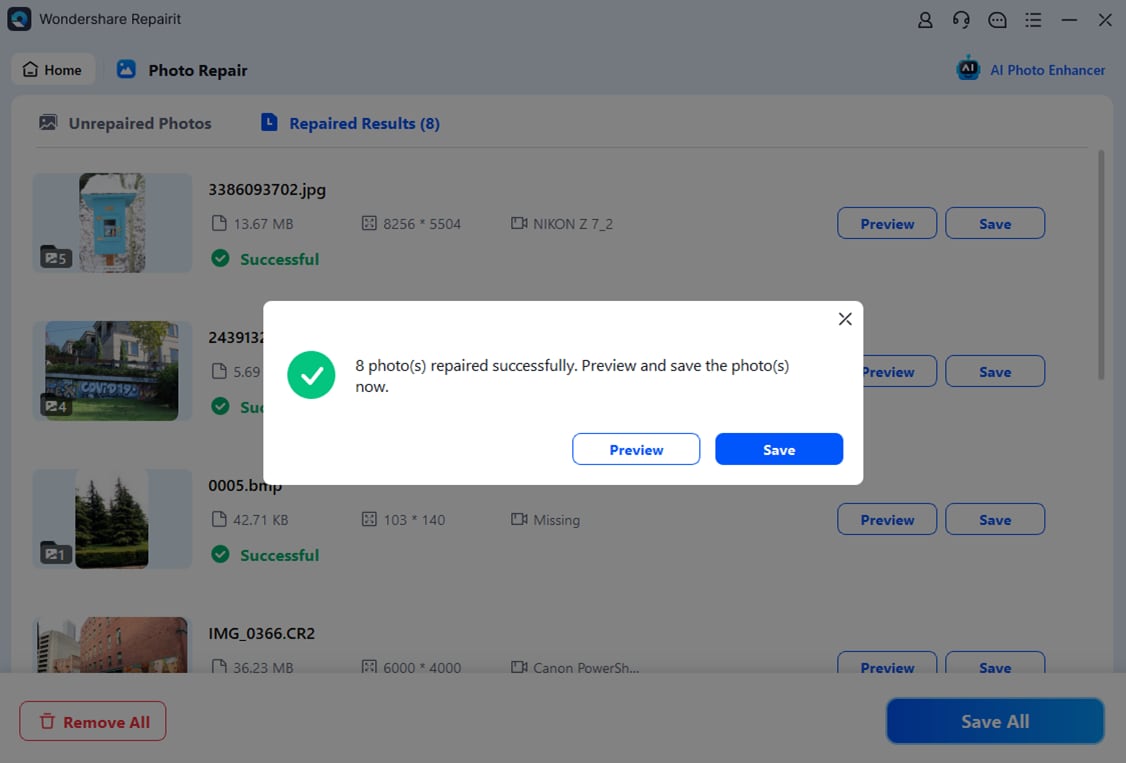
If you are satisfied with the preview results, choose a safe output folder that is different from the original corrupted file location. Click "Save" to export all the repaired images. Repairit will keep the original damaged files unchanged so you can compare them later or store them as a backup while working with your newly fixed versions.
Conclusion
Shutter angle is a powerful way to control motion blur and exposure in video by tying your shutter directly to frame rate. Whether you want smooth, classic cinematic video or sharp, high-impact action, understanding how shutter angle behaves across recording, editing, encoding, and playback helps you build a consistent, intentional look.
Pair good on-set practices with reliable tools like Wondershare Repairit so your carefully crafted shots stay viewable and intact, even if files become corrupted during recording, transfer, or editing. That way, your creative decisions about blur, sharpness, and motion are preserved from the camera all the way to the viewer's screen.
Next: Picture Profile
FAQ
-
1. What is the 180-degree shutter rule?
The 180-degree shutter rule recommends setting your shutter angle to 180 degrees so that exposure time equals roughly 1 over twice the frame rate. At 24 fps, that is about 1/48 second. This setting produces natural, comfortable motion blur that viewers associate with traditional cinema and is a good default for most narrative work. -
2. How do I convert shutter speed to shutter angle?
To convert a known shutter speed to shutter angle, use this formula: Shutter angle = 360 × exposure time × frame rate. For example, at 24 fps with a shutter speed of 1/48 second, the shutter angle is 360 × (1/48) × 24 = 180 degrees. This lets you match a look you already like in shutter speed mode when you switch to angle mode. -
3. Why does my footage look too stuttery or choppy?
Footage usually looks stuttery when the shutter angle is too small, which means the exposure time is very short and there is little motion blur. Fast pans and moving subjects will appear harsh and jittery. Increasing your shutter angle closer to 180 degrees will restore smoother, more natural motion in most scenes. -
4. Can I use the same shutter angle for slow motion?
Yes. One advantage of shutter angle is that you can keep the same angle when changing frame rate. If you shoot 60 fps slow motion at 180 degrees, the camera automatically picks a shutter speed (around 1/120 second) that preserves the same style of blur, giving you consistent motion feel after you slow the clip down in editing and export. -
5. What can I do if my video files get corrupted after recording?
If your clips become corrupted during recording, transfer, or editing, a repair tool like Wondershare Repairit can often restore them. It analyzes the damaged structure of the media file, rebuilds playable data, and lets you preview the results before saving, so your carefully chosen shutter speed, frame rate, and exposure settings are not lost to file errors.