

Continuous autofocus is a term you will see in camera menus, lens descriptions, and video autofocus settings on DSLRs, mirrorless cameras, and even smartphones. It tells your camera to keep refocusing as your subject moves, which is critical for sports, wildlife, events, and vlogs. Understanding how it behaves in shooting, recording, and playback helps you get sharper results and avoid distracting focus hunting in your photos and videos.
Repair Corrupted Files To Save Your Data
 Security Verified. Over 7,302,189 people have downloaded it.
In this article
What Is Continuous Autofocus?
Continuous autofocus (often labeled AF-C on Nikon/Sony, AI Servo on Canon, or just continuous AF in menus) is a camera focus mode designed to track and maintain focus on moving subjects. It is a core photography and videography concept that tells the camera to keep adjusting focus as long as you half-press or hold the shutter, or while video recording is active.
Instead of locking focus once, the camera constantly measures subject distance and updates the lens position. This makes continuous autofocus essential when subjects are changing distance, such as athletes running toward you, birds in flight, kids playing, or a vlogger walking while talking to the camera.
In video, video autofocus usually relies on the same technology as continuous AF, using subject-detection and tracking algorithms to follow faces, eyes, or objects during recording for smoother, more watchable footage.
How Does Continuous Autofocus Affect Your Image or Footage?
Sharpness and motion rendering
The biggest impact of continuous autofocus is sharpness. When it works correctly, moving subjects stay in focus across bursts of photos or throughout an entire video clip. This matters most when:
- You shoot at wide apertures with shallow depth of field, where tiny focus shifts can ruin sharpness.
- Your subject moves quickly toward or away from the camera, changing distance from frame to frame.
- You use high frame rates (photo bursts or 60/120 fps video) and want every frame to be usable.
If continuous autofocus fails to track accurately or reacts too slowly, you may see:
- Soft or completely out-of-focus subjects while the background looks sharp.
- Autofocus "hunting" as the lens moves past the subject and then comes back.
- Inconsistent sharpness in burst sequences, making only a few frames keepers.
Compared with single AF, continuous AF tends to trade a tiny bit of absolute precision for responsiveness. It is constantly updating, which is great for motion but can overshoot slightly or respond to distractions if not configured well.
Video behavior, playback, and platform compatibility
In video, continuous autofocus affects how focus transitions look during playback on editing timelines, exports, streams, and platforms like YouTube, TikTok, and Instagram. Good video autofocus gives:
- Smooth, predictable focus pulls as the subject moves or looks around.
- Stable focus on faces or eyes even if the subject briefly turns or is partially blocked.
- Clean footage that requires minimal correction in editing or post-production.
Problems with tracking focus can show up in playback as:
- Fast, jumpy refocusing that looks nervous or distracting.
- Frequent focus shifts to the background, lights, or foreground objects.
- Visible focus breathing and pulsing as the lens keeps searching for the subject.
These issues do not change the encoded format or platform compatibility of your files, but they strongly influence perceived quality after exporting or streaming. Viewers on any platform will notice if your subject is soft or if the image keeps pumping in and out of focus, even when resolution and bitrate are high.
How Does Continuous Autofocus Work in Real Shooting?
On most cameras, you select AF-C or AI Servo in the focus mode menu or via a physical switch. Once enabled, the camera continuously analyzes data from its focus sensors (phase-detect, contrast-detect, or hybrid on-sensor systems) while you half-press the shutter button, hold back-button focus, or record video.
The camera combines focus mode with a chosen focus area, such as single point, zone, wide-area, or subject-detection (face/eye/animal/vehicle). It predicts how your subject will move and adjusts the lens to keep that subject sharp frame after frame.
Practical shooting examples:
- Sports photography: You set AF mode to AF-C, choose a dynamic or tracking area, lock onto the player, and hold the shutter half-pressed as they run. The camera updates focus while you fire a burst.
- Wildlife and birds: You use AF-C with animal or bird eye detection. As the bird flies, the system tracks its head or eye across the frame, which is vital at long focal lengths.
- Event coverage: During weddings or concerts, continuous AF keeps walking or dancing subjects reasonably sharp as lighting and distance change rapidly.
- Vlogging and handheld video: You enable continuous AF plus face/eye tracking. As you move around or extend your arm, the camera constantly adjusts focus to hold your face sharp in 4K or HD footage.
In monitoring, you will see focus confirmation boxes, tracking frames, or colored squares over the subject on your LCD, EVF, or external monitor, showing what the camera is currently following.
Best Uses, Common Mistakes, and Quick Tips
When continuous autofocus matters most
- Sports, wildlife, and action scenes with erratic motion.
- Documentary and event work where you cannot predict subject paths.
- Run-and-gun videography, street films, and vlogs shot handheld or on gimbals.
- Any shallow-depth-of-field situation where subjects move toward or away from you.
Common mistakes and misunderstandings
- Using AF-C for static scenes like landscapes, products, or architecture, where single AF or manual focus is more stable.
- Choosing an overly wide focus area so the camera locks onto the background instead of your subject.
- Expecting perfect focus in extreme low light or fog, where AF systems naturally struggle.
- Leaving tracking sensitivity too high, causing the system to jump to every passing object.
- Relying on continuous AF alone without matching shutter speed, ISO, and aperture to control motion blur and depth of field.
Quick tips for better results
- Use subject-detection (face/eye/animal/vehicle) whenever available for more reliable tracking focus.
- Limit the focus area to a smaller zone around your subject to reduce distractions.
- For fast action, raise shutter speed (for example 1/1000s or faster) so sharp focus is not ruined by motion blur.
- In video, tweak AF speed and tracking sensitivity to get smoother, more cinematic focus transitions.
- Switch to single AF or manual focus when shooting static scenes, locked-off shots, or focus-critical macro work.
The takeaway: use continuous autofocus when your subject moves, but pair it with good technique and the right settings so you get consistently sharp, stable photos and video.
How to Use Repairit to Fix a Corrupted Photo File
Repairit introduction
Even when your af-c and tracking focus settings are perfect, card errors, sudden power loss, or transfer issues can corrupt your carefully captured images. Wondershare Repairit is a dedicated media repair tool that helps you restore damaged photos and videos quickly. On the Repairit official website, you can download desktop software that fixes common corruption problems in a few clicks, so your best continuous autofocus shots are not lost.
Key features
- Repairs corrupted or unplayable photos in popular image formats without changing original shooting metadata more than necessary.
- Supports batch repair so you can fix multiple damaged files at once from memory cards, cameras, or drives.
- Provides preview of repaired files before saving, letting you confirm focus and detail are properly restored.
Step-by-step: repair corrupted photos
- Add corrupted photo files
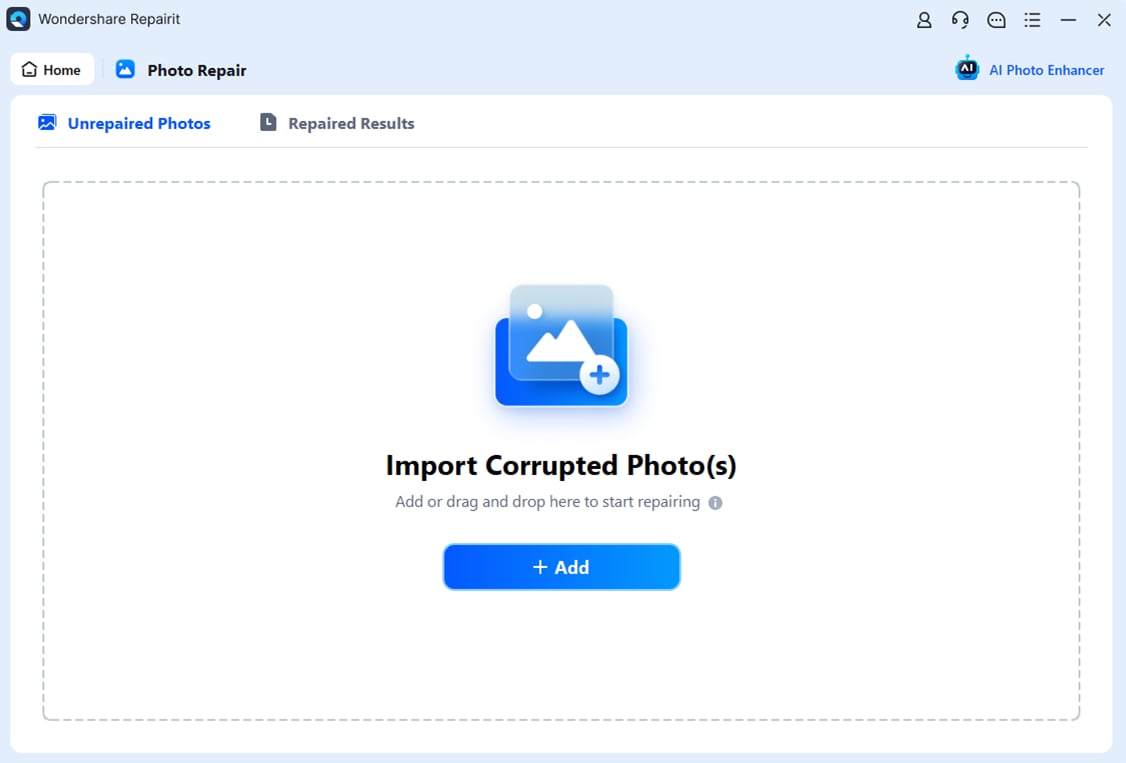
Install and open Repairit on your computer, then go to the Photo Repair module. Click the add button and import the corrupted photos you want to fix, whether they are stored on a memory card, camera backup, external drive, or local folder.
- Repair photo files
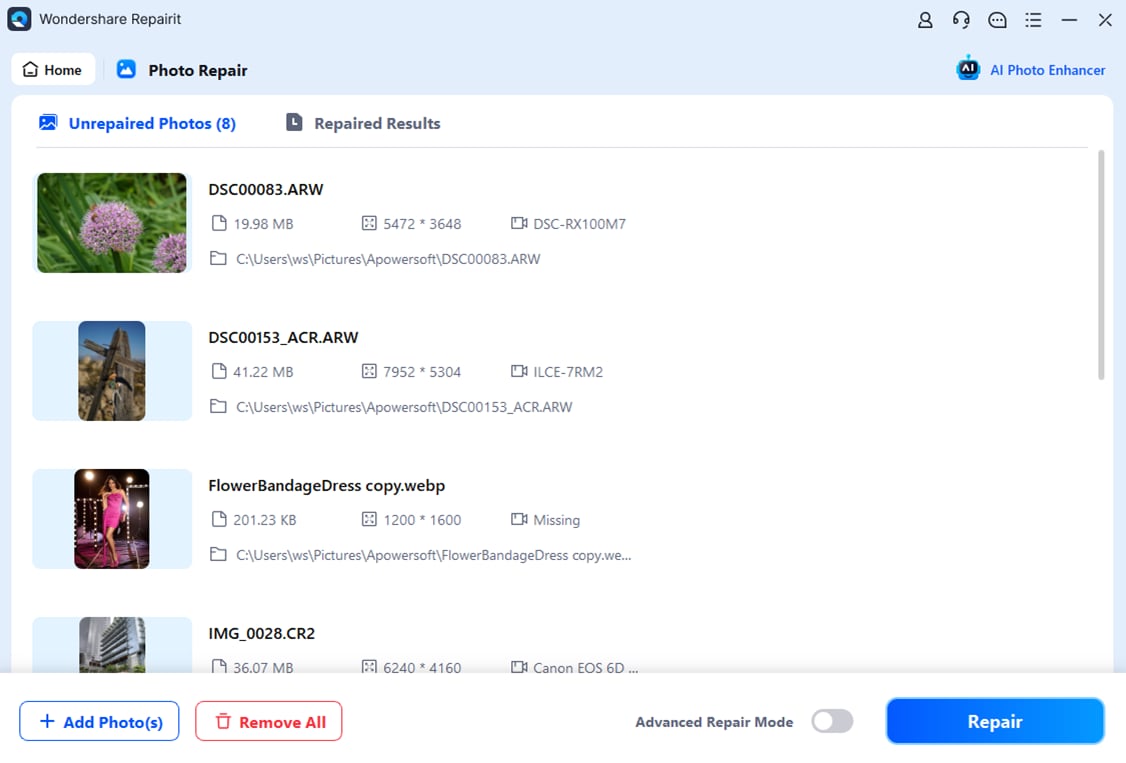
After your damaged images are listed, start the repair process with one click. Repairit analyzes each file, detects structural and data issues, and automatically applies repair algorithms to reconstruct the photos while preserving visual quality and focus detail where possible.
- Save the repaired photo files
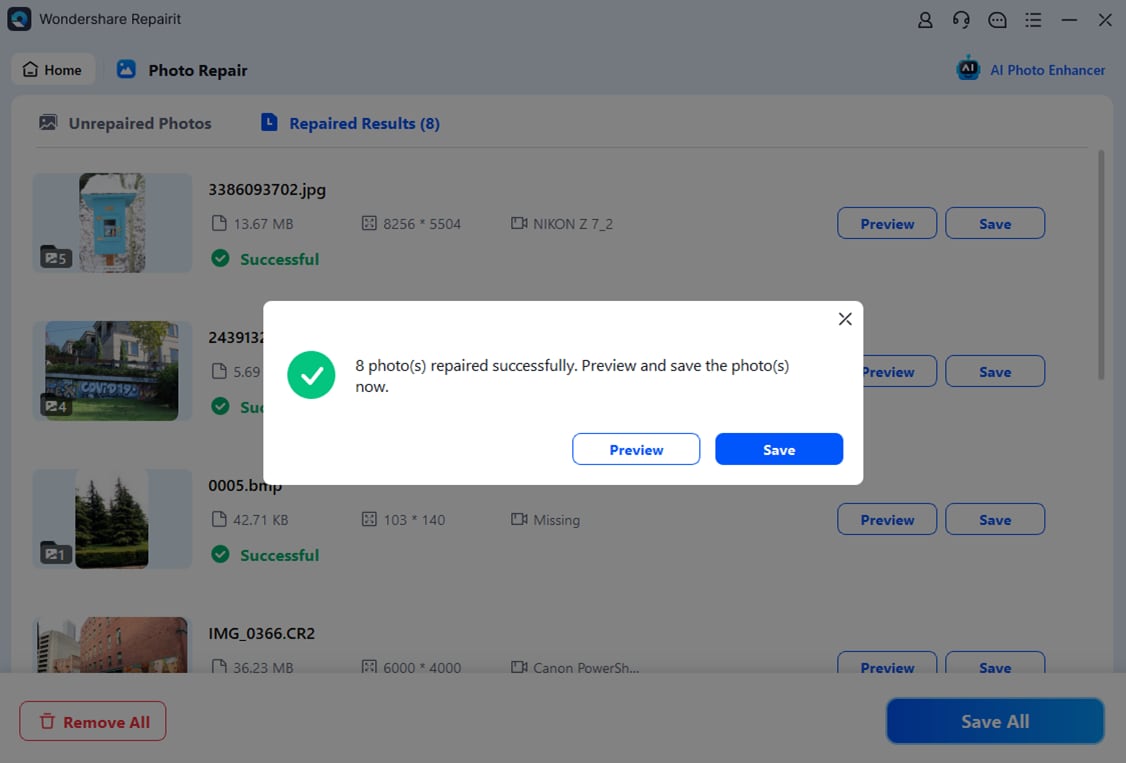
When the repair finishes, preview the recovered images in Repairit to verify that sharpness, colors, and framing look correct. Choose a safe destination folder on your computer and save the repaired files, then back them up or bring them into your editing workflow as you normally would.
Conclusion
Continuous autofocus is designed to keep moving subjects sharp by updating focus in real time as distance and framing change. Using AF-C or ai servo with the right focus area, tracking sensitivity, and exposure settings lets you capture more keepers in action, events, and dynamic video work.
Know when to rely on continuous AF, when to switch to single or manual focus, and how your choices affect the final look at recording, editing, exporting, streaming, and playback stages. If technical problems ever corrupt your best video autofocus clips or still images, tools like Wondershare Repairit can help rescue those files before they are gone.
Next: Focus Peaking
FAQ
-
1. What is continuous autofocus used for?
Continuous autofocus is used to keep moving subjects sharp while you half-press or hold the shutter button, or during video recording. It constantly updates focus as subjects move closer, farther, or across the frame, which is ideal for sports, wildlife, kids, pets, events, and handheld video work. -
2. Is continuous autofocus better than single autofocus?
Neither mode is always better. Continuous autofocus is better for moving subjects because it tracks motion, while single autofocus is more reliable for static scenes, landscapes, products, and precise compositions where the subject does not change distance. -
3. Why are my continuous autofocus photos still blurry?
Blurry images can result from the wrong focus area, low light, very fast or erratic subjects, or too slow a shutter speed. Try narrowing your AF area, enabling subject detection, increasing ISO, and using a faster shutter (such as 1/1000s or faster) to reduce motion blur. -
4. Can I use continuous autofocus for video?
Yes. Continuous autofocus is widely used in videography to keep faces and moving subjects in focus. For smoother results, adjust AF speed and tracking sensitivity to avoid aggressive hunting or distracting focus breathing, especially when recording in 4K or at high frame rates. -
5. Does continuous autofocus drain the battery faster?
Yes. Because the focus system is constantly active in AF-C or AI Servo modes, it typically consumes more battery than single AF, especially if you also shoot long bursts or extended video clips. Carry spare batteries for demanding action or event shoots.




