
Autofocus in video is everywhere: in phone cameras, mirrorless bodies, DSLRs, webcams, and even streaming setups. It quietly works in the background to keep faces and moving subjects sharp while you record, edit, or stream. When you understand what video autofocus is doing, you can avoid distracting focus jumps, choose the right mode for each scene, and capture clean, professional-looking footage that holds up on any platform.
Repair Corrupted Files To Save Your Data
 Security Verified. Over 7,302,189 people have downloaded it.
In this article
What Is Autofocus in Video?
Video autofocus is the camera system that automatically adjusts the lens to keep your subject sharp while you record, without you turning the focus ring by hand. It is a core concept in both photography and videography, but in video it must work continuously as scenes, distance, and subjects change in real time.
On modern cameras, continuous autofocus can track faces, eyes, or specific objects as you move, and it influences everything from casual smartphone clips to cinematic footage captured on mirrorless and DSLR bodies. It is controlled through camera focus modes and focus area settings that decide what the camera should prioritize.
In a typical shooting setup, you will choose between modes like single AF (locks focus once), continuous AF (keeps adjusting), or manual focus, plus options such as face/eye detection or zone focus. These choices tell the autofocus system how aggressively it should track movement and which parts of the frame matter most.
How Does Autofocus in Video Affect Your Image or Footage?
Sharpness, motion, and depth of field
The most obvious effect of autofocus in video is sharpness. If the system correctly identifies your subject, it keeps critical details like eyes and facial features crisp even when you, your subject, or the camera is moving. When it fails, you will see soft faces, sharp backgrounds, or focus "breathing" where the frame subtly zooms in and out as the lens hunts.
Autofocus also interacts with depth of field. Wide apertures (like f/1.8) create a very shallow focus plane. In this case, the autofocus system must be very precise; even small misses are obvious. With smaller apertures (like f/8), more of the scene is in acceptable focus, so minor autofocus errors are less noticeable. Filmmakers often balance aperture, subject distance, and autofocus behavior to control how isolated the subject appears.
When autofocus misjudges motion, it can introduce visible focus pulls at the wrong time or lose the subject as they cross the frame. This creates distracting focus jumps that are hard to ignore, especially in 4K and higher resolutions where every detail is more noticeable on large screens and high-density phone displays.
Editing, encoding, and playback impact
Once your clip is recorded, the performance of autofocus in video affects how easy it is to edit and how clean your footage looks after encoding and streaming. Footage with frequent focus hunting has more frames that are slightly or completely out of focus. Compression algorithms, like H.264 or HEVC, may struggle with these rapid changes, sometimes creating extra macroblocking or smearing around moving edges.
During color grading and sharpening in post-production, unstable focus becomes even more obvious. Sharpening tools can accentuate the difference between in-focus and out-of-focus frames, calling attention to any autofocus errors. When exported and uploaded to platforms like YouTube, TikTok, or Instagram, additional compression can exaggerate these issues, especially in low bitrates used for streaming on slower connections.
Steady, well-behaved autofocus generally survives re-encoding and playback on different devices far better. Your video looks sharp and consistent whether it is played on a phone, laptop, TV, or embedded on a web page, which can directly influence viewer retention and perceived production quality.
How Does Autofocus in Video Work in Real Shooting?
In real-world shooting, you interact with video autofocus through your camera's focus modes, AF area settings, and sometimes customizable buttons or touch screens. On mirrorless and DSLR cameras, you will usually find AF options in the shooting or movie menus, on dedicated AF mode buttons, and on-screen touch controls for selecting focus points.
For example, when vlogging with a mirrorless camera, you might enable face and eye AF in continuous autofocus mode. As you hold the camera at arm's length and move through a scene, the camera continually adjusts focus on your eyes so you stay sharp. If you turn the camera toward a friend, the AF system rapidly switches to their face, making it easy to capture spontaneous moments.
In a more controlled shoot, such as a talking-head YouTube video, you might lock your camera on a tripod and use a medium aperture like f/4 with face AF. Here, autofocus only needs to make small adjustments as you lean forward or backward. If you are filming a product demo, you may switch the focus area to a single point and tap on the product on a touch screen, ensuring the camera prioritizes the object rather than your face.
On camera monitors or external recorders, you can often see small boxes indicating what the autofocus is tracking. Green or blue boxes usually mean the subject is locked, while gray or flashing boxes indicate the system is struggling. Many shooters assign custom buttons for "AF-ON" or "focus hold" to temporarily override or lock focus while recording, giving a mix of automatic and manual control.
Even smartphones expose some autofocus control: tapping the screen sets the focus target, and holding can lock focus and exposure. In live streaming software or webcam utilities, you may find a checkbox for "continuous autofocus" that can be turned off if it causes focus hunting during video calls or broadcasts.
Best Uses, Common Mistakes, and Quick Tips
Autofocus in video matters most whenever subjects move unpredictably or you cannot manually adjust focus in time. This includes weddings, events, sports, vlogging, travel videos, and run-and-gun documentary work. In these situations, good focus tracking lets you concentrate on composition and storytelling instead of constantly riding the focus ring.
Common mistakes include relying on the wrong AF mode, such as using single AF for moving subjects, or leaving the focus area too wide so the camera locks onto the background instead of the subject. Another frequent issue is shooting wide open at very shallow depth of field without testing how well your camera's AF can keep up, which can lead to sharp backgrounds and soft faces.
To use autofocus in video correctly, start by matching the AF mode to your scene: continuous AF for motion, single AF for mostly static shots, and manual focus for fully controlled or pre-planned moves. Choose a focus area that clearly tells the camera what to prioritize: face/eye detection for people, single-point or small-zone for products and details, and wider zones only when subjects move across the frame unpredictably.
Before an important shoot, run quick tests. Walk toward and away from the camera, pan past foreground objects, and record short clips to see where focus fails. Learn your camera's strengths and limits so you can predict when autofocus will behave and when you should switch to manual or lock focus. The key takeaway: treat autofocus as a powerful assistant, not a magic solution, and give it the right instructions through modes, areas, and exposure choices.
How to Use Repairit to Fix a Corrupted Photo File
Repairit introduction
Even when your autofocus in video settings are perfect, technical issues like sudden power cuts, card errors, or transfer problems can corrupt your media. Wondershare Repairit is a dedicated repair tool designed to rescue damaged photos, videos, and other files so your carefully focused shots are not lost. You can access it directly from the Repairit official website, where both online and desktop solutions help you fix unplayable or unreadable media from cameras, phones, and computers.
Key features
- Repairs corrupted, unplayable, or visually damaged photo and video files from many cameras, phones, and storage devices.
- Supports batch repair so you can process multiple broken clips or images at once and save time after big shoots.
- Offers a preview window so you can validate the repaired results before exporting them to a safe location.
Step-by-step guide
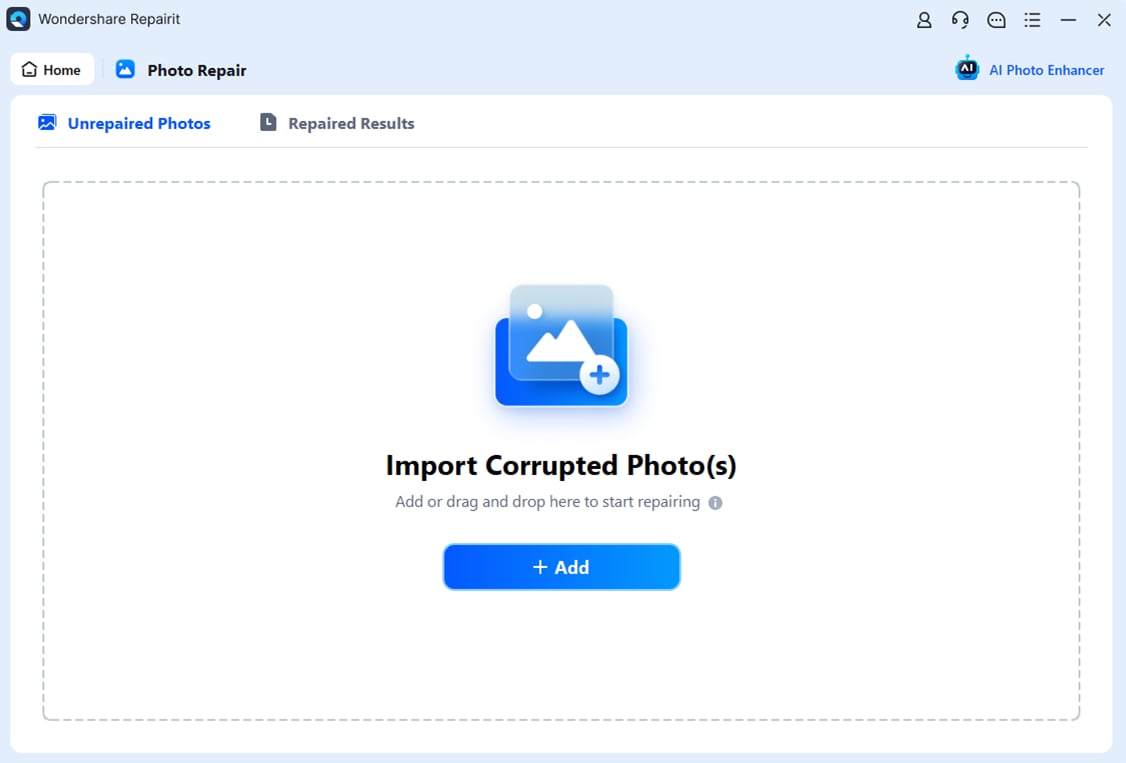
- Add corrupted photo files
Open Repairit and go to the Photo Repair module. Click the "Add" button or drag and drop your corrupted images into the main interface. The files will appear in a list showing basic details like name and size, ready for repair.
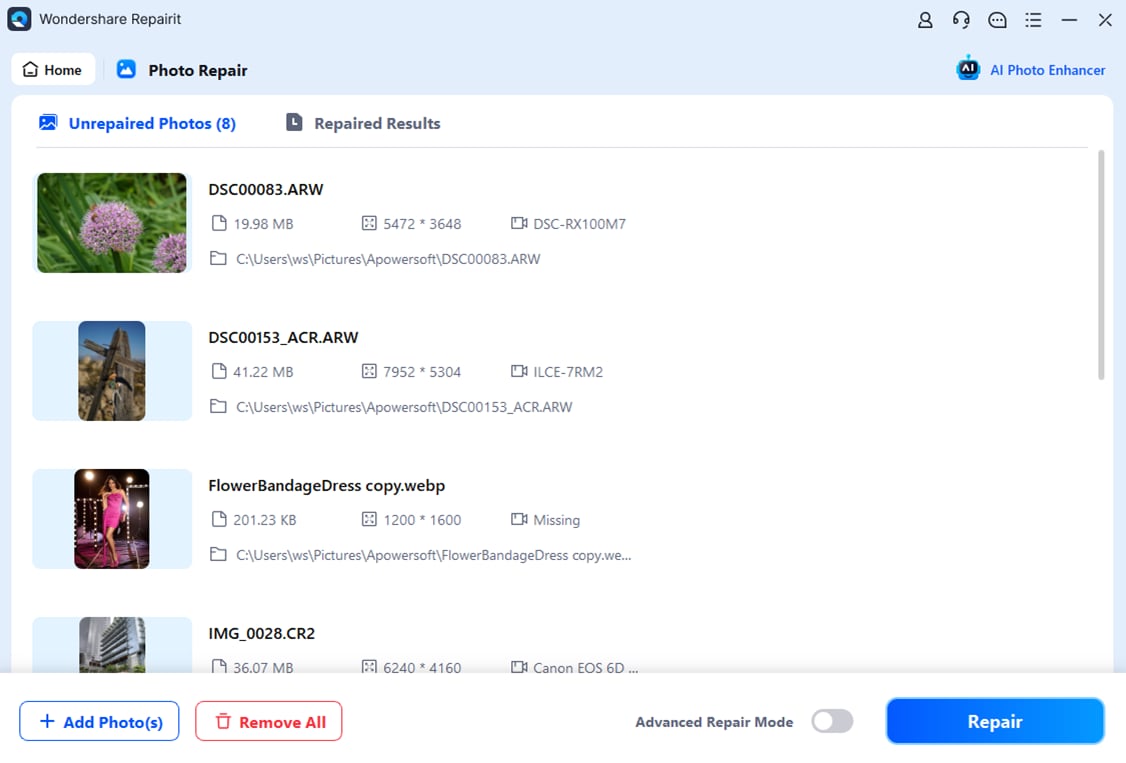
- Repair photo files
Select the items you want to fix and start the repair process. Repairit will automatically analyze each file, rebuild damaged headers and data structures, and generate repaired versions in the preview panel so you can quickly check visual quality.
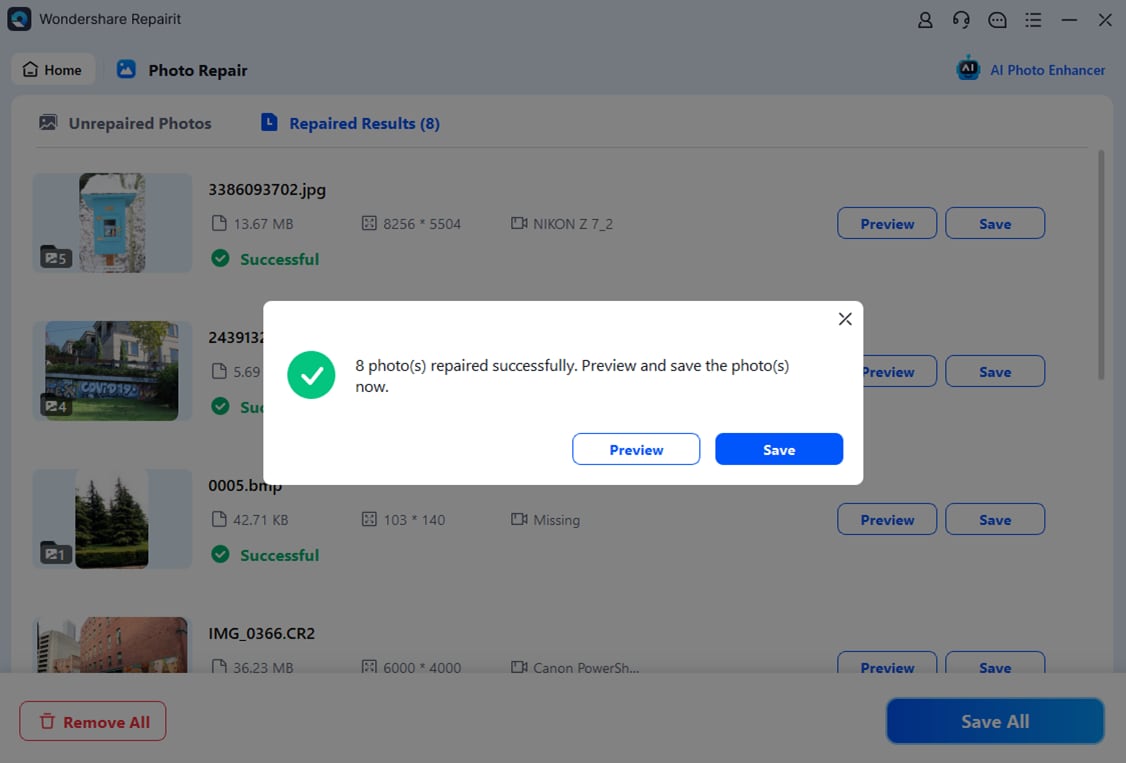
- Save the repaired photo files
After confirming that the previews look correct, choose a secure output folder that is different from the original storage location. Click "Save" to export the repaired photos. Repairit keeps your original files unchanged, creating a clean, usable copy for editing, archiving, or sharing.
Conclusion
Autofocus in video is one of the most powerful tools for keeping your footage sharp, especially now that cameras offer advanced face, eye, and subject tracking. When you understand how your camera's focus modes and areas behave, you can prevent focus hunting, missed shots, and distracting jumps that lower your video's perceived quality.
By matching autofocus settings to the scene, rehearsing moves, and switching to manual focus when needed, you gain reliable, professional-looking results across recording, editing, and streaming platforms. And if technical issues corrupt your files, Wondershare Repairit provides a practical way to recover valuable footage and photos so your best-focused moments are not lost.
Next: Continuous Autofocus
FAQ
-
1. What is autofocus in video?
Autofocus in video is the camera function that automatically adjusts the lens to keep your subject sharp while recording, without you manually turning the focus ring. It continuously measures subject distance and updates focus as you or your subject move.
-
2. Is autofocus good enough for professional video work?
Yes. Many professionals rely on modern autofocus systems for documentaries, events, vlogs, and corporate work. The key is knowing your camera's focus modes, testing their behavior, and switching to manual focus or focus lock when you need absolute control.
-
3. Why does my video autofocus keep hunting in and out?
Focus hunting usually occurs when the camera cannot find clear contrast, the subject is too small in the frame, lighting is poor, or an overly wide AF area is selected. Using single-point or face/eye detection, improving light, and simplifying the scene often stabilizes focus.
-
4. When should I use manual focus instead of autofocus for video?
Manual focus is ideal for controlled shoots like interviews, product videos, narrative films, or macro work where you can rehearse movements and mark focus positions. It prevents unwanted focus shifts and gives you predictable, repeatable results.
-
5. Can corrupted video or photo files be fixed after a recording problem?
In many situations, yes. If power loss, card removal, or transfer errors corrupt your files, tools like Wondershare Repairit can analyze the damaged data, rebuild key structures, and generate playable or viewable versions so you can recover important footage or images.