If you want to remove a shadow from a picture, the best method depends on what kind of shadow you are dealing with. A small cast shadow on a wall, floor, or product background can often be erased like an unwanted object, while a broad shadow across a face may look more natural when corrected with lighting or portrait tools instead of being completely removed.
People ask about this problem frequently in Reddit discussions about removing shadows from photos. The five tools below cover different use cases, from quick online AI erasing to portrait-focused and general photo editing.
In this article
Part 1: Why Do Shadows Appear in Photos?
Shadows are created when a subject, object, or part of the scene blocks light. They are not always defects, but harsh or misplaced shadows can hide facial detail, make product photos look uneven, or create distracting dark areas in the background.
- Harsh sunlight: Midday sun can create dark, high-contrast shadows on faces and objects.
- A single light source: One lamp or flash can leave the opposite side of the subject much darker.
- Objects blocking the light: Phones, tripods, people, furniture, or nearby objects can cast unwanted shadows into the frame.
- Uneven indoor lighting: Ceiling lights and mixed light sources can create dark patches across portraits or products.
- Direct flash: A flash close to the camera can produce a hard shadow behind the subject.
The right editing method depends on whether the shadow is a distinct unwanted shape or part of the scene's overall lighting. If the problem is a bright reflection instead of a dark shadow, a workflow designed to remove glare from a photo is a better match.
Part 2: Best Tools to Remove Shadow From Photo Online
The best shadow remover is not necessarily the tool with the most features. It is the one that matches the type of photo you are editing. The comparison below keeps the five tools focused on different shadow-removal scenarios.
| Tool | Best for | Main approach |
| Repairit Photo Eraser | Distinct cast shadows, product backgrounds, walls, floors | Brush-based AI erasing |
| PhotoAiD | ID-style portraits and simple backgrounds | Automated portrait correction |
| insMind | Product, social, and general image cleanup | AI photo editing |
| YouCam | Selfies and face shadows | Mobile portrait retouching |
| Fotor | Shadow removal plus general exposure editing | AI cleanup and photo adjustments |
1. Repairit Photo Eraser [HOT]

Repairit Photo Eraser is a strong fit when the shadow behaves like an unwanted visual object, such as a tripod shadow on pavement, a product shadow on a plain background, or a dark shape on a wall.
The brush-based workflow lets you highlight the unwanted shadow and reconstruct the selected area using surrounding visual information. This makes it particularly useful for product photos, simple backgrounds, outdoor shots, and other images where the shadow has a clear boundary. You can also explore the broader Wondershare Repairit product family for other photo editing and repair tasks.
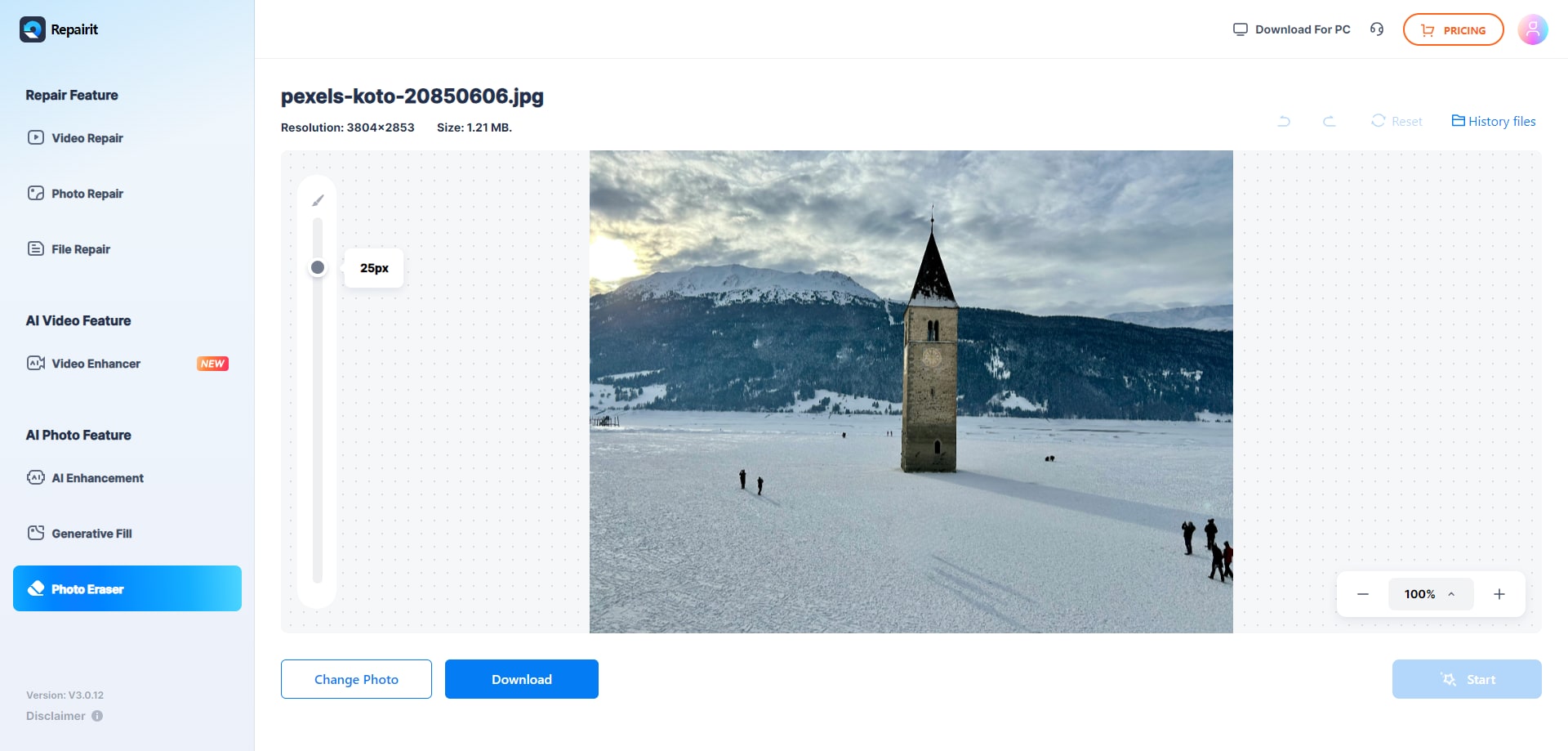
Step 1: Upload the photo that contains the unwanted shadow.

Step 2: Adjust the brush size and paint over the shadow you want to remove. Keep the selection focused around hair, skin, text, product edges, or repeating textures.
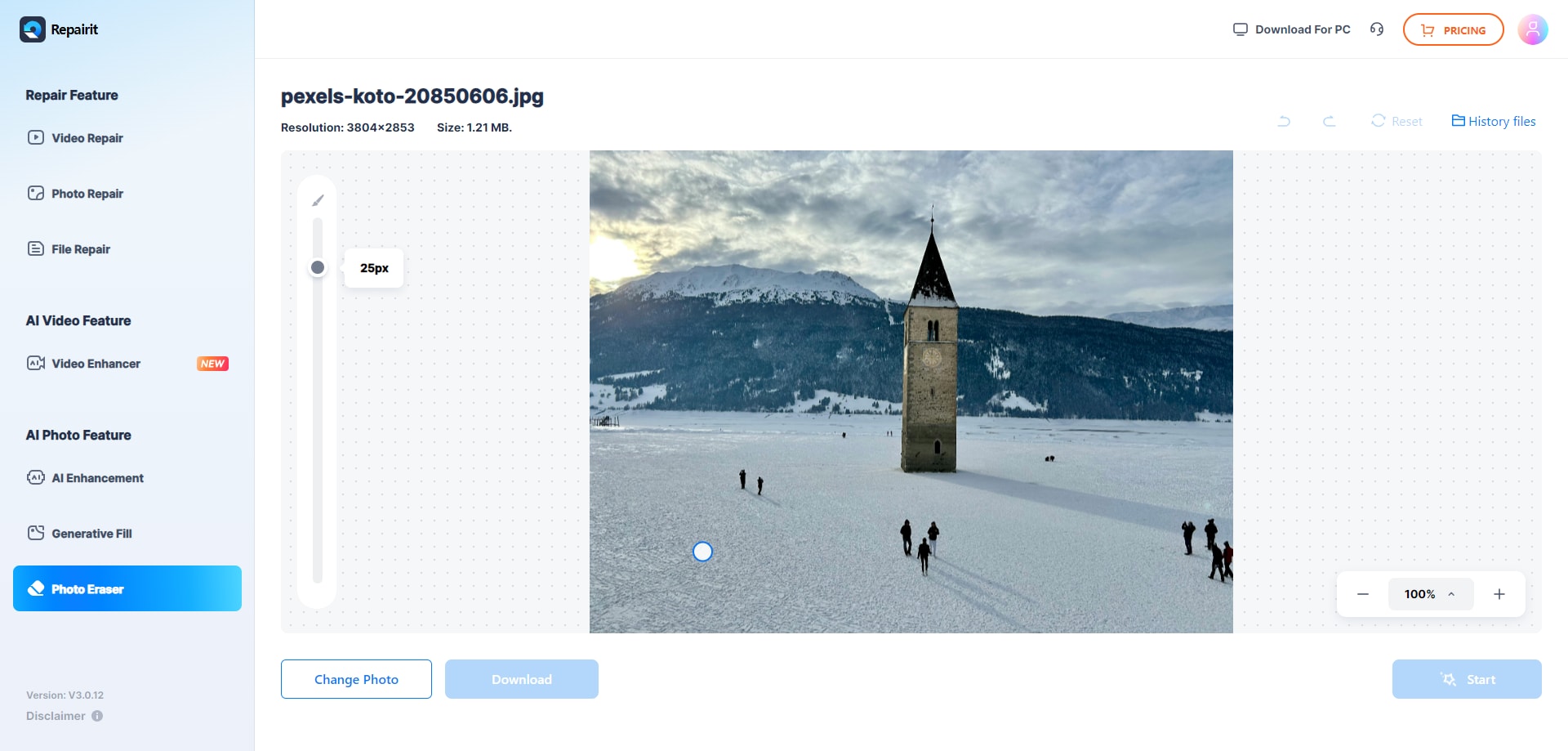
Step 3: Process the selected area, inspect the result, and download the edited image when the surrounding texture and lighting look natural.
Use Cases
- Removing tripod or phone shadows from outdoor photos
- Cleaning product-photo backgrounds
- Removing distinct shadows from walls, floors, and simple surfaces
2. PhotoAiD

PhotoAiD is a portrait-oriented online tool that is particularly relevant to ID-style photos, profile images, and simple backgrounds. It is a better fit when the unwanted shadow affects a face or a relatively uniform area rather than a complicated landscape.
Use Cases
- Removing shadows from ID and passport-style photos
- Cleaning profile pictures and professional headshots
- Reducing distracting shadows on simple portrait backgrounds
3. insMind

insMind combines AI shadow cleanup with other image-editing functions. It is especially useful when removing a shadow is only one part of a larger product-photo, social-media, or e-commerce editing workflow.
Use Cases
- Product and e-commerce images
- Travel and social-media photos
- Images requiring both shadow cleanup and other AI edits
4. YouCam

YouCam is most relevant to portrait and mobile photo editing. When a shadow falls across a face, portrait-focused retouching can preserve skin texture and facial structure better than simply erasing a large area.
Use Cases
- Selfies and portrait photos
- Reducing shadows across faces
- Quick mobile retouching for social-media images
5. Fotor

Fotor combines AI cleanup with conventional photo adjustments such as brightness and contrast. This makes it useful when the photo needs both local shadow removal and broader exposure correction.
Use Cases
- Outdoor and backlit photos
- Product photos with uneven exposure
- Images needing both shadow removal and general lighting correction
Part 3: How to Choose the Best Shadow Remover
Choose the tool based on the type of shadow rather than only the photo category.
| If your photo has... | Try first | Why |
| A distinct tripod, phone, person, or object shadow | Repairit Photo Eraser | Brush-based selection gives you direct control over the unwanted area. |
| A shadow across a face | YouCam or PhotoAiD | Portrait-oriented editing can preserve facial structure better than erasing a large region. |
| A product or social image needing several edits | insMind | Shadow removal can be combined with broader AI cleanup. |
| Uneven exposure across the whole image | Fotor | Global lighting adjustments can complement local shadow cleanup. |
If the real problem is an unwanted person or object rather than only its shadow, use the more focused workflows to remove a person from a photo or remove unwanted objects from a photo.
Part 4: Tips for Natural-Looking Shadow Removal
- Work in small sections. Large selections can replace more texture than necessary, especially on skin, fabric, and detailed backgrounds.
- Include the full edge of a hard shadow. Leaving part of the transition line behind can make the edit obvious.
- Check repeating patterns. Brick, tiles, text, fences, and product labels can reveal AI reconstruction errors quickly.
- Match the scene's lighting. Removing one dark area should not make the edited patch brighter than everything around it.
- Zoom in before exporting. Hair, facial edges, straight lines, and text deserve a close inspection.
- Compare with the original. Make sure the edit removes the distraction without changing important details.
Part 5: How to Prevent Harsh Shadows in Future Photos
- Change the light angle. Move the light, camera, or subject until the shadow falls outside the important area.
- Diffuse strong light. A softbox, diffuser, curtain, or bounce surface can soften hard shadow edges.
- Add fill light. A reflector, second lamp, or low-power flash can lift the dark side of a subject.
- Move the subject away from the background. Extra distance often makes wall shadows softer and less distracting.
- Check a test shot. Look for phone, tripod, and facial shadows before taking the final photo.
Conclusion
The best tool to remove a shadow from a photo depends on whether you need object-style erasing, portrait retouching, or broader lighting correction. Repairit Photo Eraser is a practical choice for distinct unwanted cast shadows, PhotoAiD and YouCam fit portrait-focused edits, insMind supports broader AI cleanup, and Fotor works well when the whole image also needs exposure adjustment.

FAQ
-
Can I remove shadows from photos without Photoshop?
Yes. Online AI erasers and photo editors can remove or reduce many unwanted shadows. Use an eraser for a distinct cast shadow and a lighting or portrait tool for broad shadows across faces or textured areas. -
What is the best way to remove a shadow from a face?
Use a portrait or local-lighting tool first when the shadow covers a large part of the face. If you use an AI eraser, work with small selections so skin texture, hair, and facial contours are not replaced unnecessarily. -
Can AI remove a shadow without lowering photo quality?
AI can rebuild a selected shadowed area, but the result depends on the background, texture, selection size, and amount of detail inside the shadow. Inspect edges, skin, text, and repeating patterns before exporting. -
Which tool is best for product-photo shadows?
For a distinct shadow on a plain or predictable product background, a brush-based eraser such as Repairit Photo Eraser is a strong first choice. For broader exposure problems, combine local cleanup with brightness or contrast adjustments. -
Should I remove a shadow or just brighten it?
Remove it when it is an unwanted cast shadow that behaves like a separate visual element. Brighten or locally adjust it when the shadow is part of the natural lighting and still contains important subject detail.