
 TL;DR:
Relumi's "Relive" AI feature allows documentary filmmakers to convert static archival photographs into subtly animated video clips with natural movements to prevent visual fatigue in historical narratives.
● Filmmakers must start with high-resolution, restored source images to ensure professional quality, especially when projecting the final exported clips onto large cinema screens.
● The preset strictly generates subtle, respectful motions such as blinks and breaths, requiring users to seek alternative tools if a project demands varied emotional tones.
● Users retain full responsibility for securing copyright or licensing rights for all archival images processed through the software before integrating the clips into standard editing timelines like Premiere Pro or Final Cut Pro.
Ask AI for a summary
 ChatGPT
 Perplexity
 Gemini
 Claude
 Grok
Grok
In the world of documentary filmmaking, there's a constant struggle, often discussed on industry forums like r/Filmmakers. "I have this incredible audio recording of a Civil War veteran from the 1930s," a filmmaker posts. "But all I have to show is a single, static photo of him. How do I make this visually compelling for 60 seconds?" Archival footage is the holy grail, but often, all that survives of a person or an event are a handful of still photographs.
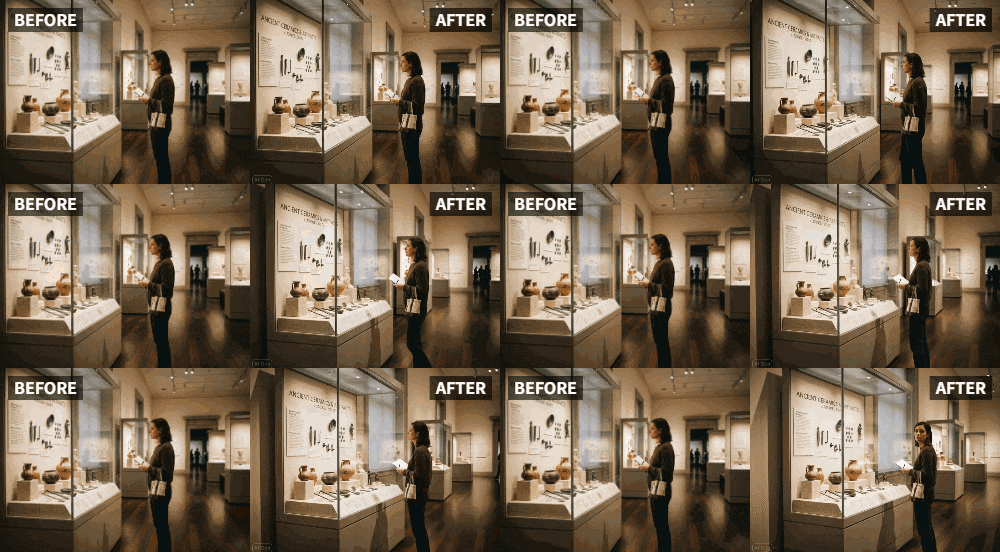
This is where Relumi's "Relive" feature becomes an essential tool for visual storytellers. By subtly animating archival photos, filmmakers can add visual interest, emotional depth, and a sense of life to their narratives, transforming a potential "wall of pictures" into a dynamic and engaging visual experience .
In this article
Part 1: The Visual Challenge of Documentary Storytelling
Documentaries rely on visual variety to keep an audience engaged. Interviews ("talking heads") provide information and emotion. B-roll footage establishes context. But when the story moves into the past, especially the 19th and early 20th centuries, the visual options often shrink to still photographs. A sequence of static images, no matter how powerful, can lead to "visual fatigue" for the viewer.
Traditional solutions include slow zooms and pans (the "Ken Burns effect"), which are effective but have become a standard trope. AI animation offers a new, more powerful tool. It allows the filmmaker to add a layer of humanity to these archival images, making the subjects feel present rather than just observed .
Part 2: How Filmmakers Can Integrate Relumi into Their Workflow


Relumi AI Photo Animation
Bring old photos to life with AI-powered animation.
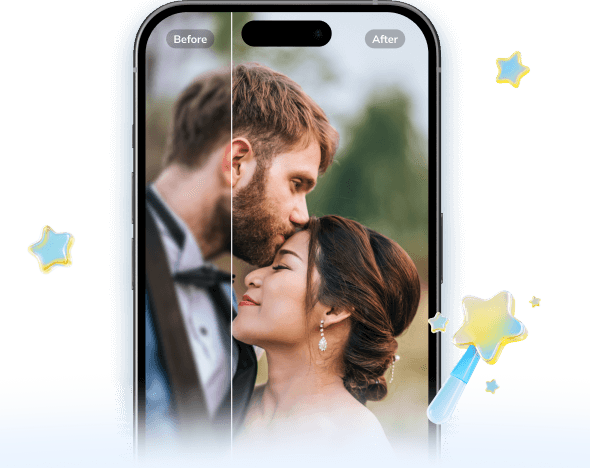
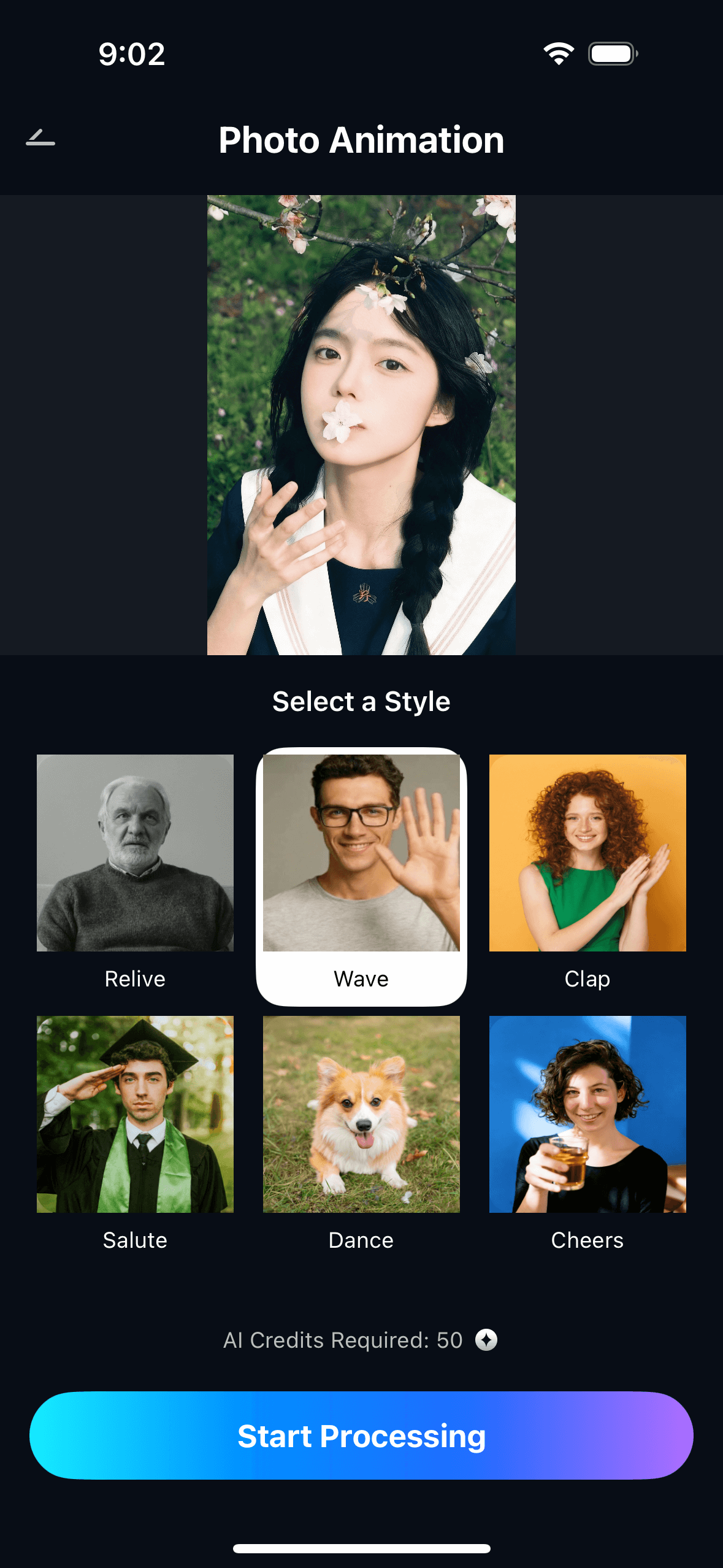
 Preset motion styles — Wave, Dance, Clap, Cheers & more
-
Works on old, faded, and black-and-white photos
-
No editing skills required — generate in seconds
-
One tap turns any still image into a moving memory.
Here's how to use Relumi's "Relive" feature in a professional or independent filmmaking context.
Step 1: Source and Prepare High-Resolution Archival Images
The foundation is a high-quality source image. Scan archival prints at the highest possible resolution or source high-res digital files from archives. Clean up any major damage using restoration software. Relumi's own tools can be used for this preliminary step.
Step 2: Animate Select Portraits with the "Relive" Preset
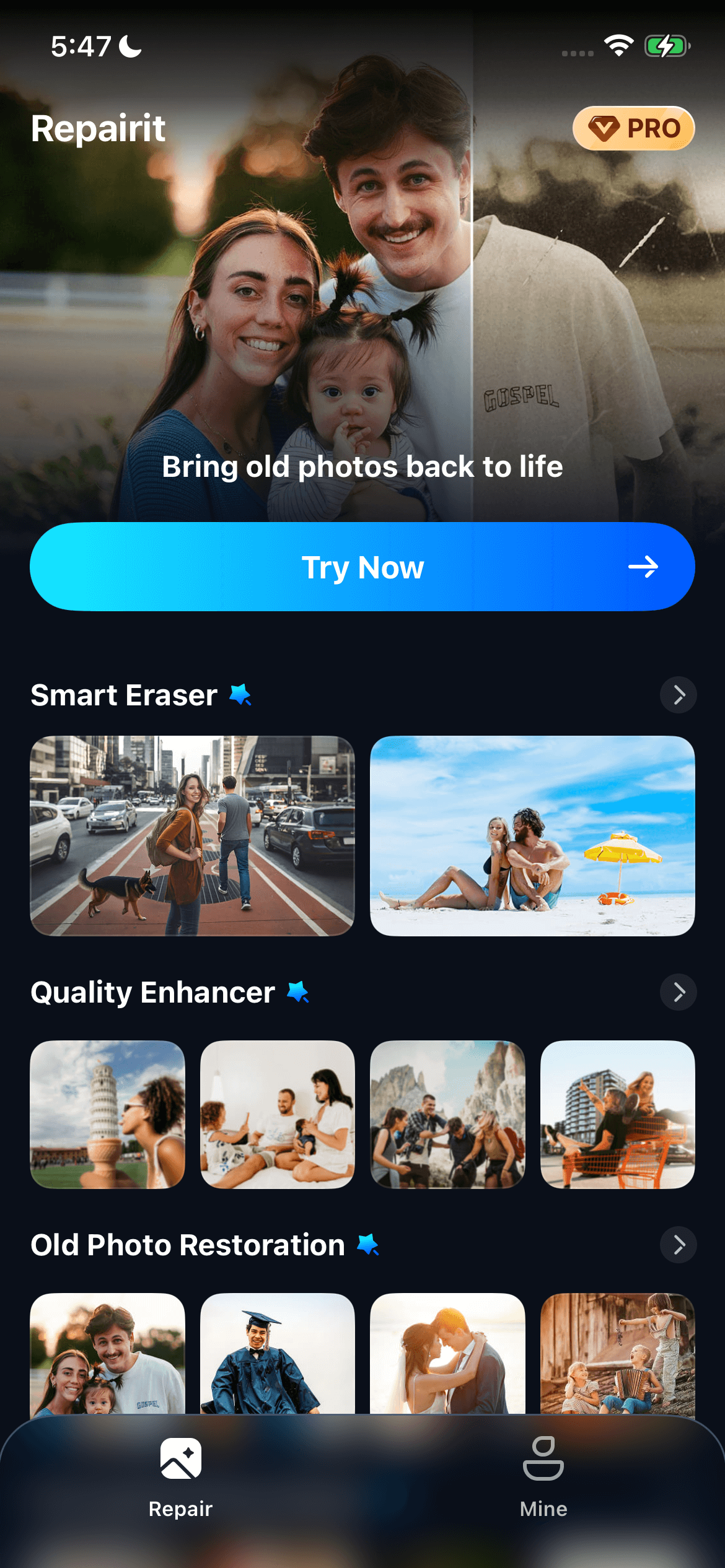
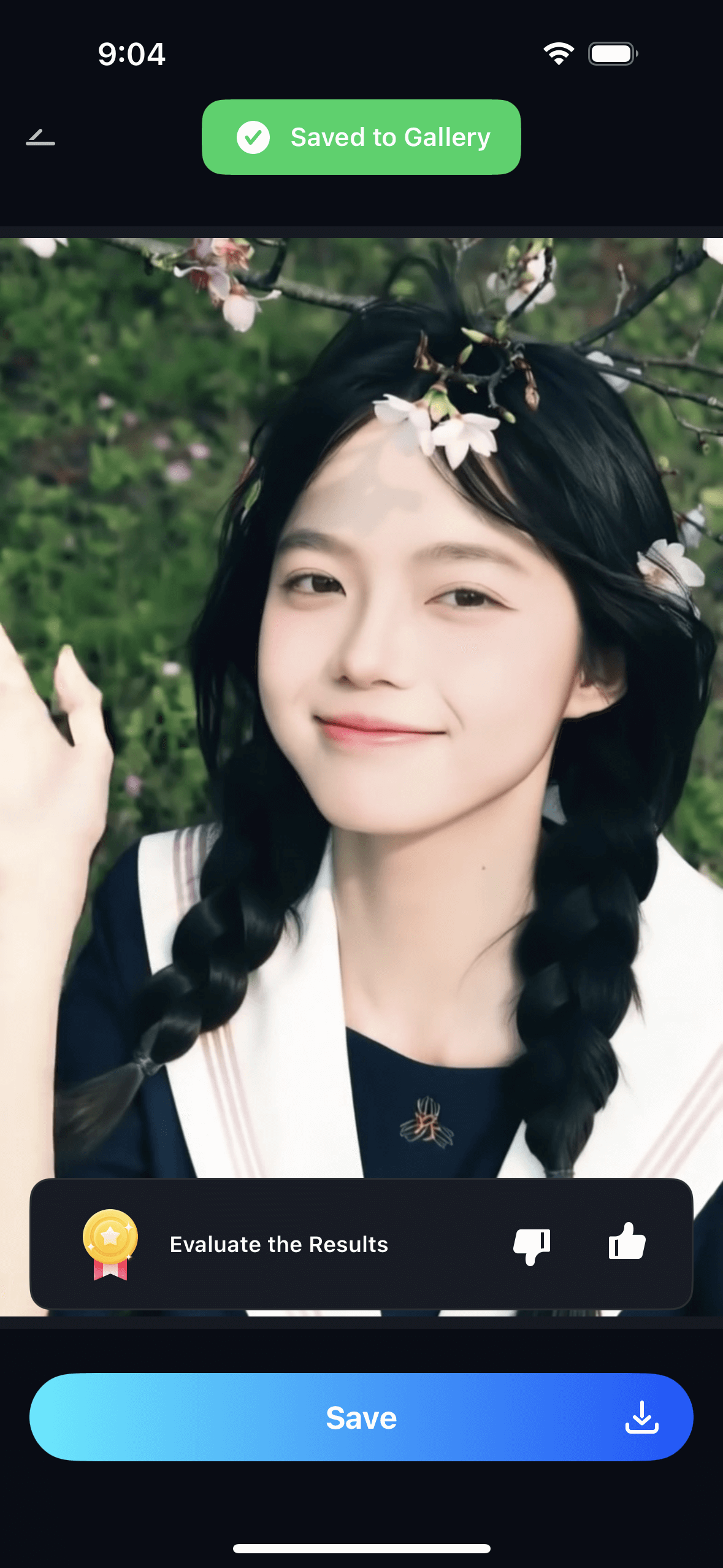
Upload the key portraits you want to bring to life. The "Relive" mode is perfect for this, as it creates subtle, natural movements—a blink, a breath, a slight head turn—that feel authentic rather than gimmicky. This technique can be used sparingly for maximum impact, focusing on the most important figures in your story.
Step 3: Seamlessly Integrate into Your Edit
Export the animated clips and import them into your editing timeline (e.g., Premiere Pro, Final Cut Pro). You can now use these animated images as you would any video clip.
- Layer with Audio: Sync the animation with a voiceover or archival audio recording, making the person seem to be listening.
- Combine with Motion: You can still add a slow zoom or pan to the animated clip for additional visual interest.
- Composite into Scenes: For advanced projects, you can even composite the animated figure into a digitally recreated environment .
Part 3: Elevating Different Types of Documentary Projects
This technique adds value to a wide range of non-fiction storytelling.
- Historical Documentaries: Make figures from history—a Civil War soldier, a suffragette, an immigrant at Ellis Island—feel human and relatable . A single, well-placed animated portrait can be more powerful than minutes of historical B-roll.
- Biographical Films: When telling the story of a specific person, animating key photos from their life creates an intimate connection with the audience. We're not just looking at pictures of them; we're glimpsing their living presence at different stages of their journey .
- Personal and Family Documentaries: For filmmakers telling their own family's story, animating photos of grandparents and ancestors adds a profound layer of emotion and makes the family history feel immediate and alive for the audience .
- Brand Storytelling and Commercials: As seen in major commercial work, this technique can be used to bring a company's archival history to life in a warm, human, and emotionally resonant way, connecting a modern brand to its heritage .
Conclusion
For documentary filmmakers and visual storytellers, the past is often a treasure trove of stories trapped in static images. Relumi's "Relive" feature provides a key to unlock that treasure, allowing you to breathe a gentle, human life into archival photos. It's a tool that helps you connect your audience with history not just intellectually, but emotionally, transforming viewers into witnesses and turning the past into a present experience.
Frequently Asked Questions
-
Is the animation quality high enough for professional production?
Yes. Relumi's "Relive" feature produces high-quality video clips that are suitable for integration into professional documentaries and commercial projects. -
Can I control the animation to match a specific mood?
The "Relive" preset is designed for a subtle, respectful mood. This works perfectly for most historical and biographical contexts. For projects needing different emotional tones, you may need to explore other tools, but for adding gentle life to archival portraits, Relumi is ideal. -
What about copyright and licensing for archival photos?
This is the filmmaker's responsibility. Ensure you have the rights to use any archival images in your project, whether they are in the public domain, licensed from an archive, or part of your personal collection. -
Can I animate a photo that will be used in a large format, like on a cinema screen?
For best results on a large screen, start with the highest possible resolution source image. Relumi's output will maintain good quality, but the final result will depend heavily on the quality of the original photo.