
 TL;DR:
To brighten dark night portraits without destroying the evening atmosphere, use Relumi's Photo Lighting Enhancer to naturally restore facial visibility and shadow depth instead of applying a generic exposure boost.
● Apply the Scene Retake workflow to lift facial readability and clean up muddy shadows while ensuring the skin tone matches the original scene and background lights retain depth.
● This method is optimal for street portraits, dim restaurant shots, and neon city-light photos where the ambient mood is valuable but the subject is lost in low light.
● Recovery results are limited if the source image is severely underexposed, heavily blurred, strongly compressed, or if bright background lights are already blown out, as the tool requires usable existing data in both the face and background.
Ask AI for a summary
 ChatGPT
 Perplexity
 Gemini
 Claude
 Grok
Grok
Night portraits often disappoint in a very particular way. The scene itself felt beautiful, atmospheric, and emotionally clear in real life, but the photo ends up forcing a bad trade-off. Either the face is too dark to read comfortably, or any attempt to brighten it makes the image lose the evening mood that made the shot worth taking. Street lights, restaurant glow, window spill, neon signs, and ambient city light can all feel rich and cinematic to the eye, yet much flatter or murkier once the camera reduces that complexity into a single frame.
That is why users looking for a brighten-photo fix at night are usually not asking for maximum brightness. They are trying to recover visibility without destroying atmosphere. They want the face to feel more readable, but they do not want the image to stop looking like night. Relumi describes its Photo Lighting Enhancer and AI Retake workflow as a way to fix what the camera caught wrong so the moment looks the way it actually felt. That product framing is especially relevant for night portraits, because the best result should feel like the same scene under better-balanced light, not like a dark photo was simply pushed until it looked artificial. Official references: Photo Lighting Enhancer and Relumi App.
In this article
Part 1. Why night portraits often look darker and flatter than the real scene
Human vision is very good at adapting to low light. At night, you can often still read facial expression, separate a person from the background, and feel the emotional texture of a place even when the actual light level is limited. Cameras do not always preserve that balance well. They may protect a bright sign, lamp, or skyline while allowing the face to sink into shadow. Or they may hold onto enough information to keep the person visible, but not enough to preserve the depth and softness that made the night scene feel special.
That is why users often describe night portraits in conflicting ways. They say the image is too dark, but they also say they do not want it to look over-bright. They want the face clearer, but they do not want the photo to stop looking like evening. These are not contradictory requests. They reflect the real challenge of low-light portrait recovery: the best fix has to improve readability while preserving mood.
Part 2. How Relumi helps brighten a night portrait without removing the mood
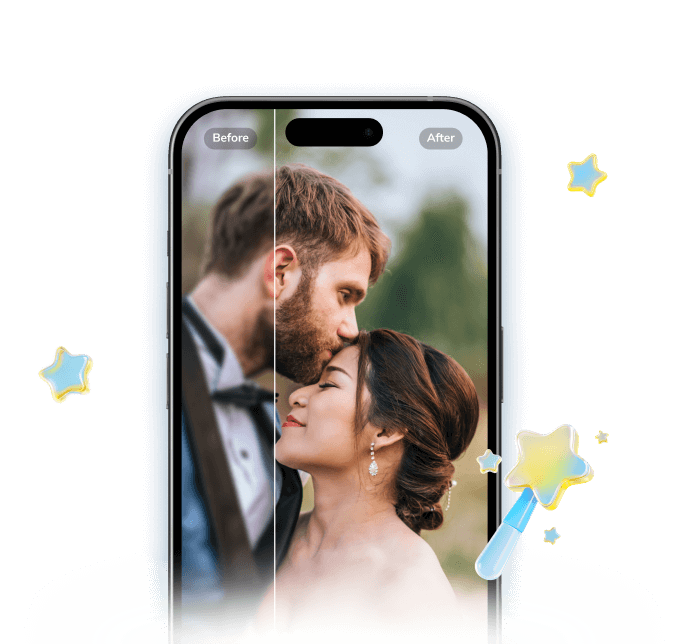

Relumi Lighting Enhancer
Retake photo lighting naturally with AI-powered scene relighting.
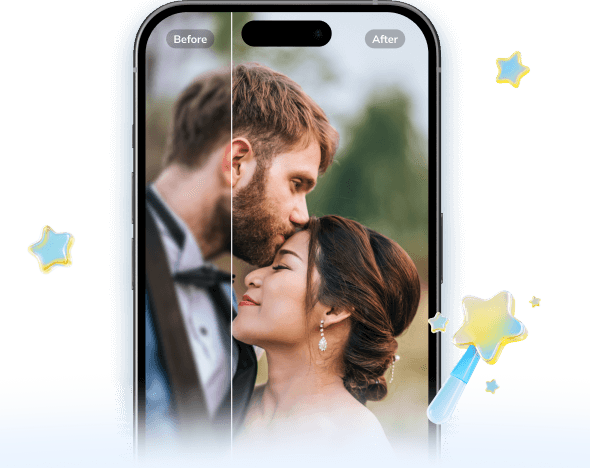
 Balance harsh facial shadows without flattening the portrait
-
Improve hard light, patchy light, and low-visibility street portraits naturally
-
Keep urban mood while making the subject easier to see
-
No editing skills required — upload, relight, preview, and save
Why night-photo recovery is about atmosphere as much as visibility
According to Relumi's official product page, Photo Lighting Enhancer reads face brightness, shadow direction, background contrast, and scene atmosphere, then rebuilds the image so it feels more naturally relit. That matters because night portraits are especially easy to over-correct. If you brighten the image too aggressively, the shadows lose shape, the warm glow turns weak or pale, and the photo can stop feeling like a real evening scene.
Relumi's official descriptions also emphasize helping users improve night portraits and romantic dinner photos while keeping the soft atmosphere that made the moment special. That makes the feature relevant not because it makes everything brighter, but because it aims to keep the emotional structure of the image intact while making the subject more visible.
What a believable brightened night portrait should feel like
A believable night-portrait result should still feel like night. The face should be easier to read, but the shadows should still carry shape. Warm ambient light should stay warm if that is part of the original scene. Background lights should still feel atmospheric rather than flattened into generic brightness. If the final image starts looking like early evening, indoor flash, or a synthetic glow effect, the edit has likely gone too far.
For most users, the best outcome is not dramatic. It is a subtle restoration of what the moment already had: facial visibility, scene depth, and an emotional sense of place that remains intact after the correction.
Part 3. How to use Brighten Photo in Relumi
Step 1. Add the night portrait
Upload the night photo you want to improve. This works best when the shot already has mood or memory value, but the face feels too dim, the light looks muddier than expected, or the image no longer carries the clarity the scene had in person.
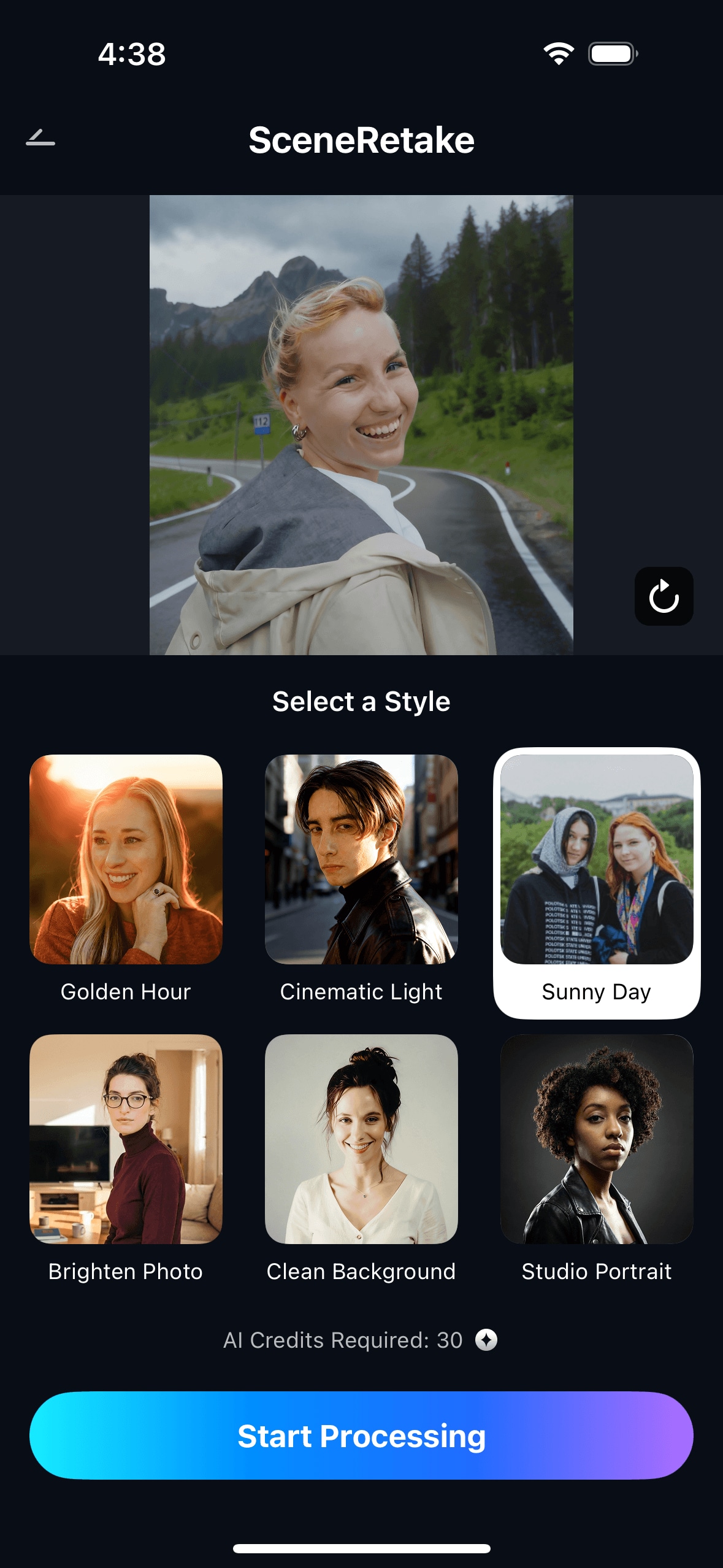
Step 2. Choose Scene Retake to improve the face light
Select Scene Retake and use the brightening-oriented direction that best fits the portrait. This is especially helpful when the goal is to lift facial readability, clean up muddy shadow zones, and make the portrait more usable without turning the image into a bright generic night edit.
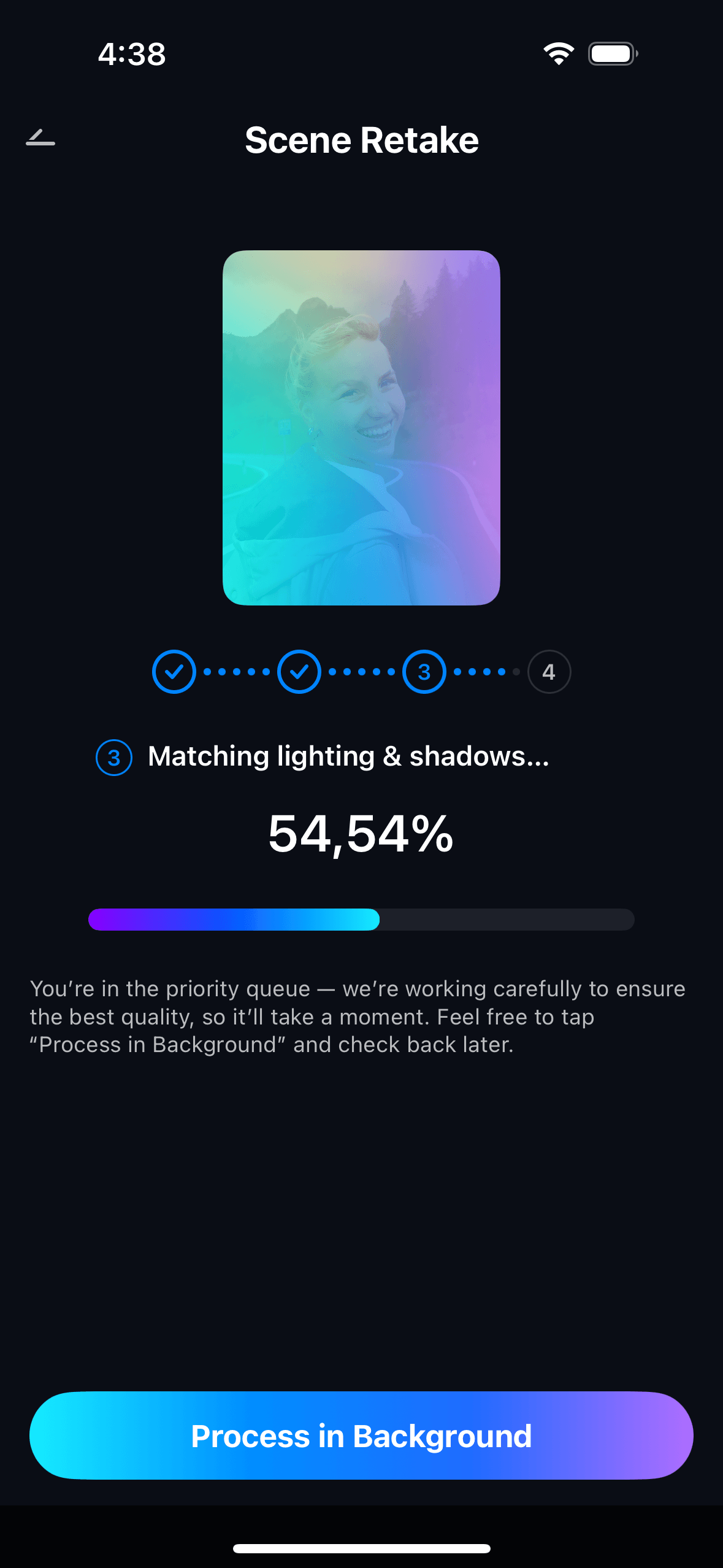
Step 3. Preview and save the version that still feels like night
Before saving, compare the updated version with the original. The strongest result usually makes the person easier to see while keeping the image emotionally consistent. Skin tone should still match the scene, background lights should retain depth, and the photo should still feel like the same time of day. If the correction makes the atmosphere disappear, it is probably less successful than it first appears.
Part 4. When this works best
Best night-photo situations for this correction
This workflow is most useful when the original image already has visual or emotional value, but the subject does not read clearly enough in the low light. Common examples include:
- street portraits at night with good atmosphere but weak facial visibility
- dinner or restaurant portraits where warm mood remains but the face is too dim
- city-light or neon portraits where the background looks strong but the person gets lost
- casual evening portraits that feel heavier and flatter than the real moment
- night lifestyle photos where users want clarity without losing ambiance
In these situations, Brighten Photo works best as an atmosphere-preserving correction. Users usually want to keep the emotional tone of the image while making it easier to keep, share, or revisit later.
Quick checklist before saving
- Does the face look clearer without making the whole scene too bright?
- Do the shadows still feel natural instead of flattened?
- Does the warm or cool night atmosphere still feel believable?
- Do background lights keep depth and mood?
- Would the photo still read as night if someone saw it without context?
Part 5. When results may be limited
Brighten Photo works best when the source image still contains enough usable detail in the face and background. Results may be limited if the portrait is severely underexposed, heavily blurred, strongly compressed, or missing too much facial structure to recover. The same is true if bright background lights are already blown out or the original image contains extreme contrast that leaves little data in shadow areas. In those cases, the feature may improve the overall balance, but it may not fully restore a clean and believable night portrait.
It is also important to keep expectations realistic. Night photography always involves trade-offs, and not every low-light photo can be turned into a polished portrait. Sometimes the most honest result is simply a clearer, more readable version of the same dim moment. Good guidance should acknowledge that rather than promise a total transformation.
Conclusion
If your night portrait looks darker, muddier, or less expressive than the real moment felt, the answer is not always to make everything brighter. A better fix is one that improves visibility while preserving the mood that made the photo special in the first place. That is where Relumi is most relevant: helping a night portrait feel more readable and more naturally balanced without stripping away the atmosphere that tells you it was night.
FAQ
-
1. Can Brighten Photo help if my night portrait looks too dark but I still want it to feel like evening?
Yes. This is one of the most relevant use cases. A strong correction should make the face easier to read while keeping the low-light atmosphere believable instead of turning the image into a bright generic photo. -
2. Will brightening a night portrait remove the mood?
It should not if the correction stays balanced. A believable result usually improves subject visibility while preserving shadow shape, background lights, and the overall emotional tone of the scene. -
3. What kinds of night portraits work best for this feature?
Night street portraits, restaurant photos, evening lifestyle images, city-light portraits, and low-light couple or solo portraits are all strong candidates when the scene feels good but the face is too hard to read. -
4. What should I check before saving the final version?
Check whether the face is clearer, the background still feels like night, and the atmosphere remains believable. The best version usually improves readability without erasing the character of the scene.