
 TL;DR:
Relumi’s Photo Lighting Enhancer utilizes the Sunny Day Scene Retake workflow to naturally recover the brightness, facial clarity, and outdoor freshness of flat park portraits without relying on heavy, unrealistic color filters.
● Instead of uniformly increasing exposure which risks washing out greenery, the AI Retake tool analyzes shadow direction and background contrast to selectively improve facial readability while keeping the outdoor atmosphere intact.
● This specific correction is best suited for candid lawn, garden, or picnic portraits captured under uneven tree shade or mild backlight where the original composition is usable but the daylight appears grayish.
● The effectiveness is limited if the original file contains heavy facial blurring, severe background overexposure, or strong compression artifacts, as the feature cannot convincingly generate bright sunshine from genuinely poor lighting data.
Ask AI for a summary
 ChatGPT
 Perplexity
 Gemini
 Claude
 Grok
Grok
Park and grass portraits often disappoint in a very specific way. The place felt open, bright, and relaxing when the photo was taken, but the final image looks flatter than the real scene. The grass may lose its freshness, the face may not feel clearly lit, and the whole portrait can end up looking less lively than the afternoon actually felt. In many cases, the issue is not the location. It is that the daylight and color separation did not translate well in the final image.
This matters because park portraits are usually supposed to feel easy, natural, and breathable. Users are not always looking for dramatic editing here. More often, they want the photo to recover what the eye already saw: cleaner daylight, a fresher outdoor mood, and a portrait that feels more sunlit without looking processed. Relumi describes its Photo Lighting Enhancer and AI Retake workflow as a way to fix what the camera caught wrong so the moment looks the way it actually felt, which is a more useful framing for this type of image than simply calling it a brightening effect. Official references: Photo Lighting Enhancer and Relumi App.
In this article
Part 1. Why park and grass portraits often look less fresh in photos
Green outdoor scenes are surprisingly easy to lose in a portrait. In real life, a park can feel airy and pleasant, with soft daylight and a clean sense of space. But once the image is captured, the grass may read as heavier and duller, the face may not stand out enough, and the whole frame can feel less lively than the actual moment. That usually happens when brightness, shadow balance, and subject separation were not recorded in a flattering way.
This is especially common in daytime photos taken under uneven tree shade, mild backlight, cloudy-bright conditions, or quick candid shooting. The result may still be usable, but the portrait no longer feels like a bright outdoor memory. It feels like a decent photo that somehow lost the freshness of the place.
Part 2. How Relumi Sunny Day helps restore a clearer outdoor feel

Relumi Lighting Enhancer
Retake photo lighting naturally with AI-powered scene relighting.
 Balance harsh facial shadows without flattening the portrait
-
Improve hard light, patchy light, and low-visibility street portraits naturally
-
Keep urban mood while making the subject easier to see
-
No editing skills required — upload, relight, preview, and save
Why green outdoor scenes need more than brighter exposure
Relumi's official Photo Lighting Enhancer description says the tool interprets face brightness, shadow direction, background contrast, and scene atmosphere, then rebuilds the portrait so it feels more naturally relit. That matters in park portraits because simply brightening exposure can create a washed-out lawn, unnatural skin, or a frame that looks edited rather than pleasantly sunlit. A believable outdoor result depends on balance: the person should become clearer, but the background should still feel like a real park instead of a flattened backdrop.
That is why Sunny Day makes sense for this scene type. It is more useful as a daylight-recovery workflow than as a basic brightness tool. In a good use case, the subject looks more readable, the grass looks cleaner and lighter, and the image feels closer to the fresh open-air impression people remember.
What a good result should feel like in a park portrait
A good park-portrait result should feel fresher, not louder. The face should sit more naturally in the scene, the light should feel cleaner, and the greenery should feel more open instead of muddy or over-saturated. If the photo suddenly looks neon green, overly warm, or unnaturally crisp, the result has probably moved away from realism.
For most users, the ideal outcome is subtle but meaningful. The portrait should look more alive and more breathable, while still feeling like the same park, the same weather, and the same person.
Part 3. How to use Sunny Day in Relumi
Step 1. Add the park or grass portrait
Upload the image you want to improve. This works best when the composition is already usable but the photo feels a little flat, dim, grayish, or less fresh than the real outdoor scene.
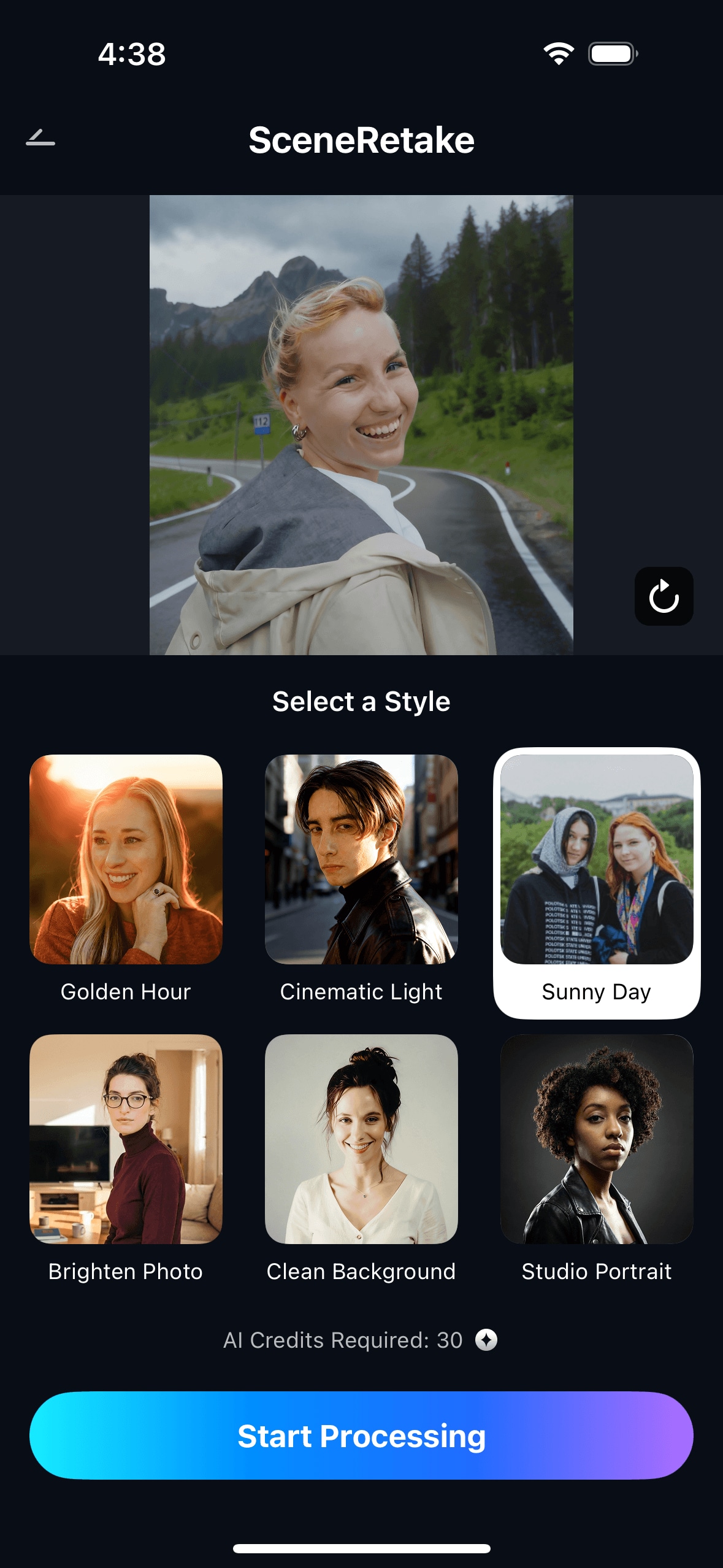
Step 2. Choose Scene Retake and apply Sunny Day
Use Scene Retake and choose the Sunny Day direction that best fits the image. The goal here is not to force dramatic sunshine into the frame. It is to restore a clearer daylight feel, improve how the face reads against the greenery, and make the park setting feel fresher without looking fake.
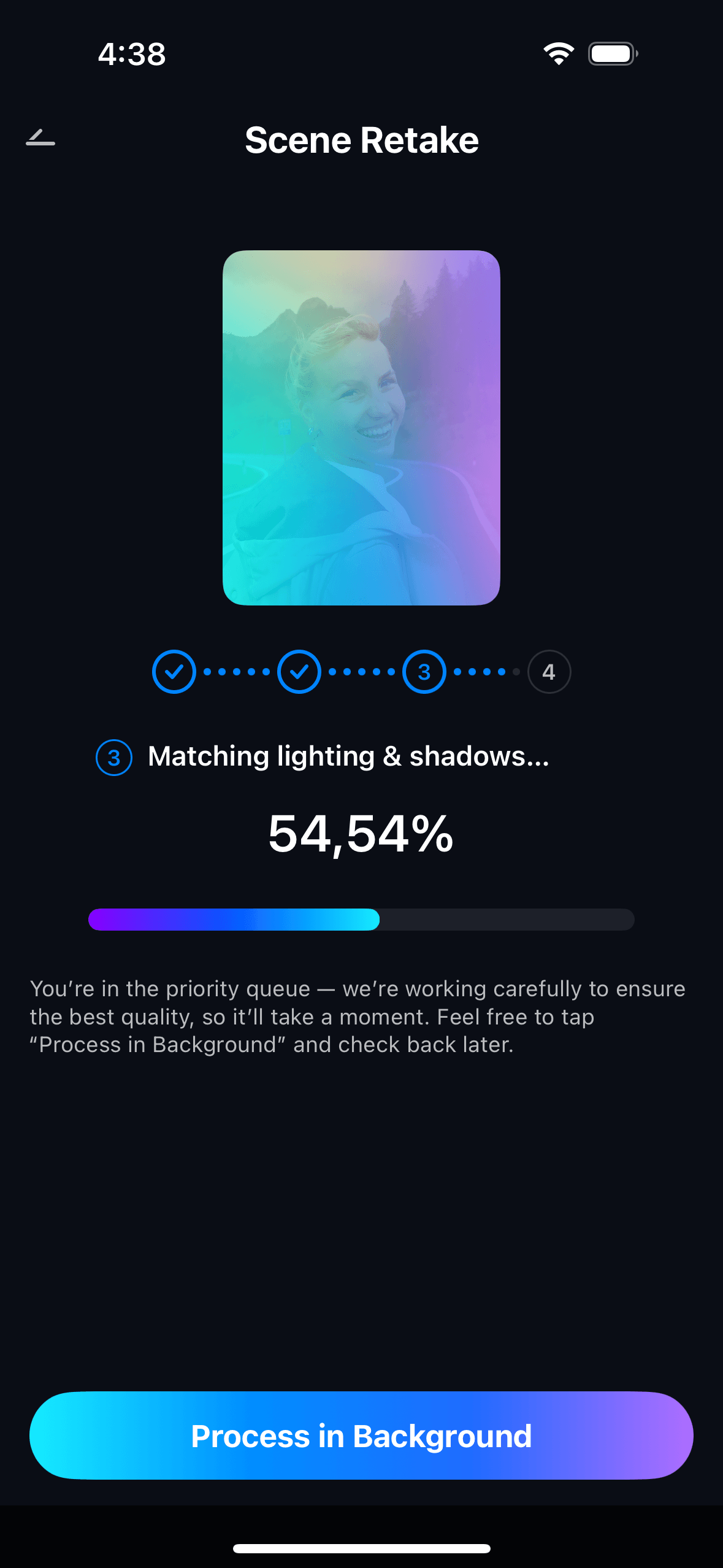
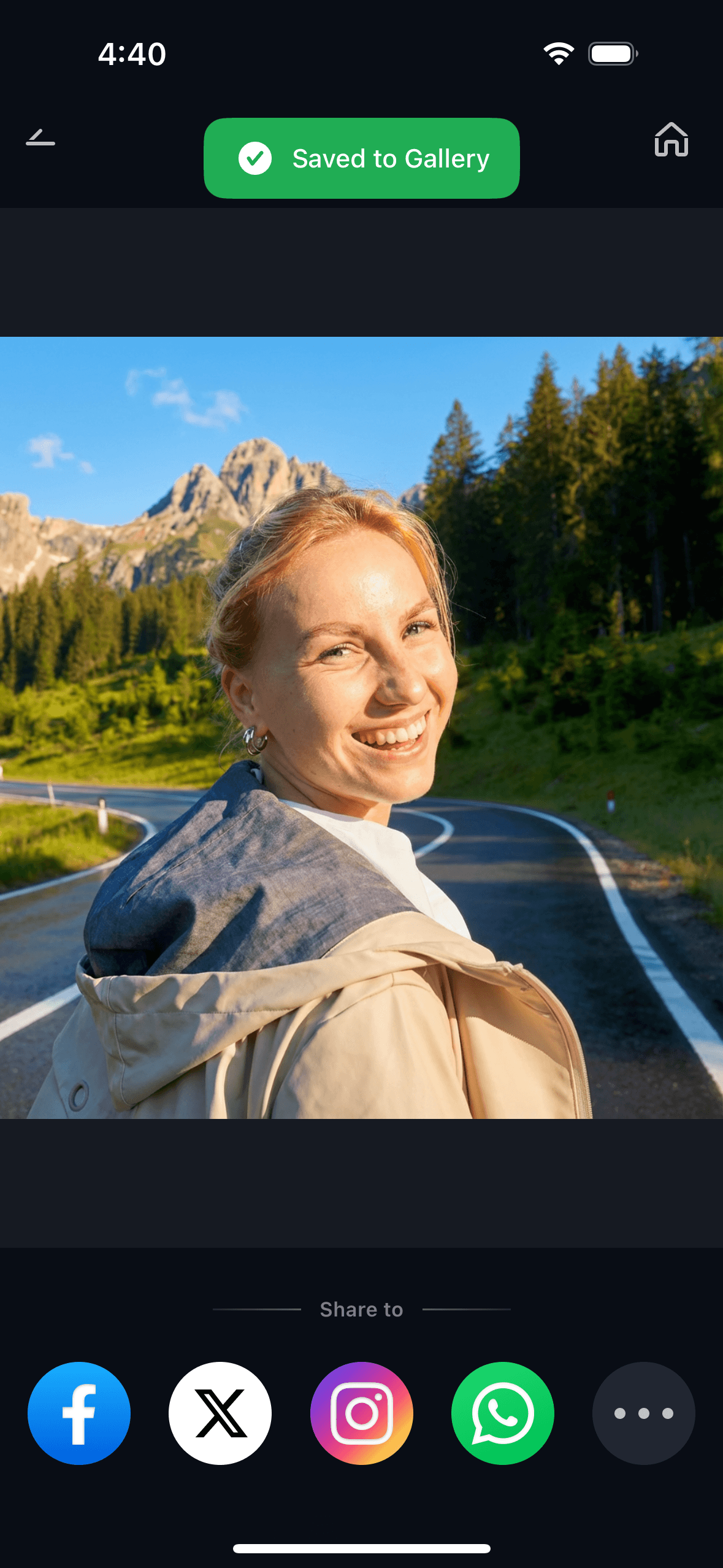
Step 3. Preview and save the version that still feels natural
Before saving, compare the updated version with the original. The best result usually makes the portrait look more open and pleasant while preserving realistic color, skin tone, and background detail. If the image feels too yellow, too polished, or too obviously edited, the result may be less trustworthy than it should be.
Part 4. When this works best
Best park and grass photo types for Sunny Day
This feature works best when the outdoor setting already has visual value, but the final portrait does not fully carry that feeling. Typical examples include:
- casual park portraits that looked brighter in person
- grass or lawn portraits where the subject blends in too much
- garden or picnic photos that feel flatter than the real afternoon
- bestie or couple portraits taken in greenery under mixed light
- candid outdoor lifestyle shots that need a cleaner daylight feel
In these cases, Sunny Day is most useful when the user wants the portrait to feel lighter, clearer, and more naturally outdoorsy without changing the core mood of the scene.
Quick checklist before saving
- Does the face look clearer without becoming over-bright?
- Does the grass or greenery feel fresher instead of artificially boosted?
- Does the portrait still look like a real park photo, not a stylized edit?
- Does the overall image feel closer to the actual weather and airiness of the moment?
- Would the result still feel believable if viewed without the original beside it?
Part 5. When results may be limited
Sunny Day works best when the original image still contains usable face detail and outdoor context. Results may be limited if the face is heavily blurred, the background is badly overexposed, the photo has strong compression artifacts, or the original lighting was too poor to preserve meaningful color and depth. In those cases, the tool may improve the overall feel, but it may not fully recreate a clean fresh-park look.
It is also worth being realistic about scene differences. A portrait taken under genuinely dull or difficult conditions may become more pleasant, but it may not convincingly turn into an image that looks like it was shot in perfect sunshine. Good guidance should make that limit clear.
Conclusion
If your park or grass portrait looks flatter than the real scene felt, the problem is often not the location. It is that the daylight, subject separation, and outdoor freshness did not carry through in the captured image. A good correction should help the portrait feel clearer and more open while keeping it believable. That is where Relumi Sunny Day fits best: not as a dramatic filter, but as a way to help the photo feel closer to the bright, fresh outdoor moment you actually experienced.
FAQ
-
1. Can Sunny Day help if my park portrait looks dull but not very dark?
Yes. This is one of the most relevant use cases. Many park portraits are not deeply underexposed; they just look flatter or less fresh than the real outdoor scene. Sunny Day is more useful here as a daylight-recovery tool than as a simple brightening tool. -
2. Will the greenery look fake after editing?
A believable result should make the grass or trees feel cleaner and fresher without pushing them into unnatural color. If the greens look too intense or the image feels over-processed, the result is probably less realistic than it should be. -
3. What kinds of park photos are best for this feature?
Casual portraits, couple photos, bestie shots, picnic images, and lawn or garden portraits are all strong candidates when the composition is good but the outdoor freshness did not translate well in the final image. -
4. What should I check before saving the final version?
Check whether the face is clearer, the outdoor scene feels fresher, and the image still looks like a real photo. The best result usually feels more open and more pleasant without making the park setting look artificially enhanced.